Custom Websites vs. Directories for Therapy Practices
Therapists and counsellors must decide whether to rely on directory listings or invest in a custom website to improve patient experience. Custom sites deliver tailored engagement, better accessibility, and a clearer connection with potential clients. This article compares custom design and directory listings and highlights factors that affect patient satisfaction and retention so mental health professionals can align digital strategy with practice goals.
Custom Websites vs. Directories for Therapy Practices
Custom websites offer personalised content, intuitive navigation, and professional branding that increase user engagement. Directory listings may provide broader exposure but typically do not deliver a distinctive patient experience or the same level of control over messaging.
Recognizing these distinctions helps practitioners allocate resources and select the digital presence that best supports their practice objectives.
User Engagement:
Custom therapy websites outperform directory listings by combining personalised content, interactive tools, and client testimonials to build trust and encourage visitors to explore services. Elements such as quizzes or self-assessments capture interest and retain attention in ways static directory entries rarely do.
Accessibility:
Well-designed custom sites apply SEO for discoverability and include integrated booking to simplify scheduling. Directory listings often lack visibility and limit a practice’s ability to convert interest into direct engagement with the therapist’s brand.
Patient Satisfaction:
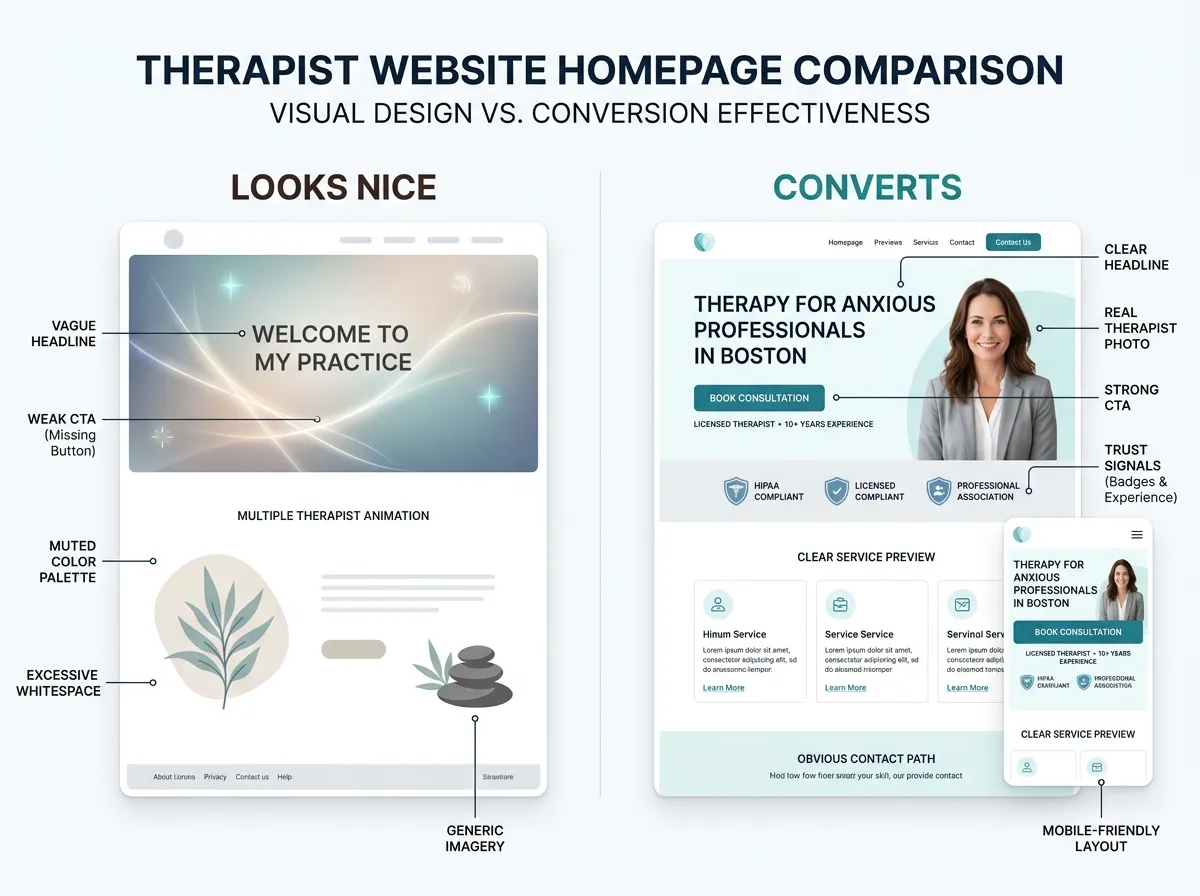
The design and functionality of a custom website affect patient satisfaction. User-friendly elements and clear content strengthen trust and create connection, while sites that communicate a therapist’s values and expertise support retention. In contrast, impersonal directory profiles can hinder rapport-building.
What Are the Limitations of Therapy Directories for Patient Experience?
Directories offer exposure but present limits that affect patient experience. Clients may struggle to find specific practitioners among many listings, and the lack of personalised information reduces engagement, prompting decisions based on superficial criteria rather than a meaningful fit.
How Do Therapy Directories Affect Client Navigation and Engagement?
Directories can complicate navigation, particularly in niche markets where options are numerous but poorly differentiated. Profiles that lack substantive content and engagement features face visibility challenges, leaving many professionals overlooked by clients seeking a relevant match.
What Are the Drawbacks of Relying Solely on Therapy Directories?
Relying solely on directories exposes therapists to volatile traffic and limited control over profile content. Practitioners cannot fully convey their approach or brand, which can dilute perceived expertise and impede the formation of long-term client relationships.
How Do Custom Therapy Websites Enhance the Online Patient Journey?

Custom websites improve the online patient journey by creating tailored user flows that guide clients from initial awareness to booking. Interactive content and clear service descriptions deliver a richer, more persuasive experience than traditional directory listings.
Which Website Features Improve Therapy Client Online Engagement?
Effective custom websites incorporate several features that increase client engagement:
- Interactive Content: Elements like blogs, quizzes, and video resources encourage active participation.
- Personalized Content Delivery: Tailored information and recommendations help resonate with individual users.
- User-Friendly Navigation: Streamlined designs prevent potential clients from feeling overwhelmed, guiding them through the site.
How Does Website Ownership Support Practice Growth and Patient Retention?
Owning a custom website supports practice growth by enabling direct communication, consistent branding, and full control over content. This autonomy sustains long-term client relationships and provides an unrestricted channel for updates and engagement beyond third-party constraints.
What UX Principles Should Guide Mental Health Website Design?
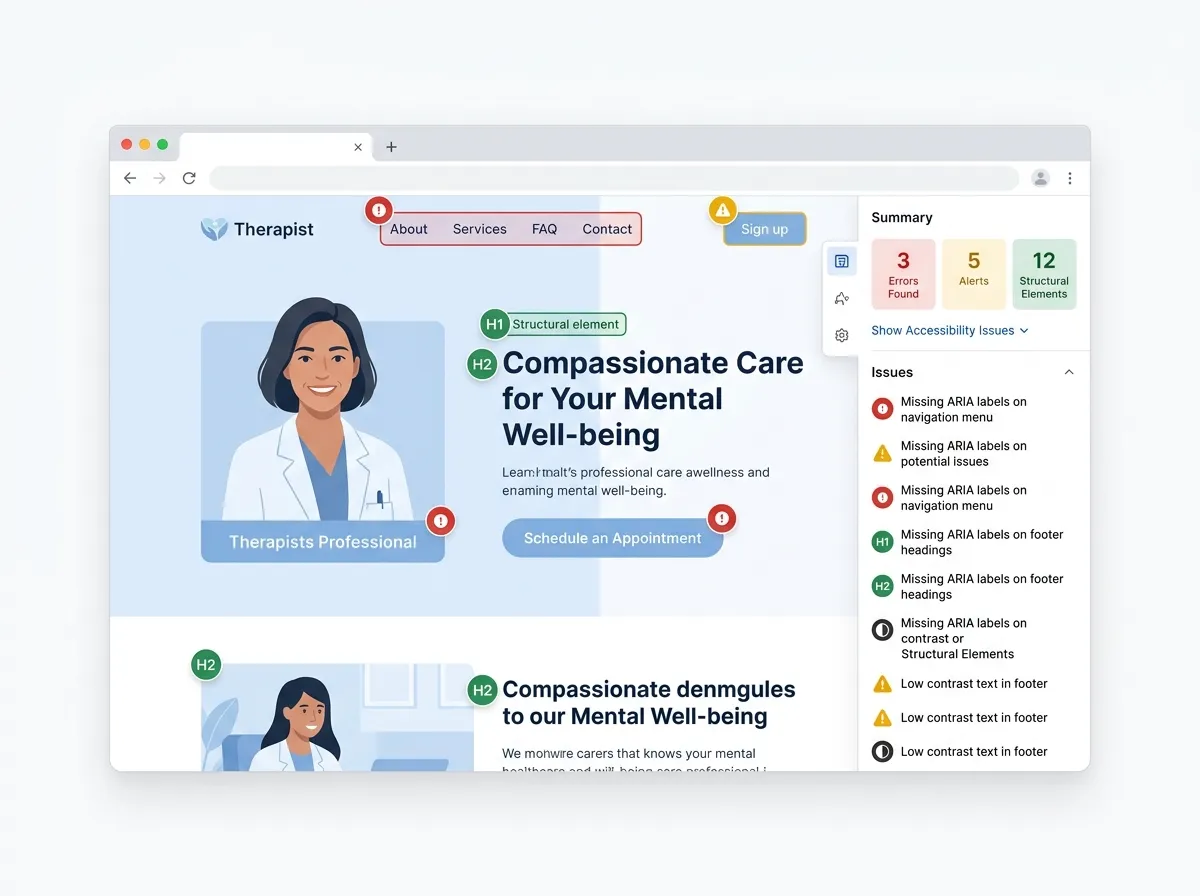
Mental health websites should follow core UX principles: meet accessibility standards, implement intuitive navigation, and present coherent visual design to build trust. A clear, professional interface reassures potential clients and supports sustained engagement.
How Can Patient Journey Mapping Optimize Therapy Website Design?
Patient journey mapping optimizes website design by identifying touchpoints and client expectations. Refining each stage—from awareness through consideration to action—ensures users feel supported and increases conversion.
What Digital Engagement Strategies Increase Patient Trust and Booking Rates?
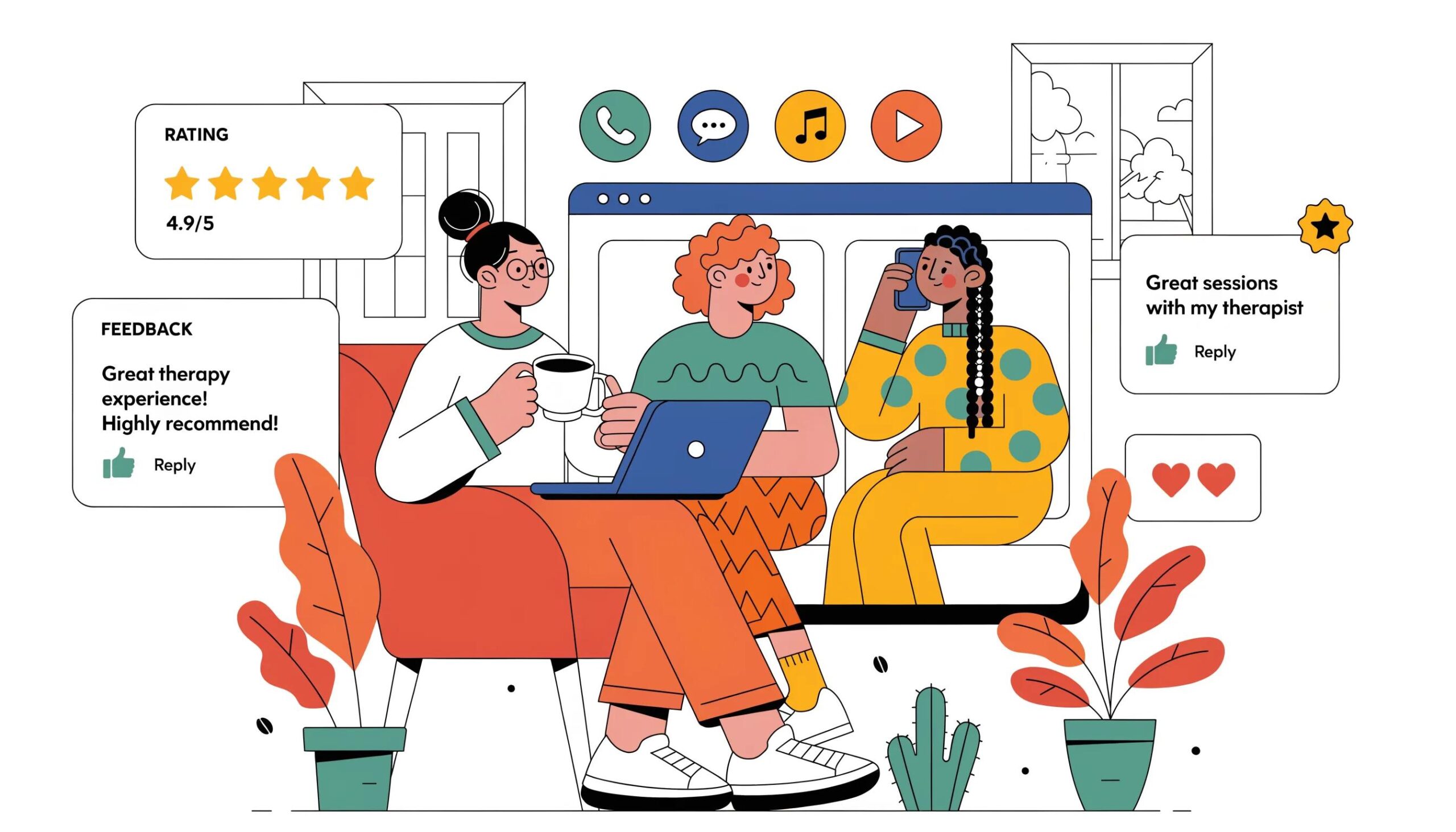
Several digital strategies improve patient trust and booking rates:
- Utilizing Social Proof: Displaying client testimonials and success stories builds credibility.
- Featuring Client Testimonials: Highlighting positive experiences motivates others to take action.
- Implementing Regular Content Updates: Consistent blogging and resource sharing keep clients informed and engaged.
How Can Therapists Transition Clients from Directories to Their Own Websites?
To transition clients from directories to a practice website, communicate the site’s benefits clearly and offer direct incentives to visit. Use directory profiles to introduce your brand and link prospects to owned channels for deeper engagement.
What Are Effective Digital Marketing Techniques for Driving Website Traffic?
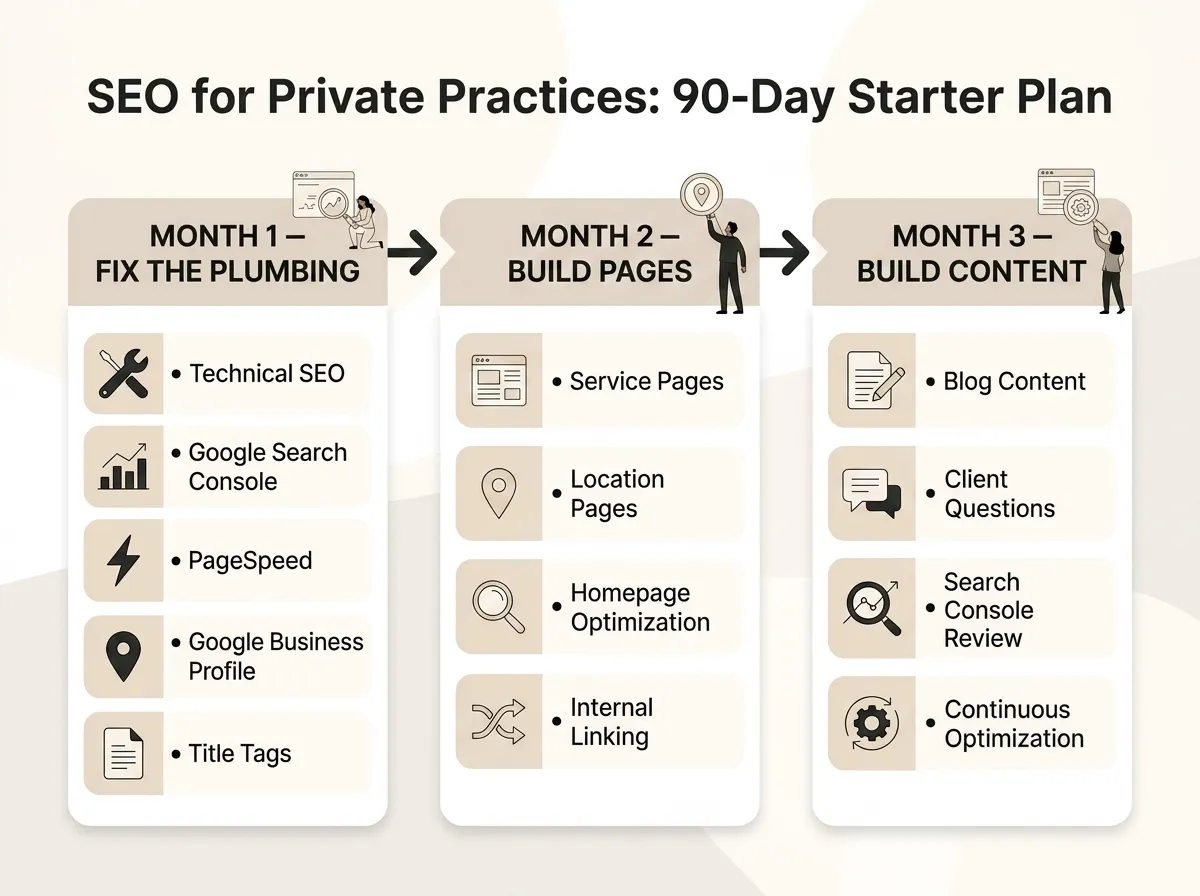
Effective techniques include targeted SEO, consistent content marketing, and strategic social media engagement. Combined, these approaches increase qualified traffic and strengthen the practice’s online presence.
How Does Integrating Online Appointment Systems Improve Conversion?
Integrated online booking streamlines scheduling, reduces friction, and improves conversion by allowing clients to book at their convenience. A seamless booking flow prevents drop-off and preserves client interest through to confirmation.
Frequently Asked Questions
1. How important is SEO for therapy websites compared to directory listings?
SEO is critical for visibility. A well-optimized website uses targeted keywords, meta tags, and substantive content aligned with client search intent, improving rankings and making it easier for potential clients to find and contact the practice, which increases traffic and engagement.
2. What qualities should I look for in a custom therapy website design?
A quality custom site is user-friendly, visually coherent, and easy to navigate. Ensure mobile responsiveness and ADA compliance, personalised content, clear calls to action, and integrated appointment scheduling to support engagement and bookings.
3. How can client testimonials enhance a mental health website?
Client testimonials provide social proof that reinforces credibility. Authentic accounts reduce hesitation and encourage prospective clients to book, so feature them prominently to influence decision-making.
4. What benefits do online booking systems provide for therapists?
Online booking streamlines scheduling and lets clients book at their convenience, reducing friction and improving conversion. For therapists it reduces administrative tasks, improves time management, and provides real-time appointment updates that support engagement and retention.
5. How do visual elements contribute to user trust in mental health websites?
Visual design—color palette, layout, and imagery—shapes user trust. A cohesive, professional design signals competence and care, while clutter deters engagement. Clear visuals and informative graphics create a welcoming, trustworthy experience.
6. What challenges do therapists face when using directory listings?
When relying on directories, therapists face limited profile control, minimal personalization, and potential visibility issues. Profiles often cannot convey a practitioner’s full approach, causing clients to make choices based on insufficient information.
7. Why is patient journey mapping important for therapists?
Patient journey mapping helps therapists identify and optimize client touchpoints from first contact to treatment completion. By aligning website and service design with client expectations, practices can improve satisfaction, retention, and overall treatment effectiveness.
Conclusion
Investing in a custom website improves patient experience through personalised engagement and better accessibility. This approach builds trust, increases satisfaction, and supports long-term retention. Review our expert resources and design services for mental health practitioners to evaluate how a custom site can elevate your practice’s visibility and client relationships.