You built the site. You wrote the copy, chose the photos, hit publish. And when you search “therapist in [your city]” from your own phone, you’re nowhere. Page three, maybe. Behind two directories and a group practice whose site hasn’t changed since 2014.
We’ve built 500+ websites for therapists and coaches, and the audits that start those projects keep surfacing the same seven problems. Here they are, in the order worth checking
Why Isn’t My Therapist Website Showing Up on Google?
A therapist website fails to show up on Google for one of seven reasons: it isn’t indexed yet, its pages don’t target the words clients type, the content is too thin to earn trust, local signals are missing, a directory profile is absorbing your visibility, technical problems drag it down, or it hasn’t had time.
The same list, in the order to check it:
- Not indexed. Google hasn’t crawled or stored your pages yet.
- Technical drag. Slow pages, broken mobile layouts, missing HTTPS.
- Keyword mismatch. Your pages don’t use the words clients type into the searchbar.
- Thin content. A five-page brochure site can’t earn trust in a health niche.
- Weak local signals. No Google Business Profile, or listings that contradict each
other. - The directory trap. Psychology Today ranks for your niche; you don’t.
- Not enough time. SEO compounds over months. Panic at week three tells you
nothing
Most guides send you straight to keywords or backlinks. Our take, after years of these audits: start with the free, boring checks. Half the SEO problems on therapist websites get diagnosed in under an hour, before you spend a dollar
Check the Plumbing First: Can Google See Your Site at All?
Type site:yourdomain.com into Google. If your pages appear, you’re indexed, and the problem lives further down this list. If nothing shows up, Google doesn’t have your site on file, and no amount of keyword work matters until it does.
Say you launched in March and it’s May with zero traffic. Before you fire your designer, check three things:
- The WordPress privacy box. Settings → Reading → “Discourage search engines from indexing this site.” It gets ticked during the build so Google won’t index a half
finished site, then forgotten at launch. We find it in audits more often than anyone admits. - A leftover maintenance-mode plugin. These block crawlers on purpose. Deactivate it once the site is live.
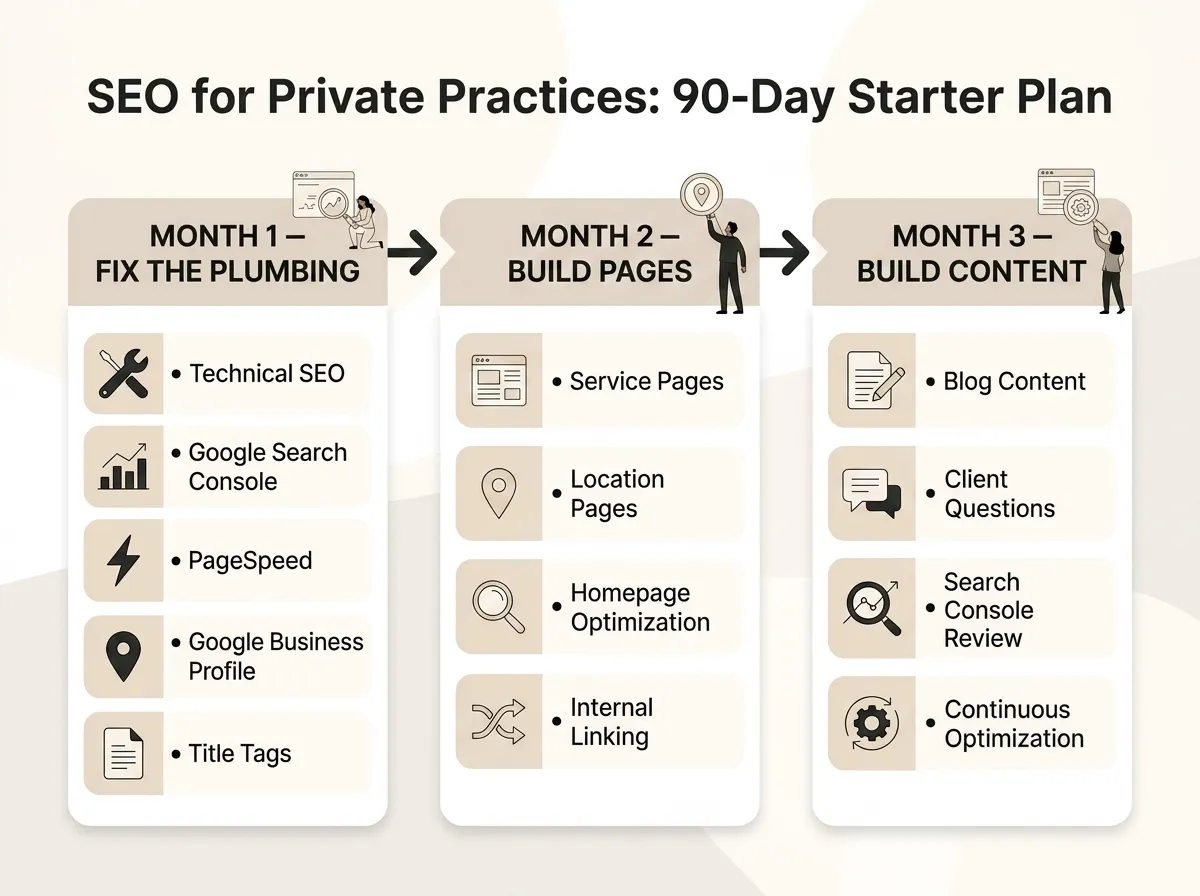
- Google Search Console. Free, made by Google, and the closest thing you’ll get to a direct line. Verify your site, submit your sitemap, then run URL Inspection on your homepage. It tells you plainly whether a page is indexed and, if not, why.
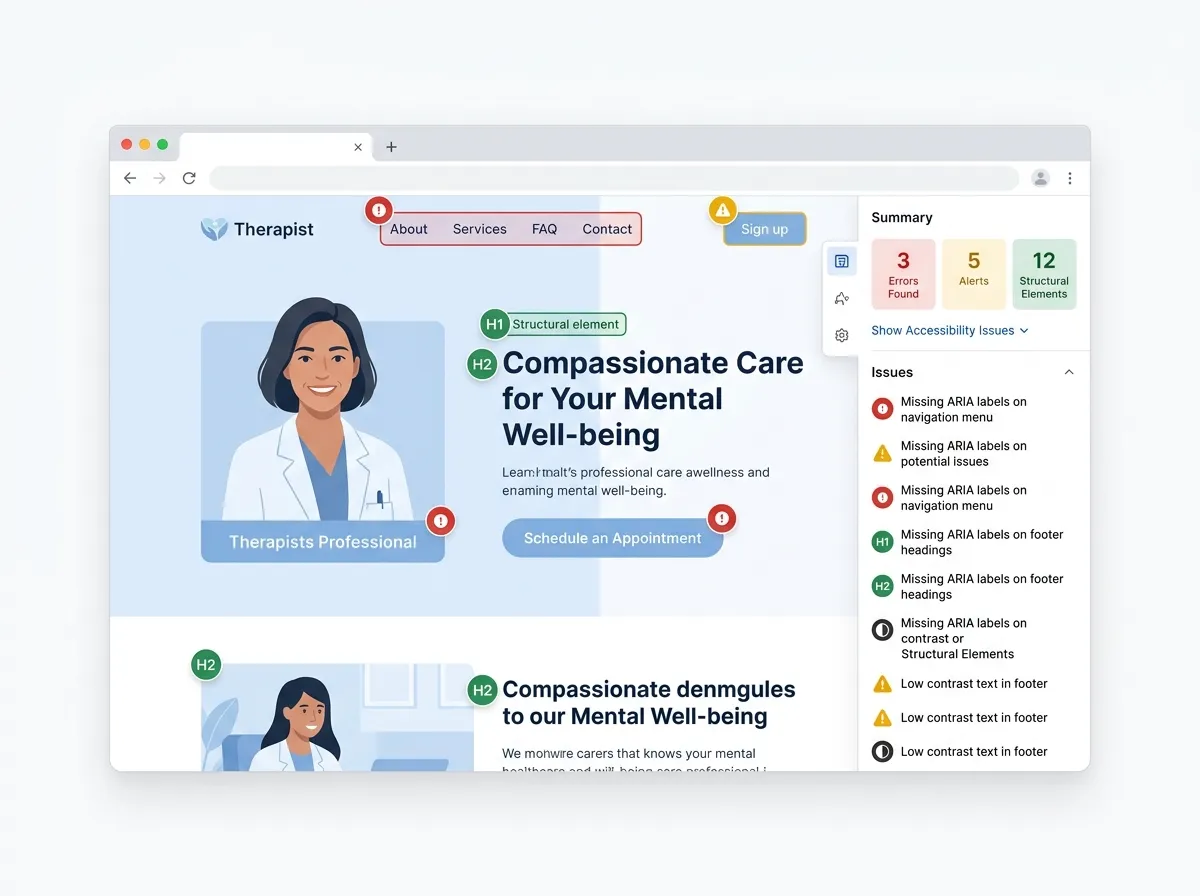
Speed and mobile belong in this plumbing check too. Run your homepage through PageSpeed Insights. If the largest element on the page takes more than 2.5 seconds to load, you’ve missed Google’s own threshold for a good experience — and an anxious visitor deciding whether to trust you won’t wait around either. On therapy sites, the culprit is usually a beautiful, uncompressed 4MB photo of the office.
One more plumbing note: brand-new sites take days to a few weeks to get indexed. That part is normal.
Your Pages Don’t Say What Clients Type
If your site is indexed but still not ranking for your services, the problem is usually language. Google ranks pages, not practices. When no page on your site uses the words a potential client searches, there’s nothing to match.
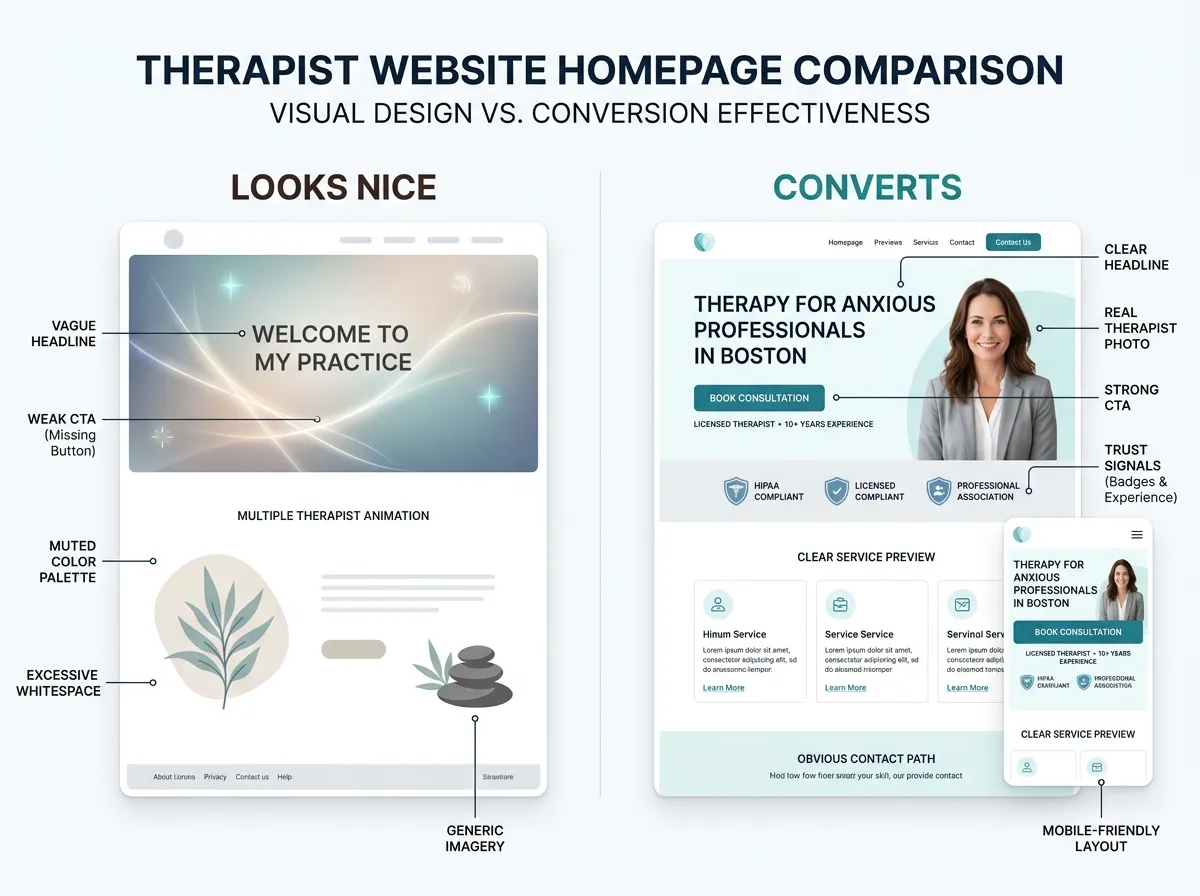
The classic version: your homepage title tag reads “Home.” Not your name, not your city, not the word therapy. Just “Home.” Nobody told you title tags existed, and why would they have — you were busy getting licensed.
Three fixes carry most of the weight:
- Rewrite your title tags. One per page, under 60 characters, front-loaded with what the page is about. “Anxiety Therapy in Denver | Practice Name” beats “Home” every time.
- Lead with client language. You write “EMDR intensives for complex trauma.” Your next client types “trauma therapist near me.” Use their words first; introduce yours after.
- Give each specialty its own page. One services page listing eight modalities ranks for none of them. Separate pages for anxiety, couples work, and trauma give Google clear answers to match against real searches.
Google Holds Therapy Sites to a Higher Bar
Google files health and mental health content under a category it calls YMYL — Your Money or Your Life. Content that can affect someone’s wellbeing gets extra scrutiny, and Google’s systems look for evidence of experience, expertise, and trustworthiness before ranking a site prominently.
A five-page brochure site struggles here. Not because the design is bad. Because there’s almost nothing to evaluate.
What builds the trust file:
- An About page with your license, credentials, a recent photo, and a first-person story a nervous visitor can connect with.
- A page for each service that answers the questions clients bring, instead of listing modalities.
- A blog that publishes what your clients search at 11 p.m. Stuck on topics? We keep a running list of blog ideas for therapists.
- Reviews and mentions elsewhere on the web confirming you exist and practice
where you say you do.
And an opinion most guides skip: hold off on backlink outreach. Links matter to Google, but they’re the last mile. Until your service pages exist and your About page proves who you are, new links point at a site Google still can’t read as trustworthy. This slower, ongoing layer — publishing, earning mentions, adjusting to the data — is exactly what our SEO and digital marketing for therapists service carries for practices that would rather spend those hours with clients.
Your Local Signals Are Weak or Contradictory
Search “anxiety therapist near me” and the top of the page is a map with three listings. That’s the local pack, and it runs on your Google Business Profile (the tool formerly
called Google My Business), not on your website’s SEO.
If you see in-person clients and haven’t claimed a profile, that’s the best 45 minutes you can spend on this entire list. Pick “Psychotherapist” as your category rather than
something generic, add photos of your actual space, keep the hours current, and answer your reviews.
Then check consistency. Your name, address, and phone number should match exactly everywhere they appear: your site, your profile, Psychology Today, insurance directories.
A suite number on one listing and not another reads, to a machine, like two slightly different businesses. Tedious to fix. Quietly powerful once fixed.
Two honest caveats. Online-only practices play a different local game, because Google treats service-area businesses differently from storefronts, so it’s worth a conversation before you sink hours in. And local visibility is a discipline of its own beyond this checklist; our local SEO for therapists page covers the full version.
The Symptom Everyone Misreads: Your Directory Outranks You
Open an incognito window and search your name plus “therapist.” For a lot of clinicians, the first result isn’t their website. It’s their Psychology Today profile. Most people shrug at that. We’d call it the single most useful diagnostic on this page. It means Google trusts Psychology Today’s enormous, long-established domain and doesn’t yet trust yours, so your visibility is rented: a listing on a page that also shows a dozen nearby therapists, a search bar pointing away from you, and a monthly fee for the arrangement.
To be fair, directories are a legitimate referral channel, and we don’t tell clients to cancel them. But when the rental outranks the home, the answer isn’t a better profile. Build enough substance on the site you own that Google has a reason to send people there directly. The full argument lives in our breakdown of your own website vs. therapy directories.
What Fixes What — and How Long It Honestly Takes
| What you see | Most likely cause | First move |
| Nothing on a site: search | Not indexed | Search Console + sitemap |
| Indexed, invisible for your services | Keyword mismatch, thin pages | Title tags + specialty pages |
| Missing from the map pack | Business Profile absent or bare | Claim and complete it |
| Directory outranks your site | Low site authority | Content depth + consistent listings |
| Rankings but no inquiries | A conversion problem, not SEO | Different diagnosis entirely |
Timelines, without the hype. Indexing fixes show up in days to weeks. Title tag and page rewrites usually register within four to eight weeks. Trust and content depth is the slow
one: three to six months before movement feels obvious, sometimes longer in crowded metros.
Which brings up the trade-off we tell every prospective client. If you need clients this month, SEO is the wrong tool for that timeline. Ads, referral relationships, and yes, that directory profile fill the near-term gap while the search work compounds behind them. SEO keeps paying after you stop pushing. It’s just never the fastest channel. Measure progress in Search Console rather than by gut. Watch impressions first (Google testing you in results), clicks second, and the only number that pays rent third: consultation requests coming through your site.
Questions Therapists Ask Us About Google Rankings
How long does it take a new therapist website to show up on Google?
Do therapists really need a website, or is Psychology Today enough?
How do I get my therapy practice to show up on Google?
client questions while trust accumulates.
What happens if a client moves to the EU?
Where to Start This Week
If you only do two things after reading this, make them the site: search and the Business Profile claim. Free, under an hour combined, and together they rule out half the list. That’s how therapist websites start showing up on Google: fundamentals first, patience second. And if the audit turns up problems you’d rather hand off, get a custom quote through the Website Inquiry Form — a free consultation, no pressure attached