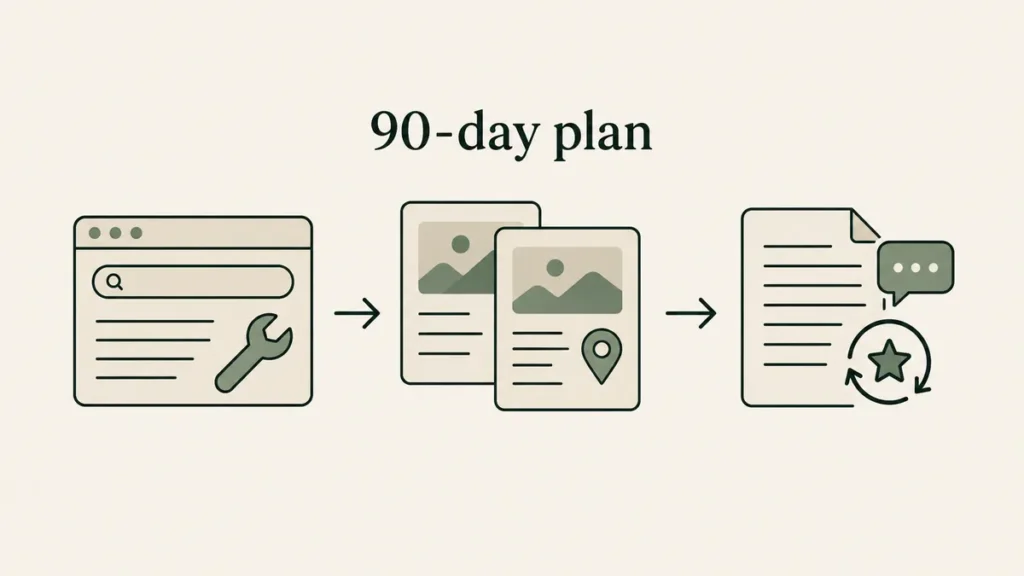
SEO for private practices isn’t a mystery; it’s a sequence. Fix the technical basics first, build pages for each service and location second, then publish content on a schedule you can actually keep. Do those three things for 90 days and you’ll be ahead of most practices in your city. Here’s the month-by-month version, plus an honest answer to the question everyone actually has: which parts to do yourself and which to pay for.
Why therapy SEO doesn’t behave like generic SEO
Before the plan, three ways your niche breaks the standard playbook. Generic advice fails therapists for reasons that have nothing to do with effort.
The decision cycle is long. Someone who finds a plumber calls in ten minutes. Someone who finds a therapist reads your About page, checks your fees, closes the tab, comes back four days later, and rereads your specialties before sending one carefully worded email. Winning the click is the easy part; your site then has to survive repeat visits from an anxious, careful reader. Thin pages that might convert for an emergency locksmith lose here.
Trust content is the ranking currency. Google treats health queries as high-stakes, so pages about anxiety, trauma, or couples work get held to a higher credibility bar. Your credentials, a real bio, clear specialty pages, and honest writing aren’t garnish. They’re the ranking strategy.
You’re competing with directories, not just other therapists. Search “therapist in Austin” and Psychology Today, Zocdoc, and Headway soak up much of page one. Head terms are a slog. The winnable ground is specific and local: “EMDR therapist south Austin,” “therapist for postpartum anxiety Round Rock.” Long-tail plus local is where a solo practice beats a directory’s domain authority, because the directory can’t write a genuine page about postpartum work in Round Rock. You can.
Month one: fix the plumbing before decorating
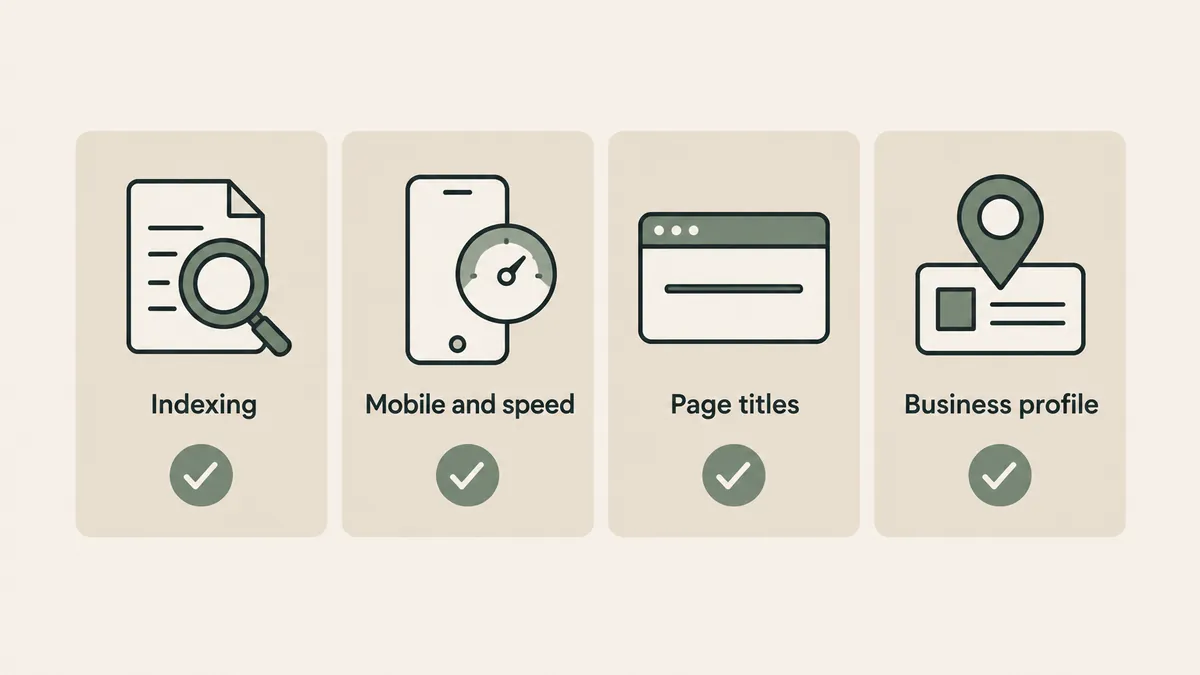
Nothing in month one is glamorous. All of it compounds.
- Set up Google Search Console. Free, takes twenty minutes, and it’s the only honest scoreboard you’ll get — real queries, real positions, real clicks.
- Check what’s actually indexed. In Search Console’s page report, look for services Google hasn’t indexed and junk it has (tag archives, old test pages).
- Confirm the basics: SSL, mobile, speed. Run PageSpeed Insights. You don’t need a perfect score; you need the site to load before an anxious visitor gives up.
- Rewrite title tags on your key pages. “Home | Jane Smith LMFT” tells Google nothing. “Anxiety & Trauma Therapy in Boise | Jane Smith, LMFT” tells it everything.
- Claim and complete your Google Business Profile. The setup details, including how to keep a home-office address private, are in our local SEO guide for therapists.
- Fix duplicate bios. If your website About page is a copy-paste of your Psychology Today profile, one of them should change — preferably the directory’s.
That’s one focused weekend, maybe two. Most therapist sites we audit fail at least three of these six, which is why we tell people to stop buying content before the plumbing works.
Month two: build the pages that do the ranking
One page per service, one page per meaningful location. This is the highest-impact month of the three.
A service page isn’t a paragraph on your homepage. “Anxiety therapy,” “couples counseling,” and “EMDR” each deserve their own URL, their own title tag, and 600+ words answering what a searcher actually wonders: what the work looks like, who it fits, what a first session involves, what you charge or how to find out. Write like you’d talk in a consult call. Clinical jargon ranks worse and converts worse — a rare case of Google and your reader wanting the same thing.
Location pages follow the same rule: only build them for places you genuinely serve, and make each one specific enough that it couldn’t describe another town.
Say you’re a two-specialty practice: trauma and couples. By the end of month two you should have, at minimum, two strong service pages, one location-flavored page, and a rewritten homepage that names your city and specialties in the first hundred words. That’s four pages. Quality over sprawl.
This is also the month to decide whether you want a partner in the work. Our SEO and digital marketing service handles exactly this layer — the strategy, the page-building, the monthly adjustments — for therapists who’d rather not learn a second profession.
Month three: start a cadence you’ll still keep in March
Content is a compounding asset, but only at a sustainable pace. Two good posts a month beats eight in January and zero by spring.
What to write: the questions clients ask you in session intake calls. “How long does EMDR take?” “What’s the difference between a psychologist and an LPC?” “Does insurance cover couples counseling?” Each is a search query, and you’re more qualified to answer it than the content mill currently ranking for it.
What to skip: generic mental-health awareness posts. “5 Ways to Reduce Stress” competes with WebMD and wins you nothing. Write what only a clinician in your city with your specialties could write.
Month three is also your first data check. Open Search Console, look at queries from the last 28 days, and find the pages showing impressions but few clicks — those are pages ranking on page two or three that a better title or a stronger opening could push up. That’s next month’s edit list. If the data shows deeper issues (pages deindexed, rankings sliding), work through our post on diagnosing SEO problems on therapist websites before adding anything new.
What to DIY and what to hire out
The honest split, from a studio that sells SEO and will still tell you this:
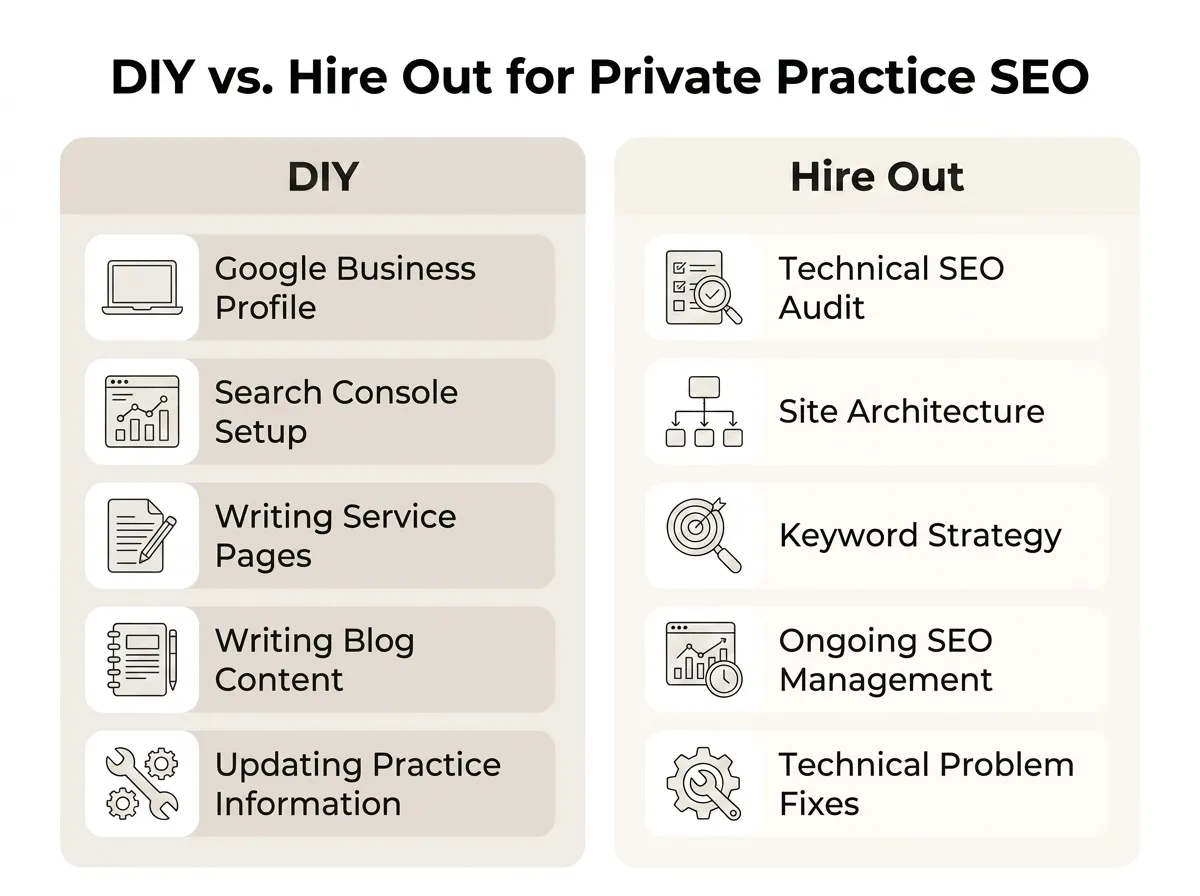
DIY these. Google Business Profile, Search Console setup, and the writing itself. Nobody can fake your clinical voice, and the writing is where your expertise becomes a ranking asset. If you have more time than money — common in year one of a practice — you can run this whole plan solo. Our practice setup guide shows where SEO fits among everything else on that list.
Hire these. Technical audits, site architecture, keyword strategy, and the relentless monthly follow-through. Not because they’re beyond you, but because they’re where DIY burns the most hours for the least return. A therapist billing $150 a session who spends six hours a month wrestling with crawl errors has paid $900 for work a specialist does faster and better.
And the trade-off we’re obligated to admit: hiring out costs real money, and SEO of any kind pays slowly. Retainers run months before the referral flow visibly changes. If your caseload is empty right now, spend this quarter’s budget on networking and directory visibility, and start SEO with next quarter’s — it’s the tool for the practice you want in a year, not the crisis you’re in this week.
How you’ll know it’s working
Ninety days in, don’t judge by rankings alone. Judge by direction across four numbers in Search Console and your inquiry inbox: impressions (are you appearing for more queries?), average position on your target terms (moving from 45 to 25 is real progress that produces zero clicks), clicks, and — the only number that pays rent — consultation requests that mention finding you on Google. Impressions move first, positions second, clicks third, inquiries last. That lag is normal, not failure.
Common Questions About Therapy Practice SEO
How long does SEO take for a private practice?
How much should a private practice spend on SEO?
Is SEO worth it for a small or solo practice?
Should I do SEO or just use Psychology Today?
Where this leaves you
Ninety days: plumbing, pages, cadence. None of it requires genius; all of it requires actually starting. If you’d rather hand the map to someone who’s built and ranked 500+ therapist sites, tell us about your practice through the website inquiry form and we’ll come back with a plan scoped to your city and specialties — free consultation, no obligation.