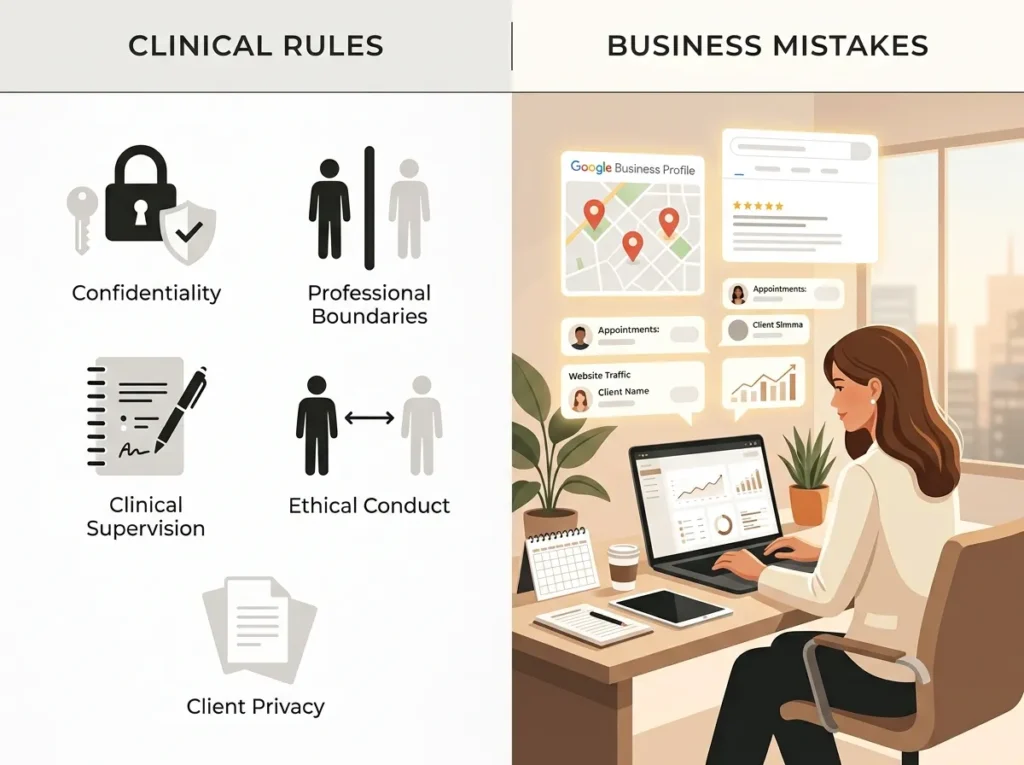
Grad school drilled the clinical list into you. Don’t blur boundaries. Don’t break confidentiality. Don’t judge, don’t rush, don’t skip your own care. You know those rules better than we ever will, and you don’t need a web design studio repeating them.
This is the other list — the things not to do as a therapist who also owns a business. Nobody teaches these. There’s no licensing exam for them, no supervisor flagging them, and no consequence you’ll notice quickly. They just quietly decide whether your phone rings. After 500+ website projects for therapists and coaches, we see the same seven mistakes on repeat, and most owners are making at least three.
1. Don’t Run a Website Nobody Can Find
The clinical rules protect the clients in your office. This first business rule is about the clients who never arrive.
Search your specialty plus your city right now, in a private browser window. “Anxiety therapist in Boston.” “EMDR therapist near me.” If your site isn’t in the first ten results, it’s not underperforming. It’s absent. For the people typing that search — and that’s how most private-pay clients now look — you don’t exist.
A website nobody finds fails at its one job, no matter how nice it looks. If yours has been live for a year and Google still ignores it, the causes are usually fixable: thin service pages, no location signals, slow load, or a builder that shipped bad technical bones. Which ones apply to you is exactly what an audit is for.
2. Don’t Rent Your Entire Caseload From Directories
Let’s be fair first: a Psychology Today profile can be one useful channel, especially early on. Plenty of good practices got their first clients there.
The mistake is making it your only channel. On a directory, you’re one card in a stack of near-identical listings, sorted by an algorithm you don’t control, on a page whose real customer is the directory. Fees rise, the format changes, and your visibility can drop overnight through no fault of yours. You’re renting attention, and rented attention comes with a landlord.
Our position, stated plainly on our website vs. therapy directories page: keep the profile if it pays for itself, but build the home base you own. When a directory referral googles your name (and they do), your own site is what closes them or loses them.
3. Don’t Let a Site You’re Embarrassed By Speak for You
You know the feeling. Someone asks for your website and you add a small apology before the URL. “It’s a bit outdated, but…”
That apology is data. Prospective clients spend a few seconds deciding whether you seem credible, and a half-finished DIY site from 2019 answers for you before your credentials get a word in.
Here’s the trade-off we’ll admit, because it’s true: a $12–$40/month DIY builder is a perfectly reasonable choice when you’re pre-launch and pre-revenue. The mistake isn’t starting there. The mistake is a full practice still running on it three years later, paying the hidden DIY tax in lost inquiries, weekend fiddling, and template sameness. Custom therapist sites typically run $3,000–$15,000; our Website in a Week exists as the middle path — custom quality, live in 7 days, quoted to your practice rather than priced off a menu.
4. Don’t Try to Be the Therapist for Everyone
“I work with adults facing anxiety, depression, trauma, relationships, and life transitions” describes most of the profession. It markets none of it.
This one hurts because it feels clinically wrong to narrow. It isn’t. A niche on your website is a marketing decision, not a scope-of-practice restriction; you can still see whoever you’re competent to see. But the person searching at midnight isn’t looking for a generalist. They’re looking for someone who gets their thing, and the site that names that thing wins the inquiry.
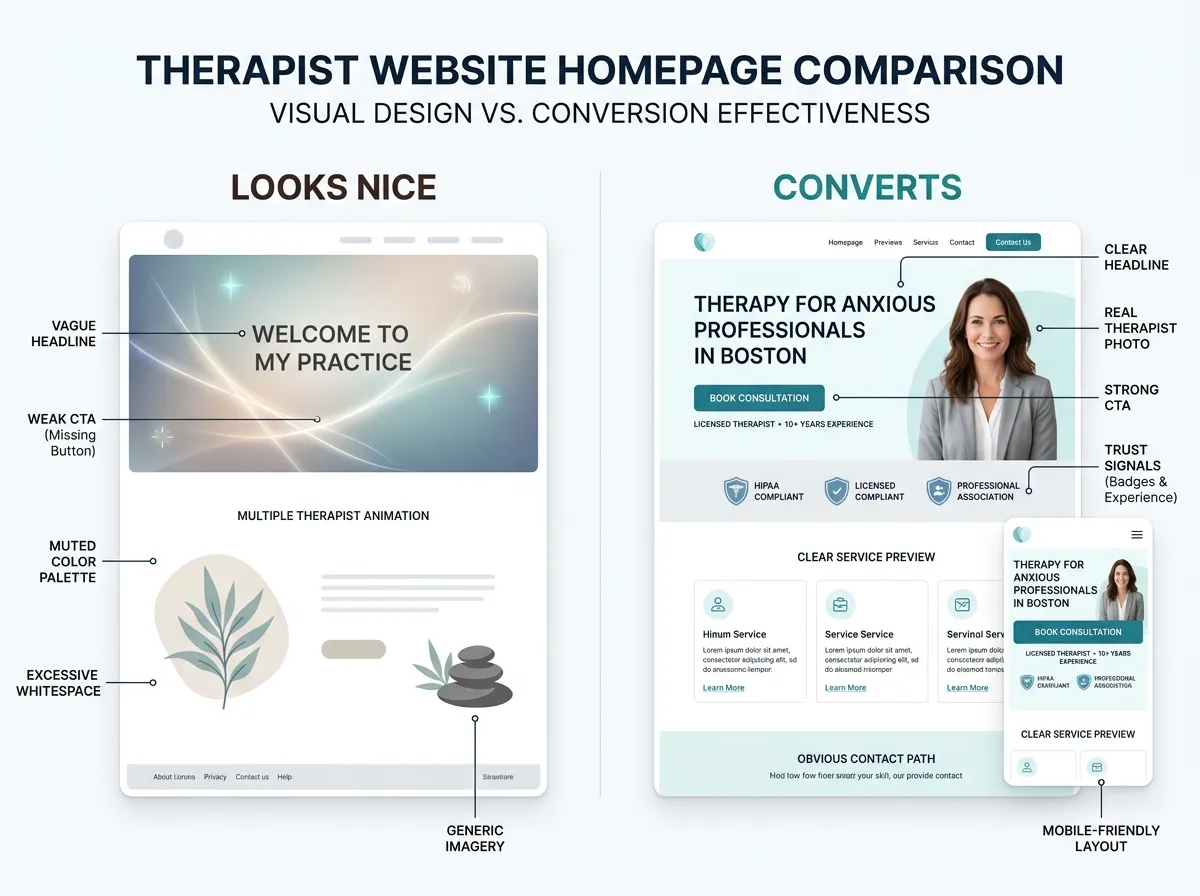
In our client audits, the vague-positioning problem shows up more often than any technical flaw. If your homepage headline could sit on any therapist’s site in your state, that’s the first thing to rewrite — our guide to therapist brand identity walks through how.
5. Don’t Ignore Local SEO While Paying for Everything Else
We’ve watched practice owners spend real money on directory upgrades and ads while their Google Business Profile sits unclaimed. That’s backwards.
Therapy is bought locally, even when it’s delivered by video. “Therapist near me” and “counselor in [city]” searches surface a map pack before anything else, and showing up there costs you a profile, accurate details, and reviews — not an ad budget. It’s the highest-return neglected asset in this field, and our local SEO for therapists service exists because so few practices ever set it up properly.
One caution: don’t fake it. Review-gating and keyword-stuffed business names get profiles suspended. Slow and real beats clever.
6. Don’t Make Compliance Promises Your Site Can’t Keep
Somewhere along the way, “HIPAA-aware website” became a phrase therapists put on their sites and designers put in their pitches. Be careful with it. A marketing website that stores no client information isn’t what HIPAA regulates — the risk lives in your forms, booking, and client communications, and a blanket compliance badge can promise more than any brochure site delivers.
The accurate posture is HIPAA-aware design: no health details collected on the site itself, BAA-covered tools for anything that touches client information, and honest language about all of it. We wrote up the full picture in HIPAA websites for therapists: the real rules. Overclaiming compliance is the digital equivalent of overclaiming outcomes, and you already know how you feel about that.
7. Don’t Wait for “Someday” While Referrals Age Out
Referral networks retire, move, and forget. The colleagues sending you clients today won’t send them forever, and the practices that hurt most in our audits are the ones that coasted on word of mouth for a decade, then needed a web presence in a hurry.
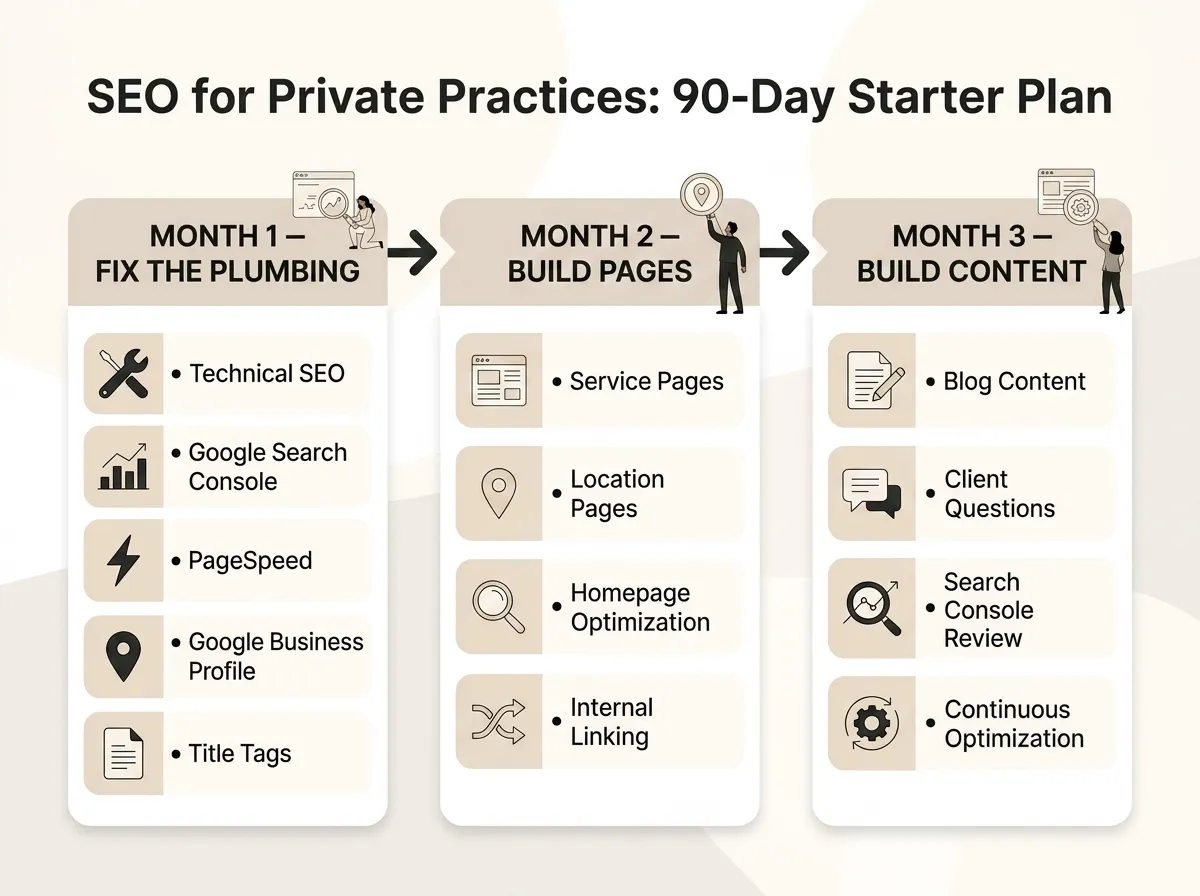
You don’t need to do everything this quarter. You need to stop doing nothing. Claim the profile this week. Fix the homepage headline this month. The bigger moves can be planned like any other business decision. 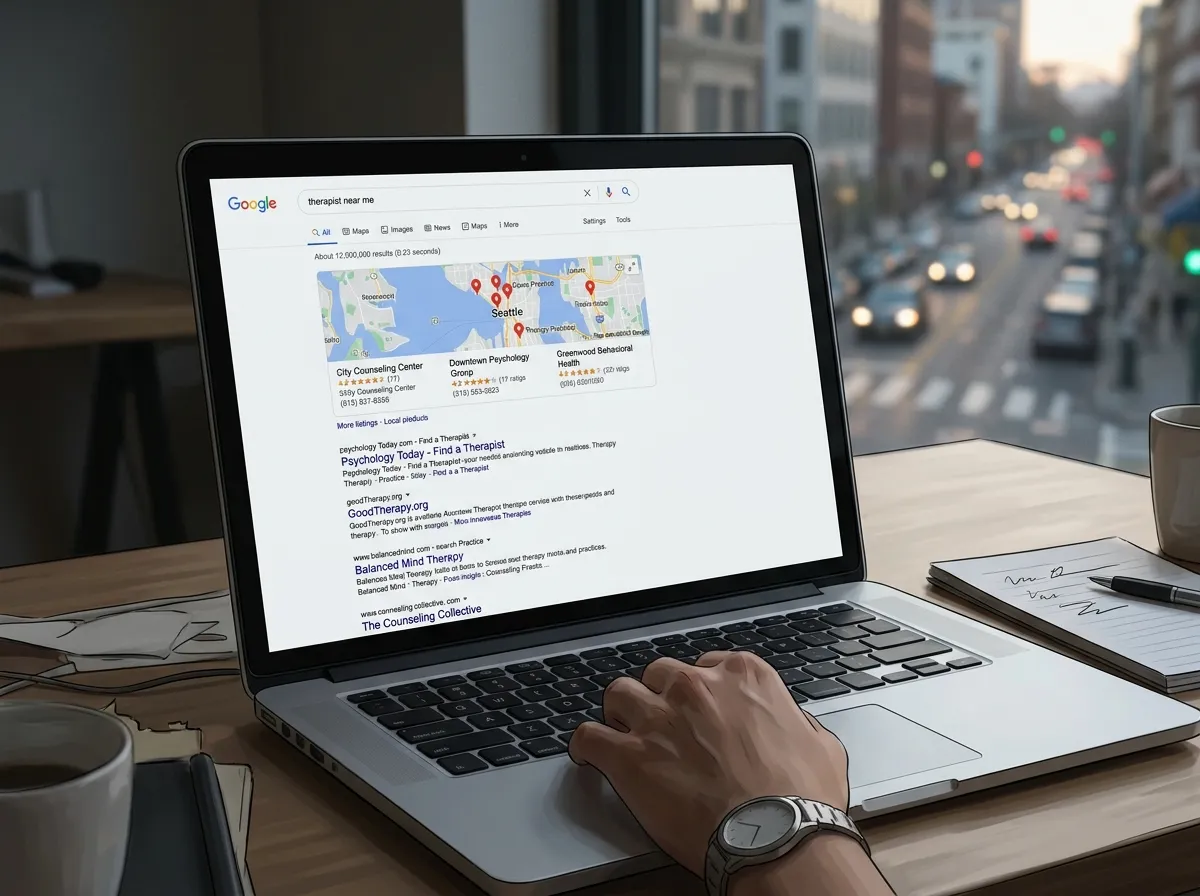
Frequently Asked Questions
What should therapists avoid when marketing a private practice?
Is Psychology Today enough to fill a caseload?
How much does a professional therapist website cost?
Do I need a niche to run a private practice?
Where to Go From Here
You’ve spent years learning what not to do in the room. The business list is shorter and far more forgiving — every mistake above is reversible. If you’d like a second pair of eyes on which ones your practice is making, send your site through the Website Inquiry Form and we’ll come back with a specific, no-pressure plan.