Most About pages we audit open the same way: a degree, a license, years in practice, and a row of modality acronyms. All accurate. And none of it answers the question a visitor arrived with, which is whether you can help someone like them.
The therapist bio examples below are built to answer it. You’ll find 10 sample bios, two before-and-after rewrites, and a five-part structure you can fill in tonight.
One note first. Every bio here is a sample we wrote for this guide, not a real clinician, so brackets like [Your name] mark where your details go. Each runs under 100 words. Yours will be longer.
How to write a therapist bio
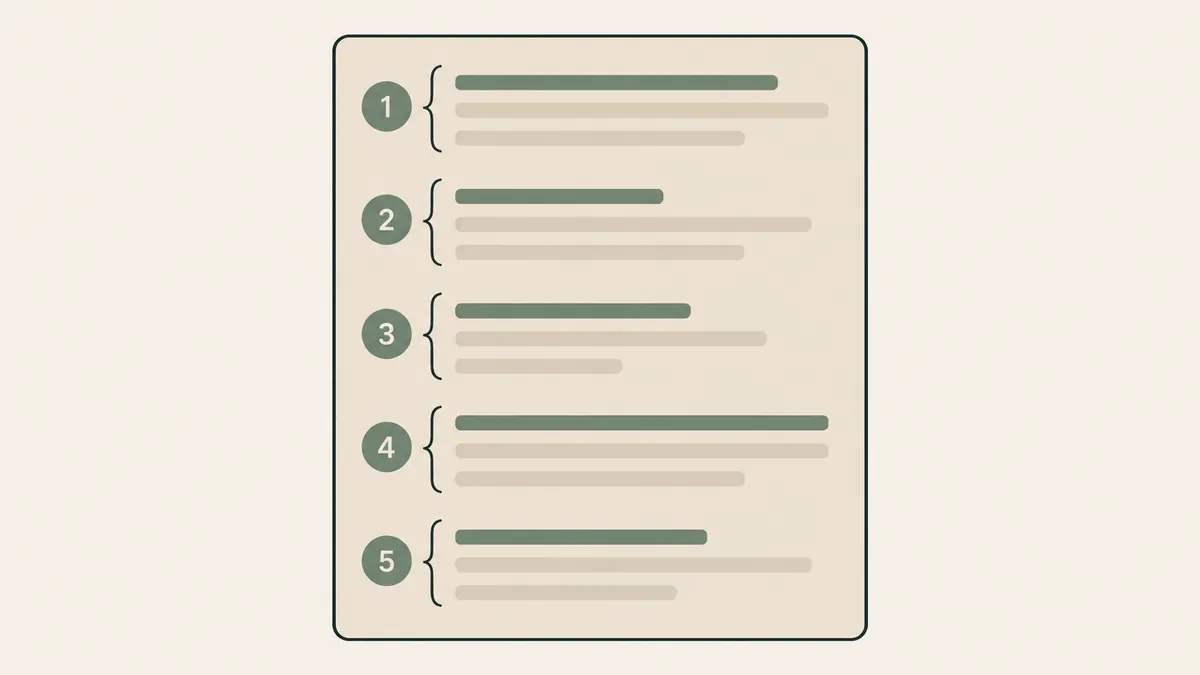
To write a therapist bio, start with the person reading it. Say who you help and what they’re dealing with, describe what sessions with you are like, state your license and training in one accurate line, add one human detail, and end with a clear next step. Use first person and plain words.
In order:
- Who you help. Name the people and the situation in their words. “Adults whose worry keeps them up at night” beats “individuals with anxiety disorders.”
- What working with you is like. Your pace, and what happens in a first session. A visitor can’t sit in your office before booking, and this paragraph is the closest they get.
- Training in one line. Your license, plus the one or two trainings that matter to this client.
- One human detail. Something small and true, like having taught seventh grade before grad school.
- The next step. A free 15-minute call or a booking link. Say what happens when they click.
Most bio advice treats part five as optional. On your own website, it’s the point.
Your website bio has a different job than your directory profile
The therapist bio examples that rank on Google mostly come from therapy platforms and software companies, and they lean toward profile fields. On a directory, the bio is the whole pitch. It sits in a list beside other clinicians, inside a layout you don’t control.
On your own site, the bio sits one tap from your specialty pages and a booking button. It doesn’t have to carry everything. Its job is to make one person feel understood, then hand them to a next step.
Rula’s provider help center tells clinicians to avoid stating their name, license type, or years of experience in the bio, because the profile already displays them. Your own site displays nothing for you.
One core bio still serves both. For a directory, lead with parts one and two and cut the rest to fit the fields, as we walk through in how to write a Psychology Today profile.
Two therapist bio examples, before and after
Both “before” bios are composites of the résumé style we see every week in client audits, written for this guide.
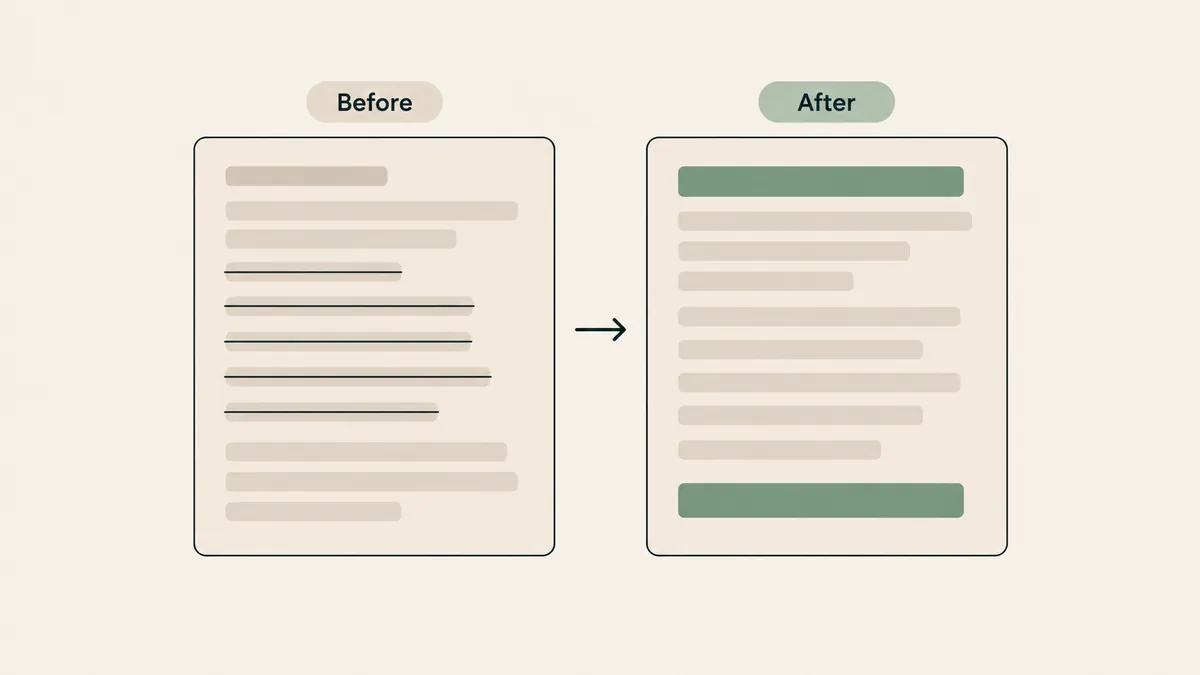
1. Anxiety therapist, solo private-pay practice
Before:
[Your name], LMFT, holds a master’s degree in counseling psychology and has more than 14 years of clinical experience. [Your name] is trained in CBT, ACT, DBT, and mindfulness-based approaches and treats anxiety, depression, and life transitions.
After:
Maybe you’re good at your job, and nobody there would guess how much you worry. I work with adults whose anxiety shows up as overthinking and 3 a.m. wake-ups. Sessions are practical, built on CBT and ACT skills you can try the same week. I’m [Your name], LMFT, licensed in [State]. My practice is private-pay, and I provide superbills. Most weekends I’m losing at chess to my nephew. Book a free 15-minute call below.
What changed: the opening describes the reader instead of the clinician. Four modalities became two. And the last sentence now gives a next step.
2. Psychologist offering assessments
Before:
Dr. [Your name] is a licensed clinical psychologist who completed a postdoctoral fellowship in neuropsychological assessment. Dr. [Your name] administers a variety of standardized cognitive and personality measures and has presented at regional conferences.
After:
I’m [Your name], PsyD, a licensed psychologist in [State]. I provide ADHD and learning evaluations for adults and teens who are tired of guessing. An evaluation has three steps: a history interview, one or two testing sessions, and a feedback meeting in plain language. You’ll leave with a written report. Off the clock, I’m usually repotting a plant that didn’t need it. For timing and fees, start with the contact form.
What changed: an evaluation is unfamiliar to most people, so the process replaced the list of instruments. The fellowship and the conference line went.
Eight more therapist bio examples for your website
Same five parts, different practices. If you searched for therapist bio for website examples or counselor bio examples, these work as written. Swap in the credential your state issued, such as LPC or LMHC.
3. Couples therapist
Most couples I meet have had the same fight forty times and can’t find the exit. I’m [Your name], LMFT, and I help partners slow one argument down and see what each was reaching for. My couples training is in [model, worded exactly as your certificate reads]. I’ve been married long enough to know that being right is overrated. Book a 20-minute call together to start.
4. Trauma therapist, EMDR-trained
Some things stay loud no matter how much time has passed. I work with adults living with the effects of trauma, including people who aren’t sure their experience “counts.” You set the pace. Early sessions focus on feeling steady before we approach any memories. I’m [Your name], LCSW, and I’ve completed an EMDRIA-approved EMDR basic training. There’s always tea on my desk. Ask me anything through the contact form.
5. Child and teen therapist
You’re probably a parent who’s worried and not sure whether it’s a phase. I’m [Your name], LPC, and I work with kids and teens ages 8 to 17. With younger children, sessions look like play and drawing. Teens usually prefer conversation, often over a card game. Parents get regular check-ins, and everyone knows what stays private. My office has more fidget toys than chairs. Start with a free parent phone call.
6. Grief counselor
Grief doesn’t keep a schedule, whatever the people around you have implied. I sit with adults after the death of a partner, parent, child, or friend. Some weeks we talk about the person. Other weeks it’s the paperwork, or the first holiday. I’m [Your name], LMHC, licensed in [State]. I keep a list of every book clients have recommended to me. When you’re ready, book a first session online.
7. Pre-licensed associate under supervision
I’m [Your name], a Registered Associate Marriage and Family Therapist (#[number]), supervised by [Supervisor name], Licensed Marriage and Family Therapist, at [Practice name]. I work with adults in their twenties who feel behind on whatever everyone else seems to have figured out. Sessions are conversational, and we usually end with one thing to try before next time. I’m a committed bad bowler. Book a free consult with the button below.
That wording is modeled on California’s published examples. Your state’s will differ.
8. Group-practice clinician page, short version
I’m [Your name], LCSW. At [Practice name] I see adults and older teens dealing with depression and burnout. My style is direct and warm, and you’ll always know what we’re working on and why. Favorite reset is a long walk with no podcast. To book with me, pick my name on the scheduling page.
9. Telehealth-only therapist
I see clients by secure video only, anywhere in [State]. That suits new parents and anyone whose nearest therapist is an hour’s drive away. I’m [Your name], LPC, and my focus is the anxiety that can come with a new baby. All you need is a private spot and a phone, and a parked car counts. My cat has appeared on camera more than once. Check the booking calendar for open times.
10. The 50-word version for a team grid or directory
I work with adults whose anxiety and overthinking get in the way of sleep and work. Sessions are practical and paced to you, drawing on CBT and ACT. [Your name], LMFT, licensed in [State]. Private-pay, superbills provided. Book a free 15-minute call through the link.
This is sample 1 with everything optional removed. The photo beside the blurb stands in for the human detail.
Write it in first person on your own site
Third person made sense when bios were printed in conference programs. On an About page it reads as if someone else is describing you to a stranger. “I work with” is warmer and shorter than “[Name] works with.”
Skip third person unless you’re writing a speaker or author bio. For more on sounding like yourself on a page, see our therapist website messaging and voice guide.
How long a therapist bio should be
These ranges are our own editorial recommendations, not research findings.
| Where it lives | Our range | What goes in |
|---|---|---|
| About page on your own site | 150 to 300 words | All five parts |
| Team-grid blurb | 40 to 60 words | Who you help, your style, your license, a link to the full bio |
| Directory profile | 120 to 200 words, within the directory’s limits | Parts one and two first, next step last |
Credentials get one accurate line
Your license makes the rest of the bio credible. It needs one line, stated exactly.
The ACA Code of Ethics (C.3.a) says counselors “identify their credentials in an accurate manner that is not false, misleading, deceptive, or fraudulent.” Standard 5.01 of the APA Ethics Code bars false or deceptive statements about training, credentials, and the “results or degree of success” of services.
Where we see accuracy slip:
- Trained versus certified. EMDRIA’s certification FAQ says that after completing an EMDR training “you are considered an EMDR trained clinician,” and that the EMDRIA Certified Therapist credential “is a separate process.” Write the one you hold.
- Pre-licensed status. Associates and interns generally must disclose that they practice under supervision, and the wording varies by state. California’s Board of Behavioral Sciences publishes advertising examples for associates: the minimum ones show the full registration title, the registration number, and a “supervised by” line, and the sheet rejects “MFTA” as an abbreviation. Read your own board’s advertising rules before you publish.
- Stale facts. “In practice since 2014” stays true; “10 years of experience” is wrong by next spring.
This is general information, not legal advice. Your licensing board has the final word, not your web designer.
What to leave out of a therapist bio
- The full CV. Dissertation titles and conference posters belong on a separate credentials page.
- A modality list with no translation. “CBT, DBT, ACT, IFS, SFBT” tells a colleague plenty and a prospective client almost nothing. Name one or two and say what they look like in a session.
- Anything that reads as a promise of results, like “you will overcome” or a success percentage.
- “A safe, nonjudgmental space.” True of you, and of the three profiles a visitor read before yours. Show it with a specific instead.
Where the bio sits on your site, and what goes next to it
Put the full bio on your About page and a two-sentence version on the homepage that links to it.
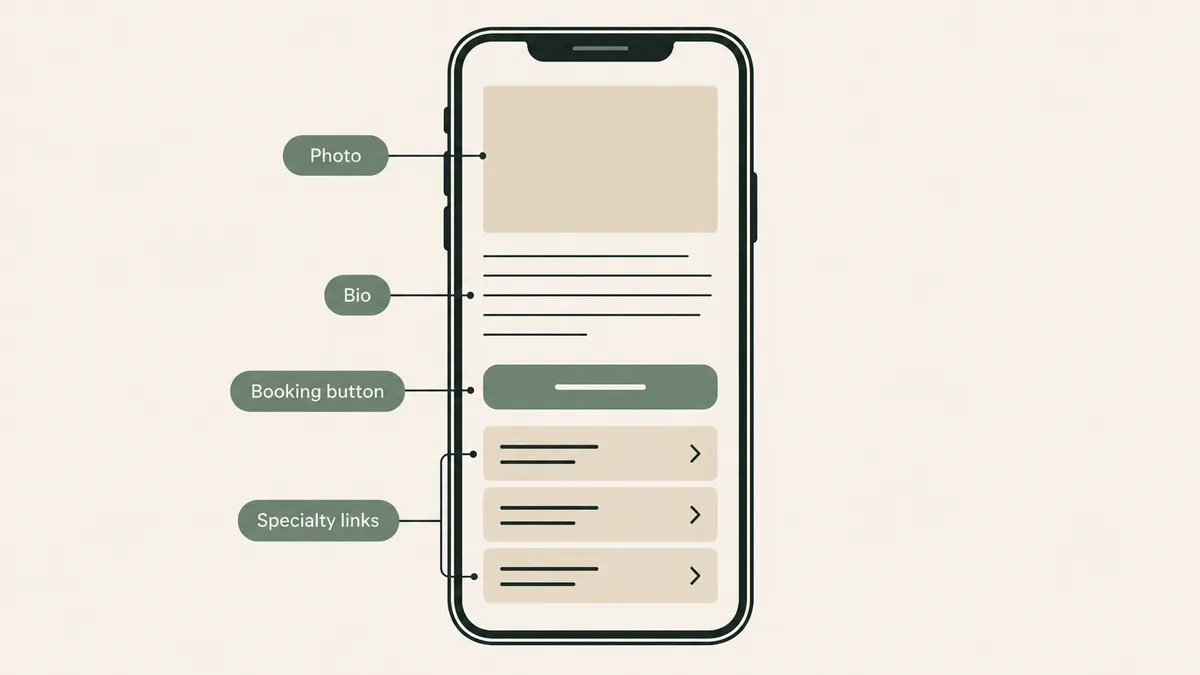
Keep these within one screen of the bio:
- A recent photo with your face clearly visible.
- A booking link or contact button directly under the last line, so part five has somewhere to go.
- Links to your specialty pages, so a reader of “I work with couples” can keep going.
Say someone reads your bio on their phone during a lunch break. They reach the last line, agree with it, and find nothing to tap. That’s a layout problem, and it’s the first thing we’d fix on a private practice website design project.
What a better bio won’t fix
A bio converts visitors. It doesn’t create them. If nobody finds the site, the best About page in your state gets read by you and your mother.
So check your analytics first. A handful of visits a month is a visibility problem, and we cover it in why your website isn’t getting traffic.
There’s a limit on our side too. We’ve built 500+ sites for therapists and coaches, and Website in a Week puts a custom site live in 7 days. What we can’t do is invent your human detail. The line about the chess-playing nephew has to be yours. A designer who writes it for you is guessing.
Questions therapists ask about writing a bio
How long should a therapist bio be?
On your own About page, we recommend 150 to 300 words. Team-grid blurbs work at 40 to 60, and directory profiles at 120 to 200.
Can I copy these therapist bio examples word for word?
Borrow the structure, not the sentences. Every detail in your bio has to be true of you, from the license line to the chess.
What should a pre-licensed therapist put in a bio?
Your exact registration or associate title, your supervisor’s name where your state requires it, and the same five parts as anyone else. Check your licensing board’s advertising rules first.
Can I use the same bio on my website and Psychology Today?
Yes, as a shorter cut. Keep who you help and what working with you is like, then trim the rest to fit the profile fields.
Pick the sample closest to your practice from the therapist bio examples above, fill in your own five parts, and read it out loud once before you publish. If the page around the bio needs work too, get a custom quote through the Website Inquiry Form. It starts with a free consultation, and we’ll tell you plainly if all you need is a better About page.