
Most reviews of the best website builder for therapists are written on signup day, when all you can see is templates and a free trial. The problems arrive around month twelve: a contact form the platform itself says you shouldn’t use for anything sensitive, a site you can’t take with you, a hosting bill several times what you paid the first year.
Here’s our pick by situation. The evidence follows.
- Tight budget, simple brochure site you’ll build yourself: Squarespace Basic, $19 a month billed annually.
- You want to own the site and grow through search: self-hosted WordPress.
- You’d rather pay monthly and have it handled: TherapySites or Brighter Vision, from $69 and $79 a month.
- Already on SimplePractice and need something live this week: its one-page Professional Website, included on every plan.
Which website builder is best for therapists?
For most solo practices, Squarespace is the best builder for a simple site you build yourself, and self-hosted WordPress is best if you want to own the site and grow through search. Therapist-specific subscriptions suit clinicians who want setup handled. No builder makes a practice HIPAA compliant; each publishes limits on health information.
Here’s how each candidate for best website builder for therapists compares on its own published pricing and terms. Prices were checked on September 30, 2026, and they change often.
| Platform | Standard price (entry plan a practice would use) | Can you export the site? | What the platform says about PHI and BAAs | Best for |
|---|---|---|---|---|
| Squarespace | Basic $19/mo billed annually ($25 monthly) | Partial: some pages and one blog | BAA covers Acuity Scheduling only. Form block can’t be part of a HIPAA-compliant solution. | A brochure site you build yourself |
| Wix | Light $17/mo, Business $39/mo, billed annually, per Wix’s blog. Varies by region; see Wix’s plans page. | No | Not HIPAA compliant by default. BAA on Business and higher plans. | DIY, if you plan to stay on Wix |
| WordPress (self-hosted) | Software free. Hosting $2.99/mo introductory, renewing at $10.99 to $17.99/mo | Yes: built-in content export | No statement from WordPress.org. Depends on host and form provider. | Owning the site and growing through search |
| WordPress.com | Premium $8/mo, Business $25/mo, billed yearly | Content yes. Theme design and plugins no. | No HIPAA statement found | WordPress without managing hosting |
| Brighter Vision | Start $79/mo, shown as reduced from $99 ($78/mo billed annually). Setup fee: see vendor. | See vendor | Terms bar HIPAA-regulated data on its services. BAA is with Hushmail, for email and forms. | Done for you, one-year term |
| TherapySites | Core $69/mo plus $199 one-time design fee | See vendor. You keep content you added. | Terms include a BAA | Done for you, month to month |
| SimplePractice Professional Website | Included on every plan. Starter $49/mo. | See vendor | BAA accepted at trial signup | SimplePractice users who need one page fast |
“See vendor” means the company’s public pages didn’t answer the question on the day we checked. Ask before you sign.
How we picked the best website builder for therapists (and where we’re biased)
Any list of the best website builder for therapists should tell you who wrote it. We build mostly on WordPress, and we sell templates on WordPress, Wix, Shopify, and Squarespace. So we’ve built on all four, and we earn money when you choose one of them with us. To keep the comparison honest, every platform claim below comes from that platform’s own published pricing and terms.
We’ve built 500+ websites for therapists and coaches, and the questions that reach us in year two aren’t about templates. Picking the best website platform for therapists comes down to four checks:
- What you own and can export.
- What the platform itself says, in writing, about forms and health information.
- How much SEO control you get.
- Annual cost at standard prices, renewal rate included.
One note on HIPAA first. A business associate agreement (BAA) is the written contract a practice needs with a vendor that handles protected health information (PHI) on its behalf, and HHS explains business associates here. Software isn’t compliant by itself. A vendor signs a BAA, and how your practice uses the tool decides the rest. This is general information, not legal advice, so confirm your setup with your own counsel or compliance resource.
Squarespace and Wix are the easiest to start and the hardest to leave
Either one can get a good-looking site live in a weekend. Both publish limits that most reviews skip.
Squarespace
Squarespace lists four plans, from Basic at $19 a month to Advanced at $99, billed annually. For a brochure site with a handful of pages, Basic is enough.
Now the limit. Squarespace’s help article on Acuity Scheduling and HIPAA says the form block can’t be used as part of a HIPAA-compliant solution, and that you shouldn’t maintain or transmit PHI through Squarespace outside of Acuity. Its BAA covers Acuity alone. Acuity is a separate subscription, and the BAA sits on the Premium tier at $49 a month billed annually.
So the $19 site comes with a contact form you should keep to logistics, or swap for a form from a provider that signs a BAA.
Leaving is partial. The export tool produces a WordPress-format file with your layout pages and one blog page with its posts. Portfolio and store pages stay behind, along with style settings and custom CSS. You’d rebuild the design on the other side.
Wix
A caveat on price first: Wix says plan prices vary by location. Its own blog lists Light at $17 a month, Core at $29, and Business at $39, billed annually. Open the Wix plans page in your own browser before you budget.
On health information, Wix is direct: it says it is not HIPAA compliant by default. Per its HIPAA help article, a BAA is available on Business, Plus, Elite, Business Elite, and Enterprise plans, and you sign it in the dashboard. That puts the entry point at Business, not Light. The same article warns that PHI protection can disable or restrict some site features, and that older Wix Forms need to be rebuilt.
Then there’s the exit, and there isn’t one. Wix’s support page on exporting says a site has to be hosted on Wix’s servers to work. Blog posts can’t be exported either. Moving means rebuilding somewhere else, page by page.
Wix is a fine place to stay. If there’s a real chance you’ll switch platforms in the next couple of years, it’s the one we’d skip.
WordPress costs less to rent and more to look after
Two different products share the name.
Self-hosted WordPress (WordPress.org)
The software is free and open source. You pay a hosting company to run it. The hosts’ own price lists tell the renewal story: SiteGround’s StartUp plan is $2.99 a month prepaid for 12 months, then renews at $17.99. Hostinger’s Premium plan is $2.99 a month on a 48-month term, then renews at $10.99. (That page showed prices before VAT, so confirm at checkout.)
What you get for that is ownership. WordPress’s built-in export tool produces a file with your posts, pages, comments, categories, tags, and users. Because the hosting account is yours, the whole site can move to another host.
On HIPAA, WordPress.org publishes no official statement, and free software has no company behind it to sign a BAA. The question moves to your host and your form provider. Hostinger’s hosting agreement says its services aren’t intended to provide a HIPAA-compliant environment. Gravity Forms, a widely used form plugin, says it won’t sign a BAA because entries are stored on your own hosting and not with Gravity Forms. On client builds, we keep the site to displaying information and run the contact form through a provider that signs a BAA.
The trade-off is upkeep. WordPress needs software updates and backups, and nobody does them for you by default. Put an hour a month on your calendar, or pay for website maintenance and updates. Our two-way comparison, WordPress vs. website builders for therapists, goes further into that choice.
WordPress.com
WordPress.com is the hosted version, sold in plans like any builder: Personal at $4 a month, Premium at $8, and Business at $25, billed yearly. Export is the same kind of content file, without your theme design or plugins.
And on HIPAA, we found nothing: no mention in the terms of service, no page offering or refusing a BAA. Treat that as unknown. It isn’t permission.

Brighter Vision and TherapySites: the therapist website builder as a subscription
These two build the site for you and bill monthly. The appeal is obvious if you’d rather spend Saturday on anything else.
Brighter Vision lists its Start plan at $79 a month (shown as reduced from $99 on the day we checked), or $78 a month billed annually. Its terms set an initial term of one year that renews automatically. The setup fee appeared differently on two Brighter Vision pages, so ask.
Those same terms say customers won’t store data regulated by the HIPAA Privacy Rules on its services. HIPAA email and forms come through Hushmail as an add-on, and Brighter Vision’s help center says the BAA is between you and Hushmail. On leaving, the terms say content you submitted is yours, while the services and the company’s own materials remain the company’s. We found no export or site-transfer provision.
TherapySites lists Core at $69 a month plus a $199 one-time design fee, and its FAQ says billing is month to month. The terms incorporate a BAA. Secure emails and forms are an add-on starting at $15 a month, and the public pages don’t say whether base-plan forms may carry PHI without it.
Its FAQ is plain about leaving: you keep your content, but you can’t keep using content TherapySites provided. If TherapySites bought your domain, it owns the domain and will transfer it to you for a small fee. The terms add that data can be deleted on termination.
So the honest trade-off: a subscription site is easy, and you may not be able to take it with you. Say you’ve been on one for three years and want to move. Your bio is yours. Content the company supplied may not be.
Before signing with either, ask two things in writing: what exactly leaves with you if you cancel, and which forms on your plan are covered by a BAA.
Whichever you choose, register your domain yourself, in your own name.
The one-page SimplePractice site, and why Shopify and Webflow rarely fit
SimplePractice’s Professional Website FAQ says the site is available at no extra cost on all subscription plans (Starter is $49 a month) and uses a single-page layout. Pages can’t be added. You can connect one custom domain, which stays registered with an outside provider, and you can edit the page title and meta description. Embedded links aren’t supported at this time.
You agree to SimplePractice’s BAA when you open a trial account, and the Contact section can show Client Portal and Request Appointment buttons.
That’s a fair deal for a practice that needs a professional page by Friday. One page gives Google one page to rank, though. Use it as a starting point.
Shopify and Webflow
Shopify’s acceptable use policy says uploading PHI isn’t supported on its platform. Webflow’s policy tells customers not to use the service to collect or process PHI. Shopify is a store, and it fits a clinician selling workbooks or courses next to the practice. Webflow is a designer’s tool.
For a practice site with an inquiry form, we’d look elsewhere.
Ownership and export: what you keep if you leave
Going only on what each company publishes, the order is clear. Self-hosted WordPress exports the most, then WordPress.com, then Squarespace, then Wix with nothing. Brighter Vision, TherapySites, and SimplePractice don’t say on their public pages, which is a reason to ask.
Cancellation differs too. Cancel Squarespace and visitors see a “Website expired” message, though you can still log in and reactivate. A cancelled Wix plan leaves the site viewable, but on a free Wix address with Wix ads.
The piece that matters most is the domain. Squarespace and Wix both advertise a free domain for the first year. A domain registered in your own name moves with you to any platform, and it’s the core of what we mean by own your online presence. Content can be rebuilt. The address people already have for you can’t.
Renewal pricing and the real cost of year two
Every figure below is our arithmetic: the listed monthly price times 12, plus listed one-time fees, before tax.
| Platform and plan | 12 months at list price | What that number leaves out |
|---|---|---|
| Squarespace Basic | $228 | Domain after year one. Acuity Premium for a BAA adds $588. |
| Wix Business (per Wix’s blog) | $468 | Domain after year one. Regional pricing varies. |
| WordPress on SiteGround StartUp | $35.88 in year one, $215.88 in a renewal year | Domain, any paid theme or plugins, and your time |
| Brighter Vision Start | $948 on monthly billing, $936 billed annually | Setup fee and the Hushmail add-on: see vendor |
| TherapySites Core | $1,027 in year one ($828 plus the $199 fee) | Secure emails and forms, from $15 a month |
| SimplePractice Starter | $588 | Nothing for the site. This is the practice-management subscription. |
| Psychology Today listing | $359.40 | Nothing to take with you |
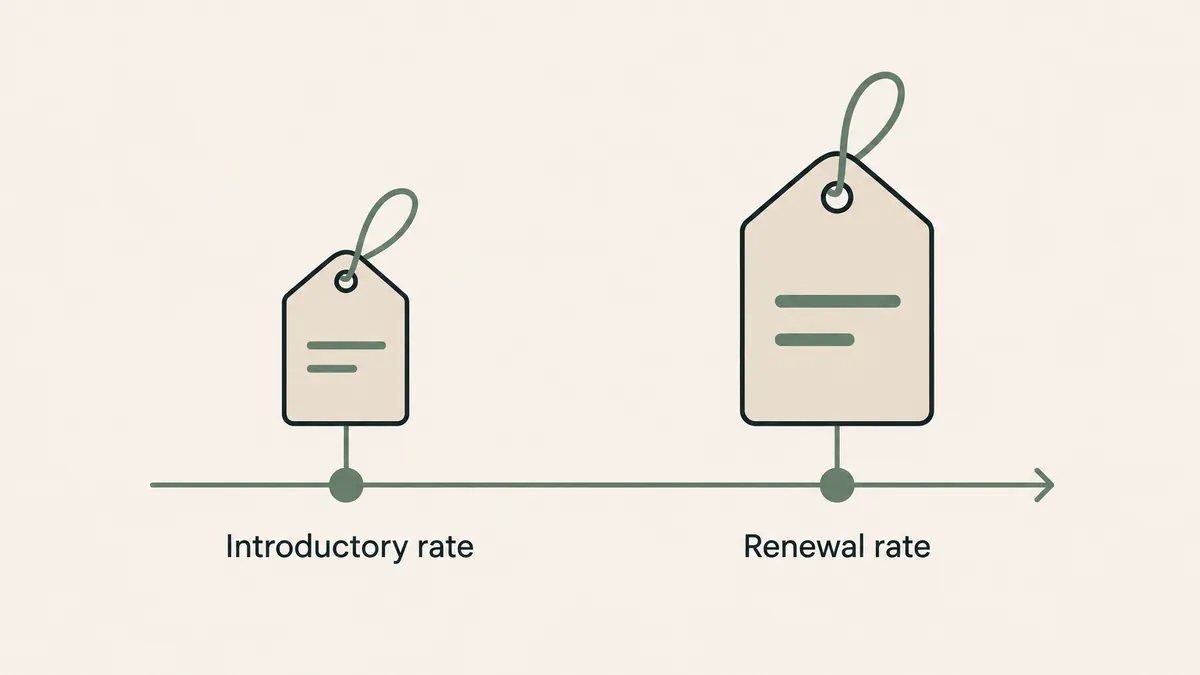
Builders list a price, and hosts list two: an introductory rate and a renewal rate. So the best website builder for therapists on a budget isn’t automatically the one with the smallest sticker.
Say you launch on SiteGround in October for $35.88. Twelve months later the same plan renews at $215.88. That’s still less than a year of Squarespace Basic, but it’s six times what you paid, and it lands as a surprise if nobody told you.
Psychology Today is in the table as a reference point, at $29.95 a month with no contract. A directory can be one useful channel. But a listing is rented visibility that ends the month you stop paying, and twelve months of Squarespace Basic costs less than twelve months of the listing. We compare the two models in website vs. therapy directories.

Forms and booking are where every builder draws a line
A brochure website that only displays information doesn’t store PHI. The question starts the moment a form or booking tool collects something from a client.
Say a prospective client fills out your contact form at 11 p.m. and writes three sentences about why they’re looking for a therapist. Where that message is stored, and whether that vendor has a BAA with you, was decided by a platform choice you made months earlier.
We treat that message as something to protect. That’s our cautious reading and not a line from HHS, which publishes no sentence saying a website inquiry is PHI.
Our rule on any platform: the website displays, and a BAA-covered tool collects. This is the part of choosing the best website builder for therapists that most roundups skip. We go platform by platform in what “HIPAA compliant website builder” really means, and we compare the form tools in HIPAA form builders reviewed.
SEO controls worth checking before you commit
Most roundups score “SEO tools” with a checkmark. Four controls decide whether you can do real search work later: page titles and descriptions, URL slugs, 301 redirects, and header code.
Squarespace lets you edit the SEO title and description on each page, plus the URL slug, and handles 301 and 302 redirects through URL mappings. Code injection needs the Core plan or higher.
Wix gives you the title tag, meta description, and slug per page, plus custom structured data. Its 301 redirects only work with a custom domain, and custom code needs a published site with a connected domain.
Self-hosted WordPress lets you set the URL structure and edit each page’s slug in the core software. Titles, descriptions, and schema usually come from a plugin. Yoast SEO’s free version covers all three, per its WordPress.org listing, and the free Redirection plugin handles 301s.
Neither Brighter Vision nor TherapySites publishes what clients can edit themselves. Brighter Vision says it performs a manual SEO audit when you join, and TherapySites sells SEO by plan tier. Ask either one whether you can change a title or add a redirect without opening a ticket.
Redirects matter most. Say you rename “Services” to “Anxiety Therapy in Columbus” in year two. Without a 301 from the old URL, every link pointing at the old page hits a dead end.
When a website builder for therapists is the wrong tool
Sometimes the best website builder for therapists is no builder. That’s the case when the site has to do more than describe you: a group practice with clinician profiles and several locations, say, or a plan to rank for many specialties when you have no hours to give it. Custom therapist sites typically run $3,000 to $15,000. There’s a middle path. Website in a Week is a custom site live in 7 days, quote-based, and larger builds fall under our website design for therapists service. We build these mostly on WordPress, which is our bias showing again: you’d own the site, and you’d need a plan for upkeep. Before deciding, look through a few therapist website examples from real practices.
Questions therapists ask about website builders
What is the best website template for therapists?
The best template is one built for the platform you’ve already chosen and organized around a practice: separate pages for specialties, fees, about, and contact. We sell therapist website templates for WordPress, Wix, Shopify, and Squarespace, delivered within 2 business days. A template changes the design. It doesn’t change the platform’s export or BAA terms.
Is Squarespace or Wix the best website builder for therapists?
Squarespace, if you want a simple brochure site and the option to leave with some of your content later. Wix, if you want a BAA on the website platform itself (Business plan and up) and you accept that a Wix site can’t be exported.
Do I need a BAA for my therapy website?
A site that only displays information doesn’t store PHI. The BAA question applies to tools that collect client information, such as forms and booking. Use providers that sign a BAA for those, and confirm the setup with your own counsel.
Can I move my site from Squarespace or Wix to WordPress later?
From Squarespace, partly: its export file carries layout pages, one blog, and text and image blocks into WordPress. From Wix, no. Wix says sites can’t be exported, so you’d rebuild.
How much does a therapist website builder cost per year?
In our cost table, builder subscriptions run from $228 a year for Squarespace Basic to $1,027 for the first year of TherapySites Core. Each figure is the monthly price times 12, plus listed one-time fees.
The best website builder for therapists is the one whose month-twelve terms you read before month one. Our pick for most practices that plan to grow through search is still WordPress, and you know why we’d say that. If you’d like a second opinion on your own situation, get a custom quote through the Website Inquiry Form. The consultation is free, and if a $19 builder is all your practice needs right now, that’s a fine answer.