Search for the best EHR for therapists and check who wrote page one. Several of those roundups are published by EHR companies or insurance platforms, and the ones we read put their own product first. We build websites for therapists, and we don’t sell an EHR, so nothing on this list is ours.
There’s no single best EHR. The right one depends on how you practice, so here’s where we’d start, based on each vendor’s published plans:
- Solo and private-pay: Sessions Health
- Solo and billing insurance: TherapyNotes or TherapyAppointment
- Part-time or just starting out: Sessions Health’s free tier (up to 3 clients) or TherapyAppointment’s $10 tier
- Group practice: TherapyNotes, or SimplePractice Plus
- A prescriber on the team: any system with a published e-prescribing add-on, or ICANotes’ Prescribing plan
- Clients book from your own website: TheraPlatform, PracticeQ, or SimplePractice Plus
How we compared these EHRs, and what we didn’t do
To find the best EHR for therapists in each situation, we compared four things: the published price for one clinician, what’s included versus sold as an add-on, how insurance billing is priced, and how the system connects to your own website.
Every figure comes from the vendor’s own pricing page, help center, or documentation, read on September 30, 2026. Prices are standard list prices. Several vendors were running introductory discounts that day, and we ignored them. EHR prices change often, so confirm on the vendor’s page before you sign up.
What we didn’t do is hands-on testing. We haven’t run a caseload through any of these systems, so you won’t find opinions here about how the note editor feels or how fast support answers. Where a vendor’s pages didn’t state something, the table says “see vendor.”
One thing we do know firsthand. We’ve built 500+ websites for therapists and coaches, and on most of them the “Book” button hands off to an EHR. None of the roundups we read covered what that handoff looks like.
What is the best EHR system for therapists?
There is no single best EHR system for therapists. Sessions Health fits solo private-pay practices. TherapyNotes and TherapyAppointment fit solo clinicians who bill insurance. For groups, shortlist TherapyNotes and SimplePractice Plus. TheraPlatform, PracticeQ, and SimplePractice Plus fit practices that want booking embedded on their own website. Subscription price alone shouldn’t decide it.
Our picks for the best EHR for therapists rest on published plans, so they’ll shift as vendors reprice. SimplePractice’s claim fees changed on October 1, 2026 (covered below).
Best EHR for therapists: ten systems compared in one table
Solo prices below are monthly list prices for one clinician. Each vendor name links to the page we read.
| EHR | Solo price (standard list) | Telehealth | Website connection | Free trial |
|---|---|---|---|---|
| SimplePractice | $49 Starter, $79 Essential, $99 Plus | Included on all plans | Embed widget (Plus only), portal link, built-in one-page site | 30 days |
| TherapyNotes | $69 Solo | Basic Telehealth included; Premium $15 per clinician | Portal link | 30 days |
| Jane | $54 Balance (max 20 appointments a month), $79 Practice | 1:1 telehealth included on all plans | Book Online buttons or plain link; Jane Websites add-on $59 per clinic | None (demo account) |
| Sessions Health | $0 up to 3 clients, $39 Professional | $10 add-on per practitioner | Portal link | 30 days, no card |
| TheraNest | $29 Essentials, $59 Advanced, $89 Premier | $12 add-on on Essentials; included from Advanced | Portal link | 21 days |
| TherapyAppointment | $10, $39, or $59 by sessions booked | Add-on: $15 integrated telehealth, or $5 Zoom integration with your own Zoom license | Portal link | 30 days |
| TheraPlatform | $39 Basic | Included on all plans | Website widget, client portal | 30 days, no card |
| Practice Better | $35 Starter (10 clients), $69 Professional, $99 Plus | Included on all plans | Embed widget (plan: see vendor), booking links, hosted bookings page | 14 days |
| IntakeQ / PracticeQ | $59.90 Starter, $84.90 Pro | Included on practice management plans | Embed widget, link button, or hosted booking site | 14 days, no card |
| Zanda | $19 Starter | Free option included; Telehealth Pro $9 | Booking URL and Book button (embed or link: see vendor) | 14 days, no card |
A few notes the cells can’t hold:
- TherapyAppointment charges $10 a month until you book more than 10 sessions, $39 until you pass 39, and $59 from 40 sessions up. Its pricing page says tiers don’t drop back down.
- TheraNest (by Ensora Health) puts telehealth in Advanced on its pricing page, while another page on the vendor’s site describes it differently. Confirm the tier during your trial.
- IntakeQ is the forms product; PracticeQ is the same company’s practice management platform. The intakeq.com pricing page describes the $59.90 practice management plan as low volume: 25 appointments and 25 form submissions per 30 days per practitioner.
The best EHR for private practice depends on your practice type
The best EHR for private practice changes with how you bill and how many of you there are.
Solo and private-pay: Sessions Health
If you don’t bill insurance, you’re buying scheduling, notes, a client portal, and card payments. Claim fees are irrelevant.
Sessions Health’s Professional plan lists at $39 a month for the first practitioner with unlimited clients. The client portal, with secure messaging, intake forms, and e-signatures, comes with every plan. Telehealth is a $10 monthly add-on.
SimplePractice Starter lists at $49 with telehealth included, so the two land close. The difference is what Starter holds back. Secure messaging sits on Essential ($79) and Plus ($99), and Starter’s note templates are limited to intake.
Coral EHR deserves a look as well. It describes itself as built for out-of-network, private-pay practices, starts at $29 a month, includes video on every plan, and doesn’t file insurance claims. That last point cuts both ways: join a panel next year and you’d be moving systems. Our solo-practice EHR guide goes deeper.
Solo and billing insurance: TherapyNotes or TherapyAppointment
Most comparisons lead with the subscription price. If you bill insurance, read the per-claim fee first.
TherapyNotes Solo is $69 a month, with a published fee of 14 cents per electronic claim, 14 cents per claim for ERAs, and 14 cents per real-time eligibility request. TherapyAppointment charges $0.15 per claim and says ERA processing and posting are free for every customer. At 40 or more sessions, its solo plan is $59.
SimplePractice repriced claims this fall. Its help center says that beginning October 1, 2026, insurance claims cost $0.39 each on all plans for the first 250 claims a month, with lower rates above that volume. Through September 30 the rate varied by plan, so older comparisons will show different numbers.
Say you file a claim for nearly every session. That fee recurs every week you keep the system, and it never shows up in the headline price. We compare the two best-known options in SimplePractice vs TherapyNotes.
Part-time or just starting: a free or usage-based tier
Sessions Health’s free tier covers up to 3 clients. TherapyAppointment’s solo plan is $0 for the first 30 days, then $10 a month at its lowest tier.
Watch the caps. Say you see six clients on Thursday evenings while you keep an agency job. That’s roughly 24 appointments a month, already past the 20-appointment limit on Jane’s $54 Balance plan. Practice Better’s $35 Starter caps you at 10 clients. Zanda’s $19 Starter allows one practitioner up to 1,000 appointments a month.
Group practice: TherapyNotes or SimplePractice Plus
TherapyNotes publishes a plain group price: $79 a month for the first clinician and $50 for each additional one, with unlimited non-clinical users. Add the 14-cent claim fee and it suits an insurance-heavy group.
Say you hire two associates next spring. On SimplePractice that means Plus ($99), the only plan that allows additional clinicians. SimplePractice lists $74 a month per clinician for practices of 2 to 5, and billers, schedulers, and supervisors come at no additional cost. Plus is also the plan with the website widget.
Lower per-clinician prices exist. Zanda’s Growth plan is $49 plus $19 per additional practitioner, and Sessions Health adds practitioners at $29 each.
One limit on our side: for most of these vendors we couldn’t verify supervision tools or payroll reports from public pages. Put both first on your trial checklist. Our guide to EHRs for group practices goes further.
A prescriber on the team: look for a published e-prescribing price
Six of the ten publish one:
- SimplePractice: $49 a month per clinician, plus a one-time $89 setup fee
- TherapyNotes: $65 a month per prescriber
- TheraNest (eRx with PDMP): $45 a month per therapist, plus $135 one-time setup
- TherapyAppointment: $65 a month per prescriber, with a $110 setup fee
- PracticeQ: $65 a month
- Practice Better: $49 a month and a $99 one-time onboarding fee
For a psychiatry-led practice, ICANotes sells a dedicated Prescribing plan at $213 a month full-time, plus a $99 activation fee and a three-month minimum commitment.
On the pages we read for Jane, Sessions Health, Zanda, and TheraPlatform, we found no published e-prescribing statement. That’s not a no. Ask before you start a trial.
Clients book from your own website: TheraPlatform, PracticeQ, or SimplePractice Plus
TheraPlatform’s pricing table shows its website widget on all plans, starting at $39. PracticeQ includes a booking widget in its practice management plans. SimplePractice offers its appointment request widget on Plus only.
Don’t buy SimplePractice Starter expecting the widget. On Starter and Essential you can still take online appointment requests, through a link to the Client Portal.
What the best EHR for mental health private practice costs once fees are added
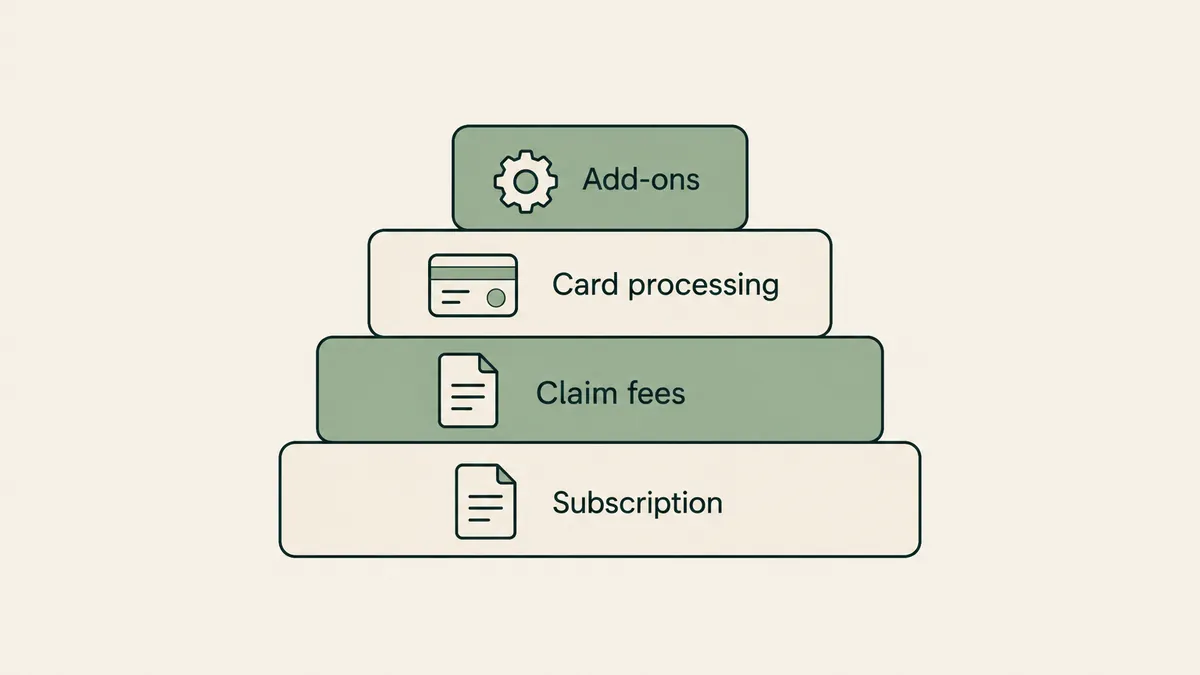
The subscription is one of three costs. Claim fees and card processing are the other two, and they scale with your caseload.
| EHR | Per electronic claim | Card processing |
|---|---|---|
| SimplePractice | $0.39 for the first 250 claims a month (from October 1, 2026) | 3.15% + $0.30 |
| TherapyNotes | $0.14; ERA $0.14 per claim | 3.1% + $0.30 |
| Jane | $20 a month insurance add-on; separate Claim.MD account required (fees: see vendor) | 2.85% + $0.25 online |
| Sessions Health | From $0.25 | 2.9% + $0.30 (Stripe) |
| TheraNest | Advanced: 50 free a month, then $0.23. Premier: unlimited | 2.99% + $0.30 |
| TherapyAppointment | $0.15; ERA free | 2.9% + $0.30 |
| TheraPlatform | $0.25 | See vendor |
| Practice Better | Through a separate Claim.MD account (fees: see vendor) | See vendor |
| IntakeQ / PracticeQ | See vendor | 2.9% + $0.30, plus $7.50 a month |
| Zanda | $0.15, plus a $50 enrollment fee | See vendor |
Then come the add-ons. AI note tools are the common one: $35 a month per clinician at SimplePractice and Sessions Health, $40 at TherapyNotes, and $0.59 per note at TherapyAppointment. TherapyNotes also bills 14 cents per text or voice reminder (email reminders are free).
Say you priced a system on a Sunday night from the number at the top of its pricing page. Add telehealth, AI notes, claims, and card fees, and the invoice you pay in month three won’t match it. The best EHR for mental health work is the one whose full invoice you’ve priced, add-ons included.
How your EHR connects to your website decides what clients see when they click “Book”
Roundups of the best EHR for therapists skip this part. We’d weigh it more heavily than AI note features.
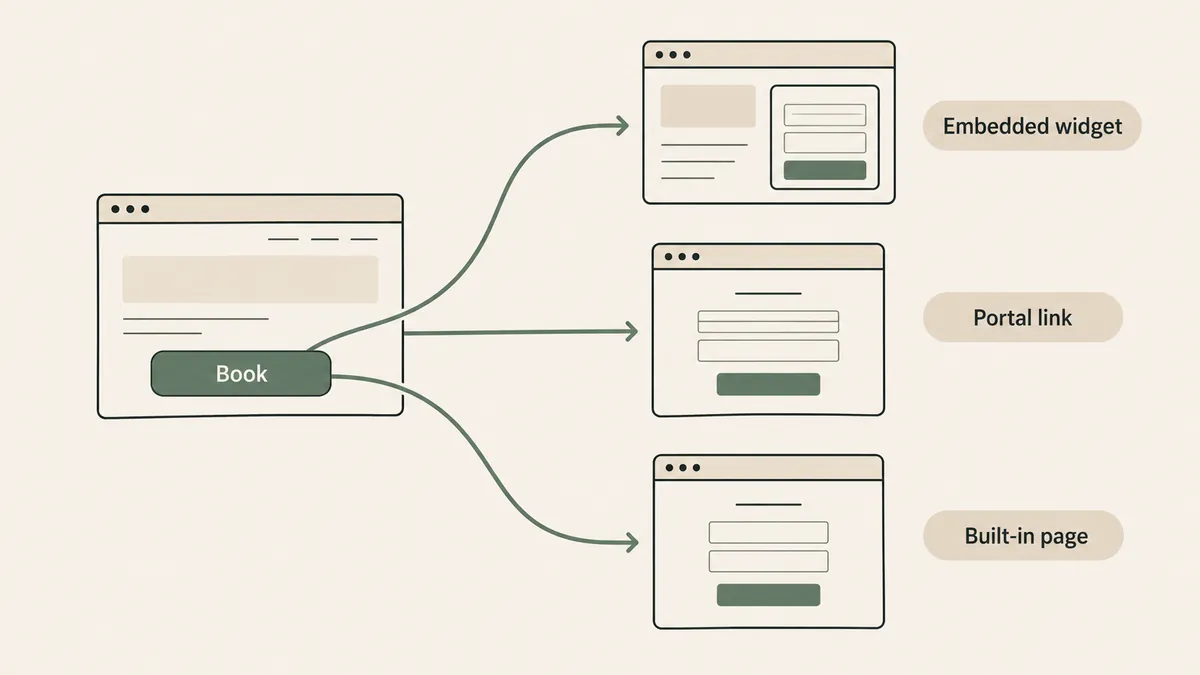
A therapy EHR connects to your website in one of three ways.
| Connection | What happens at the click | Who documents it |
|---|---|---|
| Embedded widget | Booking or an appointment request opens on your own page | SimplePractice (Plus), TheraPlatform, PracticeQ, Practice Better |
| Button or link to a hosted page | The visitor goes to a page on the vendor’s domain | TherapyNotes, Sessions Health, TheraNest, TherapyAppointment, Jane |
| Built-in page | The EHR hosts the page itself | SimplePractice Professional Website (all plans), Jane Websites ($59 add-on) |
Zanda offers a booking URL and a Book button; its feature page doesn’t say whether the button embeds or links out.
Say a prospective client reads your anxiety therapy page on their phone at 11 p.m. and taps Book. With an embedded widget, the request starts on the page they’re already reading. PracticeQ’s documentation describes clients scheduling without leaving your website, and TheraPlatform describes scheduling right on your site.
With a portal link, that same tap sends them somewhere else. TherapyNotes documents a portal link: a code snippet that adds a link to your client portal, which lives on TherapyPortal.com. Sessions Health has you copy your portal URL and add /request to send new clients straight to the booking page. Jane provides Book Online button codes, or a plain link for site builders that don’t accept HTML.
Our view as designers: the fewer changes of scenery between “this might be my therapist” and “request sent,” the better. We won’t dress that up with a conversion statistic, because we don’t have one we trust.
A portal link is still a workable setup, and plenty of practices use one. Label the button clearly and tell people they’re about to land on your secure client portal, so the change of address doesn’t surprise them.
The built-in page is a different decision. SimplePractice includes its Professional Website on all plans at no additional cost, on your own custom domain if you want. It’s one page, and SimplePractice says more pages can’t be added at this time. That leaves no room for a page per specialty, a fees page, or a blog. It works as a placeholder. If you plan to own your online presence, you’ll outgrow it.
Widgets have limits too. SimplePractice notes that on Wix its widget won’t display as a full-screen modal. If you’re on WordPress, our walkthrough of SimplePractice and WordPress integration covers placement.
Choosing the website and the EHR in the same month makes this easier. When we build a custom site in 7 days, the booking step is planned around the system you’ve picked, widget or link. The same goes for longer private practice website design projects.
Where Headway and Alma fit
Headway and Alma come up whenever therapists compare EHRs, and Headway’s own roundup of the best EHR for therapists sits on page one. They’re a different kind of product: insurance billing and credentialing platforms with practice tools built in.
Headway credentials you with insurers, bills them, and pays you. It charges clinicians no membership or subscription fee, and says a small amount of the rates it negotiates with insurers keeps the platform free. For private-pay sessions run through Headway, its help center says payouts account for 2.95% of your session rate, with no fee when the client pays by bank account. Headway describes its built-in notes, telehealth, and scheduling as an all-in-one EHR.
Alma is a membership. As of September 30, 2026, the annual membership is listed at $1,140, discounted to $600 for the first year. Alma handles payer relationships and claims, includes EHR tools such as notes, telehealth, and treatment planning, and says income from your cash-pay clients stays with you.
On the pages we read, neither one states that it replaces a standalone EHR subscription. We also couldn’t verify either platform’s BAA terms, data export, or website booking options. Ask about all three before you run a whole practice inside one.
What to check before you sign
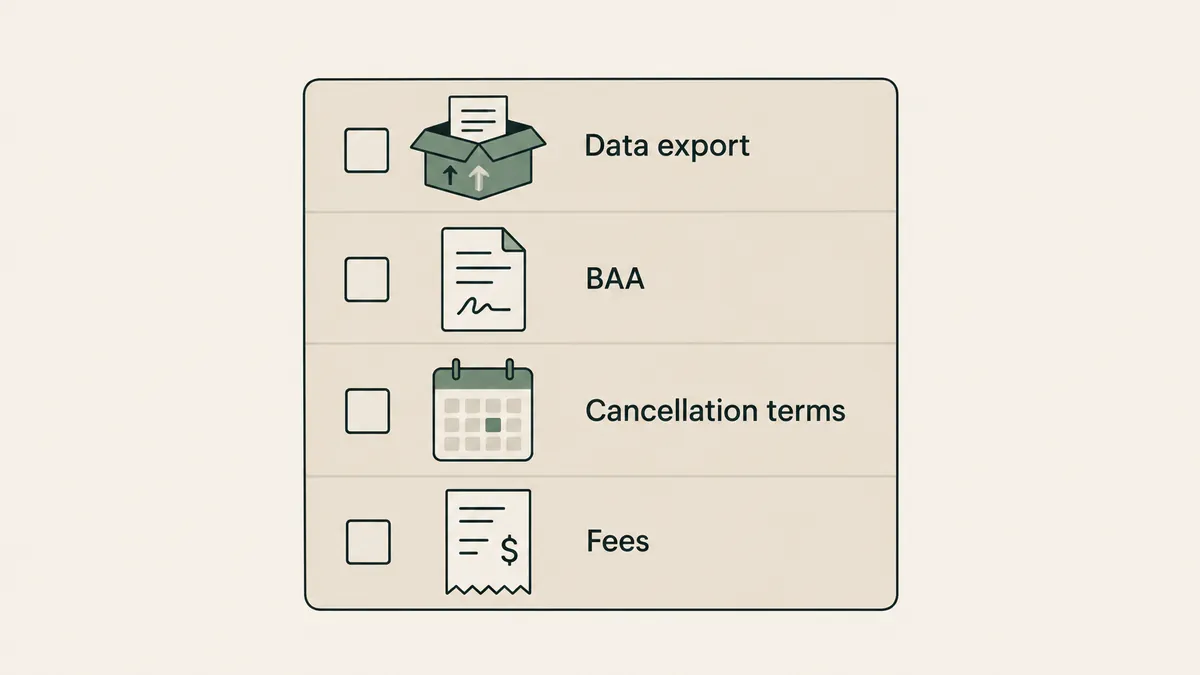
Four things: the export, the BAA, the cancellation terms, and the claim, card, and add-on fees in the table above.
Data export when you leave
Most people spend a free trial testing note templates. Spend one day of it testing the export. Say you cancel in December and a records request arrives in March: what you exported is what you have.
What the vendors publish:
- SimplePractice recommends exporting before you cancel and says data in a deleted account can’t be recovered. Its standard export covers client information only. Reports and payment data are separate exports.
- TherapyNotes and Zanda both tell you to export before you leave, and each sells a storage option: $9 a month for the first user at TherapyNotes, $10 a month at Zanda.
- Jane says your data belongs to you and that it will help you export it in a portable format. After you cancel you lose day-to-day access, though Jane says the data stays on its servers.
- Sessions Health, TherapyAppointment, Practice Better, and PracticeQ all document self-service exports in CSV, spreadsheet, or PDF formats.
For TheraNest and TheraPlatform, we didn’t find a published statement on exporting when you leave. Ask, and get the answer in writing.
The business associate agreement
Your EHR holds protected health information, so you need a BAA with the vendor. HHS explains that a covered entity may disclose PHI to a business associate once it has satisfactory assurances, in a contract or other written arrangement, that the information will be safeguarded.
How you get one varies. SimplePractice and Sessions Health have you agree to the BAA when you create the account. TherapyNotes has you download, sign, and upload it. TheraNest’s is signed inside the product, and Zanda folds its BAA into its data processing agreement. TheraPlatform says it provides and signs one. Jane says it can work with you to develop one.
Practice Better’s pricing page cites HIPAA compliance, but its help article on obtaining a BAA didn’t load when we checked. Ask for the agreement before you add client records.
No software is “HIPAA compliant” by itself. The vendor offers a BAA and safeguards, and your use has to be compliant too. This is general information, not legal advice, so confirm the details with your own counsel or compliance resource.
Cancellation terms
SimplePractice says it doesn’t offer refunds, and that cancellation takes effect immediately without prorating unused time. ICANotes has a three-month minimum. Jane, TherapyAppointment, Sessions Health, Practice Better, PracticeQ, and TheraPlatform all say there’s no long-term contract.
Starting on the lowest-priced plan and switching later has a cost
“Start on the lowest-priced option and move when you grow” sounds sensible. Count what moving involves first.
Your records leave the old system as CSV files and PDFs, which don’t rebuild working charts in the new one. Clients get a new portal address and a new login. Every booking button, link, and widget on your website has to be replaced, along with the link in your Psychology Today profile and your email signature.
So if you expect to join insurance panels or hire within a year or two, choose for that practice now. Paying $20 or $30 more a month can cost less than a migration. If switching is already on your mind, we grouped the options by reason for leaving in SimplePractice alternatives.
Our own limit belongs here too. A guide to the best EHR for therapists built from published pages can’t tell you which system has the kindest support team or the fastest note editor. Ask two colleagues who’ve used your shortlisted system for a year. And a well-designed website won’t fix a clumsy booking flow that lives inside the EHR. We design the page and the button. What happens after the click belongs to the vendor.
Questions therapists ask about choosing an EHR
Is there a free EHR for therapists?
Yes, with limits. Sessions Health has a free tier for up to 3 clients, and Carepatron lists a free plan. Headway charges clinicians no subscription fee, but it’s an insurance platform, so it fits clinicians who take insurance through it.
How much does a therapist EHR cost per month?
For one clinician, list prices in our table run from $0 to $99 a month as of September 30, 2026. That’s before per-claim fees, card processing, and add-ons such as telehealth or AI notes.
Which EHR has a booking widget I can embed on my website?
SimplePractice (Plus plan only), TheraPlatform, PracticeQ, and Practice Better all document an embeddable widget. TherapyNotes, Sessions Health, TheraNest, and TherapyAppointment document a link to a hosted client portal.
Does SimplePractice include a website?
It includes a one-page Professional Website on all plans at no additional cost, and you can use a custom domain. SimplePractice says additional pages can’t be added at this time, so there’s no room for separate specialty pages.
Do I still need an EHR if I join Headway or Alma?
Both include notes and telehealth tools. Neither states on the pages we read that it replaces a standalone EHR. Before relying on one alone, ask about the BAA, how you’d export your records, and how clients would book from your own website.
The best EHR for therapists is the one that matches how you bill, how many clinicians you have, and how clients reach you from your website. Shortlist two, run both trials, and test the export first. If you’d like the booking step on your site designed around the system you choose, get a custom quote through the Website Inquiry Form. The consultation is free.