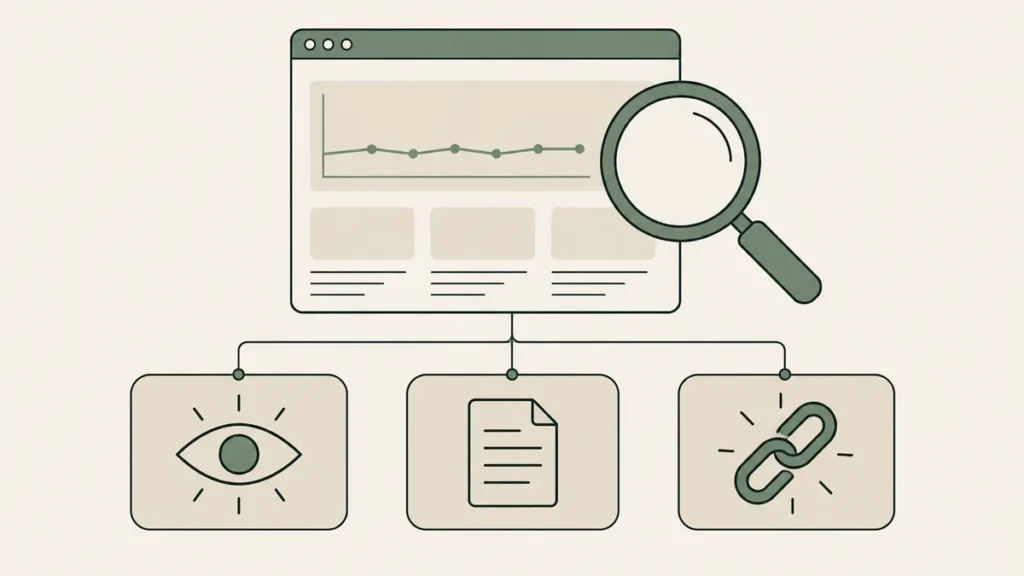
Your website has been live for months. It looks the part, you’d happily send a client to it, and according to your analytics, almost nobody has ever seen it.
Here’s the short answer. When a website is not getting traffic, the cause is nearly always one of three leaks: Google can’t see your site, your pages speak the wrong language, or nothing on the web vouches for you yet. Every fix below starts with knowing which leak is yours.
| The leak | The tell | The 5-minute check |
|---|---|---|
| Visibility — Google can’t see you | site:yourdomain.com returns zero or a handful of pages | Run the site: search, then open Search Console |
| Language — wrong words on the page | You rank for your own name and nothing else | Search Console → Performance → Queries |
| Trust — no one vouches for you | Directories outrank your homepage for your own name | Google your practice name in a private window |
How Much Traffic Does a Therapy Website Actually Need?
Before the diagnosis, a reframe. Most traffic advice is written for online stores that need thousands of visitors to survive. You don’t. A full caseload is somewhere between 20 and 30 weekly clients, which means a handful of consultation calls a month is often all it takes to keep a schedule healthy.
That math changes the goal. A few hundred of the right visitors beats ten thousand of the wrong ones, so everything below is aimed at getting found by people already searching for what you do.
Zero is still zero, though. If nobody’s arriving at all, one of the three leaks is open. Start here.
Why Is My Website Not Showing Up on Google?
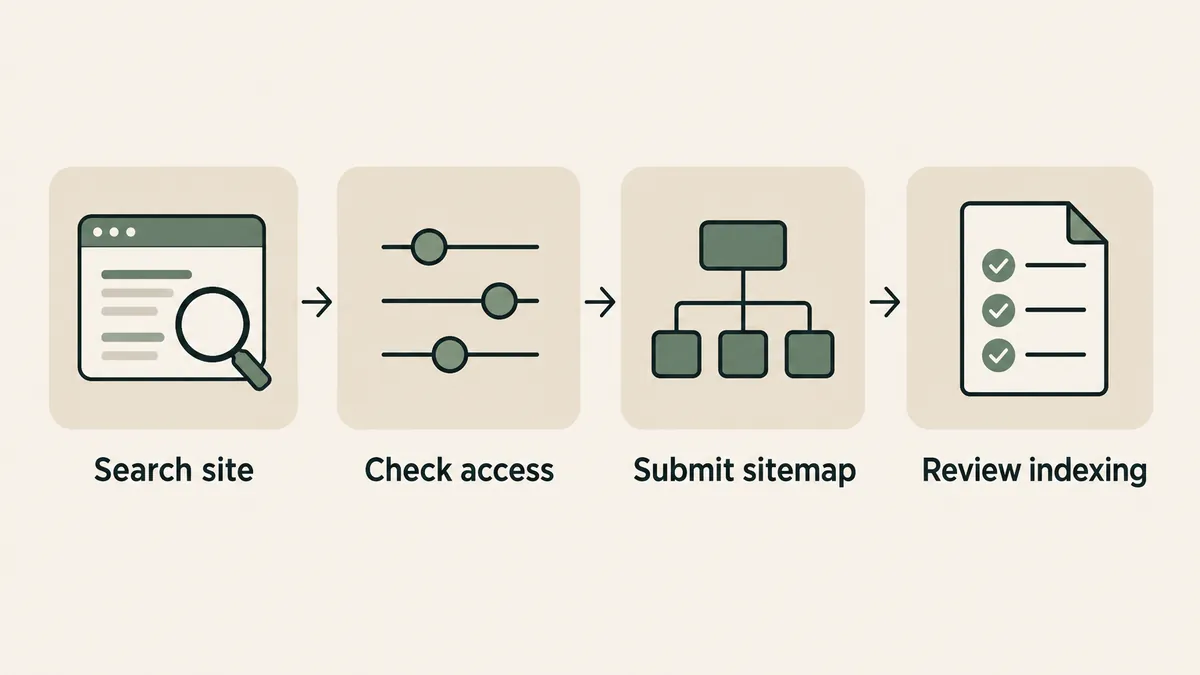
If your website doesn’t show up on Google at all, Google either hasn’t found it or has been told to ignore it. Search site:yourdomain.com. Zero results points to a noindex setting, a blocked robots.txt file, or a site Google never discovered. Google Search Console will tell you which, for free.
This is the most common leak we find in therapist site audits, and it’s usually an accident. Squarespace and Wix both have a single checkbox that hides your entire site from search engines. It gets switched on so the half-built site stays private, and nobody remembers to switch it off at launch.
So check, in order:
- Run the site: search. Type
site:yourdomain.cominto Google to see every page Google has indexed. - Verify your site in Google Search Console. It’s free, it’s Google telling you directly what it sees, and no, it won’t overwhelm you. Two reports matter: Pages and Performance.
- Submit your sitemap under Indexing → Sitemaps. It’s usually yourdomain.com/sitemap.xml.
- Read the verdicts. “Discovered – currently not indexed” means Google knows the page exists and hasn’t bothered with it yet. That’s usually a content problem, not a technical one — which brings us to the second leak.
One more thing while you’re in there: brand-new domains sit through a getting-to-know-you period. If your site launched six weeks ago, some patience is part of the prescription.
You’re Writing in Clinician. Your Clients Search in Plain English.
Open your site and read your page titles. If they say “Individual Sessions,” “My Approach,” and “Modalities,” you’ve found the second leak.
Say you’re an EMDR-trained therapist in Columbus. Your ideal client isn’t searching “somatic integration intensives.” She’s on her phone at 11 p.m. typing “trauma therapist columbus” or “why do I panic when nothing is wrong.” If those words never appear on your pages, Google has no way to connect her search to your site. You’re fluent in clinical language; your future clients aren’t. The gap between those two vocabularies is where traffic dies.
The fix is structural, not sneaky:
- One page per specialty. Anxiety therapy, couples counseling, EMDR — each earns its own page written in the words clients use, not an accordion row on a lone Services page. Five real pages give Google five chances to match a search.
- Titles that answer searches. “Anxiety Therapy in Columbus, OH” will outperform “Services” every single time.
- Answer the questions clients ask in a first session. They typed those same questions into Google the week before. Each one can anchor its own page or post.
This is the layer where SEO for therapists earns its keep. Keyword research is really just listening to how clients describe their problem, then using their words on your pages.
When Psychology Today Outranks Your Own Name
Try this: open a private browser window and Google your exact practice name.
If your Psychology Today profile appears above your own homepage, you’ve met the third leak. Google trusts the directory more than it trusts your site, because thousands of sites link to Psychology Today and, for now, almost nothing links to yours. Authority is search’s vouching system, and every new practice site starts with zero vouchers.
To be fair: directories are a workable referral channel, and we don’t tell clients to cancel them the day a new site launches. The problem is structural. A profile is rented visibility — the directory controls how you appear, who shows up beside you, and what next year’s fee is. Your website is the only channel you own outright. We’ve broken this down fully in website vs. therapy directories.
Trust builds slower than a checkbox flips, but it isn’t complicated:
- Claim your Google Business Profile if you see clients at a physical office. Map results sit above everything else for “therapist near me” searches, and they’re the core of local SEO for therapists.
- Get listed consistently. Identical practice name, address, and phone on your state association directory, insurance panels, and alumni resource lists.
- Earn a few real links — a colleague’s resources page, a local wellness roundup, a quote in a journalist’s piece. Three honest links beat 300 from a $99 package. Honestly, skip those packages entirely; cleaning up cheap links costs more than the links did.
The Three-Second Tax (Speed, Mobile, and the Quiet Killers)
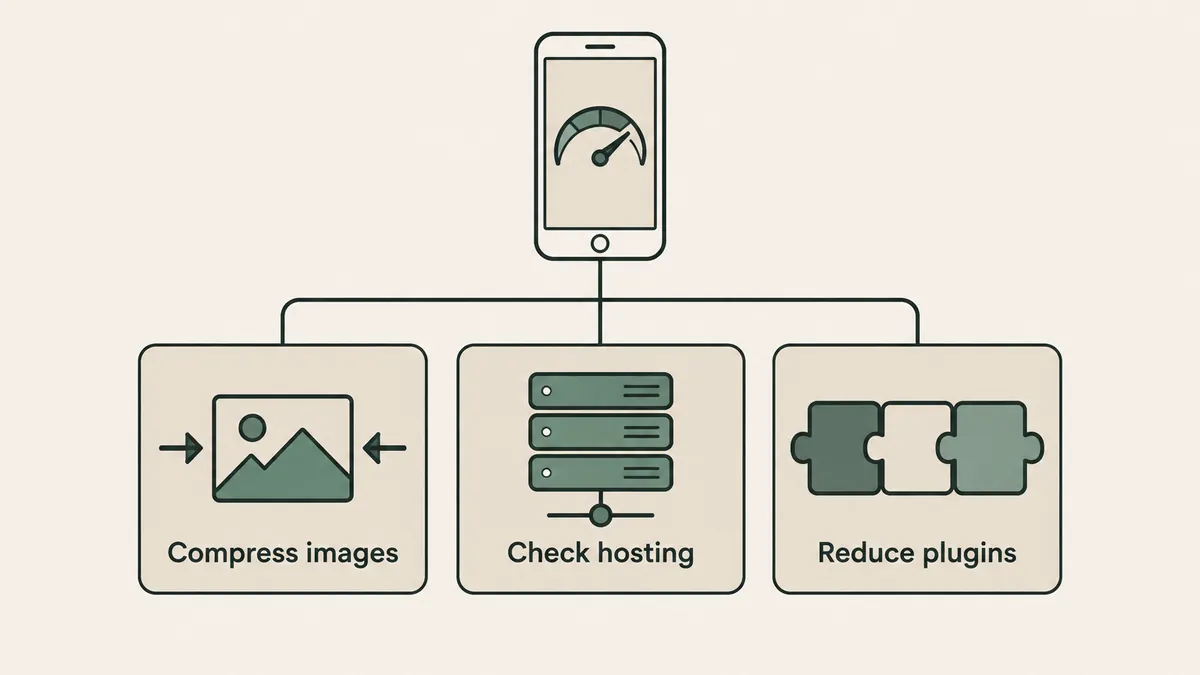
Google will index a slow site. Humans won’t wait for one. Therapy searches skew toward a phone on the couch at night, and if your homepage takes five seconds to appear because of a 9 MB hero image, a share of would-be clients is gone before your name loads.
Run your homepage through PageSpeed Insights — free, no signup. Look at the mobile score, not the desktop one. The usual suspects on therapist sites, in order: photos uploaded straight off the camera roll, bargain hosting, and page builders stacked with plugins. All three are fixable in an afternoon.
Speed won’t create demand on its own. It just stops you from taxing the demand you’ve earned.
Website Still Not Getting Traffic? The Honest Timeline
Here’s the part most agencies soft-pedal: organic search is slow. Fix everything above today and Google typically takes three to six months to reward it, with new domains at the slow end. Anyone promising page one in two weeks is describing an ad budget or a fantasy.
The wait is also why we tell clients to keep their directory profile running in month one. Hold the channels you have while the channel you own gets established. Meanwhile, the compounding starts:
- Your Google Business Profile can surface in map results within weeks, not months.
- Each specialty page collects more long-tail searches as it ages.
- January brings the “new year, new practice” surge and September brings the back-to-school referral wave. Pages published now are seasoned by the time seasonal demand hits.
SEO rewards the practice that starts before it feels urgent.
Your Next Six Moves
You don’t need a marketing degree this week. You need 30 minutes and this list.
- Search
site:yourdomain.comand confirm Google has your pages at all. - Verify your site in Google Search Console, then submit the sitemap.
- Google your practice name in a private window and note what outranks you.
- Rewrite one page title from clinician into client language (“Anxiety Therapy in [Your City]”).
- Test mobile speed in PageSpeed Insights and compress your heaviest image.
- Claim your Google Business Profile if you practice from an office.
Six checks, one afternoon, and you’ll know exactly which leak has kept your website invisible.
FAQ: Website Traffic Questions Therapists Actually Ask
How long does it take for a new therapy website to get traffic?
Expect the first meaningful organic traffic in three to six months, assuming the site is indexed and the pages target real client searches. Google Business Profile visibility and directory referrals move faster and can carry you through the gap.
How do I make my practice show up on Google?
Verify your site in Google Search Console, submit the sitemap, claim your Google Business Profile, and build one page per specialty using the words clients actually search. Matching name, address, and phone details across the web help Google connect your listings to your site.
Do I need a blog for my website to get traffic?
No. A site with strong specialty pages can rank without one. A blog widens the net, since every well-answered client question is another search you can show up for — and one useful post a month beats daily filler.
Is Psychology Today enough, or do I need my own traffic?
Directories are a legitimate referral channel, and plenty of therapists start there. They’re also rented ground: fees, placement, and the competitors listed beside you sit outside your control. A website that earns its own traffic is the asset you keep.
A website not getting traffic is a diagnosable problem, and you now know the three places to look. If you’d rather hand the diagnosis to people who audit therapist sites every week, we’ll gladly take it off your plate — get a custom quote through the Website Inquiry Form and we’ll show you what we’d fix first. No pressure, no jargon, and no promises about page one by Friday.