Hiring a website designer for your practice is a strange purchase. You’ll spend somewhere between $3,000 and $15,000 on a custom build, you can’t judge the work until it’s too late to un-sign, and half the industry’s sales language is designed to stop you asking follow-up questions.
So here’s the follow-up-question playbook. A good website designer for therapists can show you live therapy sites they’ve built, explain how contact forms should handle sensitive information without overpromising, and answer “who owns the site?” in one sentence. Everything below expands on how to test for that — including how to test us, since we’re one of the options you might be weighing.
What to Look For in a Web Designer for Private Practice
Look for three things: real therapy-site experience you can click through, working knowledge of how privacy rules touch websites (forms, booking, analytics), and clean answers on ownership and exit terms. Design taste matters, but these three predict whether you’ll be happy in year two, not just at launch.
Why so much weight on niche experience? Because therapy sites carry constraints a generalist has never met. Ethics rules shape testimonials. Contact forms can quietly collect health information. Your visitors arrive anxious, which changes how navigation, color, and copy should work. A designer who’s built twenty therapy sites has already made the mistakes someone’s brother-in-law is about to make on yours.
We hold a strong opinion here: for this niche, a competent specialist beats a talented generalist almost every time. The generalist can produce something beautiful. The specialist knows why a “What brings you to therapy?” text box on a standard form is a problem.
The 8 Questions to Ask Before You Sign Anything
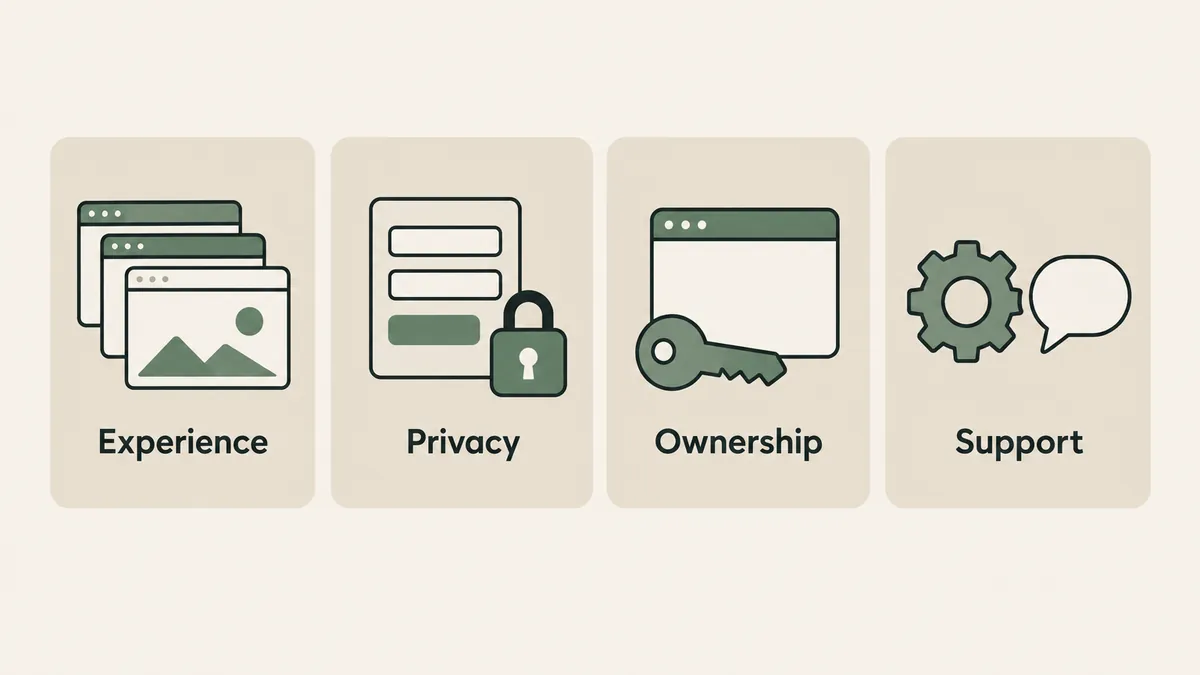
Ask every candidate all eight. The answers matter less than whether they answer without flinching.
- Have you built websites for therapists before? Ask for three live URLs, not mockups. Click them on your phone. If the portfolio is all restaurants and roofers, this project is their experiment.
- How will my contact form handle sensitive information? You want to hear about minimal fields and BAA-covered tools, in plain language. The business associate agreement is the giveaway term; a designer who’s never heard of one hasn’t worked in your world.
- Who owns the website when it’s done? Domain, content, design, and the site itself. The only good answer is “you do, all of it.”
- What happens if I leave you? Can the site move to another host or designer intact? Get the exit terms in writing before you’re attached to the work.
- What’s included, and what costs extra? Hosting, plugin licenses, revisions, post-launch edits. Surprise line items are a design flaw in the contract.
- Who writes the copy? Words convert; design frames them. If copy is “you’ll send us text,” budget your own time for the hardest part of the project.
- How will anyone find the site? Listen for specifics: page titles, one page per specialty, Google Business Profile. “It’s SEO-friendly” with nothing behind it is a shrug in a suit.
- What does support look like after launch? Training, maintenance, response times. A site is a thing you run, not a thing you bought.
Red Flags That Should End the Call
Some answers aren’t just weak. They’re disqualifying.
A flat promise of a “HIPAA-aware website.” This one’s counterintuitive, so it’s the best amateur-detector you have. Websites aren’t certified HIPAA-aware; compliance lives in how tools handle protected health information, which is why careful designers talk about HIPAA-aware design and BAA-compliant forms instead. A designer who leads with the confident version of the wrong claim is telling you they’ve never read the rules they’re selling. Our guide to the real HIPAA rules for therapist websites explains where the line actually sits.
No answer on ownership, or a complicated one. Never sign with anyone who can’t answer question 3 in one sentence. “It’s technically on our master license…” means you’re renting.
A portfolio you can’t visit. Screenshots age well; broken sites don’t. Live links only.
Pressure pricing. “This rate is only good today” is fine for mattresses. Your practice’s front door deserves a decision made at your speed.
Design talk with no client talk. If the whole pitch is fonts and palettes and nobody asks who your ideal client is, you’re buying brand decoration without brand thinking.
What Hiring a Website Designer for Therapists Costs
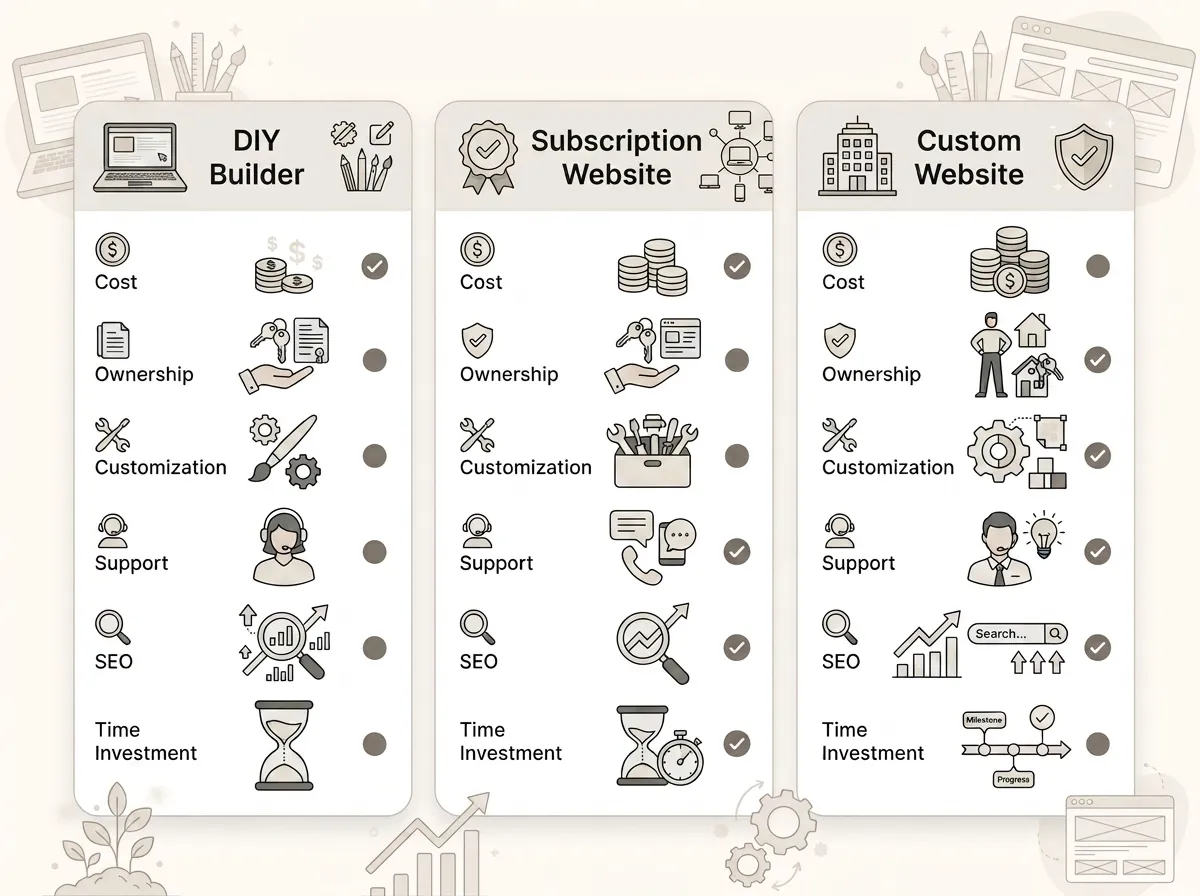
Custom therapist websites typically run $3,000–$15,000, depending on scope, page count, and who’s doing the work. DIY builders run $12–$40 a month, plus the hidden invoice: your evenings, the compliance gaps you don’t know you have, and a template ten other practices in your state are using.
Between those poles sit specialist studios. Ours prices private practice website design by custom quote, and our Website in a Week model exists specifically for practices that want custom quality without the top of that range.
One honest note on cost logic: the cheapest bid is usually the most expensive one. You pay for it later in rebuild fees, which is the plot of roughly half the “I got burned by a designer” stories therapists tell us on strategy calls.
Agency vs. Freelancer vs. Subscription Site
Each model works for someone. Each has a catch the sales page skips.
Freelancers are the most affordable custom route and can be excellent. The catch is continuity: one person is your designer, developer, and support desk, and when they get busy, retire, or vanish, your site’s institutional memory goes with them.
Agencies give you process and a team. The catch is that generalist agencies bill agency rates while learning your niche on your dime, and therapist-specialist agencies book out.
Subscription-site companies bundle design, hosting, and support for a monthly fee, and the convenience is real. The catch is ownership. Brighter Vision, the biggest name in the category, is upfront that its websites work this way: subscribe and you have a site, cancel and the site doesn’t come with you. Years of monthly payments can end with nothing portable to show for them. If you go this route, ask question 4 twice.
Where does Therapeia sit? We’re a therapist-only studio: custom builds you own outright, delivered in 7 days to 6 weeks depending on the package. Which brings us to the part most guides skip.
Putting Therapeia to the Test: Our Commitment to Transparency
We’d rather be interviewed hard than chosen blind, so here are our own answers to the awkward questions — and the trade-offs that come with them.
Use the eight questions below with any professional website designer for therapists, whether that's an agency, a freelancer or a subscription provider.
Ownership: the site, domain, and content are yours, and they stay yours if you leave. Forms: minimal-field and BAA-compliant, because we build HIPAA-aware, not HIPAA-mythical. Experience: 500+ sites for therapists and coaches, with live examples and warm remarks you can verify, including on Trustpilot.
Now the trade-offs. Our pricing is quote-based rather than published, so you do have to ask, and question 5 is fair game on the call. We cost more than a $16-a-month builder, and we always will. And Website in a Week is genuinely fast, but it works because clients show up prepared — the workbook and your focused input that week aren’t optional. If you want a slow, hands-off project, that specific package isn’t your fit, and we’ll say so.
FAQ: Hiring a Website Designer for Therapists
How much does a website designer for therapists cost?
Do I really need a designer who specializes in therapists?
Who should own my therapy website?
How long should the project take?
Print the eight questions, book three calls, and take notes on who answers cleanly. That half-day of interviews protects a four-figure decision. If you’d like Therapeia to be one of the three, start with the Website Inquiry Form — free consultation, and yes, you can open with question 3.