You spent six or more years learning to sit with people in pain. You spent roughly zero hours learning bookkeeping, marketing, or what a profit-and-loss statement is for. Then you opened a private practice and discovered it comes with a second job stapled to it.
Here’s the honest answer to the clinical-versus-business question: they’re separate skill sets, and the business one is far smaller and more learnable than the one you already mastered. Running the business side of a solo practice takes some money tracking, one positioning sentence, a few systems, and a handful of compliance basics. Most therapists can hold it in a few focused hours a week.
The rest of this guide is what those hours should contain.
Why the Business Side Feels Harder Than It Is
Clinical training is long, supervised, and structured. Business training for therapists is a podcast, maybe. So billing, taxes, and marketing arrive with no scaffolding, squeezed into the gaps between sessions, and they feel harder than they are for one simple reason: nobody ever taught you, and everyone acted like they had.
There’s a second layer. Plenty of clinicians feel that promoting a practice sits at odds with the work itself. That discomfort isn’t a character flaw. Most marketing advice really is written by people selling protein powder. But a clear website and honest visibility are closer to informed consent than to salesmanship: they help the right people find you and let the wrong fits self-select out before a wasted consultation.
The fee itself carries weight too. Charging money for care sits uneasily with many therapists, and that tension shows up in fee-setting, in raising rates, in chasing unpaid invoices. You can hold that discomfort and still run a financially sound practice. The two are not in conflict, whatever your inner critic says on invoice day.
The Business Skills Worth Learning First
You don’t need an MBA. You need a spreadsheet, a sentence, and a calendar rule.
Money basics. Track three numbers monthly: revenue, expenses, and average sessions per week. Those three tell you whether the practice is healthy long before your accountant does. If you take insurance, add one more habit: expect reimbursements to land 30–60 days behind the session, and plan cash around that lag instead of being ambushed by it.
A fee you can say out loud. Set it deliberately, publish it on your website, and hold it. A fee you mumble is a fee you’ll discount.
One positioning sentence. Who you help, with what. “I help postpartum moms in Boston work through anxiety” makes every later decision (website copy, referral asks, directory profiles) nearly automatic.
A one-page plan. Where you want the practice in twelve months — caseload shape, weekly hours, income floor — and the two or three moves that point there. Revisit it quarterly. That’s the entire strategic-planning department of a solo practice.
If you’d rather build this layer with structured help, our private practice growth service exists for exactly this gap: the business scaffolding grad school never covered.
Cut the Admin Before It Cuts Into Your Caseload
Admin doesn’t announce itself. It leaks. Ten minutes rescheduling here, twenty chasing a payment there, and suddenly your 25-session week somehow contains 35 working hours.
Three fixes, in order of impact:
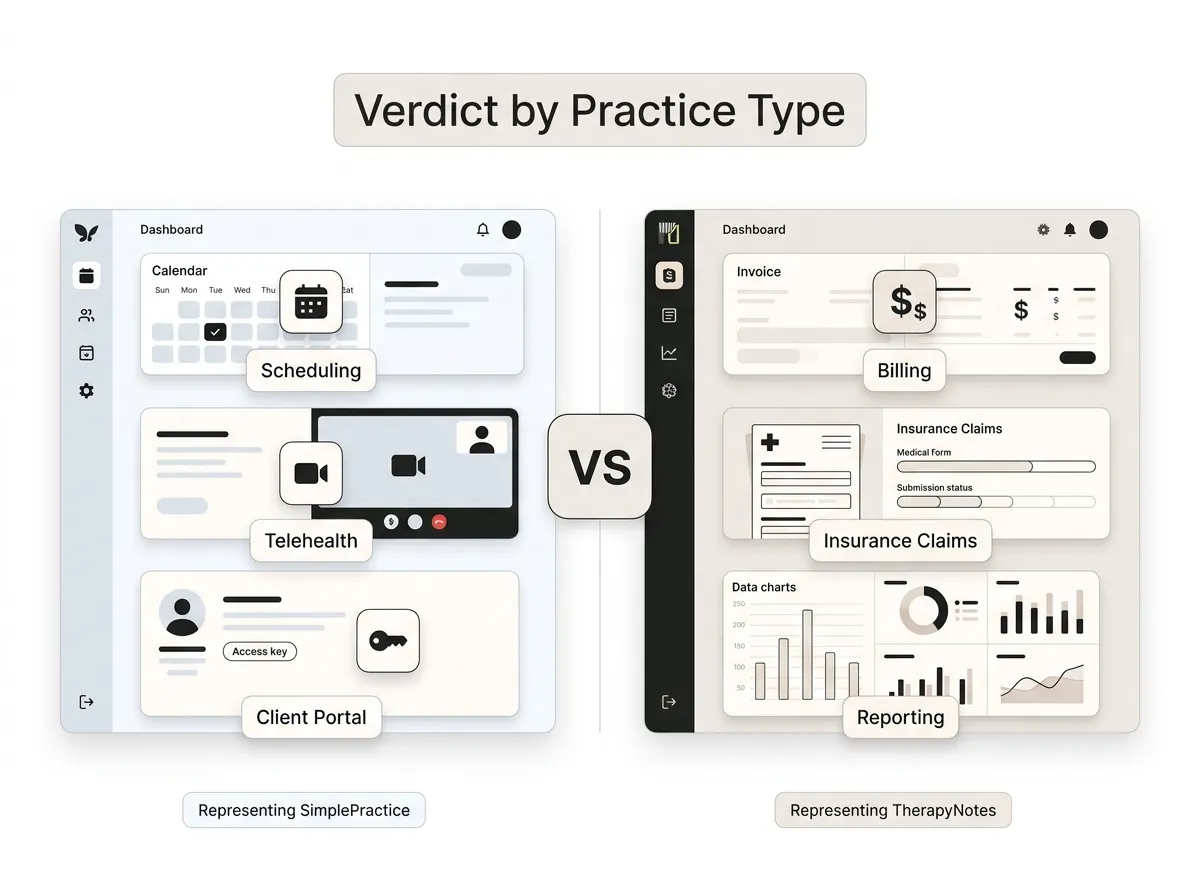
- One practice management system. SimplePractice, TherapyNotes, Jane — pick one and let it hold scheduling, reminders, notes, and billing in a single place. Automated reminders alone noticeably cut no-shows.
- Online scheduling on your website. Every consultation booked without a four-email thread hands you minutes back, and prospective clients strongly prefer booking a first call without phoning a stranger.
- Delegation, eventually. A billing service first, then a few hours of virtual-assistant time for the recurring tasks you keep postponing.
The honest trade-off: delegation costs money a young practice may not have, and in year one you’ll do most of this yourself. That’s fine. The goal isn’t to make admin vanish; it’s to make each task small, boring, and contained.
Your Website Is the Business Asset That Works While You’re in Session
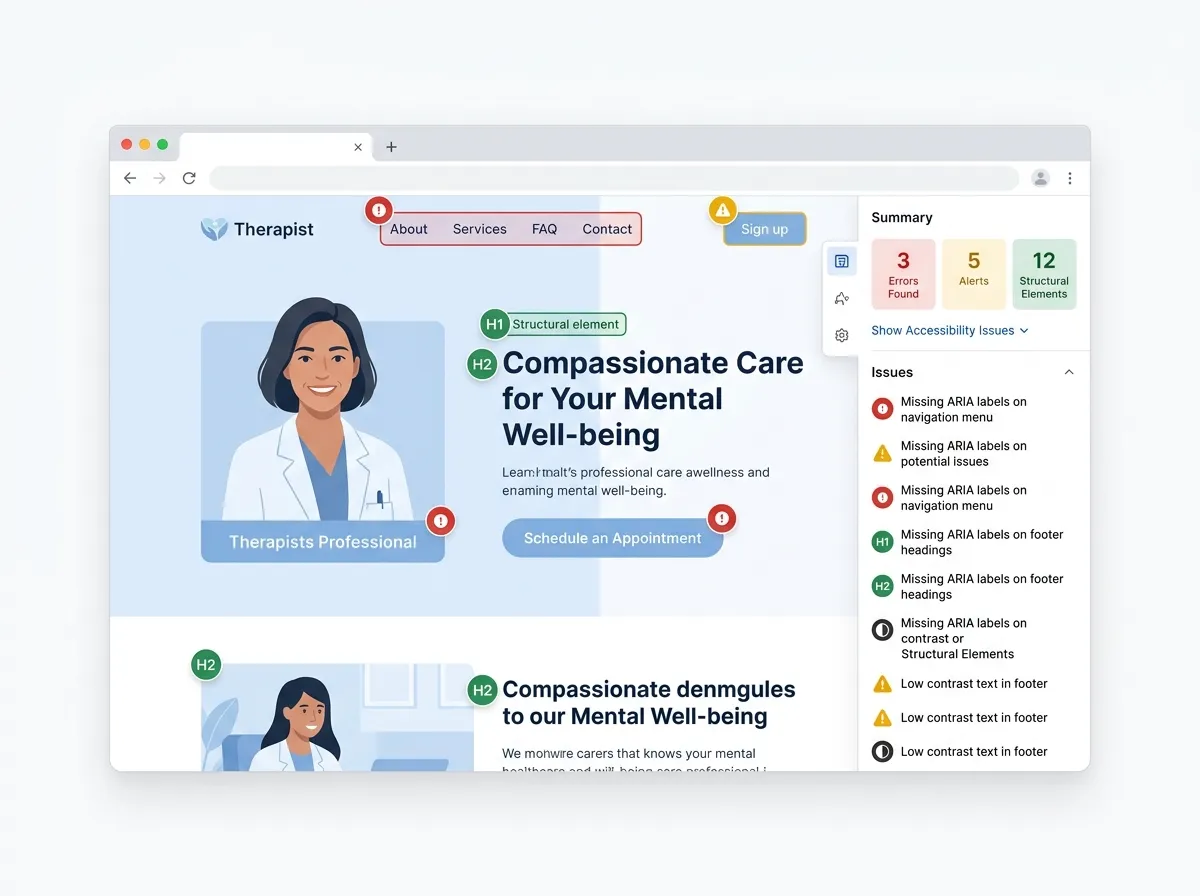
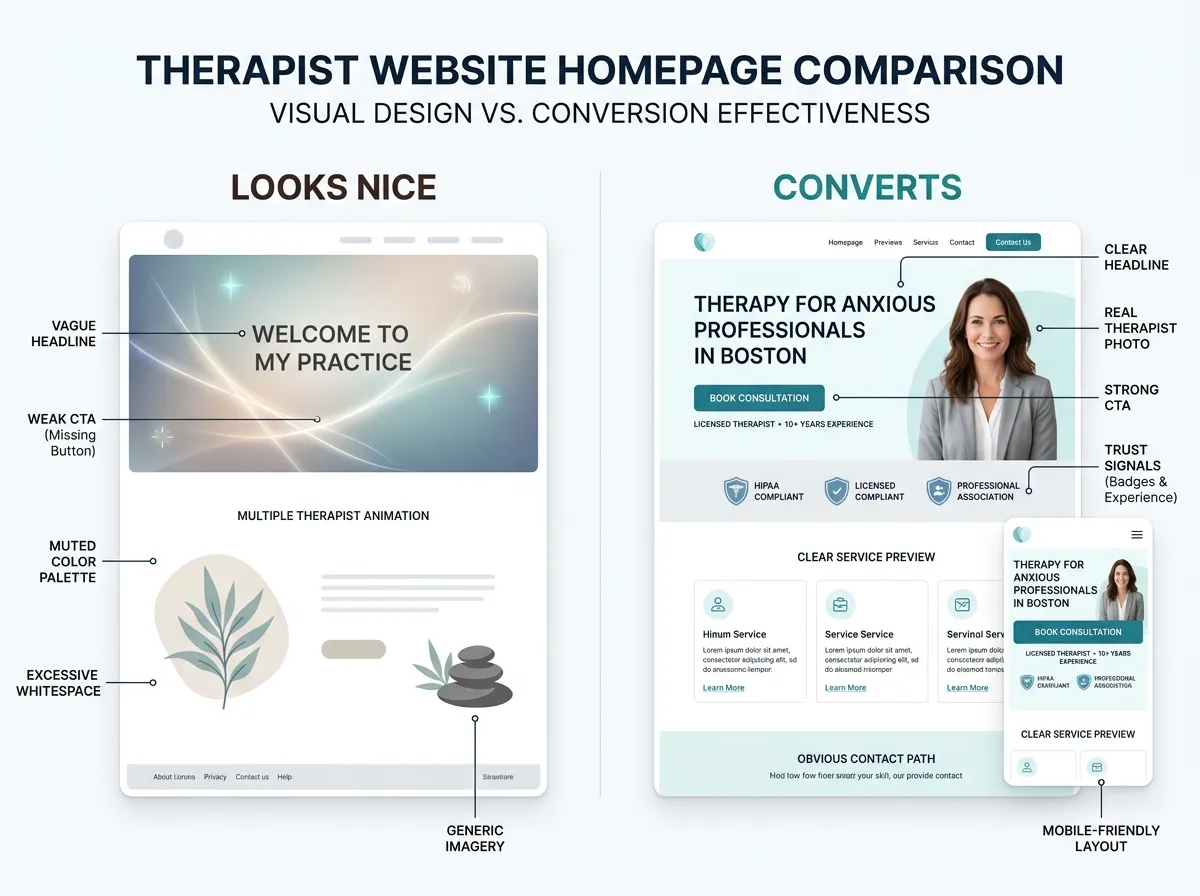
Nearly every client-facing business skill — marketing, positioning, intake — eventually routes through one asset: your website. It answers questions at 11 p.m., screens for fit, states your fee so you don’t have to negotiate it live, and books consultations while you’re mid-session.
We’ve built 500+ sites for therapists and coaches, and the pattern repeats: practices that treat their own site as home base, instead of renting visibility on a shared directory page, spend far less energy worrying about where next month’s inquiries come from.
Two pages do most of the trust work. Your overall look and message, which is a solvable design problem — our guide to building a therapist brand identity breaks it down. And your About page, usually the second page a visitor opens; here’s how to write an About page clients actually trust.
Boundaries That Survive a Full Caseload
Most work-life-balance advice amounts to “try to relax,” which helps nobody. Structure works better than intention:
- Admin gets a block, not your evenings. Ninety minutes, once or twice a week, on the calendar like a session.
- Your scheduler enforces your limits. Cap daily sessions in the software so you never rely on in-the-moment willpower to say no.
- An autoresponder states your reply window. “I respond within one business day” protects your evenings and sets client expectations at the same time.
Burnout prevention in private practice is partly self-care and partly workload design. The second half is the one a business system can actually carry.
The Legal and Financial Groundwork, Minus the Panic
Compliance fear sells therapists a lot of services they don’t need. The real groundwork is shorter:
- Business structure and taxes. LLC versus sole proprietorship is an accountant conversation, not a blog conversation — including this one. The SBA’s guides cover the basics well.
- Insurance. Malpractice plus general liability. Your professional association (APA practice resources are a solid starting point) will have current guidance.
- HIPAA-aware tools. Your website shouldn’t store protected health information at all. Keep contact forms minimal and put anything clinical behind BAA-covered systems. Our guide to the real HIPAA rules for therapist websites draws the line precisely.
- Payments. Use a processor set up for healthcare contexts, with a BAA where client information is involved.
Do these once, review them yearly, and the “legal stuff” stops being background dread.
FAQ: The Business Side of Private Practice
Do therapists need formal business training to run a private practice?
How many hours a week does the business side take?
What should a therapist outsource first?
Is a website really necessary if Psychology Today already sends referrals?
You already learned the harder skill set. The business side is smaller, flatter, and far more forgiving than clinical work — a wrong fee can be corrected next quarter; there’s no such thing as a do-over in the room. If the website piece is the part you’d rather not learn, tell us about your practice through the Website Inquiry Form and we’ll map what the business scaffolding should look like for you.