Therapist SEO Strategies: From Invisible to Fully Booked by Ditching Directories
In the digital age, therapists are increasingly recognizing the importance of a strong online presence. As potential clients turn to search engines rather than traditional directories, understanding how to optimize for search engine visibility becomes crucial. This article explores the shift from directories to SEO, detailing effective therapist SEO strategy techniques that therapists can implement to enhance their online visibility and client acquisition. By focusing on SEO, therapists can not only increase their reach but also build credibility and trust with potential clients. We will delve into key techniques, the benefits of SEO, and practical steps for implementation, providing a comprehensive guide for mental health professionals looking to thrive in a competitive landscape and explore psychology today alternatives for marketing their practice.
Key Techniques
Therapists can employ various SEO techniques to improve their online presence and attract more clients. These strategies include:
- Keyword Optimization: Identifying and using relevant keywords that potential clients are searching for can significantly enhance visibility, especially when integrating terms related to therapy website SEO and marketing private practice.
- Content Marketing: Creating valuable content that addresses common client concerns can position therapists as experts in their field and improve search rankings.
- Local SEO: Optimizing for local search ensures that therapists appear in searches relevant to their geographical area, making it easier for local clients to find them.
- Backlinking: Building backlinks from reputable sites can improve domain authority and search rankings.
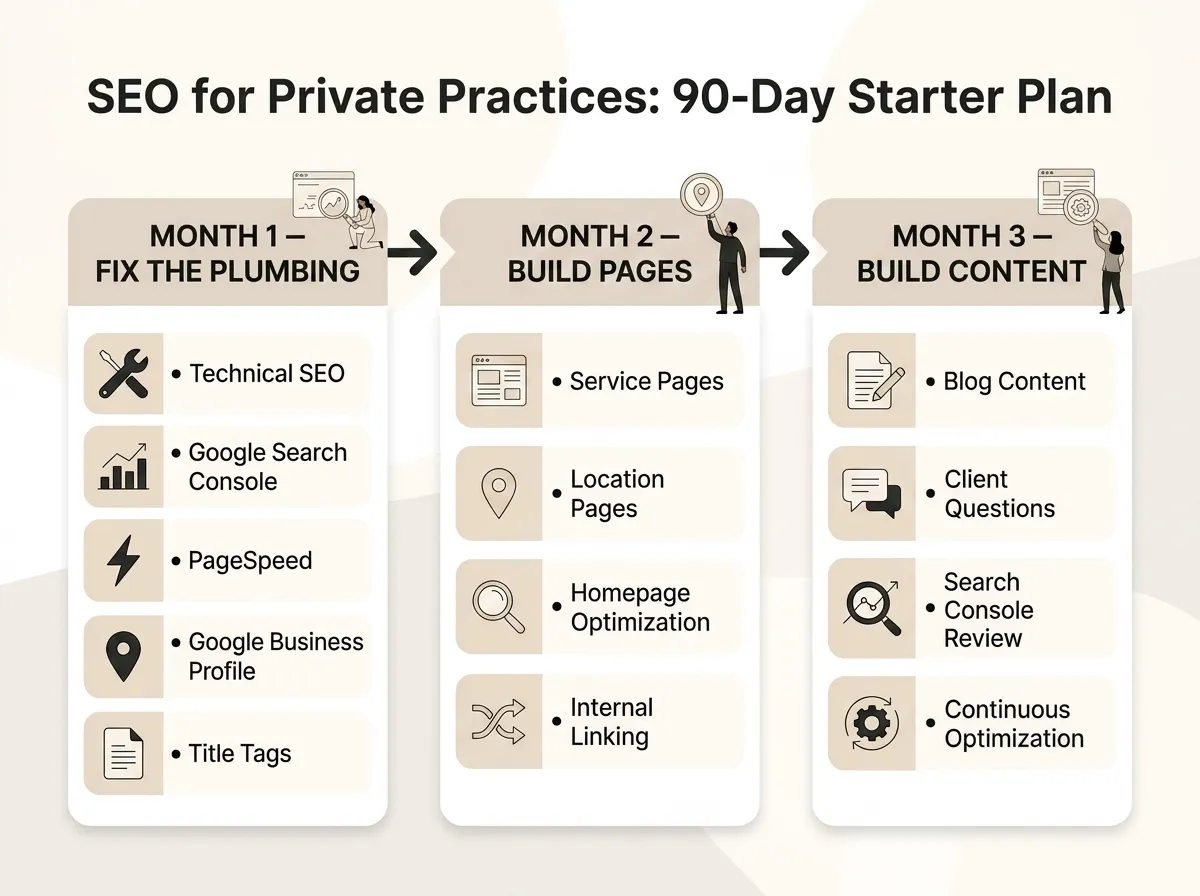
- Technical SEO: Ensuring that a website is technically sound, with fast loading times and mobile optimization, is essential for user experience and search engine ranking.
- User Experience (UX) Design: A well-designed website that is easy to navigate can keep potential clients engaged and encourage them to book appointments.
These techniques form the foundation of a successful SEO strategy for therapists, enabling them to reach a broader audience and enhance their practice.
Benefits
Implementing SEO strategies offers numerous benefits for therapists looking to grow their practices. These include:
- Increased Visibility: By optimizing their websites with a focused therapist SEO strategy, therapists can appear higher in search engine results, making it easier for potential clients to find them.
- Credibility and Trust: A well-optimized website can enhance a therapist’s credibility, as clients often perceive higher-ranking sites as more trustworthy.
- Client Engagement: Engaging content can attract and retain clients, encouraging them to reach out for services.
- Long-term Growth: Unlike paid advertising, which stops generating leads once the budget is exhausted, SEO can provide ongoing visibility and client acquisition over time.
For therapists seeking to enhance their online presence, professional web design services can play a crucial role. Therapeia Web Design specializes in creating tailored websites that not only look great but are also optimized for search engines, helping therapists achieve their business goals through effective therapy website SEO.
Implementation Steps
To effectively implement SEO strategies, therapists can follow these actionable steps:
- Develop a Professional Website: A well-designed website serves as the foundation for all SEO efforts and is essential for successful marketing private practice.
- Conduct Keyword Research: Identify keywords that potential clients are using to search for services, including alternatives to popular directories like psychology today alternatives.
- Create and Publish Content: Regularly update the website with informative and engaging content that addresses client needs.
- Optimize for Local Search: Ensure that the website is optimized for local SEO by including location-based keywords and creating a Google Business Profile.
- Build Backlinks: Reach out to other professionals and organizations to create backlinks to the therapist’s website.
- Monitor and Adapt: Regularly review website analytics to understand what is working and make necessary adjustments.
By following these steps, therapists can create a robust SEO strategy that drives traffic and increases client bookings.
Why Are Therapists Moving From Directories to SEO for Client Attraction?
Therapists are increasingly shifting from traditional directories to SEO for several compelling reasons. Enhanced visibility is a primary factor, as SEO allows therapists to appear in search results when potential clients are actively seeking services. This proactive approach contrasts with directories, where clients may not find the most relevant options.
Additionally, SEO provides therapists with greater control over their branding and messaging. Unlike directories, where listings can be generic and competitive, a well-optimized website allows therapists to showcase their unique services and approach. This control fosters a stronger connection with potential clients, ultimately leading to increased trust and engagement.
What Limitations Do Therapy Directories Present for Mental Health Professionals?
While therapy directories can offer some visibility, they come with significant limitations that can hinder a therapist’s growth. These include:
- Limited Features: Many directories offer basic listings without the ability to showcase a therapist’s full range of services or expertise.
- Lack of Control: Therapists often have little control over how their profiles are presented, which can dilute their branding.
- Increased Competition: Directories can be crowded, making it difficult for individual therapists to stand out.
- Dependence on Directory Traffic: Relying solely on directories can lead to inconsistent client flow, as therapists are at the mercy of the directory’s traffic.
- Generic Client Engagement: Directories often lack personalized engagement, which can lead to missed opportunities for building relationships with potential clients.
These limitations highlight the need for therapists to adopt SEO strategies that empower them to take control of their online presence.
How Does SEO Provide a More Effective Online Marketing Solution for Counselors?
SEO offers a more effective online marketing solution for counselors by providing several advantages over traditional methods. One key benefit is the ability to control and personalize the online experience for potential clients. Through SEO, counselors can create tailored content that speaks directly to the needs and concerns of their target audience.
Enhanced visibility is another significant advantage. SEO strategies ensure that counselors appear in relevant search results, increasing the likelihood of attracting clients actively seeking their services. This proactive approach contrasts with traditional marketing methods, which may not reach the intended audience effectively.
Furthermore, SEO helps build authority and trust. By consistently providing valuable content and optimizing their online presence, counselors can establish themselves as experts in their field, fostering trust with potential clients.
This aligns with broader research on digital marketing, which highlights the strategic opportunities for mental health organizations to expand their reach.
Digital Marketing Strategies for Mental Health
AbstractThe study explores the usefulness of digital marketing strategies (DMS) in promoting the awareness of mental health in Asia as it investigates relationships between DMS, ethics, feedback processes, target audiences, and marketing aims. Quantitative approach was adopted and 200 professionals working in the mental health sector in Asia were surveyed. The proposed model was tested in terms of SPSS and SmartPLS. The results indicated positive correlations between DMS and marketing goals, target audience and ethics, and target audience and marketing goals. Ethics, however, did not produce any significant influence in the feedback mechanisms. The results indicate that successful mental health marketing is based on proper targeting of audience and a need to use culturally suitable language. The research leads to the literature on marketing in digital health by providing a vision on the ethical and strategic opportunities of mental health organizations to magnify their reach in sensiti
Effective Use of Digital Marketing in the Mental Health Industry, İS Mert, 2025
What Are the Key SEO Strategies for Therapists to Increase Online Visibility?
To increase online visibility, therapists should focus on several key SEO strategies:
- Keyword Research: Identifying relevant keywords is essential for optimizing content and attracting the right audience, including terms related to therapist SEO strategy and psychology today alternatives.
- On-Page Optimization: Ensuring that website elements, such as titles, meta descriptions, and headers, are optimized for target keywords.
- Create Valuable Content: Regularly publishing informative and engaging content that addresses client concerns can improve search rankings.
- Implement Local SEO: Optimizing for local search ensures that therapists appear in searches relevant to their geographical area.
- Technical SEO Practices: Ensuring that the website is technically sound, with fast loading times and mobile optimization, is crucial for user experience.
By implementing these strategies, therapists can significantly enhance their online visibility and attract more clients.
How Does Local SEO Enhance Therapist Client Attraction Methods?

Local SEO plays a vital role in enhancing therapist client attraction methods by ensuring that therapists appear in local search results. Key components of local SEO include:
- Google Business Profile Optimization: Creating and optimizing a Google Business Profile can help therapists appear in local searches and Google Maps.
- Incorporating Local Keywords: Using location-based keywords in website content can improve search rankings for local queries.
- Encouraging Online Reviews: Positive reviews can enhance credibility and attract more clients.
- Building Local Citations: Listing the practice in local directories can improve local search visibility.
- Creating Relevant Local Content: Developing content that addresses local issues or events can engage the community and attract local clients.
- Monitoring and Measuring Success: Regularly reviewing local SEO performance can help therapists understand what strategies are working and where improvements are needed.
By focusing on local SEO, therapists can effectively attract clients in their area and build a strong local presence.
Further emphasizing the importance of localized digital efforts, recent research provides a comprehensive guide to mastering local SEO for medical practices.
Mastering Local SEO for Medical Practices
This chapter provides a comprehensive guide to local SEO for medical practices, emphasizing how healthcare providers can improve online visibility and attract more patients through strategic optimization. It explains key concepts such as keyword targeting, metadata use, structured data tags, and directory listings. The chapter also introduces emerging challenges in AI-powered search results and offers practical tools, including a physician SEO readiness checklist, to help practices adapt. Real-world examples and step-by-step instructions ensure that providers without technical backgrounds can take actionable steps to enhance their digital presence and remain competitive in a rapidly evolving search landscape.
Mastering Local SEO for Medical Practices, 2025
What Content Marketing Techniques Optimize Therapist Websites for Search Engines?
Content marketing is a powerful tool for optimizing therapist websites for search engines. Effective techniques include:
- Conduct Keyword Research: Identifying relevant keywords to target in content creation, including therapy website SEO and marketing private practice terms.
- On-Page Optimization: Ensuring that content is optimized for search engines, including proper use of headings and meta tags.
- Create Valuable Content: Developing informative and engaging content that addresses client needs and concerns.
- Implement Local SEO: Incorporating local keywords and optimizing for local search can enhance visibility.
- Technical SEO Practices: Ensuring that the website is technically sound to improve user experience and search rankings.
By employing these content marketing techniques, therapists can enhance their online presence and attract more clients.
How Can Therapist Website SEO Optimization Improve Client Booking Rates?
SEO optimization can significantly improve client booking rates for therapists by enhancing visibility and user experience. Key strategies include:
- Keyword Optimization: Targeting relevant keywords can attract potential clients actively searching for services.
- Content Marketing: Engaging content can encourage potential clients to reach out for services.
- Technical SEO: A technically sound website with fast loading times can improve user experience and reduce bounce rates.
- Local SEO: Optimizing for local search can attract clients in the therapist’s geographical area.
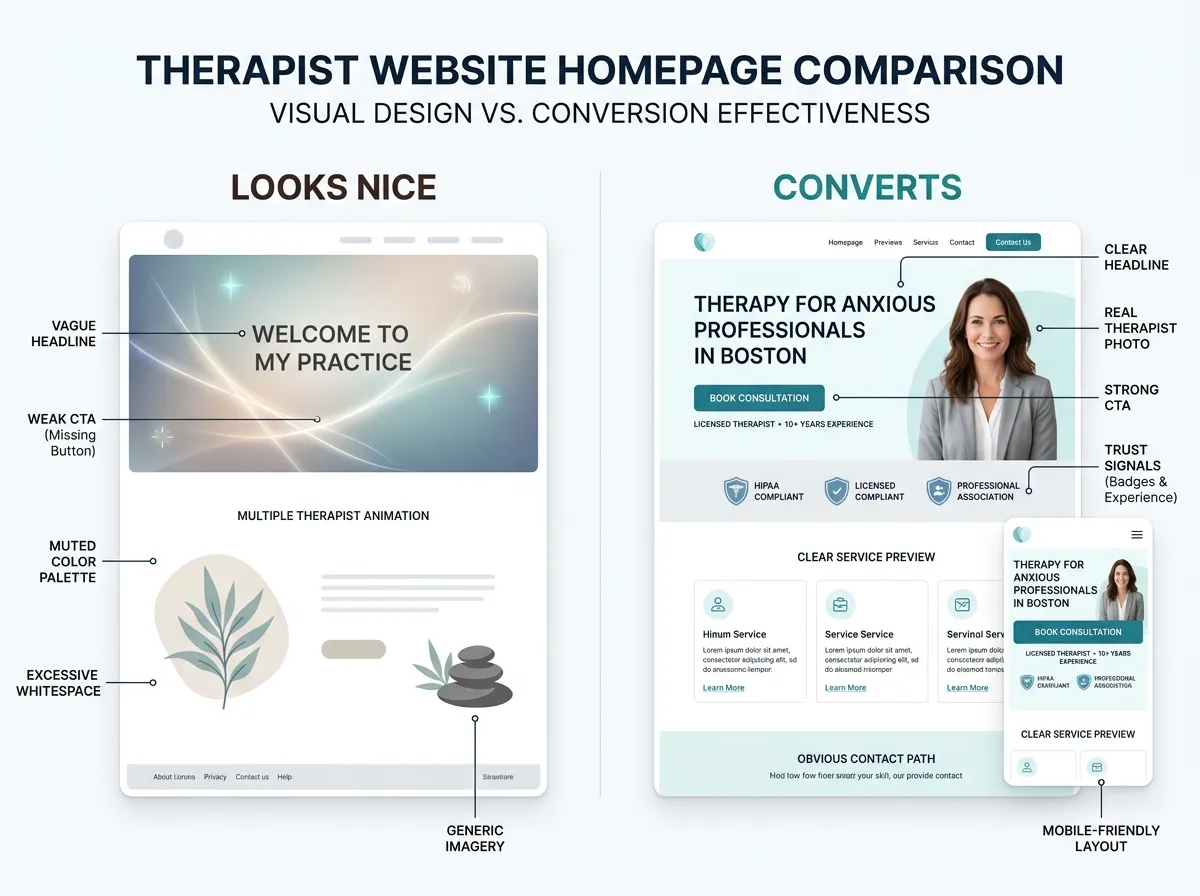
- Clear Calls to Action: Including clear calls to action on the website can guide potential clients toward booking appointments.
- Online Booking Systems: Implementing user-friendly online booking systems can streamline the appointment process and increase bookings.
- Client Testimonials: Showcasing positive client testimonials can build trust and encourage potential clients to book services.
By focusing on these strategies, therapists can enhance their website’s effectiveness in converting visitors into clients.
Which Website Design Elements Streamline Patient Navigation and Reduce Friction?

Effective website design is crucial for streamlining patient navigation and reducing friction. Key design elements include:
- User-Friendly Navigation: A clear and intuitive navigation structure helps users find information quickly.
- Clear Calls to Action (CTAs): Prominent CTAs guide users toward desired actions, such as booking an appointment.
- Online Booking Systems: Implementing easy-to-use online booking systems can simplify the appointment process.
- Client Testimonials: Displaying testimonials can build trust and encourage potential clients to engage.
- Responsive Design: Ensuring that the website is mobile-friendly enhances accessibility for users on various devices.
- Fast Loading Times: Optimizing website speed can improve user experience and reduce bounce rates.
- Structured Data and Schema Markup: Implementing structured data can enhance search engine understanding and improve visibility.
By incorporating these design elements, therapists can create a seamless user experience that encourages potential clients to engage with their services.
How Does Conversion Architecture Support Practice Growth for Mental Health Professionals?
Conversion architecture is essential for supporting practice growth among mental health professionals. Key components include:
- Clear Calls to Action (CTAs): Strategically placed CTAs guide users toward booking appointments or contacting the practice.
- Online Booking Systems: User-friendly booking systems streamline the appointment process and reduce barriers to engagement.
- Trust-Building Content: Providing valuable content that addresses client concerns can build trust and encourage engagement.
- User-Friendly Navigation: A well-structured website helps users find information quickly, enhancing the likelihood of conversion.
- Mobile Optimization: Ensuring that the website is mobile-friendly caters to users on various devices, improving accessibility.
By focusing on conversion architecture, mental health professionals can create an environment that fosters growth and client engagement.
What Are the Benefits of SEO Over Traditional Therapy Directories?
SEO offers several advantages over traditional therapy directories, including:
- Increased Visibility: SEO strategies can enhance a therapist’s visibility in search results, making it easier for potential clients to find them.
- Cost-Effectiveness: Unlike directory listings that often require ongoing fees, SEO can provide long-term visibility without continuous costs.
- Client Engagement: Engaging content can attract and retain clients, fostering a stronger connection than generic directory listings.
These benefits highlight why many therapists are choosing to invest in SEO strategies rather than relying solely on traditional directories.
How Does SEO Increase Client Acquisition Compared to Directory Listings?
SEO significantly enhances client acquisition compared to directory listings through several mechanisms:
- Control Over Branding and Content: Therapists can create a personalized online presence that reflects their unique services and approach.
- Enhanced Visibility Through SEO: Optimized websites appear in relevant search results, attracting clients actively seeking services.
- Building Credibility and Trust: A well-optimized website can establish therapists as authorities in their field, fostering trust with potential clients.
- Improved User Experience: A user-friendly website encourages potential clients to engage and book services.
- Cost-Effectiveness: SEO provides ongoing visibility without the recurring costs associated with directory listings.
- Measurable Outcomes: SEO efforts can be tracked and analyzed, allowing therapists to understand their return on investment.
By leveraging SEO, therapists can create a more effective client acquisition strategy that outperforms traditional directory listings.
What Recent Industry Statistics Demonstrate SEO Effectiveness for Therapists?
Recent industry statistics underscore the effectiveness of SEO for therapists. Studies show that:
- 75% of users never scroll past the first page of search results, highlighting the importance of ranking high in search engines.
- Over 60% of consumers report that they prefer to find service providers through online searches rather than directories.
- Businesses that invest in SEO see an average return on investment of $2.75 for every dollar spent, demonstrating the financial benefits of effective SEO strategies.
These statistics illustrate the growing importance of SEO in the mental health field and the potential for therapists to enhance their practices through effective online marketing.
How Do Professional Web Design Services Tailored for Therapists Enhance SEO Outcomes?
Professional web design services tailored for therapists can significantly enhance SEO outcomes by focusing on several key areas:
- Responsive Design: Ensuring that websites are mobile-friendly improves accessibility and user experience.
- Intuitive Navigation: A well-structured website helps users find information quickly, reducing bounce rates.
- Visual Appeal: Aesthetically pleasing designs can engage visitors and encourage them to explore the site further.
- SEO Optimization: Professional designers understand SEO best practices and can implement them effectively during the design process.
- Clear Calls to Action: Strategically placed CTAs guide users toward booking appointments or contacting the practice.
- Content Integration: Professional services can help integrate valuable content that addresses client needs, enhancing engagement.
By investing in professional web design, therapists can create a strong online presence that supports their SEO efforts and attracts more clients.
What Role Does Customized Website Design Play in Therapist SEO Strategies?
Customized website design plays a crucial role in therapist SEO strategies by ensuring that websites are tailored to meet the specific needs of their target audience. Key aspects include:
- Responsive Design: Customized designs ensure that websites are mobile-friendly, enhancing accessibility for users on various devices.
- Intuitive Navigation: A well-structured website helps users find information quickly, improving user experience and engagement.
- Visual Appeal: Customized designs can reflect the therapist’s brand and personality, making a strong first impression on potential clients.
- SEO Optimization: Professional designers can implement SEO best practices during the design process, enhancing search visibility.
- Clear Calls to Action: Customized designs can strategically place CTAs to guide users toward booking appointments or contacting the practice.
By focusing on customized website design, therapists can create a strong online presence that supports their SEO strategies and attracts more clients.