Why Every Therapist Needs a Website: Benefits and Essential Features for Private Practice Growth
A professional website is a central marketing asset for therapists: it presents services, verifies qualifications, and improves visibility. This article summarises why a website matters, which features are essential, and practical design strategies that build client trust and support practice objectives.
Benefits of Having a Website for Private Practice Growth
A well-built site supports practice growth by strengthening trust, boosting search visibility, and delivering consistent branding that increases engagement and conversion.
- Increased Client Trust and Credibility: A clear, professional site demonstrates credentials and practice approach to build confidence.
- Enhanced Online Visibility and Presence: Search-optimised pages make the practice discoverable to prospective clients.
- Effective Branding and Client Engagement: Consistent messaging and visuals help clients connect before their first contact.
For implementation advice, Therapeia Web Design offers practical guidance on optimising sites for engagement and conversion.
Essential Features for an Effective Therapist Website

Core features include clear navigation, mobile-friendly layouts, secure booking, HIPAA-aware communication, and ongoing content to support discovery and trust.
User-Friendly Navigation
Intuitive menus and labelled pages help visitors find services quickly and reduce drop-off.
Mobile Responsiveness
Responsive layouts preserve usability on smartphones and tablets, maintaining engagement across devices.
Secure Online Booking
Reliable scheduling systems simplify appointments and reduce administrative work while protecting user data.
HIPAA-Compliant Communication
Encrypted channels and strict access controls protect sensitive information and reassure clients about confidentiality.
Content Marketing and Blogs
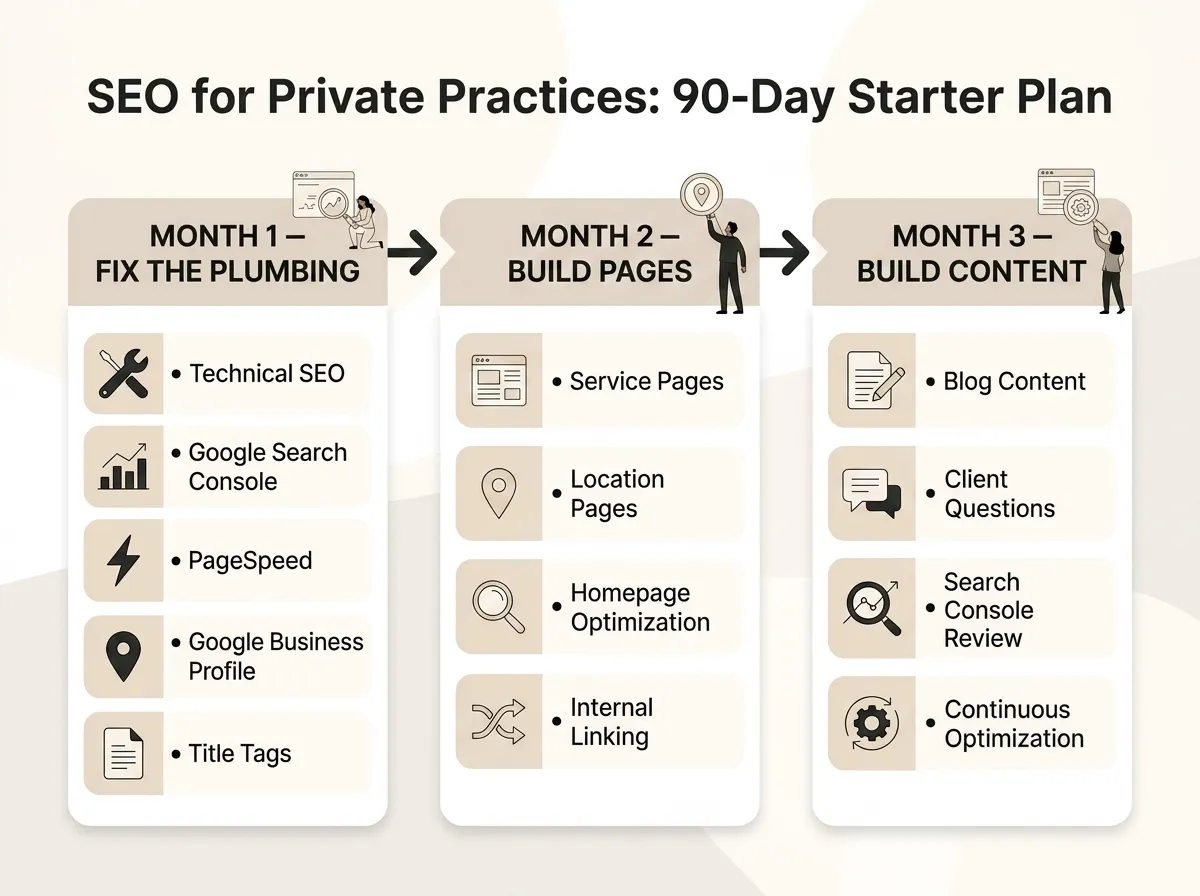
Regular, focused content demonstrates expertise, answers common client questions, and improves search performance.
Testimonials and Client Feedback
Vetted testimonials offer social proof and help prospective clients evaluate the practice.
Contact Information and Clear Calls to Action
Prominent contact details and direct calls to action make it easy for visitors to take the next step.
How Does a Professional Website Enhance Client Trust and Credibility?

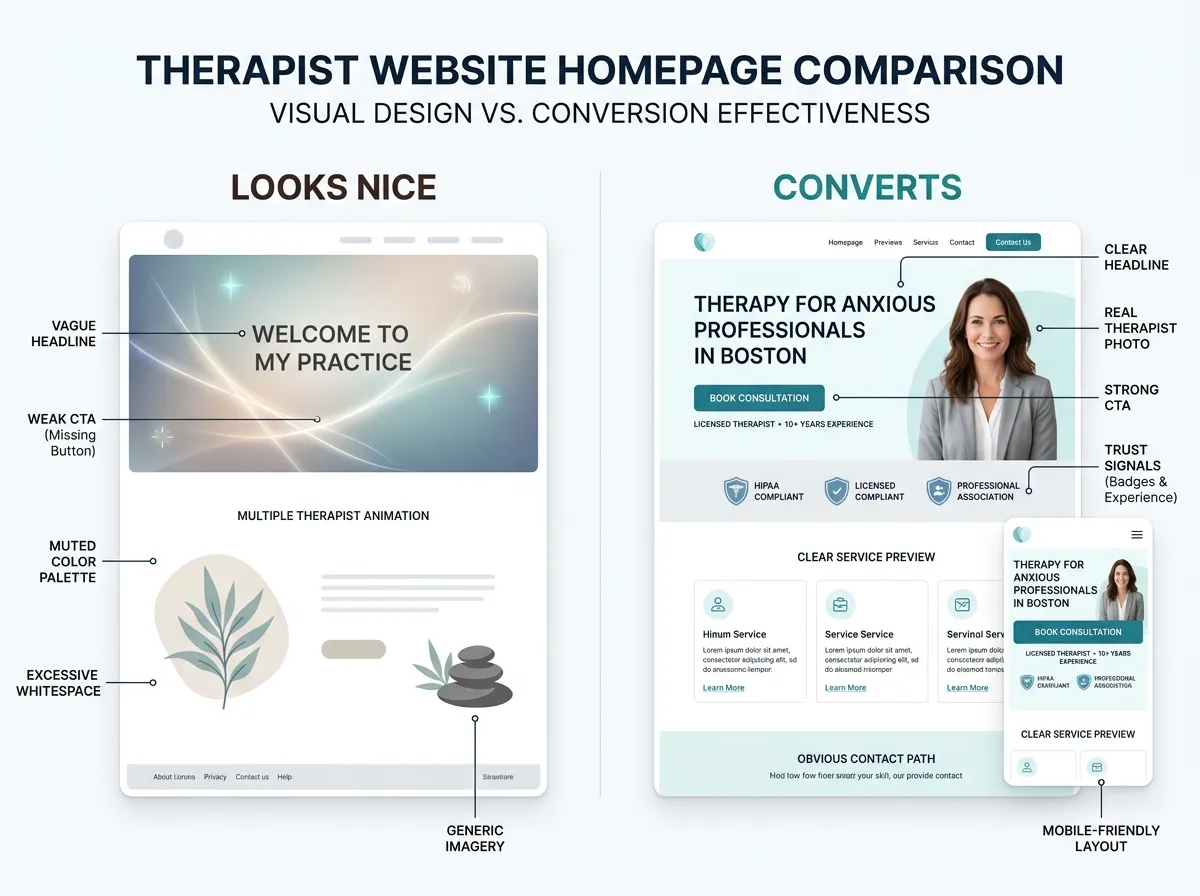
A professional site presents credentials, services, and practice philosophy clearly; quality visuals and concise descriptions shape strong first impressions.
In What Ways Can a Therapist Website Increase Private Practice Client Acquisition?
Targeted SEO and conversion-focused pages improve discoverability and use lead-capture elements to turn visitors into consultations.
Which Essential Features Should Every Therapy Website Include?
Every site should deliver aesthetic design, SEO-optimised content, and privacy features that protect client information while supporting business goals.
- Aesthetic Design: Layouts that match the practice brand.
- SEO Optimization: Pages and posts tailored to relevant search terms.
- Privacy Features: Secure transmission and storage to protect confidentiality.
What Booking and Online Scheduling Tools Support Efficient Client Management?
Scheduling tools reduce administrative burden and provide clear availability for clients, freeing clinicians to focus on care.
- Calendly: Simple self-service booking for clients.
- Acuity Scheduling: Customisable workflows and payment integration.
- SimplyBook.me: Adds marketing features to boost reach.
These platforms streamline operations and improve client access to appointments.
How Does HIPAA-Compliant Web Design Protect Patient Privacy?
Design that incorporates encryption, secure storage, and access controls reduces breach risk and supports regulatory compliance.
How Can Effective Therapy Website Design Boost Practice Growth?
Clear messaging, persuasive content, and focused calls to action guide visitors from discovery to booking and support scalable growth.
What Are Clinical UX Principles for Optimizing Therapist Websites?
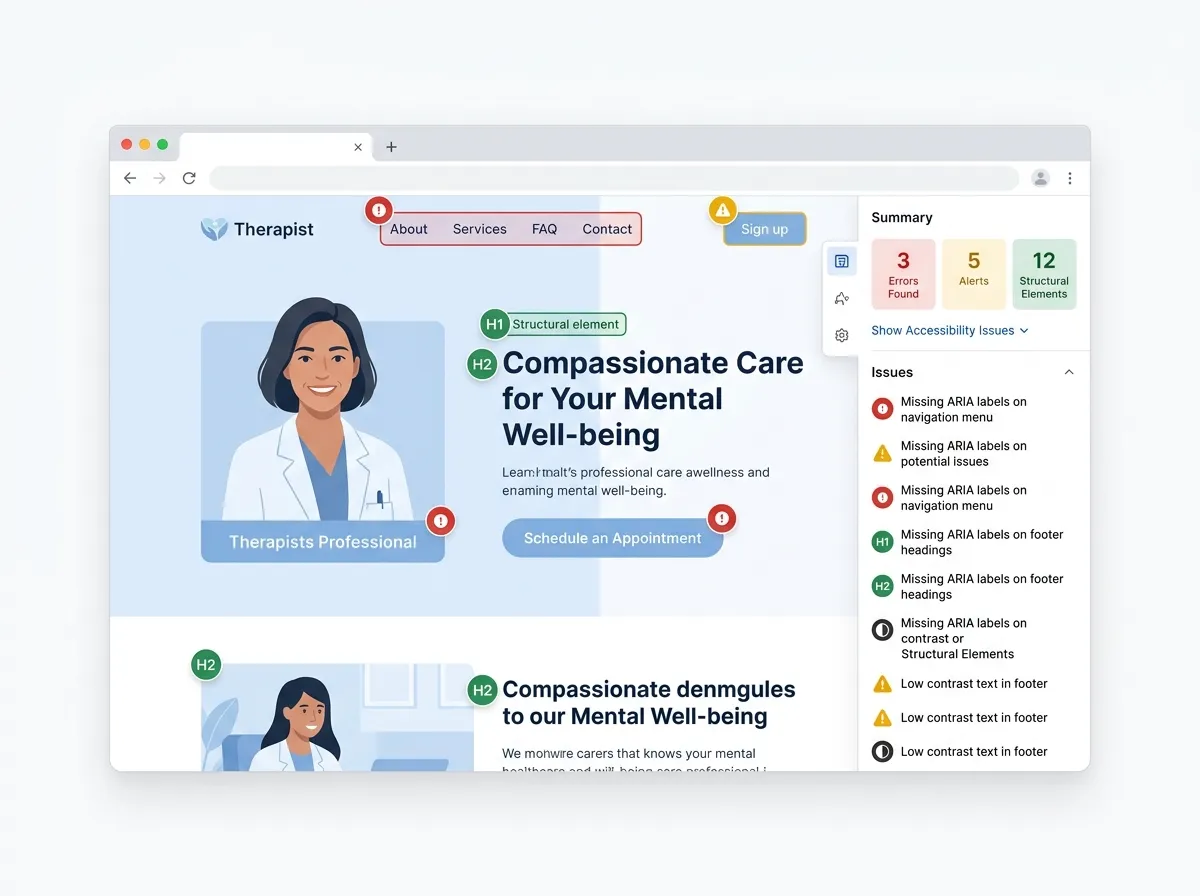
Clinical UX emphasises clarity, accessibility, and trust-building to reduce friction and help visitors make informed choices.
- Simplified Navigation: Quick access to key information.
- Readable Content: Clear, concise language.
- Visual Appeal: Aesthetics that retain visitors.
Applied together, these principles make a site approachable and professional.
How Does Mobile-Friendly Design Improve Client Accessibility?
Fast, well-structured mobile pages let clients access services and contact the practice easily when they need support.
What Is the Return on Investment for Investing in a Therapist Website?
ROI is realised through increased client acquisition and reduced marketing costs; an optimised site can raise consultation volume and retention over time.
How Does a Website Drive Booked Consultations and Long-Term Client Retention?
A strategic site simplifies access to services, captures leads, and keeps clients engaged with ongoing content to support retention.
What Are Typical Costs and Considerations for Private Practice Website Design?
Consider initial design and feature costs alongside ongoing maintenance, security, and analytics to ensure long-term effectiveness without excess expense.
Frequently Asked Questions
What role does content marketing play in attracting therapy clients?
Content builds authority and answers common questions, helping potential clients find and trust your services.
How can therapists ensure their website is compliant with legal standards?
Use HTTPS, encrypt data in transit and at rest, publish clear privacy policies, and consult compliance specialists when needed.
What are the benefits of including testimonials on a therapist’s website?
Testimonials provide social proof that reduces uncertainty and supports decision-making.
Can therapists use social media to complement their websites? If so, how?
Yes—use social channels to promote content and practice updates that drive targeted traffic back to the website.
How often should therapists update their website content?
Update regularly (for example, every few months) to keep information current and support search visibility.
What types of marketing strategies can enhance a therapist’s online presence?
Combine SEO, social media, email marketing, and content marketing for a cohesive presence that attracts and converts clients.
Conclusion
A professional website materially improves a therapist’s ability to attract and retain clients. Prioritise security, user-focused design, and strategic content to make your site a reliable channel for building trust and facilitating client access.