Why Clients Trust Therapist Websites More Than Directory Profiles: Professional Online Presence and Conversion Benefits
Therapists’ online presence affects trust and booking. Dedicated websites are viewed as more credible than directory profiles because they present tailored services, clear client journeys, visible credentials and testimonials, plus secure contact options that support higher conversions and engagement.
What Key Trust Signals Make Therapist Websites More Credible Than Profiles?
Therapist websites communicate professionalism and reliability through a compact set of trust signals.
- Professional Design: A thoughtfully designed website conveys expertise and attention to detail, establishing initial trust in potential clients. An aesthetic and user-friendly interface encourages visitors to engage with the content.
- Client Testimonials: Showing real feedback from clients can validate the therapist’s work and enhance the level of trust prospective clients feel. These testimonials provide social proof and illustrate the therapist’s effectiveness.
- Security Features: Ensuring clients’ information is secure with SSL certificates and privacy policies is crucial. Clients need to feel that their sensitive information is safe when they reach out for help.
Therapeia Web Design specializes in delivering customized websites for therapists, counsellors, life coaches and wellness practitioners that emphasise these trust signals.
How Do Testimonials and Credential Highlights Build Client Confidence?

Testimonials and credential highlights act as visible proof of competence and outcomes. Well‑placed client feedback combined with clear display of degrees, licences and continuing education strengthens perceived professionalism and helps prospective clients decide.
The table summarises how different testimonial types influence client trust and decision-making.
Why Are Secure Contact Methods and Privacy Features Essential on Therapist Sites?

Privacy and security are essential because clients share sensitive information. Encrypted messaging, secure contact forms, clear privacy policies and HTTPS reduce barriers to outreach and reassure visitors that their data is handled responsibly.
How Does a Professional Website Enhance Client Conversion for Mental Health Providers?
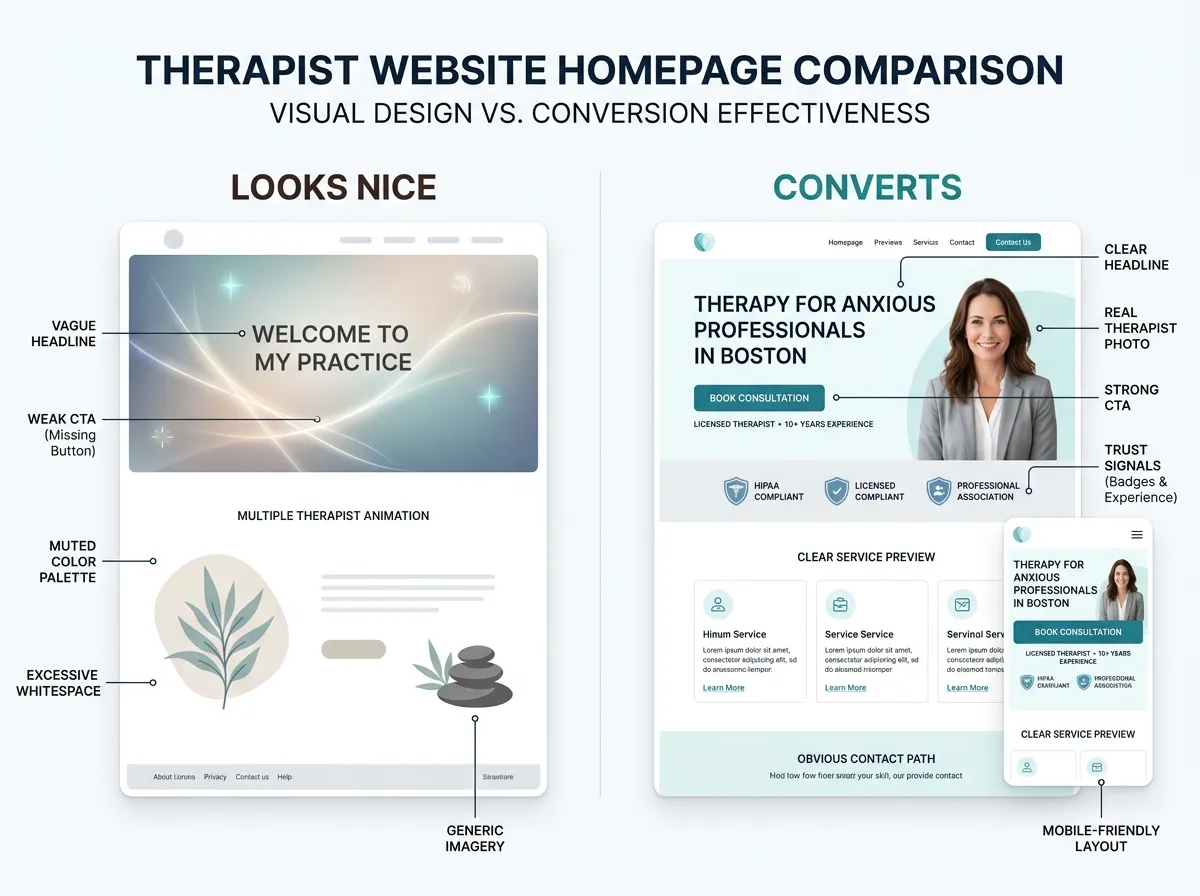
A professional site reduces friction from search to consultation: clear visual hierarchy, intuitive navigation and prominent calls to action (for example, “Book a Session” or “Contact Me”) make it easier for visitors to book appointments.
Why Are Personalized Therapist Websites Preferable to Directory Profiles?
Personalized websites provide authenticity and control over the client experience that standard directory profiles cannot match.
- User Trust: A custom website showcases the therapist’s unique voice and approach, increasing trust among potential clients.
- Personalization Features: Options to add personal blogs or articles enhance engagement and allow potential clients to connect more profoundly with the therapist’s values and approach.
- Higher Conversion Rates: Custom features such as online booking systems or resources specifically tailored to potential clients can streamline the process, directly leading to increased appointments.
A personalised site strengthens a therapist’s brand and converts visitors into clients more effectively than generic listings.
What Advantages Do Dedicated Websites Offer Compared to Generic Directory Listings?
Dedicated websites offer strategic advantages for client acquisition and positioning.
- Control Over Content: Therapists have the freedom to showcase their services, philosophy, and practice style, allowing them to control their narrative fully.
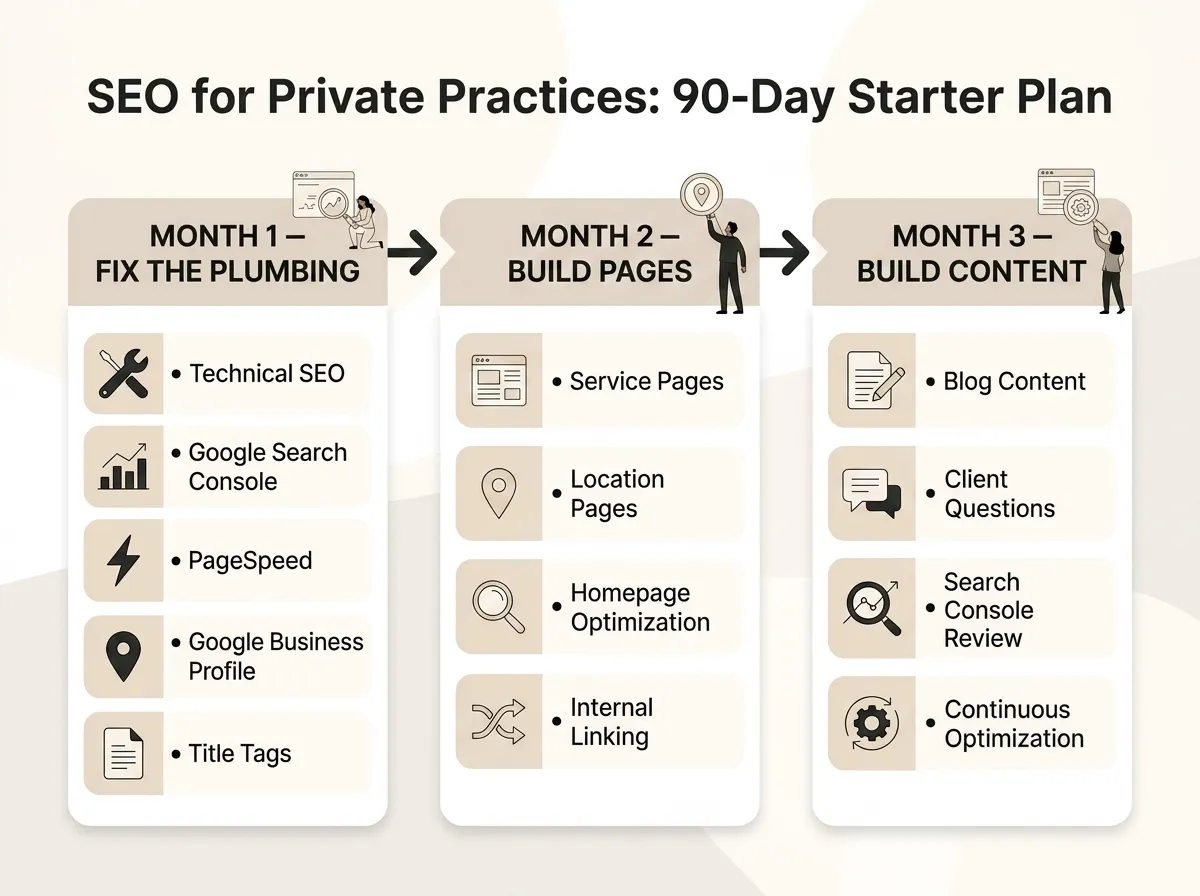
- SEO Optimization: Dedicated websites can be optimized for search engines, boosting their visibility and attracting more clients through organic search.
- Trust and Credibility: A dedicated online presence fosters a professional image, reinforcing trust and credibility in comparison to profiles that often lack depth.
Owning and maintaining a dedicated website helps therapists define a distinct online identity and present a comprehensive view of their practice.
How Does Ownership of a Website Support Professional Branding and Client Attraction?
Owning a website is foundational to consistent branding and client acquisition. It reduces dependence on third-party directories, lets therapists control marketing and client experience, and supports recognition that helps attract and retain clients.
What SEO and Visibility Benefits Do Therapist Websites Provide Over Profiles?
Websites offer measurable SEO advantages that generic listings cannot match.
- Enhanced Control Over Branding: Therapists can utilize keyword optimization, backlinks, and quality content strategies to rank higher in search engines.
- Local SEO Opportunities: Tailoring content to local demographics allows therapists to attract clients from their community effectively.
- Engagement Tools: Websites integrated with blogs or educational content can enhance visibility while providing added value to potential clients.
These strategies typically generate more qualified, organic inquiries than profile‑only listings.
How Does Optimizing Website Content Improve Search Ranking for Counselors?
Content optimisation starts with keyword research and continues with high-quality pages that use those keywords naturally. On‑page SEO (meta descriptions, header structure, image alt text) and regular content updates improve discoverability and attract relevant client traffic.
Why Is Schema Markup Important for Enhancing Therapist Website Discoverability?
Schema markup gives search engines structured details about services, reviews and contact information, increasing the chance of rich results and improving click‑through rates from search pages.
Frequently Asked Questions
How can therapists effectively utilize social media alongside their websites?
Use social posts to share articles and insights that drive traffic back to service and booking pages; let social channels build awareness while the website remains the conversion hub.
What role does mobile-friendliness play in a therapist’s website?
Mobile responsiveness ensures clear layout and easy contact on smartphones, reduces bounces and is favoured by search engines—making it essential for accessibility and visibility.
How can therapists measure the effectiveness of their websites?
Monitor page views, session duration, conversion rates and traffic sources with analytics; combine those metrics with client feedback to guide improvements.
What content should therapists include on their websites to improve client engagement?
Offer practical, evidence-informed content—blogs, videos, guides—and interactive elements like assessments or intake forms, always paired with clear calls to action.
How do therapists ensure their websites comply with legal and ethical standards?
Publish clear privacy policies, terms of service and disclaimers; obtain informed consent before collecting personal data and review policies regularly to stay compliant.
What strategies can therapists use for effective local SEO?
Optimize pages with location keywords, keep NAP consistent across listings, use local business profiles and encourage reviews to boost local visibility and trust.
Conclusion
A professional website is a strategic asset for therapists seeking trust and client growth. By presenting services clearly, highlighting feedback and credentials, and maintaining strong security, therapists can increase engagement and conversions. Investing in a custom website strengthens credibility and supports measurable practice growth.