The True Cost of Therapy Directory Listings: Understanding Pricing and Alternatives for Therapists
Therapists often rely on directory listings to establish an online presence, but the true cost goes beyond advertised fees. This article summarizes common pricing models and hidden charges, compares directories with professional websites, and outlines how to evaluate return on investment when choosing between listings and bespoke solutions.
Pricing Structures for Therapy Directory Listings:
Understanding directory pricing models helps therapists expand reach while controlling expenses. Directories use different fee structures that change total cost and value.
What Are the Typical Therapy Directory Listing Fees in 2023?

In 2023, fees vary by platform and package. For example, Psychology Today lists packages roughly $29.95–$60 per month; GoodTherapy averages about $39.95; TherapyDen offers free and premium tiers up to $39 monthly. Zocdoc may charge per booking, and Headway takes a percentage of reimbursements. Costs add up faster when you list on multiple services.
How Do Subscription Models Affect Therapist Directory Costs?
Subscription tiers (basic, enhanced, premium) govern visibility and long-term cost-effectiveness. Premium listings often deliver more exposure and higher conversion rates, which can justify higher fees for many practices.
Potential Alternatives for Therapists:
Alternatives can improve ROI. A custom website gives therapists control over branding, messaging, and client interactions while reducing long-term dependency on paid listings.
Which Hidden Fees Should Therapists Expect in Therapy Directory Listings?

Directories may add costs beyond the monthly price, increasing overall marketing spend.
- Initial Setup Fees: Some directories charge to create and maintain a detailed profile.
- Additional Service Charges: Extra fees may apply for enhanced visibility or priority placement.
- Cancellation Fees: Early termination penalties can raise exit costs.
Include these charges when assessing directory value.
How Can Professional Therapy Websites Reduce Dependence on Costly Directory Listings?
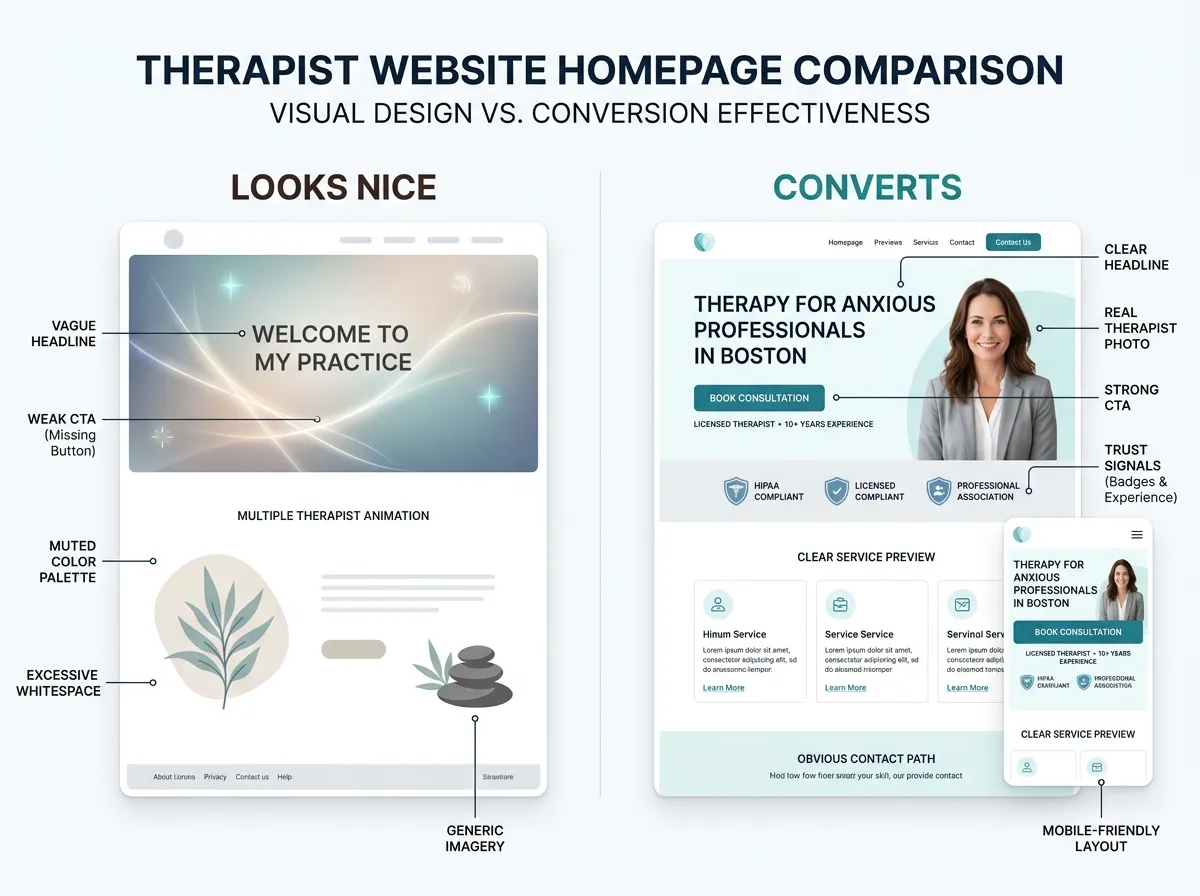
A professional website combines SEO and content to attract organic traffic. It serves as more than a listing, positioning therapists as specialists and strengthening credibility beyond directory profiles.
What Are the Benefits of Custom Therapist Websites for Lead Conversion?
Custom sites help convert leads by offering:
- Enhance Branding: A unique online presence that reflects the practice.
- Support Content Marketing: Publish resources that address client needs and build trust.
- Boost SEO: Tailored sites often rank better and drive organic traffic.
Together, these elements improve lead generation and client engagement.
How Does Investing in Professional Web Design Lower Marketing Costs?
Quality web design lowers long-term marketing costs. While it demands an upfront investment, a well-built site reduces reliance on directory subscriptions and increases client-acquisition efficiency.
- Reduced Subscription Fees: A website lessens the need for multiple costly listings.
- Enhanced Client Acquisition: Strong content and SEO attract more organic visitors who convert.
- Lifetime Value: A usable site encourages repeat bookings and long-term client retention.
Up-front design costs are often offset by long-term savings.
What Should Therapists Consider When Choosing Between Directories and Professional Website Solutions?
When choosing, compare these factors:
- Cost-Effectiveness: Weigh cumulative directory fees against web development and maintenance costs.
- Brand Control: A website provides greater control over messaging and presentation.
- Client Engagement: Consider how each option converts visitors into clients.
An informed choice will improve ROI and market position.
How to Evaluate Therapy Directory ROI Versus Website Investment?
Compare client acquisition costs and long-term sustainability to evaluate ROI.
- Client Acquisition Costs: Track the cost to acquire a client via directories versus an optimized website.
- Visibility: Measure visits, inquiries, and conversion rates for each channel.
- Longevity: Consider recurring costs and how sustainable each option is over time.
These metrics help allocate marketing budgets more effectively.
What Are Key Factors in Selecting Marketing Platforms for Mental Health Professionals?
Choose platforms by evaluating:
- Brand Compatibility: Ensure the platform aligns with professional values and goals.
- Control Over Content: Prefer platforms that allow custom messaging and branding.
- Financial Implications: Consider cost versus benefit and watch for hidden fees.
These considerations support a more effective marketing approach.
With these insights, therapists can navigate directory complexities and select appropriate solutions. Weigh directory costs and website returns to choose a strategy that best supports practice growth.
Frequently Asked Questions
1. Are therapy directory listings worth the investment for new therapists?
Directories can give new therapists visibility and access to clients. Assess expected engagement and costs in your market; combining directories with a tailored website often balances immediate exposure and long-term growth.
2. How can therapists effectively track the ROI from directory listings?
Record leads from directories and your site, track conversions to sessions, and calculate cost per acquired client. Review these metrics regularly to judge platform effectiveness.
3. What are the potential downsides of relying solely on therapy directories?
Relying only on directories carries risks: recurring subscription costs, limited brand control, and reduced opportunity to build an owned online presence and long-term credibility.
4. How important is SEO for therapists’ websites compared to directory listings?
SEO is essential for sustainable visibility. A well-optimized site targets relevant clients and often yields higher conversion rates than directory traffic alone.
5. Can therapists benefit from combining directory listings with a professional website?
Yes. Directories provide quick exposure while a custom site gives brand control, content opportunities, and stronger SEO—together improving engagement and retention.
6. What should therapists prioritize when building their online presence?
Prioritise clear messaging, user-friendly design, and solid SEO. Create content that answers client needs, ensure easy navigation, and use social media to support visibility for an integrated presence.
7. How can therapists ensure they choose reputable therapy directories?
Research directories for peer reviews, transparent pricing, and clear confidentiality policies. Prefer platforms that emphasize therapist profiles and engagement, and ask colleagues for recommendations.
Conclusion
Understanding directory costs enables better marketing decisions. A professional website can boost engagement and brand control while reducing reliance on paid listings. Evaluate alternatives and choose a tailored strategy to maximise visibility and support practice growth.