Therapist Website Cost Analysis: Understanding the Real Cost of Renting Your Online Presence
In the digital age, therapists face a critical decision regarding their online presence: to rent space on therapy directories or invest in their own websites. This article delves into the real costs associated with directory dependency, highlighting the financial implications and long-term consequences of relying on third-party platforms. Readers will learn about the various factors influencing website pricing, the hidden costs of directory listings, and the benefits of owning a custom therapist website. By understanding these elements, therapists can make informed decisions that enhance their branding and client acquisition strategies.
The discussion will cover key areas, including the cost breakdown of website services, the financial costs of therapy directory dependency, and the long-term implications of losing brand control. Additionally, we will explore alternatives to directory dependency and how owning a website can improve client conversion rates and brand authority.
Factors Influencing Pricing
The pricing of therapist websites is influenced by several factors that determine the overall cost. Understanding these elements is crucial for therapists looking to invest wisely in their online presence. Key factors include design complexity, functionality requirements, and SEO considerations.
Design complexity refers to the intricacy of the website layout and user interface, which can significantly affect costs. Functionality requirements encompass the features needed, such as appointment scheduling, client portals, and secure messaging systems. Lastly, SEO considerations are vital for ensuring the website ranks well in search engines, which may require additional investment in optimization services.
Therapist Website Costs: True Price of Directory Dependency

A detailed breakdown of the costs associated with therapist websites reveals the financial commitment required for a professional online presence.
This breakdown illustrates that while the initial investment may seem high, the long-term benefits of owning a website can outweigh the costs associated with directory listings.
Long-Term Financial Implications
Investing in a professional website offers significant long-term financial benefits. Unlike directory listings, which can accumulate fees of $1,000 2,000+ over three years without any ownership, a custom website becomes an asset that can appreciate in value.
Additionally, a well-optimized website can lead to increased client acquisition, reducing the overall cost per client over time. This cost-effectiveness is a compelling reason for therapists to consider transitioning from directory dependency to owning their own digital space.
Alternatives to Directory Dependency
Therapists have several alternatives to relying solely on therapy directories. Owning a website allows for greater control over content and branding, enabling therapists to present their unique value propositions directly to potential clients.
Supplementary use of directories can still be beneficial, but it should not be the sole strategy for client acquisition. Content marketing, including blogs and social media engagement, can also enhance visibility and attract clients organically.
What Are the Financial Costs of Therapy Directory Dependency?
Relying on therapy directories incurs various financial costs that therapists must consider. Subscription fees for platforms like Psychology Today can be approximately $29.95 per month, which adds up over time.
Moreover, hidden expenses may arise from a lack of ownership, such as limited client connection and opportunity costs associated with not having a personalized online presence. These factors can significantly impact a therapist’s financial health and client acquisition strategies.
What Hidden Expenses Arise from Relying on Therapy Directories?
Therapists often overlook hidden expenses associated with directory dependency. The lack of ownership means that therapists do not control their branding or client relationships, which can lead to missed opportunities.
Additionally, the opportunity costs of relying solely on directories can be substantial. Therapists may find themselves competing for visibility in saturated markets, leading to increased marketing expenses and reduced client engagement.
What Risks Does Directory Dependency Pose to Therapist Branding and Client Acquisition?
Directory dependency poses several risks to therapist branding and client acquisition. The reliance on third-party platforms can dilute brand identity, making it challenging for therapists to establish a unique presence in the market.
Client trust issues may also arise, as potential clients may perceive directory listings as less personal compared to a dedicated website. This perception can hinder long-term business sustainability and growth.
How Does Directory Saturation Limit Therapist Visibility?
Directory saturation can significantly limit therapist visibility. As more practitioners join these platforms, competition increases, making it difficult for individual therapists to stand out.
Limited control over branding and the variable quality of leads can further exacerbate this issue. Therapists may find themselves investing more in marketing efforts without seeing proportional returns, highlighting the need for a more strategic approach to online presence.
What Are the Long-Term Consequences of Losing Brand Control?
Losing brand control through directory dependency can have lasting consequences for therapists. The erosion of brand identity can lead to client trust issues, as potential clients may struggle to differentiate between practitioners.
Additionally, the vulnerability of reputation becomes a concern, as therapists are at the mercy of directory policies and changes. This lack of control can hinder growth and limit opportunities for establishing a strong professional identity.
What Are the Benefits of Owning an Independent Therapist Website?

Owning an independent therapist website offers numerous benefits that enhance client engagement and branding. A custom website allows therapists to control their content, ensuring that their unique voice and approach are effectively communicated.
Moreover, having a dedicated online space can lead to improved client conversion rates, as potential clients are more likely to engage with a professional and personalized website. This investment not only enhances visibility but also establishes authority in the field.
How Does a Custom Website Enhance Client Conversion Rates?
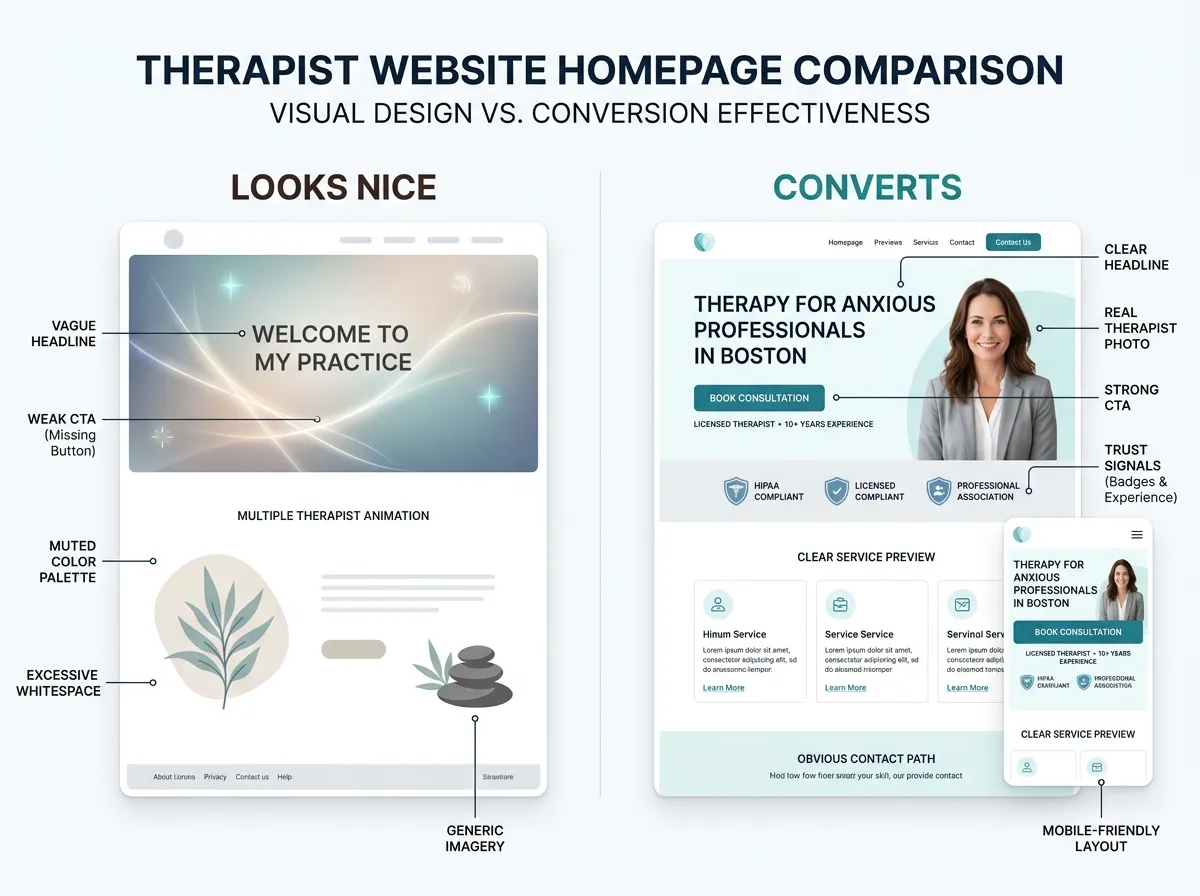
A custom website can significantly enhance client conversion rates through several mechanisms. Unique branding and user-friendly navigation create a positive first impression, encouraging potential clients to explore services further.
Clear calls to action, such as easy appointment scheduling and contact forms, facilitate client engagement. By streamlining the user experience, therapists can effectively convert visitors into clients, maximizing the return on their website investment.
In What Ways Does Website Ownership Improve Brand Authority?
Website ownership improves brand authority by allowing therapists to present their expertise and services in a controlled environment. This control fosters trust and credibility, essential components for attracting and retaining clients.
Additionally, a well-optimized website can enhance search engine rankings, further establishing authority in the field. As therapists build their online presence, they can position themselves as thought leaders, contributing to their overall brand strength.
How Can Therapists Calculate the Return on Investment of Their Website?
Calculating the return on investment (ROI) of a therapist’s website involves identifying key metrics and evaluation methods. Therapists should track client acquisition costs, lead conversion rates, and overall revenue generated through the website.
By comparing these metrics against the initial and ongoing costs of website ownership, therapists can gain insights into the financial benefits of their investment. This analysis is crucial for making informed decisions about future marketing strategies.
What Metrics Measure Therapist Website Performance?
Measuring therapist website performance involves analyzing several key metrics. Traffic volume, conversion rates, and engagement metrics provide valuable insights into how well the website is performing.
By regularly monitoring these metrics, therapists can identify areas for improvement and optimize their online presence to better meet client needs.
How to Compare Website ROI Versus Directory Costs Effectively?
Comparing website ROI with directory costs requires a comprehensive analysis of client acquisition costs and long-term benefits. Therapists should evaluate the effectiveness of their website in attracting clients compared to the ongoing fees associated with directory listings.
This comparison can help therapists understand the true value of investing in their own online presence, guiding future marketing decisions.
What Steps Should Therapists Take to Transition from Directory Listings to Their Own Website?
Transitioning from directory listings to a personal website involves several key steps. Therapists should first assess their current online presence and identify areas for improvement.
Next, building the website should focus on user experience and branding. Finally, measuring and optimizing the website’s performance will ensure that it effectively meets client needs and drives engagement.
How to Plan and Execute a Successful Website Launch?
Planning and executing a successful website launch requires careful consideration of several factors. Therapists should begin by auditing their current online presence to identify strengths and weaknesses.
Defining the ideal client and investing in a professional website design are crucial steps. By ensuring that the website aligns with their branding and client expectations, therapists can maximize the impact of their launch.
What Lead Generation Strategies Integrate Best with Therapist Websites?
Effective lead generation strategies for therapist websites include content marketing, SEO strategies, and social media engagement. By creating valuable content that addresses client needs, therapists can attract organic traffic to their websites. Implementing SEO strategies ensures that the website ranks well in search engines, while social media engagement can drive additional traffic and foster community connections. These strategies work synergistically to enhance online visibility and client acquisition.
Indeed, a well-optimized website is often cited as the most effective channel for generating new clients and boosting revenue in today’s digital landscape.
Website Marketing for Lead Generation & Revenue
Currently, their primary source of new clients is through their website because after trying other channels, website is the most effective and digital marketing nowadays have proven to be highly impactful. To increase sales and help PT. LVC grow, their website needs to be optimized to generate leads or potential customers, ultimately boosting revenue.
Enhancing PT. LVC Website Marketing Strategy To Generate Leads Through Conversion Rate Optimization (CRO), AR Qastharin, 2024