Therapist SEO Keyword Research: The Keyword Strategy Directories Can’t Match
Effective keyword research is essential for therapists who want better online visibility. Directory suggestions are often generic; this article outlines targeted keyword practices—long-tail phrases, niche targeting, discovery tools, and semantic SEO—that improve client engagement and conversion.
Effective Techniques for Keyword Research
Follow a clear process: identify service- and specialty-specific keywords, use tools for volume and competition data, and analyse competitors to uncover gaps you can fill.
- Identify Relevant Keywords: Map terms that match your services and specialties.
- Utilize Keyword Research Tools: Use tools to assess volume and difficulty.
- Analyze Competitor Keywords: Find gaps and opportunities to differentiate your practice.
This streamlined approach helps prioritize pages and content that attract prospective clients.
Tools for Keyword Discovery

Choose tools that provide reliable suggestions, trends, and competitor insights to inform targeting decisions.
- Google Keyword Planner: Free baseline data on search volumes.
- SEMrush: Competitor keywords and trend data.
- Ahrefs: Niche suggestions and backlink insights.
- Google Trends: Seasonal and trend signals.
Use a combination of tools to validate keyword choices and prioritize high-value, intent-driven phrases.
Significance of Tailored Keywords
Tailored keywords match search intent more precisely than generic terms, attracting the right clients and strengthening credibility.
- Increase Visibility for Targeted Searches: Reach clients actively seeking specific services.
- Enhance Engagement Rates: Answer precise queries with focused content.
- Build Credibility Online: Demonstrate expertise in niche areas.
A coherent, focused keyword plan deepens connections with prospective clients and improves conversion potential.
What Are Long Tail Keywords and Why Are They Crucial for Mental Health Providers?
Long-tail keywords (three or more words) reveal specific intent, often face lower competition, and convert better—making them ideal for therapists targeting particular needs.
- Specific User Intents: Enable content that directly answers client queries.
- Improved Engagement and Conversion: Match intent, increasing the chance of contact or booking.
- Reduced Competition: Easier to rank for niche, precise phrases.
Integrating long-tail phrases into content and page targeting drives more relevant traffic.
How Do Long Tail Keywords Improve Therapist Website Visibility?
Long-tail phrases connect your practice with motivated searchers and offer stronger ranking opportunities for specific queries.
- Targeted Audience Connections: Align content with what clients are searching for.
- Higher Ranking Opportunities: Less competitive terms often rank faster.
- Increased Conversion Rates: Precise matches lead to more meaningful actions.
Use long-tail keywords on service pages, blog posts, and FAQs to capture intent-driven traffic.
Which Long Tail Keyword Examples Best Fit Therapy Niches?
Select phrases that clearly describe your services and the people you help. Examples include:
- Trauma Therapy for Adults: Targets adults seeking trauma support.
- Online Couples Counseling Options: Captures demand for remote relationship help.
- Child Anxiety Therapy Solutions: Attracts parents seeking specialist care.
- Mindfulness Techniques for Stress Relief: Appeals to users seeking practical strategies.
Use these as templates to create location- or population-specific variations.
How to Identify Niche Marketing Keywords Therapy Directories Overlook
Directories often list broad terms; to uncover underserved phrases, combine discovery tools with competitor analysis and focus on specific practice attributes.
- Utilizing Keyword Discovery Tools: Generate focused suggestions and question-based queries.
- Analyzing Competitor Keywords: Spot gaps where competitors under-serve specific queries.
- Using Specific Phrases: Emphasize modalities, populations, formats (e.g., teletherapy), and outcomes.
Target niche phrases where search intent aligns closely with your offerings.
What Tools and Methods Reveal High-Value Niche Keywords for Therapists?
Combine multiple methods to surface practical, low-competition opportunities. The Ahrefs Free Keyword Generator is one useful option.
- Google’s ‘People also ask’ Feature: Reveals common client questions to address.
- Competitor Analysis Tools: Use Ahrefs or SEMrush to adapt successful terms.
- Local SEO Strategies: Add location modifiers to capture local intent.
These methods give practical keyword ideas you can prioritize by intent and ease of ranking.
How Does Personalized Keyword Strategy Outperform Generic Directory Listings?

Personalized keyword strategies focus on your specialties, formats, and client needs, making your messaging more relevant than directory listings.
- Unique Branding Benefits: Emphasize what distinguishes your practice.
- Customized Content Effectiveness: Targeted pages convert better than generic listings.
- Higher Engagement Rates: Clients respond to content tailored to their situation.
Prioritize keywords that reflect your practice’s differentiators.
What SEO Tactics for Therapist Websites Drive Client Acquisition Beyond Directories?
Combine on-page optimization, valuable content, and outreach to attract clients organically.
- On-Page SEO: Use focused keywords, meta descriptions, and descriptive alt text.
- Content Marketing: Publish helpful resources that address client concerns and FAQs.
- Backlinking Strategies: Earn links from relevant local partners and mental health sites.
These tactics build authority and increase qualified traffic to your site.
How Does Integration of Clinical UX and Conversion Architecture Boost Website Performance?
Design and messaging that reflect clinical workflows and client needs improve usability and conversions.
- User-Centered Design Principles: Easy navigation and clear information hierarchy help visitors find help quickly.
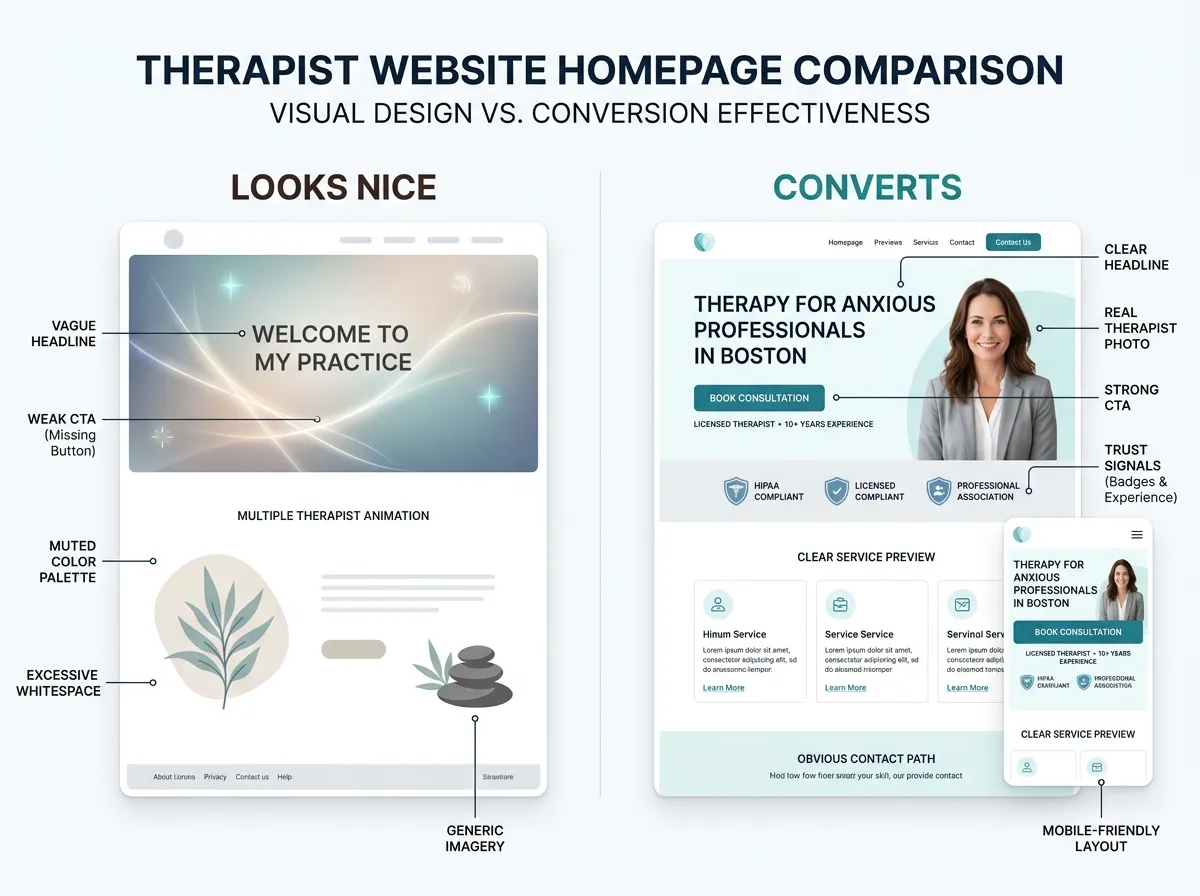
- Clear CTAs: Guide users to contact or booking actions with simple, persuasive CTAs.
- Trust-Building Content: Provide credentialed, compassionate content to reduce hesitation.
Align UX with clinical expectations to reduce friction and increase inquiries.
Why Are Semantic SEO and Schema Markup Essential in Therapy Keyword Strategy?
Semantic SEO and schema markup help search engines understand your services and present them effectively in results.
- Improved Search Visibility: Schema can surface relevant details to searchers.
- Enhanced Indexing: Semantic structure clarifies page intent for algorithms.
- Rich Snippets Benefits: Proper markup can increase click-through rates.
Apply appropriate schema types for services, articles, and local business details to improve search presentation.
How Do Customized Keyword Strategies Catalyze Growth for Counseling Websites?
Customized keywords attract more relevant visitors and lead to measurable growth in inquiries and bookings.
- Increased Organic Traffic: Targeted phrases draw the right audiences.
- Higher Conversion Rates: Relevant pages convert better than general ones.
- Client Inquiries Tracking: Monitor sources to refine keyword focus over time.
Use analytics and search-console data to iterate and improve keyword performance.
Frequently Asked Questions
1. What role does local SEO play in a therapist’s keyword strategy?
Local SEO helps you appear for geographically relevant searches; include city and neighborhood modifiers to increase local inquiries.
2. How can therapists use content marketing alongside their keyword strategy?
Create informative posts and pages that answer common client questions and optimise them for targeted keywords to attract organic traffic.
3. What are some examples of keyword variations therapists can use for better reach?
Use synonyms and alternate phrasing—e.g., “couples therapy,” “relationship counseling,” “marriage therapy,”—to capture related searches.
4. How often should therapists update their keyword strategy?
Review keywords every few months or when services change; track trends and competitor moves to stay current.
5. What metrics should therapists track to evaluate the effectiveness of their keyword strategy?
Monitor organic traffic, keyword rankings, bounce rates, and conversions (inquiries or bookings) using Google Analytics and Search Console.
6. Can social media play a role in enhancing a therapist’s SEO strategy?
Social media drives traffic and visibility; share keyword-optimised content and resources to amplify reach.
7. What common mistakes should therapists avoid in their keyword research?
Avoid relying only on broad or directory terms; prioritise long-tail, intent-driven phrases and assess competition before targeting keywords.
Conclusion
A tailored keyword strategy—focused on long-tail phrases, niche targeting, and semantic clarity—outperforms generic directory listings. Start by auditing current pages, prioritising high-intent keywords for services you specialise in, and measuring results to refine your approach.