Understanding the 6-Month Website ROI Timeline for Therapists: SEO and Growth Impact
A therapist’s website ROI affects practice growth and visibility. A clear six-month timeline helps practitioners prioritise tasks, measure progress, and see how specific SEO and design actions influence client acquisition.
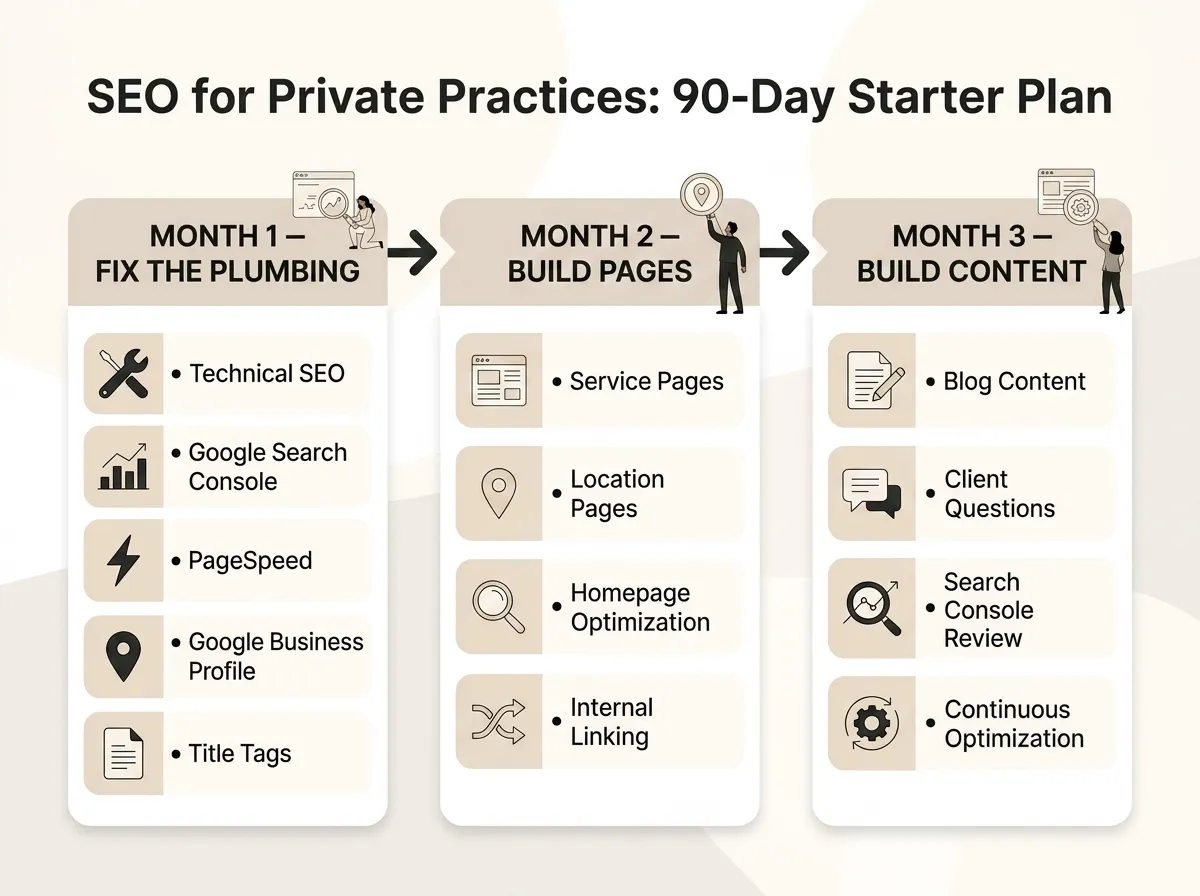
Initial Phase (Months 1-2)
The first two months focus on establishing a professional, search-ready site: intuitive navigation, professional visuals, basic on-page SEO (keywords, meta tags, alt text), and analytics setup to capture baseline data for future decisions.
Building Authority (Months 3-4)

Months three and four concentrate on authority through targeted content that answers client concerns and demonstrates expertise to convert search interest into trust and enquiries.
Regularly publish informative blog posts and articles that match search intent and build clinical credibility to support SEO gains and organic traffic growth.
Measurement and Optimization (Months 4-6)

Between months four and six, focus on measurement and iterative optimisation: review traffic, conversions, and engagement, then prioritise content updates, SEO tweaks, and UX refinements based on data.
Continuous iteration improves outcomes and helps maximise ROI by emphasising what demonstrably drives enquiries.
Long-Term Impact
A structured six-month plan usually produces measurable SEO gains, increasing enquiries and conversion rates over time. Ongoing optimisation and authority work create a durable foundation for practice growth and compounding ROI.
What Is the Typical ROI Timeline for Therapist Websites?
Therapists often see initial returns within four to six months, depending on the scope and consistency of SEO and marketing efforts.
How Does SEO Influence Client Acquisition Within 6 Months?
SEO improves visibility for relevant searches; solid keyword research, on-page optimisation, UX improvements, and local SEO help attract clients searching for nearby services.
What Are Industry Benchmarks and Recent 2023 Data on ROI Timing?
Benchmarks indicate ROI commonly appears in four to six months. By 2023, targeted SEO investments generally produced stronger lead generation and lower acquisition costs than unfocused approaches.
Which Website Design Factors Drive Measurable ROI for Mental Health Professionals?
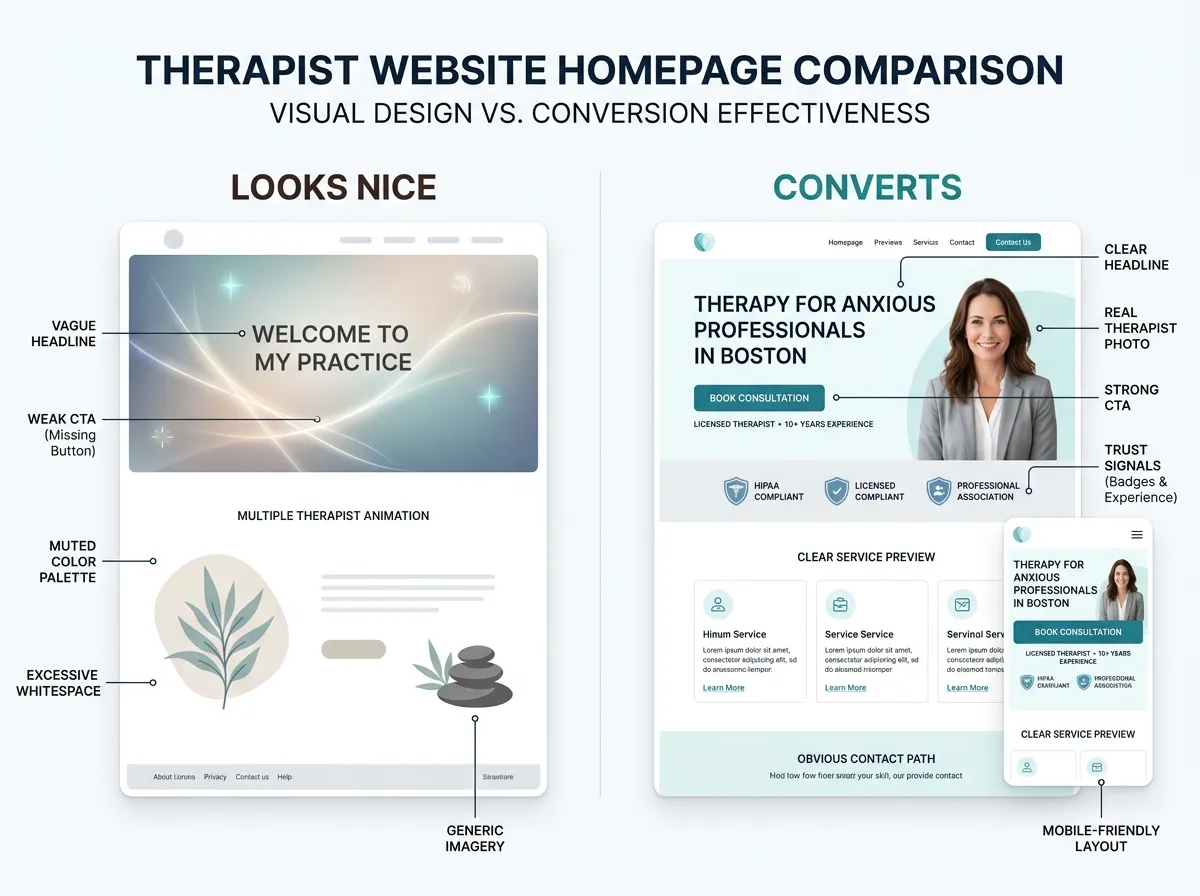
Effective design captures attention and reduces friction to guide visitors toward booking or contacting the practice.
Primary design elements include:
- User-Friendly Navigation: Clear menus and page structure help visitors find information quickly.
- Clear Calls to Action: Prominent CTAs guide users to book or enquire.
- Mobile Optimization: Mobile-friendly layouts retain users and improve conversions.
How Does Conversion Architecture Optimize Therapist Website Growth?
Site architecture and conversion-focused elements streamline the journey from discovery to inquiry.
Key techniques include:
- Effective CTAs: Strategically placed prompts for booking or signup.
- Online Booking Integrations: Easy scheduling reduces friction and boosts conversions.
- Simplified User Experience: Streamlined pages and clear paths keep visitors engaged.
What Role Does Clinical UX Play in Streamlining Patient Navigation?
Clinical UX minimises barriers by prioritising intuitive pathways and a clear information hierarchy, reducing drop-off and improving engagement.
Key factors to consider include:
- Intuitive Navigation Design: Logical paths guide users to needed information.
- Trust-Building Elements: Testimonials and credentials reassure prospective clients.
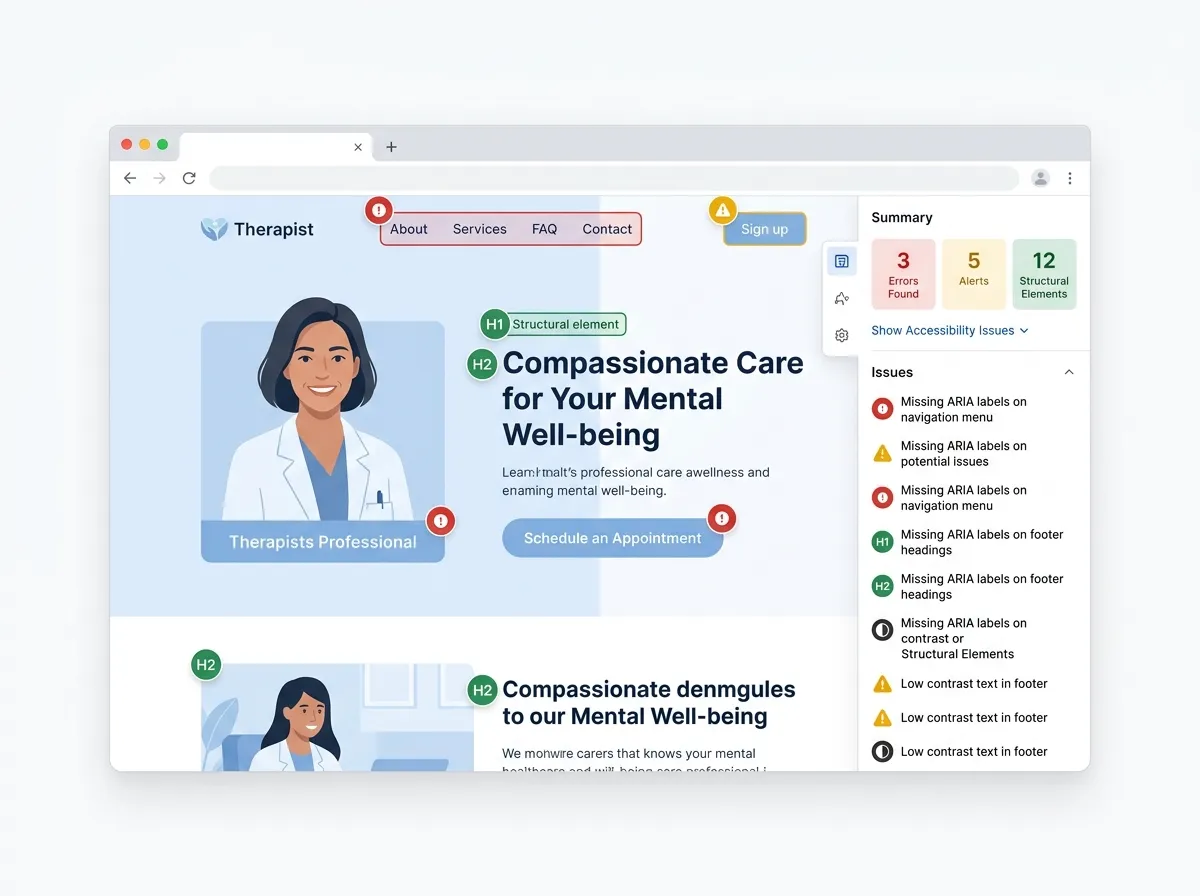
- Accessibility Importance: Accessible design ensures all visitors can use the site.
How Can Therapists Measure and Forecast Website ROI Effectively?
Measure ROI with KPIs that reflect traffic quality and conversions, then use those metrics to forecast and prioritise work.
Key methods include:
- Analytics Tools: Platforms like Google Analytics show visitor behaviour and conversion paths.
- Client Acquisition Cost Tracking: Monitor costs to evaluate marketing efficiency.
- Regular Reporting: Frequent reports identify trends and support forecasting.
Which Metrics Should Be Tracked to Assess Client Acquisition Impact?
Track metrics that link traffic to enquiries and revenue to understand the website’s contribution to client acquisition.
- Client Acquisition Cost (CAC): Cost to gain a new client.
- Lead Conversion Rates: How well traffic becomes enquiries or bookings.
- Overall Revenue Tracking: Revenue from new clients to gauge financial ROI.
What Tools and Techniques Support Accurate ROI Tracking in Therapy Practices?
Combine analytics, SEO tracking, and email metrics for a complete performance view.
- Google Analytics: Core traffic and conversion data.
- SEO Tracking Tools: Monitor keyword performance and rankings.
- Email Marketing Metrics: Measure campaign engagement and conversions.
What Are Proven Strategies to Maximize Website ROI Within 6 Months?
Apply targeted tactics that improve visibility and conversion together to achieve measurable ROI in six months.
- Professional Web Design Investments: Better design improves engagement and trust.
- Regular Content Marketing: Consistent, relevant content builds authority and search visibility.
- Online Booking Integrations: Simplified booking increases conversion rates.
How Does SEO Timeline Planning Align With Therapist Business Growth Goals?
An SEO timeline sets milestones and expected outcomes so marketing work aligns with business objectives and is auditable against growth goals.
Key considerations include:
- Structured Timeline for Website Growth: Milestones help track progress and adapt tactics.
- Phased Approach to SEO: Implement changes in stages based on performance data.
- Measurable Outcomes from SEO Integration: Regular reviews ensure alignment with client acquisition goals.
What Client Success Stories Demonstrate Effective 6-Month ROI Outcomes?
Case studies show structured strategies can deliver measurable results in six months.
- Case Study One: A private practice saw a 40% increase in new client inquiries within six months through a targeted content strategy.
- Case Study Two: After SEO-focused updates, a therapy group achieved first-page rankings for several key terms and increased web traffic.
- Case Study Three: A local SEO effort made one practice the most queried therapy service in its region, driving local engagement.
These examples show how a structured timeline and targeted improvements strengthen web presence and support sustained client acquisition.
Frequently Asked Questions
What are the common mistakes therapists make when establishing their online presence?
Common errors include skipping keyword research, ignoring site speed and mobile optimisation, and having weak calls-to-action.
How long does it typically take to see tangible results from SEO efforts?
Substantial SEO results typically appear within four to six months as search engines index updates and content gains traction.
Are there specific SEO tools therapists should use to measure their website effectiveness?
Use Google Analytics for visitor and conversion data and SEO platforms like SEMrush or Moz for keyword and ranking insights.
How important is local SEO for therapists seeking new clients?
Local SEO is important because many clients search for nearby services; optimise local listings and maintain consistent NAP information.
What role does content marketing play in enhancing a therapist’s online ROI?
Content marketing builds authority, addresses client concerns, supports SEO, and attracts organic traffic that can convert to enquiries.
Can therapists expect variations in ROI based on their niche or practice type?
Yes. ROI varies by niche, location, and competition; specialisations and competitive markets affect the intensity of effort required.
Conclusion
Understanding the six-month ROI timeline helps therapists plan targeted SEO and design work that drives client acquisition and sustainable growth. Structured implementation and regular optimisation strengthen visibility and maximise long-term ROI.