Creating a website for a therapy practice comes with significant responsibilities, particularly regarding compliance with legal frameworks such as HIPAA (Health Insurance Portability and Accountability Act) and ADA (Americans with Disabilities Act). These regulations aim to protect patient information and ensure that digital spaces are accessible to all users, including individuals with disabilities. This article serves as a comprehensive guide, offering a technical blueprint for achieving compliance through secure and accessible website design.
In the following sections, we will explore the critical elements of a “HIPAA and ADA compliance checklist”, detailing the legal requirements, secure website design principles, and essential policies. We will also highlight the importance of regular security audits and user-centric design features, ultimately enhancing your site’s security and accessibility for clients.
Technical HIPAA & ADA Compliance Checklist for Therapy Websites
To ensure that therapy websites meet the necessary standards, it’s important to adhere to a robust compliance checklist. This will not only protect sensitive patient information but also foster trust between therapists and clients.
1. Legal Requirements:
Legal compliance is the cornerstone of a trustworthy therapy website, primarily involving adherence to HIPAA and ADA standards.
HIPAA Compliance:
HIPAA compliance mandates that healthcare providers, including therapists, protect the confidentiality of patient health information. This includes implementing strict access controls to electronic records, ensuring secure data transmission, and conducting regular training for staff on privacy policies. Following these requirements helps prevent data breaches and establishes a foundation for safeguarding patient information, thereby enhancing client trust.
ADA Compliance:
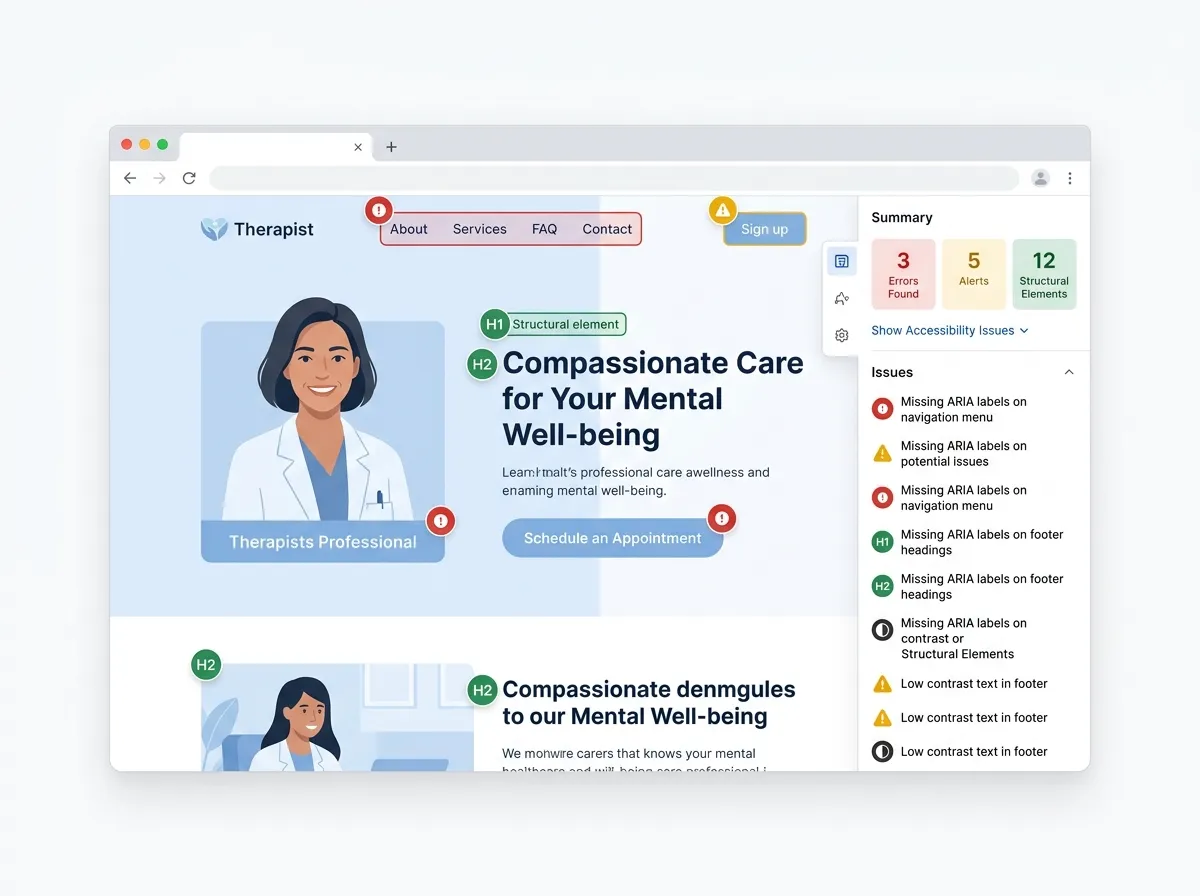
ADA compliance dictates that “therapy websites” must be accessible to individuals with disabilities. This can involve adhering to the Web Content Accessibility Guidelines (WCAG), which includes using alternative text for images and maintaining navigational ease for users with disabilities. By implementing these standards, therapists can ensure that their services are available to all, fostering inclusiveness and compliance with federal regulations.
Understanding the historical shift toward digital accessibility is crucial for modern therapy practices navigating these legal obligations.
The Evolution of ADA Compliance in Digital Healthcare Design
Despite updates made to the legislation since its original passage, the ADA initially focused on pressing issues of accessibility in physical structures and architecture. While this need remains true today, technology has become a more prominent issue. This is particularly important during the Coronavirus pandemic, where rapid innovations in telehealth have a large marginal impact for people with disabilities. Inclusive innovation in telehealth, 2020
Secure Website Design Principles:
A secure design is paramount for any therapy website. This aspect encompasses various strategies that enhance website security and user experience.
Every website must implement SSL (Secure Sockets Layer) certificates to encrypt data between users and servers, thereby protecting sensitive information such as patient data. Additionally, employing regular software updates and security patches can prevent vulnerabilities from being exploited by cyber threats.
Moreover, integrating two-factor authentication for sensitive areas of the website helps verify user identities before granting access to sensitive information. Such measures underscore the importance of safeguarding patient confidentiality through technological means.
Privacy Policies:
A well-crafted privacy policy outlines how user data will be handled, detailing the types of information collected and how it will be used or shared. A transparent privacy policy not only fosters trust but also demonstrates legal compliance with both HIPAA and ADA standards. It is essential for therapists to regularly review and update their privacy policies, ensuring that they align with current regulations and technological practices.
Regular Security Audits:
Conducting regular security audits is critical for monitoring compliance and identifying vulnerabilities within the website. These evaluations involve assessing current security measures, software configurations, and data access protocols. Implementing a “check-up” schedule, ideally every 6 to 12 months, can help keep security measures up to date, ensuring continuous protection of patient information.
This ongoing vigilance emphasizes the need for mental health professionals to remain proactive in their approach to website security, especially when choosing between independent sites or “therapy directories”.