SEO for Mental Health Professionals in Therapists
By Therapeia Web Design Editorial Team · Updated 2026-08-05
SEO for therapists means optimizing a practice website for local search terms, Google Business Profile listings, and location-based keywords, since most prospective clients begin their search on Google. It requires ongoing work—local map listings, on-page content, and technical fixes—so a practice keeps ranking as search algorithms evolve. Therapeia Web Design, a 50-employee agency based in Bolton, Manchester, builds semantic SEO and schema markup tailored for mental health professionals, pairs local SEO with clinical UX, and structures sites to convert searches into booked consultations, not just traffic.
Key Takeaways
- Most clients searching for mental health support begin their journey on Google search results.
- SEO helps therapists reach local patients actively seeking mental health services in their area.
- Therapeia Web Design, based in Bolton, Manchester, employs 50 staff supporting therapy practice visibility.
- Effective SEO requires convincing Google’s algorithm your website deserves top ranking positions consistently.
What Do You Need Before Starting Therapist SEO?
A readiness checklist matters more than a marketing calendar. Google remains the first stop for most people searching for a therapist. A practice without search visibility loses new client inquiries before a phone ever rings. Getting SEO right for a therapy practice demands specific groundwork before any campaign launches.
What technical knowledge does a therapist need before starting SEO?
A practice owner needs a working grasp of how Google ranks pages, how keywords signal relevance, and how backlinks and site speed affect placement. Skipping this foundation wastes time on tactics that don’t move rankings.
Is local SEO really necessary before general SEO?
Yes. Local optimization functions as a core building block, not a bonus step, since most searches include a location. A practice ignoring local signals competes at a permanent disadvantage.
Before building keyword strategy, confirm these prerequisites:
- A website built on a stable, modern platform with room to scale
- Baseline understanding of Google’s ranking factors
- A local SEO plan mapped alongside content and technical work
Therapeia Web Design supports therapists nationwide with performance-focused foundations built for this exact groundwork.

How Do You Execute Local And On-Page SEO?
Local visibility determines whether a private practice appears when a prospective client searches nearby for support. Improving local presence stands as the fastest route to reaching people actively looking for help, ahead of broader brand-building efforts. Effective local SEO for a therapy practice treats this layer as the foundation, then builds outward into content and technical structure.
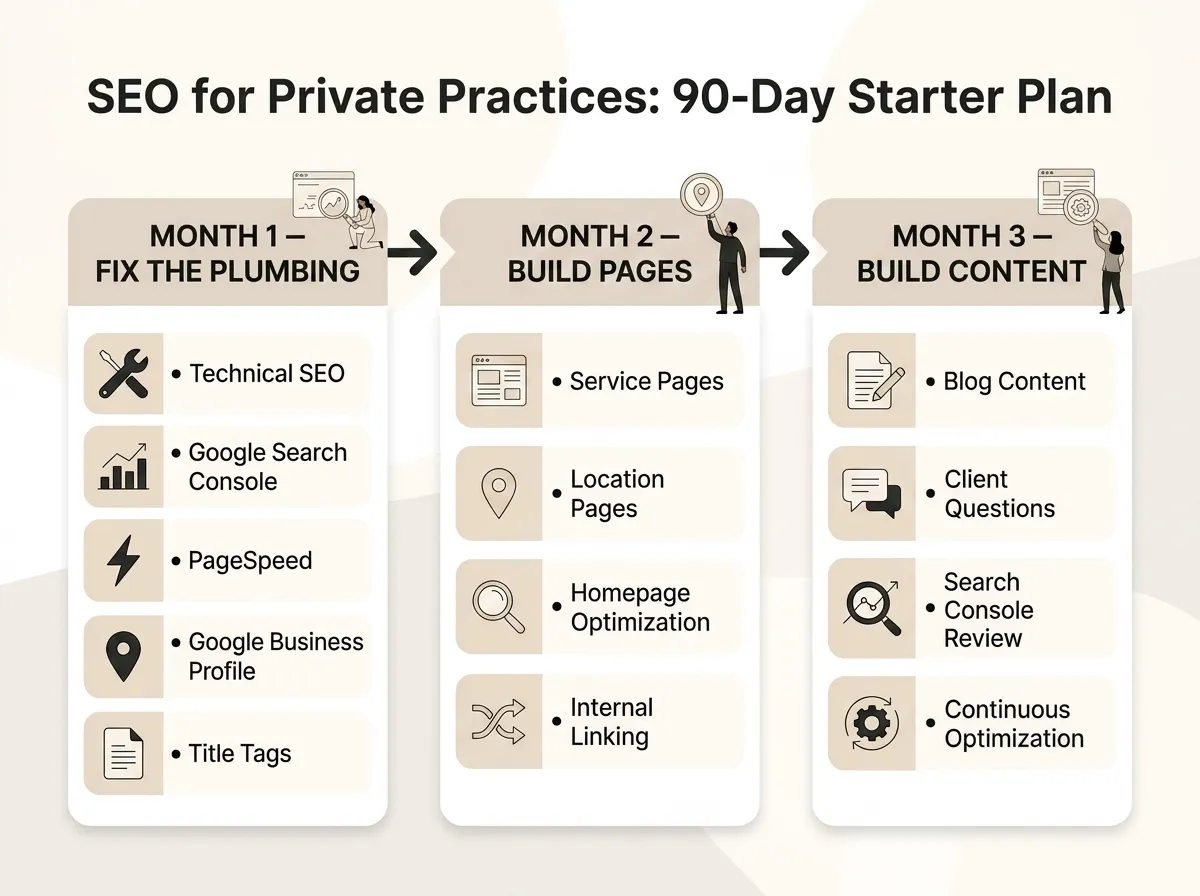
Execution follows a defined sequence rather than a single fix. Practices that treat search optimization as ongoing work, not a one-time project, see steadier results over time. The following steps outline the order in which local and on-page elements should be addressed.
- Claim and complete a Google Business Profile with accurate practice name, service area, and specialties.
- Select keywords that match how prospective clients search for therapy services, then map each keyword to a specific page.
- Structure page content—headings, service descriptions, FAQs—around those chosen keywords so pages answer real search intent.
- Build backlinks from directories, professional associations, and referral partners to signal credibility to search engines.
- Audit the website’s technical performance, including load speed and mobile structure, since these factors weigh directly on ranking.
What counts as on-page SEO for a therapy website?
On-page SEO covers everything published directly on a practice’s site: page titles, headings, service copy, and internal links. Selecting therapist-specific keywords and organizing content around them helps pages match the exact phrases clients type into Google. Without this structure, even well-written content struggles to surface for relevant searches.
Why do backlinks matter for a private practice?
Backlinks act as endorsements from other credible websites, telling search engines a practice’s site deserves trust. Combined with strong on-page content, they form one of the core building blocks search algorithms weigh when ranking mental health providers. Therapeia Web Design incorporates local SEO structuring. Technical audits into site builds, helping practices execute these steps without diverting time from clinical work.

What Common SEO Mistakes Should Therapists Avoid?
Overlooked basics rank as the costliest mistake practices make online. Skilled clinicians often discover their websites never appear on Google, leaving open appointment slots week after week despite genuine expertise. This gap rarely reflects a lack of talent. It reflects neglected search optimization, from missing metadata to thin, generic page content.
Delay compounds the problem. Most prospective clients begin their search for support on Google. Demanding caseloads push marketing to the bottom of the to-do list. That postponement costs visibility every single week a site sits unoptimized.
Why does a therapy website fail to show up in search results?
A site fails when it gives Google’s algorithm no reason to trust its relevance for therapist-related searches. Google favors pages that clearly signal expertise and topical focus.
Common gaps include:
- Thin or duplicate service-page content
- Missing location and specialty keywords
- No structured data marking credentials
- Slow-loading, non-mobile pages
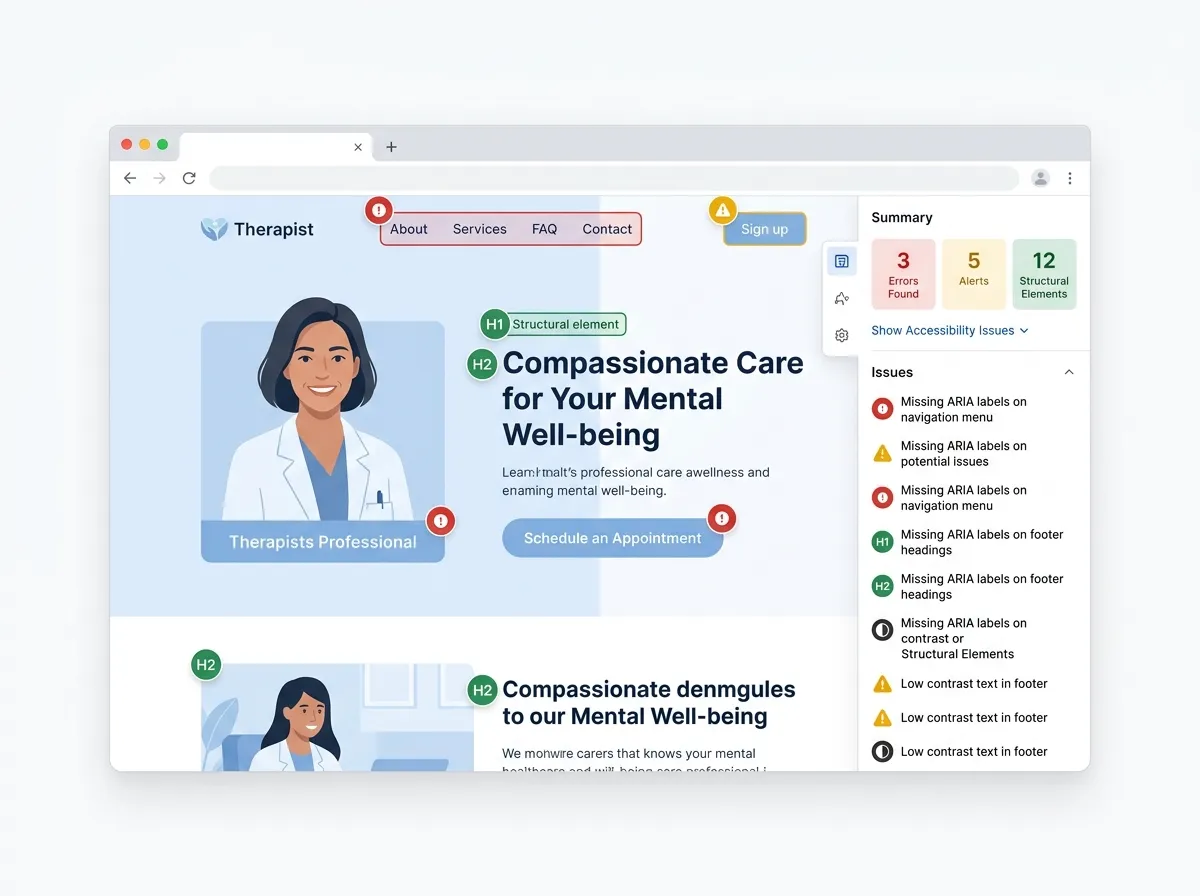
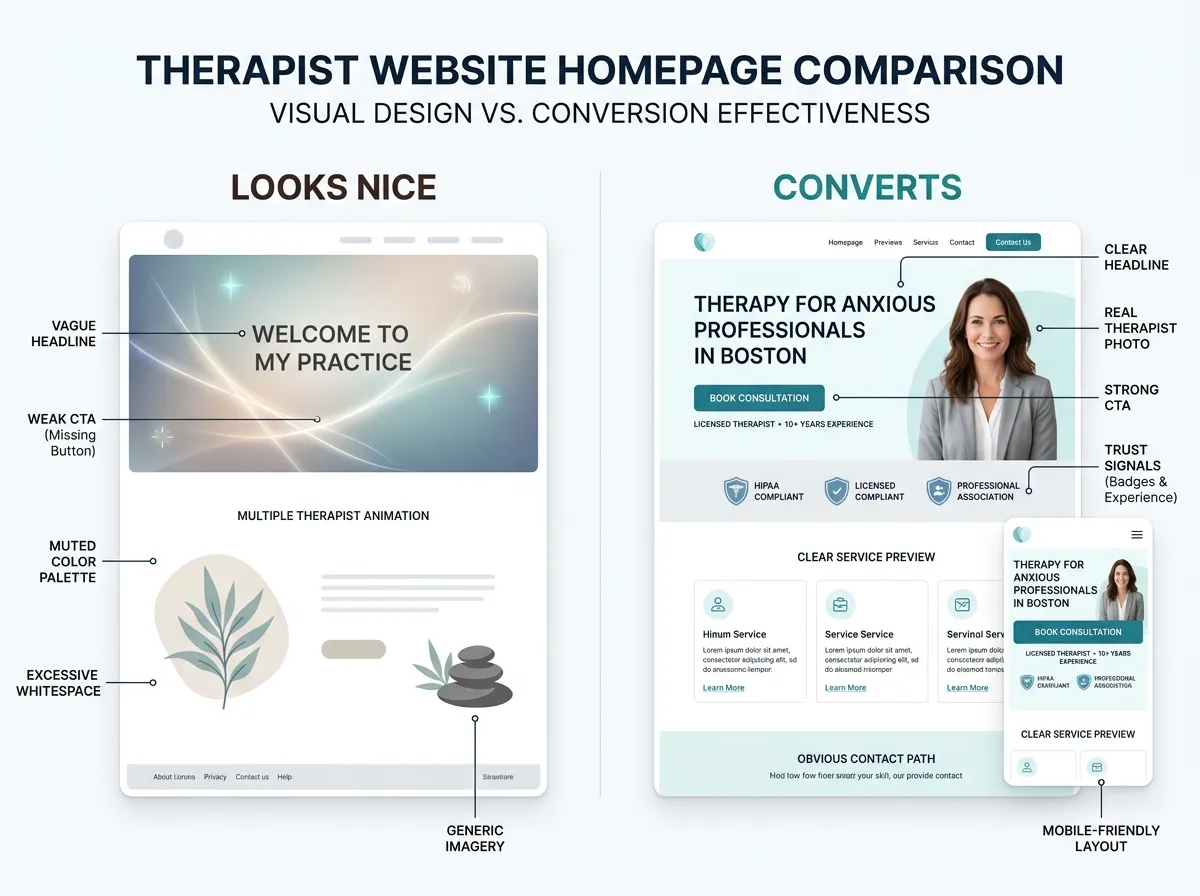
Effective SEO for therapists transcends keyword optimization—it represents a strategic commitment to visibility. Accessibility for those actively seeking mental health support. By implementing clinical UX principles, semantic markup, and trauma-informed design, therapy practices establish digital credibility while reducing barriers to care. The convergence of technical proficiency and therapeutic understanding creates websites that convert relevant searches into meaningful consultations, ultimately advancing both practitioner success and patient outcomes.
FAQ
What is SEO for therapists?
SEO for therapists is the process of optimizing practice websites so they rank higher on Google. Most prospective clients begin their search there. It combines local map listings, on-page content, and technical fixes to convert searches into booked consultations.
Why does local SEO matter for therapy practices?
Local optimization is a core building block, not a bonus step, since most searches include a location. Practices ignoring local signals compete at a permanent disadvantage against therapists who claim their Google Business Profile and target their service area.
What should a therapist do before starting an SEO campaign?
A therapist needs a stable, modern website platform, a baseline understanding of Google’s ranking factors, and a local SEO plan mapped alongside content and technical work. Therapeia Web Design, based in Bolton, Manchester, supports practices nationwide with these performance-focused foundations.
Facts
- Therapeia Web Design is located in Bolton, Manchester, United Kingdom.
- Therapeia Web Design has 50 employees.