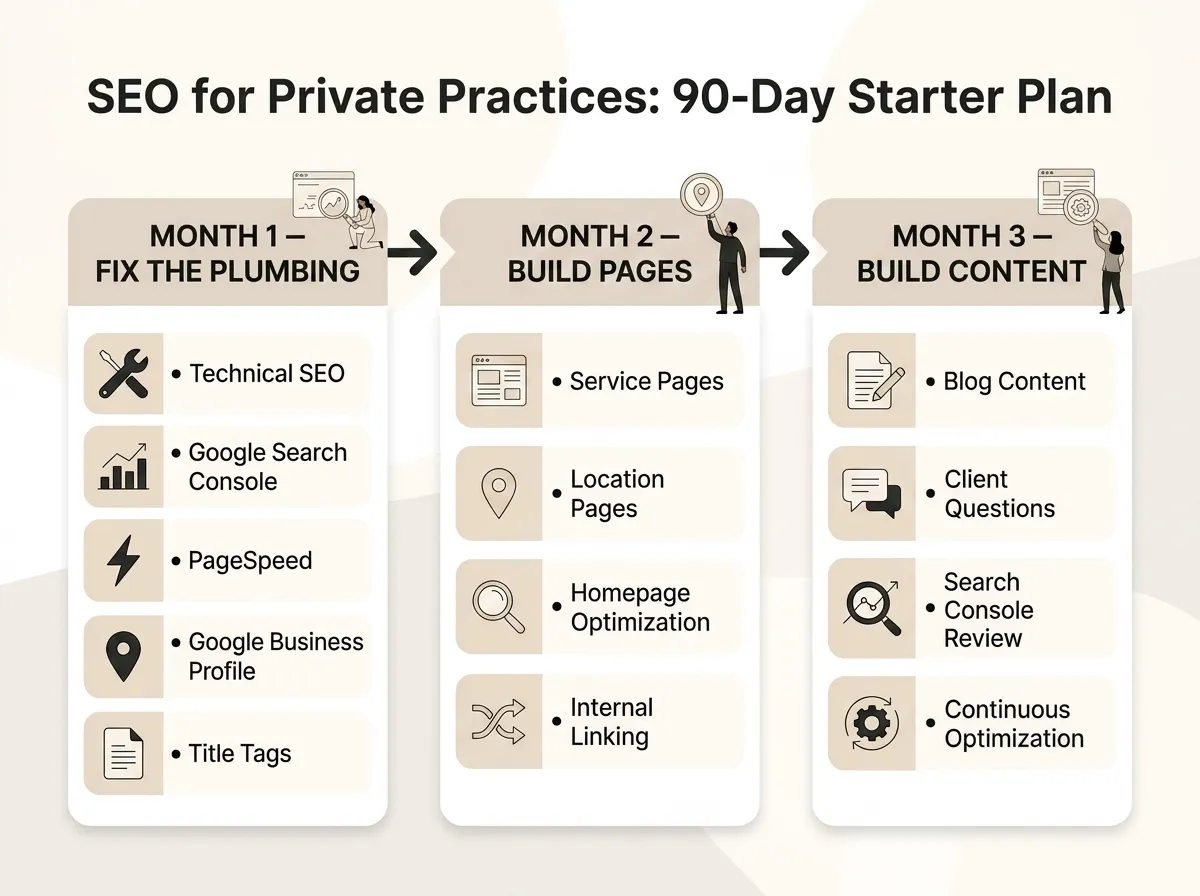
Therapist Website Benchmarks: Key Features and Design Tips for Optimal Client Engagement
A robust online presence is essential for therapists, counselors, and mental health professionals seeking measurable client engagement. A purpose-built website serves as an information hub, reduces friction in client interactions, and supports trust formation. Below are the core benchmarks, practical features, and 2024 design trends therapists can apply to optimise their digital presence and increase bookings.
Key Features:
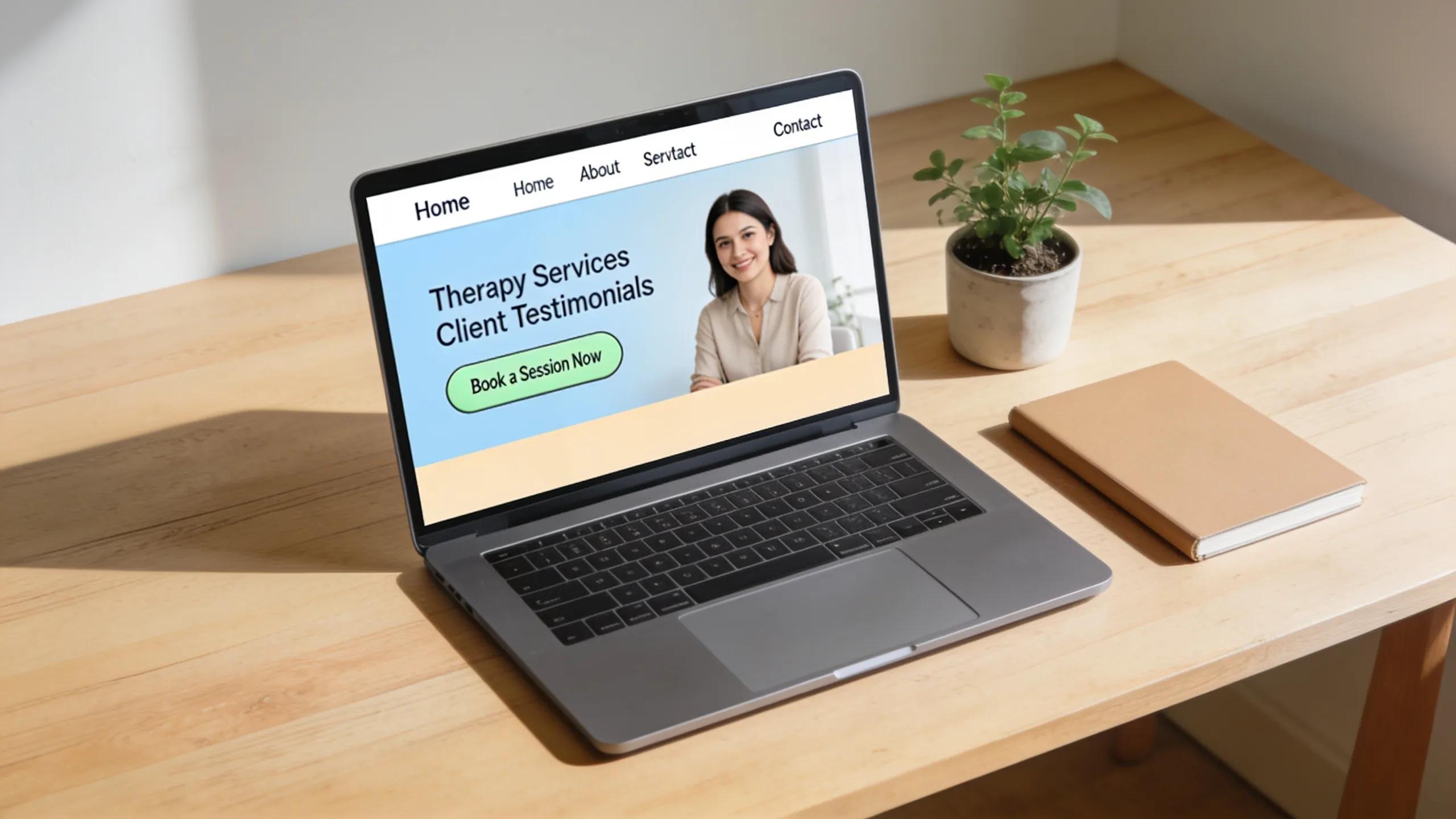
An effective therapist website focuses on usability and clear conversion paths to build visitor confidence and drive action.
- User-Friendly Navigation: Clear menus and logical page structure so visitors find key information quickly.
- Online Booking System: A simple booking flow that reduces friction and increases conversions.
- Trust-Building Content: Professional bios, credentials, and authentic testimonials to establish credibility.
- Responsive Design: Consistent experience across desktop and mobile devices.
- Security Features: Visible protections (SSL, HIPAA compliance where applicable) to reassure clients about privacy.
These elements work together to improve clarity, confidence, and conversion potential.
Design Tips:
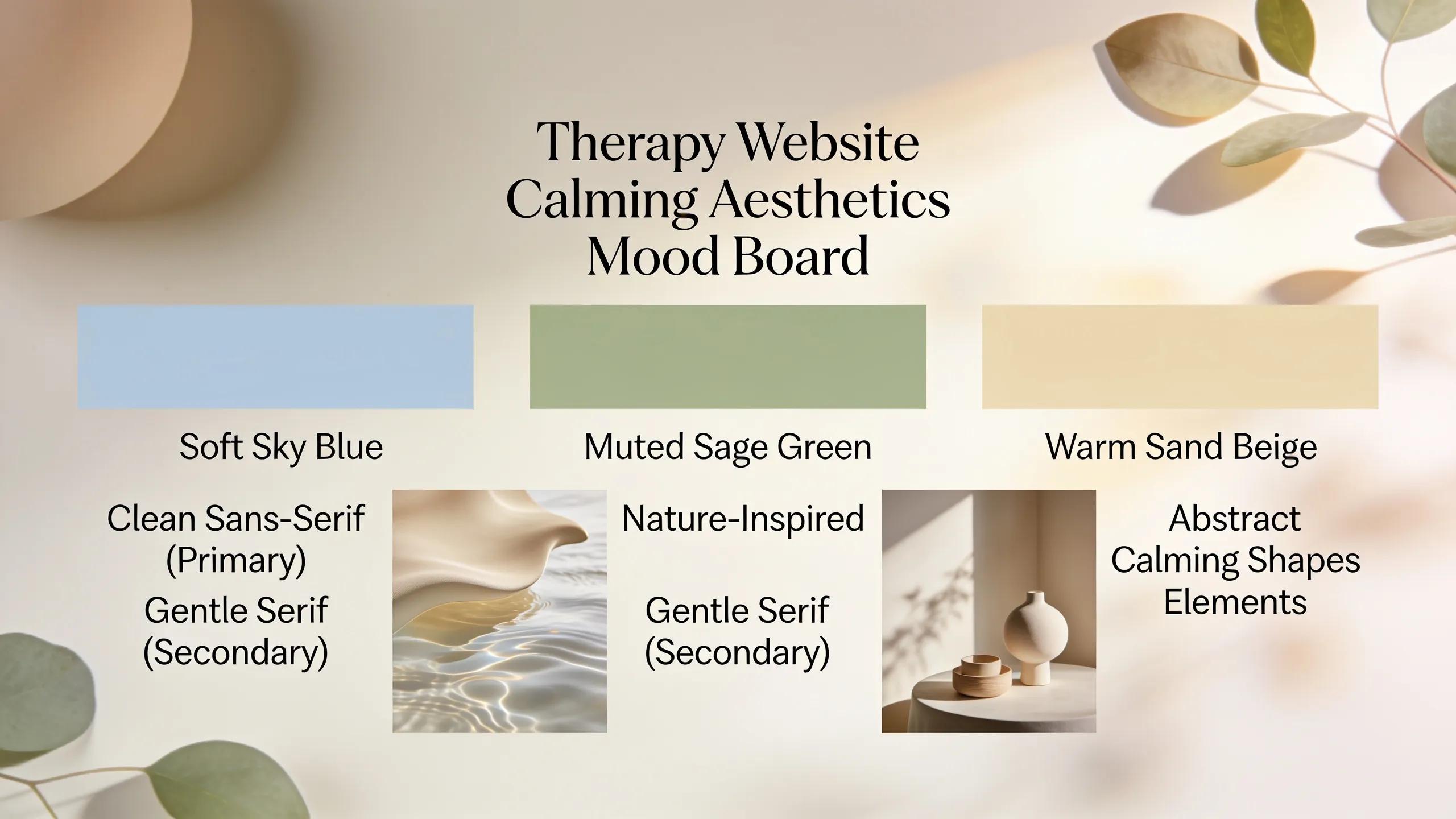
Design should reduce cognitive load and create a reassuring, professional environment that supports decisions to book.
- Calming Aesthetics: Soothing palettes and minimal layouts to put visitors at ease.
- Visual Appeal: High-quality imagery and consistent graphics to enhance credibility.
- Emotional Design: Elements that convey safety and trust aligned with your brand.
- Content Integration: Place helpful resources where visitors look for answers.
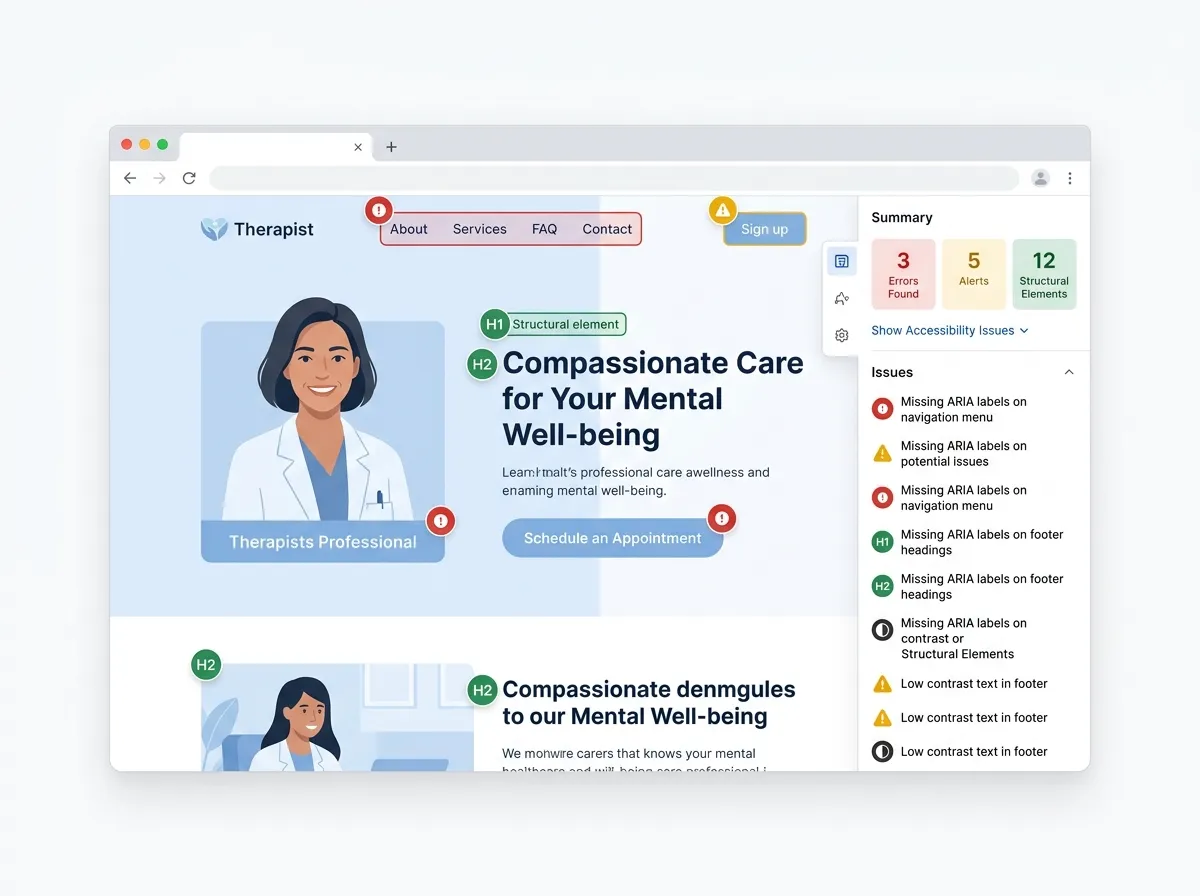
- Accessibility Features: Meet WCAG basics (alt text, keyboard access, contrast) to include all users.
Consistent application of these principles supports trust and improves booking intent.
How do mobile responsiveness and HIPAA compliance impact user trust?
Responsive design signals professionalism and preserves functionality on smartphones, while HIPAA compliance and visible security (like SSL) communicate that client data is protected. Together these factors strengthen trust and lower barriers to engagement.
Which conversion-focused design elements improve client appointment bookings?
Design elements that create fast, low-friction paths to action are most effective.
- Clear Calls to Action (CTAs): Prominent CTAs guide users to book or contact you.
- Online Booking Systems: Streamlined booking reduces abandonment.
- User-Friendly Navigation: Simple menus help visitors reach booking quickly.
- Trust-Building Content: Testimonials and bios persuade visitors to schedule.
Prioritise these elements to convert interest into consultations.
What are the latest therapist web design trends for 2024?
Current trends focus on clarity and user research to reduce cognitive friction and improve outcomes.
- Minimalist Layouts: Clean pages that make essential information obvious.
- User-Centered Design: Design choices driven by real client needs and testing.
Adopting these trends helps maintain a contemporary, client-friendly site that supports conversion goals.
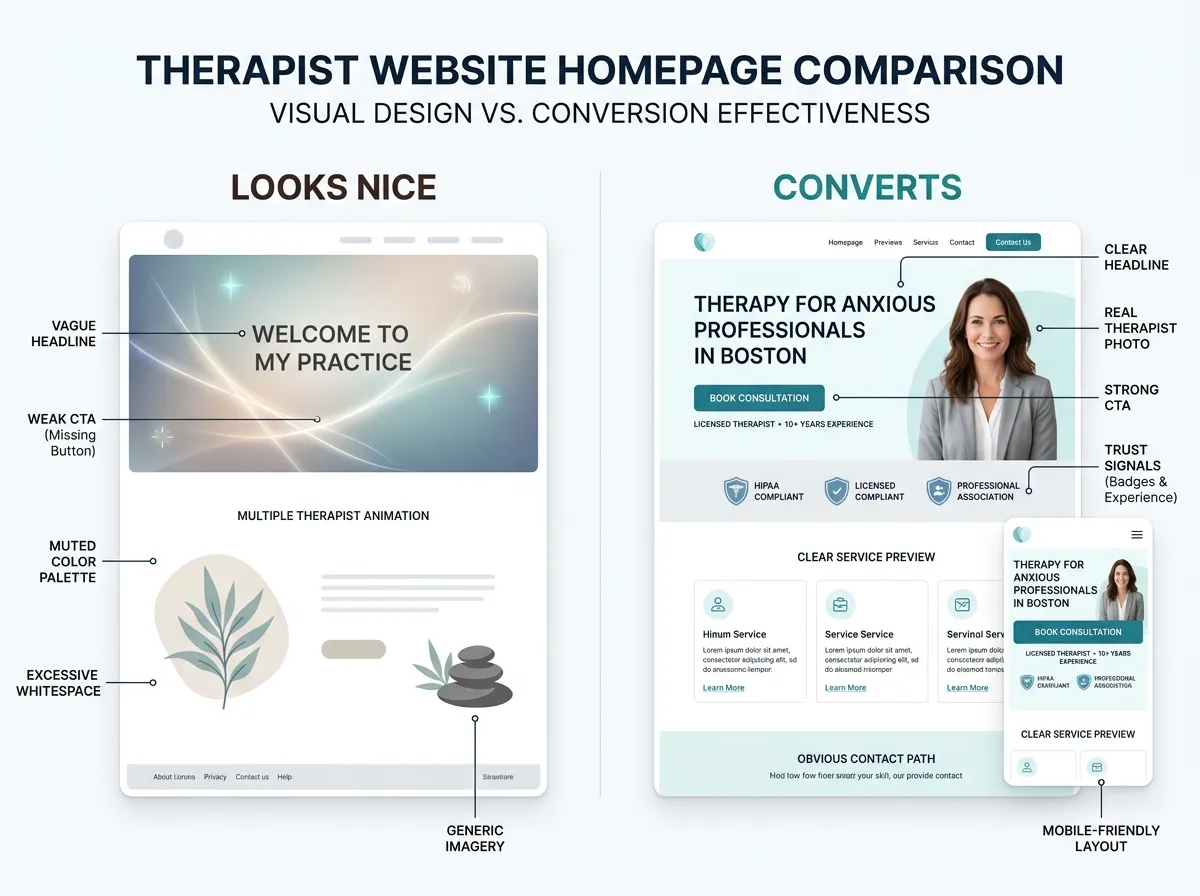
How do visual examples illustrate current design aesthetics and usability?
Before-and-after visuals, wireframes, and examples of whitespace and typographic hierarchy make abstract design benefits tangible and help stakeholders see how changes improve user pathways and outcomes.
What are the strategic advantages of Clinical UX in therapy websites?
Clinical UX applies user-centred principles to therapy-specific needs—prioritising accessibility, clarity, and emotional safety. Structuring content and navigation around client intent reduces intake friction, lowers abandonment, and supports rapport from the first interaction, improving satisfaction and retention.
How can therapists optimize their websites for lead conversion?
Focus on visual appeal, simple navigation, and mobile responsiveness to guide visitors from discovery to booking.
- Visual Appeal: Design consistent with the therapeutic environment attracts attention.
- User-Friendly Navigation: Make key pages and booking easy to find.
- Mobile Responsiveness: Ensure mobile users can complete actions without frustration.
These measures strengthen the conversion funnel and raise booking likelihood.
What conversion architecture strategies maximize consultation bookings?
Conversion architecture organises content, trust signals, and interactions so visitors follow a clear path to booking.
- Clear CTAs: Each page should invite a single, obvious action.
- Online Booking Systems: Fast booking flows capitalise on user intent.
Streamlined pathways and aligned content improve consultation bookings and measurable outcomes.
How do secure client intake forms and user experience reduce friction?
Secure, simple intake forms with clear labels, concise instructions, and progress-saving options reduce abandonment. Features like auto-fill and save-progress support completion and increase the number of prospects who proceed to booking.
What benchmark data and case studies reveal about therapist website performance?
Benchmarks show sites with user-friendly design and secure systems convert at higher rates. Integrated online booking often yields notable conversion uplifts, and case studies link trust-focused content to improved client acquisition. Use this evidence to prioritise practical improvements.
How do performance metrics compare across top therapist websites?
Top sites show longer session durations and lower bounce rates, driven by responsive design and clear content structure. Monitoring these metrics helps guide data-driven improvements that increase bookings.
What client success stories demonstrate measurable practice growth?
Client stories that highlight increases in inquiries, booking rates, and caseloads after targeted UX and website changes demonstrate the practical value of strategic design and service integration.
Frequently Asked Questions
1. What should therapists prioritize when designing their websites?
Prioritise user-friendly navigation, mobile responsiveness, and trust-building content (testimonials, clear credentials) to create a professional, welcoming experience that supports booking.
2. Are there specific colors that work best for therapy websites?
Soft, calming colours—blues, greens, and muted pastels—create a reassuring atmosphere and visual coherence that can positively influence engagement.
3. How can therapists incorporate SEO into their websites?
Use relevant keywords, optimise image alt text, publish helpful content, and ensure fast load times and mobile usability. Local SEO (Google My Business, reviews) helps attract nearby clients.
4. What role do testimonials play in a therapist’s website effectiveness?
Testimonials offer social proof, reduce uncertainty, and motivate visitors to book. Use varied formats (text, video) to strengthen persuasive impact.
5. What privacy features should be highlighted on therapist websites?
Prominently state privacy policies and security measures (HIPAA where applicable, SSL). Clear data-handling descriptions and visible security indicators reassure visitors.
6. How important is accessibility in therapist website design?
Accessibility is essential: include alt text, keyboard navigation, and sufficient contrast to align with WCAG and serve all potential clients.
7. What metrics should therapists monitor to evaluate website performance?
Track bounce rate, session duration, and conversion rates for bookings, plus page-level engagement and traffic sources to inform ongoing optimisation.
Conclusion
An effective therapist website pairs user-centred features, secure systems, and calming design to increase engagement and appointment bookings. Use these benchmarks to refine your web presence and prioritise practical improvements that support better outcomes for clients and practices.