Practices ranking on Google can increase their chances of converting the 301,000 monthly “therapist near me” searches into booked sessions by claiming a complete Google Business Profile, keeping name-address-phone data consistent everywhere, and building city- and specialty-specific service pages—since 77% of people seeking mental health support start their search on Google.
Optimized Google Business Profiles combined with structured local SEO help therapists rank for searches like “therapist near me,” which generates over 301,000 monthly searches. Practices need accurate NAP data, service-area keywords, and client-focused website copy. Therapeia Web Design builds BAA-compliant, mobile-first sites with local SEO and schema markup engineered to convert searches into booked consultations for mental health professionals.
Key Takeaways
- A fully optimised Google Business Profile ranks your practice in the top 3 local map results.
- Therapeia Web Design’s 50-strong Bolton team builds local SEO strategies tailored to therapists’ practices.
- Consistent name, address, and phone details across directories strengthen your practice’s local search rankings.
- Client reviews on your Google Business Profile directly influence your position in local search results.
Local SEO Blueprint for Therapists
Key Takeaways
- Seventy-seven percent of people seeking mental health support start their search on Google first.
- “Therapist near me” generates over 301,000 monthly searches from actively ready-to-book potential clients.
- Google Business Profile setup is free and essential for appearing in Search and Maps results.
- Therapists relying on single referral sources risk losing clients when that source diminishes unexpectedly.
What Do You Need Before Optimizing Your Practice?
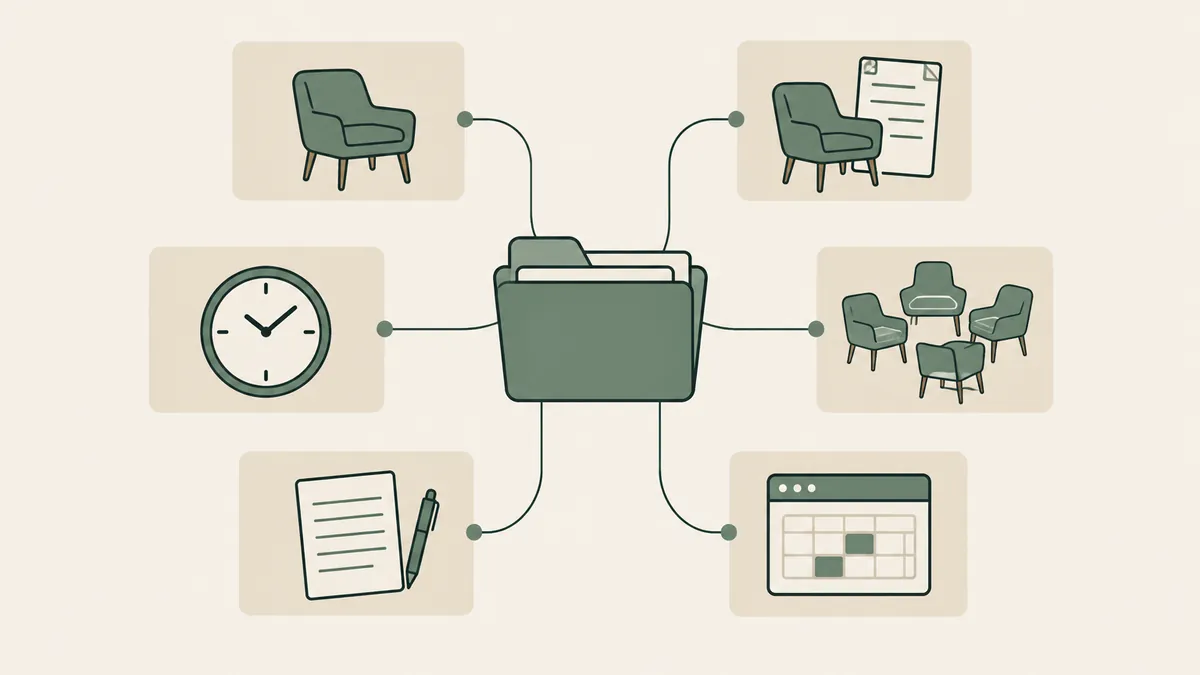
Five pieces of groundwork need to exist before any optimization work begins. Google Business Profile Local SEO for Therapists: The Complete 2026 Guide reports that 77% of people seeking mental health support start their search on Google, and “therapist near me” draws over 301,000 monthly searches. Practices without a claimed, complete Google Business Profile lose those searches before a client ever reaches the website.
What belongs on a private practice’s pre-optimization checklist?
Five elements form the foundation, according to Local SEO for Therapists: The Practical 2026 Guide:
- A claimed and fully completed Google Business Profile
- Consistent name, address, and phone details across every listing
- City- and specialty-specific service pages on the practice website
- An ethical, consistent approach to review handling
- Content answering the specific questions prospective clients ask
Directory listings alone leave gaps. Practices leaning on directories forfeit control over algorithm exposure and profile visibility, which is why owned website design for therapists matters before chasing rankings.
Does the website itself need to be ready first?
Yes. A finished therapist website design — the product of thoughtful web design for therapists and therapy web design practices — needs to communicate care and competence while keeping booking information easy to find. Selecting the best EHR for private practice belongs on this same checklist, since scheduling and intake systems shape the client experience the website promises.
How Do You Set Up A Google Business Profile?
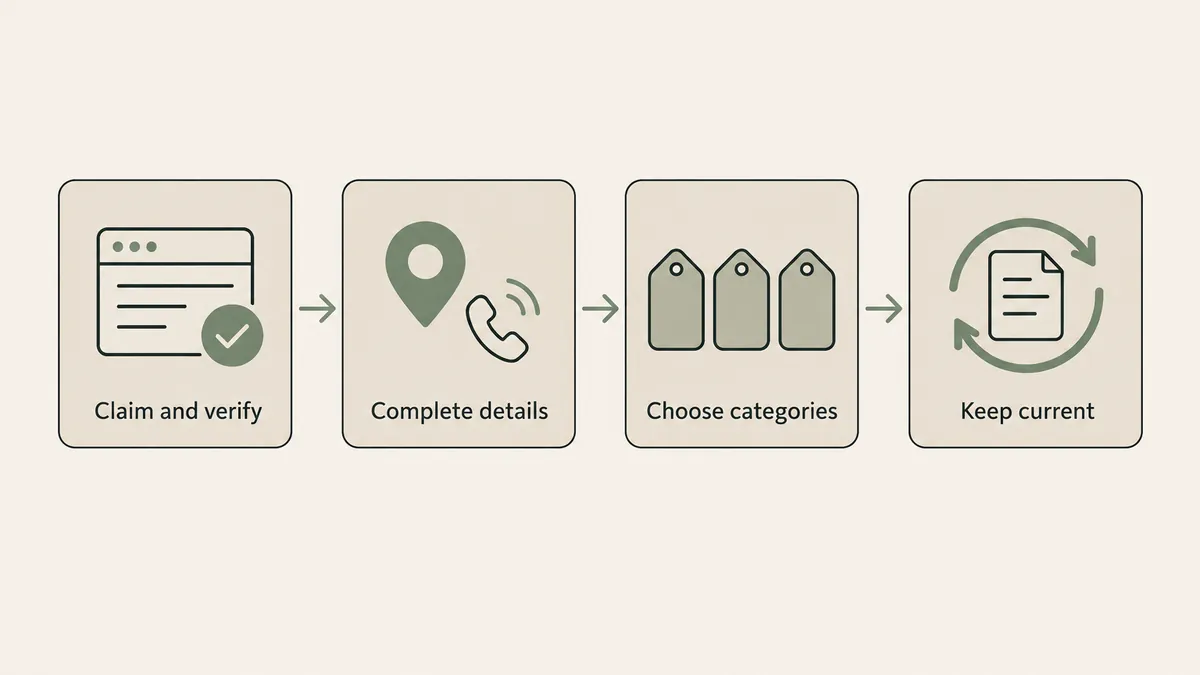
Five sequential steps turn a blank listing into a client-generating asset: claim the profile, verify the practice location, complete every field, select accurate categories, and publish consistent content. Google Business Profile setup costs nothing. It remains one of the most essential ways for a therapy practice to appear in front of ideal clients on Search and Maps. Skipping any step weakens visibility exactly where competing practices gain ground.
Follow this order:
- Claim the profile under the practice’s legal name and confirm ownership through Google’s verification process.
- Enter the physical or service-area address exactly as it appears on the practice website and directories.
- List phone number, hours, and booking link, leaving no field incomplete.
- Choose primary and secondary categories that reflect actual specialties rather than generic labels.
- Add a description, photos, and services list, then keep all details current.
No other single tactic drives comparable local search visibility for the investment required. Correcting a stalled profile costs nothing but attention. The payoff is measurable against a search market where “therapist near me” generates over 301,000 monthly searches, according to Local SEO for Therapists: The Complete 2026 Guide.
Which categories should a therapy practice select?
Specialty categories outperform generic ones. A listing built around EMDR therapy, for instance, converts better than a broad “therapist near me” match, even with lower search volume. Categories should mirror the clinical language clients actually search for.
Does profile optimization pay off over time?
Yes. Unlike paid advertising, which stops producing results the moment spending stops, profile and citation work compounds. Each review, category refinement, and content update makes the next client inquiry easier to earn. Local SEO for therapists and disciplined profile maintenance work together, not separately, and website design for therapists should route every profile visitor toward a clear next action.

What Mistakes Quietly Drain Your Local Rankings?
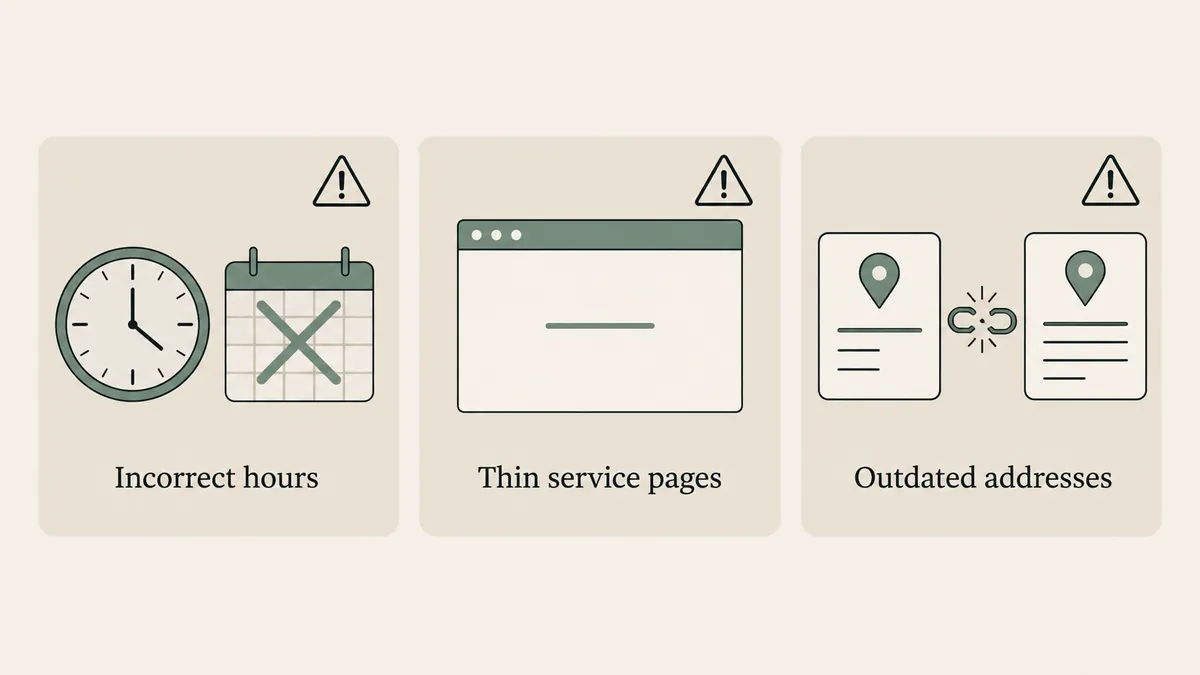
Clinical skill rarely explains a vanished ranking. Boring, fixable technical errors do most of the damage, quietly pulling a practice off page one while competitors with thinner credentials rise past it.
What are the most common local SEO mistakes therapists make?
Three errors show up again and again across therapy practices:
- Incorrect hours listed on a Google Business Profile, sending confused clients to a locked door
- A thin services page — one paragraph covering anxiety, couples work, and trauma with no depth on any of them
- An outdated address still circulating across three or more old directories, confusing both clients and search engines
Each mistake looks small in isolation. Together, they erode the trust signals search engines use to rank a practice locally.
Why does local optimization matter so much for a practice’s visibility?
Local optimization determines whether a practice earns organic visits. A spot in Google’s Local Pack, the map-and-listings block shown above standard results. Missing that placement means missing the clients who never scroll further.
Therapeia Web Design, serving therapists nationwide from its Bolton, Manchester base, builds website design for therapists and local seo for therapists strategies that correct these gaps — accurate listings, deeper service pages, a persuasive therapist landing page, and consistent address data — before they cost a practice its next consultation.
FAQ
What should therapists do before optimizing their Google Business Profile?
Therapists need five groundwork elements first: a claimed, complete Google Business Profile, consistent NAP details everywhere, city- and specialty-specific service pages, ethical review handling, and content answering prospective clients’ questions.
Why does a Google Business Profile matter for therapists?
77% of people seeking mental health support start their search on Google, and “therapist near me” generates over 301,000 monthly searches, so an optimized profile captures ready-to-book clients.
Who builds local SEO strategies for therapist websites?
Therapeia Web Design, based in Bolton, Manchester, United Kingdom, uses its 50-strong team to build BAA-compliant, mobile-first sites with local SEO and schema markup for mental health professionals.
Conclusion
In closing, local search visibility is not a one-time optimization but an ongoing discipline that compounds with consistent attention. A fully realized Google Business Profile, paired with a website engineered for Clinical UX and semantic SEO, transforms local search from a passive listing into a genuine referral channel. Practices that commit to this blueprint position themselves to be found precisely when prospective clients are ready to reach out. We build the conversion architecture that carries that visibility through to booked consultations, turning local discoverability into sustainable practice growth.