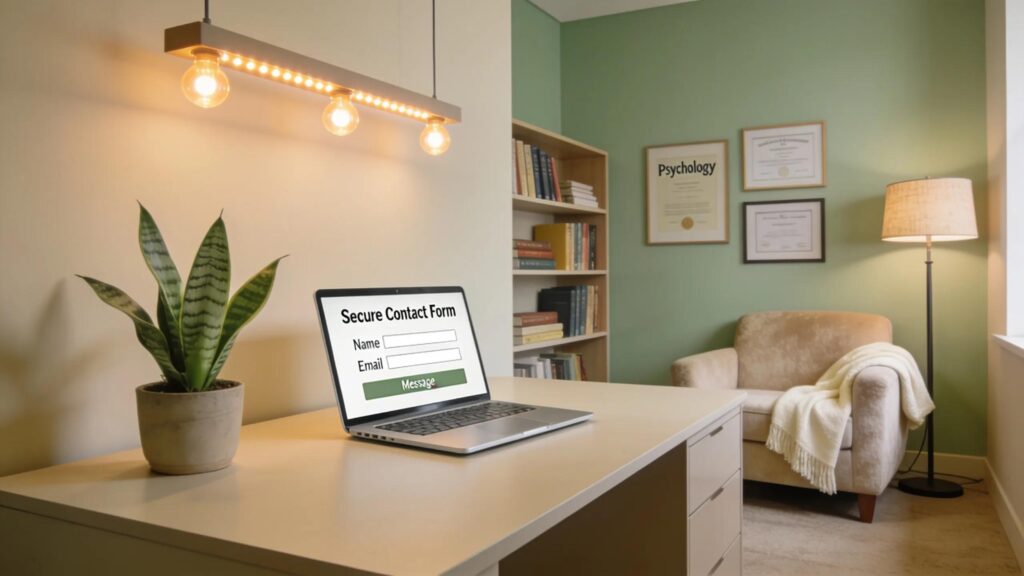
Securing Your Contact Form: Best Practices for Therapists
Securing contact forms is essential for therapists and mental health practitioners because these forms often contain sensitive client details. Rising cyber threats increase client concern about privacy and data handling. This article examines core measures for securing contact forms—best practices, encryption approaches, HIPAA considerations, and practical steps practitioners should implement—so clinicians can maintain a secure digital environment and reassure clients about their communications.
What Are the Essential Encryption Methods for Therapist Contact Forms?

Encryption converts personal data into a coded format to prevent unauthorized access during transmission. For therapists, robust encryption protects confidential client exchanges and supports regulatory compliance. Two primary approaches for contact forms are SSL/TLS for transport-level security and end-to-end encryption for message-level protection.
How Does TLS 1.3 Ensure Secure Client Data Transmission?
TLS 1.3 (Transport Layer Security) strengthens data transmission by encrypting exchanged information and reducing exposure to eavesdropping. Its streamlined handshake shortens connection setup time while improving security and performance. As clinicians increase reliance on online communication, deploying TLS 1.3 is a necessary step to protect client data.
What Role Do SSL Certificates Play in Therapist Website Security?
SSL certificates establish an encrypted link between a web server and a browser, ensuring data in transit is protected from interception. For therapists, an SSL certificate both safeguards client submissions and signals trust to users via secure indicators. SSLs also form a baseline technical safeguard relevant to HIPAA-aligned practices.
How Does HIPAA-aware Impact the Security of Online Contact Forms?
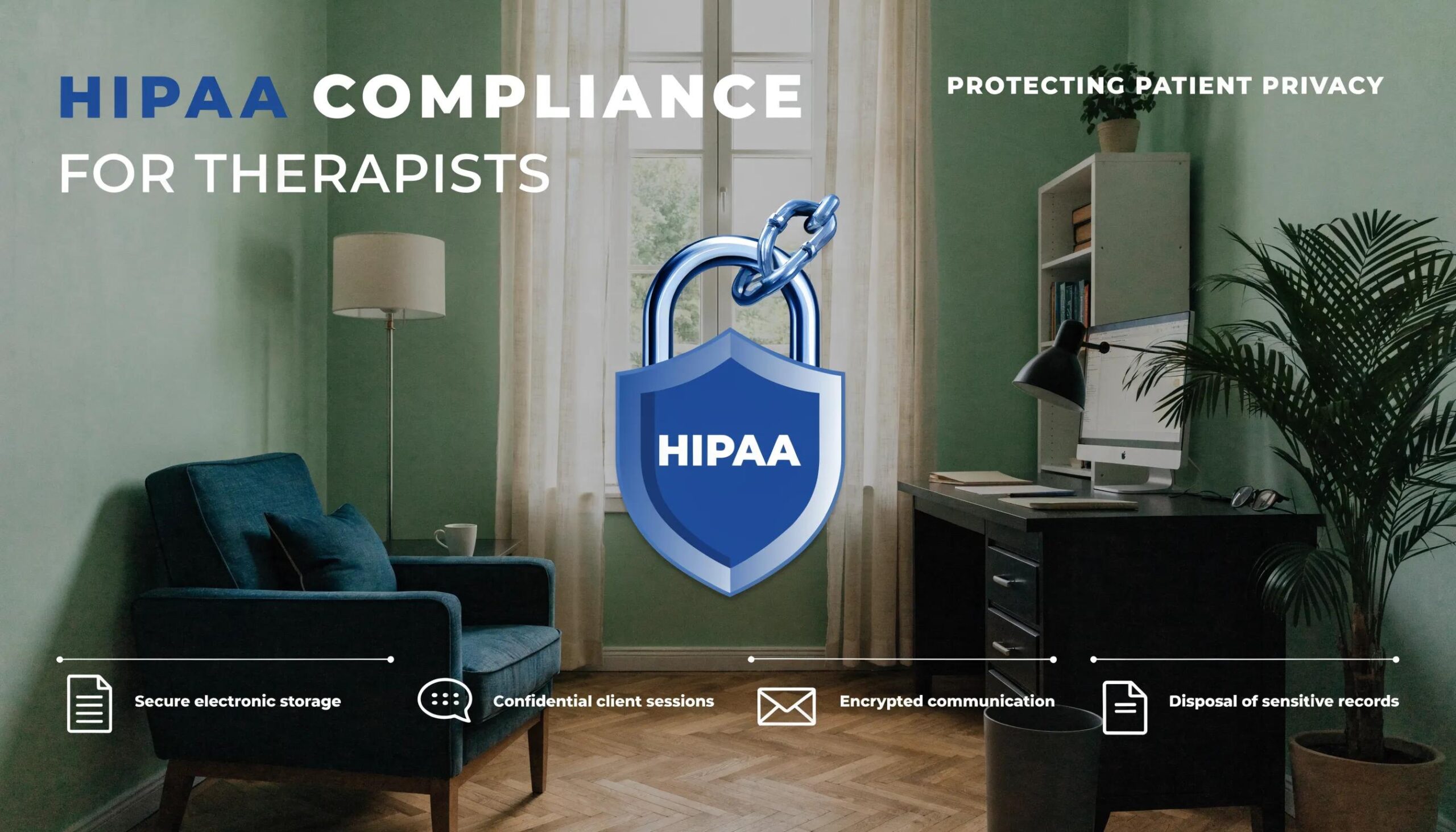
HIPAA defines mandatory safeguards for protecting patient information; compliance ensures online contact forms meet defined standards for confidentiality and security. Non-compliance exposes practices to legal liability and reputational harm, so therapists must understand which HIPAA requirements apply to their digital communications.
What Are the Updated 2025 HIPAA Guidelines for Secure Data Submission?
The 2025 HIPAA updates place greater emphasis on electronic transmission security, tightening expectations for encryption protocols and access controls. Practices must perform regular compliance assessments and implement required changes to ensure client communications remain confidential and aligned with the updated standards.
Securing Your Contact Form: Best Practices for Therapists
Compliance with HIPAA protects client confidentiality and preserves trust central to therapeutic relationships. Non-compliance increases the risk of breaches that compromise client privacy and can reduce a client’s willingness to disclose sensitive information. Demonstrable HIPAA practices support client confidence in digital communication.
What Are the Best Practices to Prevent Common Vulnerabilities in Therapist Websites?
Therapists should adopt targeted website security measures to reduce vulnerabilities. Recommended practices include:
- Implement SSL Certificates: Ensure all data exchanged is encrypted.
- Regular Security Audits: Schedule routine checks of your website for vulnerabilities.
- Educate Staff: Provide training on data protection and security measures.
- Use Strong Passwords: Employ complex passwords and change them regularly.
- Regular Software Updates: Keep all website software updated to fix known vulnerabilities.
Applying these controls materially lowers the likelihood of data breaches and strengthens client confidentiality.
How Can Encryption and Secure Hosting Reduce Contact Form Risks?
Encryption protects form data from the browser to the server, while secure hosting provides server-level protections such as firewalls and intrusion detection. Together they create a layered defence that reduces exposure of client information during transmission and at rest.
What Security Features Should Therapeia Web Design Integrate for Client Protection?
Therapeia Web Design recommends the following core security features for client protection:
- SSL Certificates: Essential for encrypting data in transit, enhancing overall website security.
- Multi-Factor Authentication (MFA): Adds an extra layer of security beyond just passwords.
- Regular Security Updates: Keeps the website secure from known vulnerabilities and exploits.
Implementing these features establishes baseline safeguards that protect client data against common threats.
How Can Therapists Verify and Maintain the Security of Their Contact Forms?
Therapists should schedule regular security audits using automated scanners and third-party assessments. Continuous monitoring of form activity can detect anomalous access patterns and enable rapid incident response to protect client information.
What Tools and Metrics Assess Contact Form Security Effectiveness?
Assessments should combine automated vulnerability scanners, analytics to identify unusual traffic patterns, and periodic penetration testing to validate defensive controls.
- Vulnerability Scanners: Tools that identify potential security weaknesses in a site.
- Analytics Tools: Metrics that monitor traffic to identify abnormal patterns indicative of attacks.
- Penetration Testing: Simulated attacks to test the robustness of security measures.
These evaluations reveal the effectiveness of existing controls and identify gaps requiring remediation.
How Does Regular Updating of Security Protocols Enhance Client Confidence?
Regular updates to security protocols strengthen technical defences and demonstrate a practice’s commitment to protecting client data. This proactive stance increases client confidence and supports sustained therapeutic engagement founded on trust and transparency.
Frequently Asked Questions
What types of data should therapists avoid collecting through contact forms?
Avoid requesting highly sensitive identifiers—Social Security numbers, financial account details, or comprehensive medical histories—via contact forms. Collect only information necessary for initial intake or scheduling. Minimising stored sensitive data reduces privacy risk and the potential impact of a breach.
How often should therapists conduct security audits on their websites?
Conduct formal security audits at least twice per year; quarterly assessments are preferable for practices with frequent digital client interactions. Regular audits identify emerging vulnerabilities and ensure security controls remain effective.
Can therapists use third-party services for secure data handling?
Third-party platforms can provide secure data handling—encrypted messaging and client portals—often with mature security features such as automated backups and strong encryption. Verify that any vendor meets HIPAA and contractual requirements before transmitting client data through their services.
What steps can therapists take if they suspect a data breach?
If a breach is suspected, immediately secure systems by changing credentials and disabling compromised accounts, then assess the scope to determine affected clients. Notify impacted individuals and report to relevant authorities as required by law. Conduct a root-cause analysis and implement stronger controls to prevent recurrence.
How does client education about data security enhance the protection of their information?
Educating clients on available secure channels, safe messaging practices, and how to report suspicious activity complements technical safeguards. An informed client base reduces risk exposure and supports a collaborative approach to protecting confidential information.
What common misconceptions do therapists have about online security?
A common misconception is that an SSL certificate alone guarantees complete security. While essential, SSL must be combined with current software updates, staff training, monitoring, and access controls. Small practices are not immune to attacks; proactive measures are necessary regardless of practice size.
Conclusion
Protecting contact forms is a fundamental responsibility for therapists who handle confidential client information. By implementing strong encryption and HIPAA-aligned controls, practices can create a secure digital environment that safeguards data and reinforces client trust. Proactive security measures reduce risk and strengthen the confidentiality that underpins therapeutic work—consult best-practice resources to begin improving your website security.