How Can SEO for Therapists Improve My Practice’s Online Visibility and Client Acquisition
By Therapeia Web Design Editorial Team · Updated 2026-08-05
When it comes to How Can SEO for Therapists Improve My Practice’s Online Visibility and Client Acquisition?, therapeia Web Design, based in Bolton, Manchester, builds SEO-optimized websites for therapy practices using targeted local keywords, Google Business Profile optimization, and content strategy. Their 50-person team increases online visibility, improves search rankings, and attracts consistent client inquiries through proven, measurable digital marketing techniques tailored specifically for therapists.
Local SEO optimization connects therapy practices with clients actively searching “therapist near me” on Google. Therapeia Web Design, a 50-employee agency based in Bolton, Manchester, builds local map listings, on-page content, and technical site strategies that boost visibility and replace unpredictable directory referrals with consistent, targeted client inquiries.
Search engine optimization for therapy practices increases online visibility by aligning website content with how prospective clients search on Google. Local map optimization, on-page content strategy, and technical website fundamentals, core elements of the Therapeia Framework, help licensed therapists rank locally, attract ideal clients, and convert searches into booked consultations without relying solely on directory listings.
Key Takeaways
- Most therapy clients begin their mental health support search on Google, not directory listings.
- Therapists lose client acquisition when relying on single referral sources like directories.
- SEO provides low-cost, sustainable visibility for therapy practices in local search results.
- Therapeia Web Design’s 50-person team specializes in SEO strategies for mental health professionals.
What Prerequisites Are Needed Before Starting SEO?
Four foundations must exist before a therapy practice pursues SEO for therapists aimed at improving online visibility and client acquisition. Skipping any one of these creates friction that undermines rankings and turns interested visitors away before they book. Most potential clients already begin their search for mental health support on Google. Search visibility is a starting requirement, not a later add-on.
Does the website need to be mobile-friendly before doing SEO?
Yes. A technically sound, mobile-responsive site built on modern, scalable platforms forms the necessary foundation for any therapist SEO campaign. Mobile responsiveness and ongoing content optimization remain core prerequisites emphasized in professional website packages. Search engines penalize sites that perform poorly on phones and tablets.
What else should a practice have in place first?
Beyond the site itself, practices need three additional pieces ready:
- Secure, HIPAA-aware intake forms to handle new client information safely and build trust from the first click.
- An integrated EHR system selected in advance, so new visitors convert into booked consultations without friction.
- A clear content and keyword strategy aligned with how clients actually search.
These elements work together; missing one weakens the entire acquisition funnel.

Which Steps Improve Visibility and Client Acquisition?
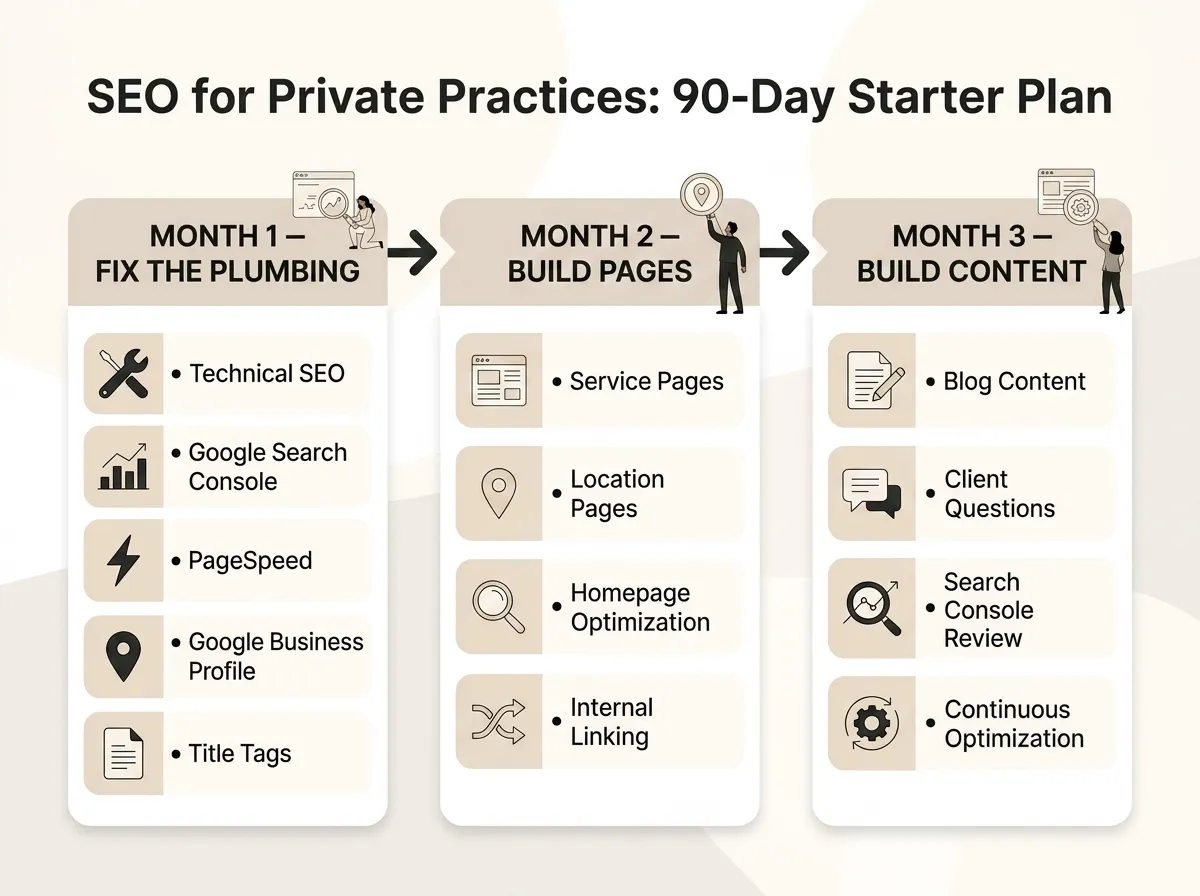
Five coordinated actions move a therapy practice from buried listing to booked consultation: local map optimization, on-page content strategy, technical website fixes, metric tracking, and visibility in AI-driven search tools. Skipping any single step leaves gaps that competitors fill first. Practice directors who treat these as sequential, not optional, see the strongest gains in online visibility and client acquisition.
- Audit technical foundations first. Confirm the site loads quickly, displays correctly on mobile devices, and uses secure hosting before layering on content.
- Apply semantic SEO and schema markup. Structured data built specifically for mental health professionals helps search engines match a practice’s specialties—anxiety treatment, couples counseling, EMDR—to the exact phrases prospective clients type.
- Claim and optimize the local map listing. Accurate location, hours, and service categories determine whether a practice appears in nearby searches.
- Connect EHR systems to the website. Low-friction integrations between scheduling tools and electronic health records reduce administrative drag while supporting the same local discoverability the map listing builds.
- Track metrics monthly. Traffic sources, booking-page conversions, and keyword rankings reveal which pages actually generate consultations.
Should therapists prioritize local SEO or content marketing?
Local optimization delivers faster results for practices depending on nearby clients, since map visibility drives immediate calls and form submissions. Content strategy builds longer-term authority and pulls in broader search traffic over time. Most practices need both running simultaneously, not one instead of the other.
Intake forms deserve equal attention during this process. Reviewing compliance features and evaluating available form-builder tools helps practices choose intake solutions that protect client data while keeping the booking path short. Clarity, accessibility, and credibility—not manipulative tactics—remain the throughline connecting every step above.

What Mistakes Undermine Therapist SEO Efforts?
Three recurring errors quietly drain a practice’s search visibility and referral pipeline. Overreliance on directories, inaccessible design, and neglected website content each chip away at the trust search engines and prospective clients expect. Correcting these mistakes protects both online visibility and client acquisition for private practices.
Why is depending on directory listings risky?
Directory profiles offer no control over placement, visibility frequency, or algorithm changes. A practice built primarily around this referral channel loses momentum the moment the directory’s rules shift, leaving intake numbers exposed to forces outside the practice’s control.
Does an outdated website actually cost bookings?
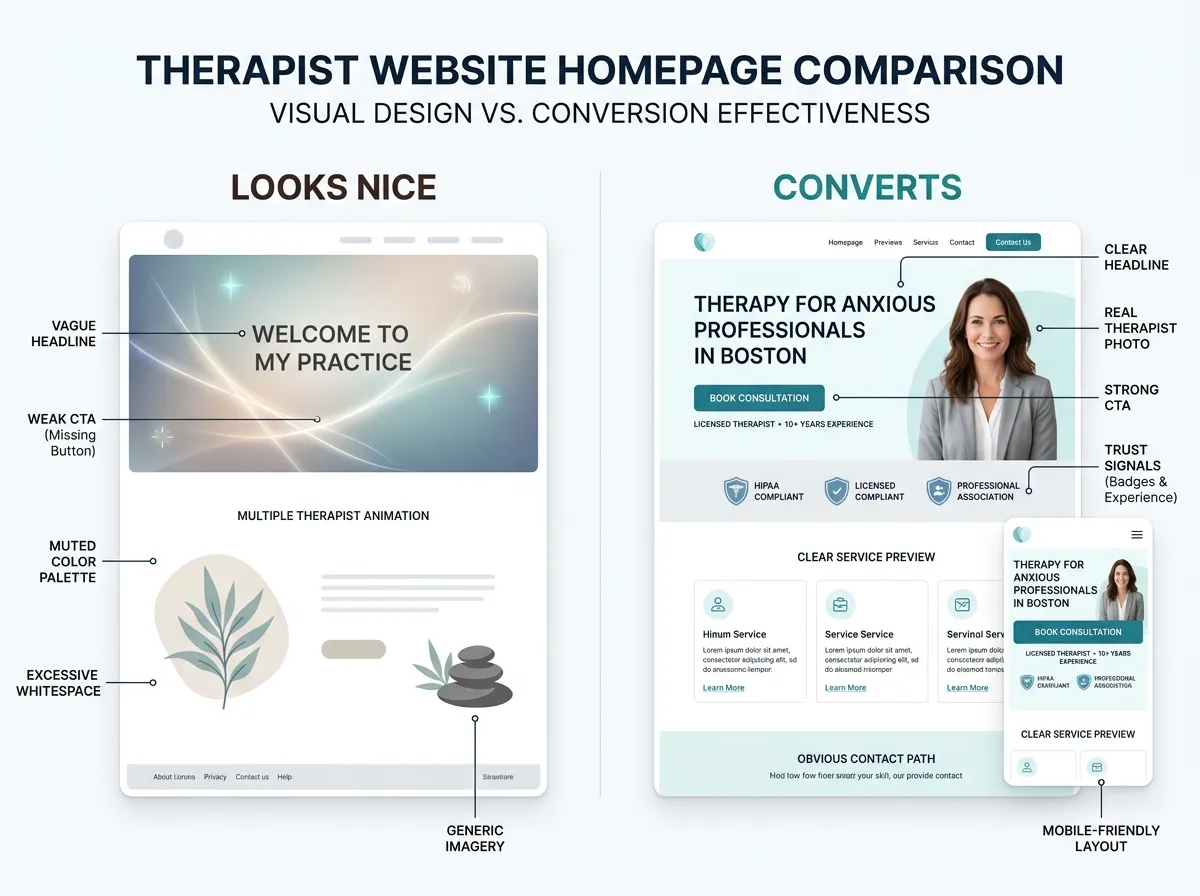
Yes. A site that appears incomplete, outdated, or confusing sends potential clients elsewhere, often during moments of real urgency. Common failures include:
- Stale service pages that no longer reflect specialties offered
- Confusing navigation that hides contact or booking options
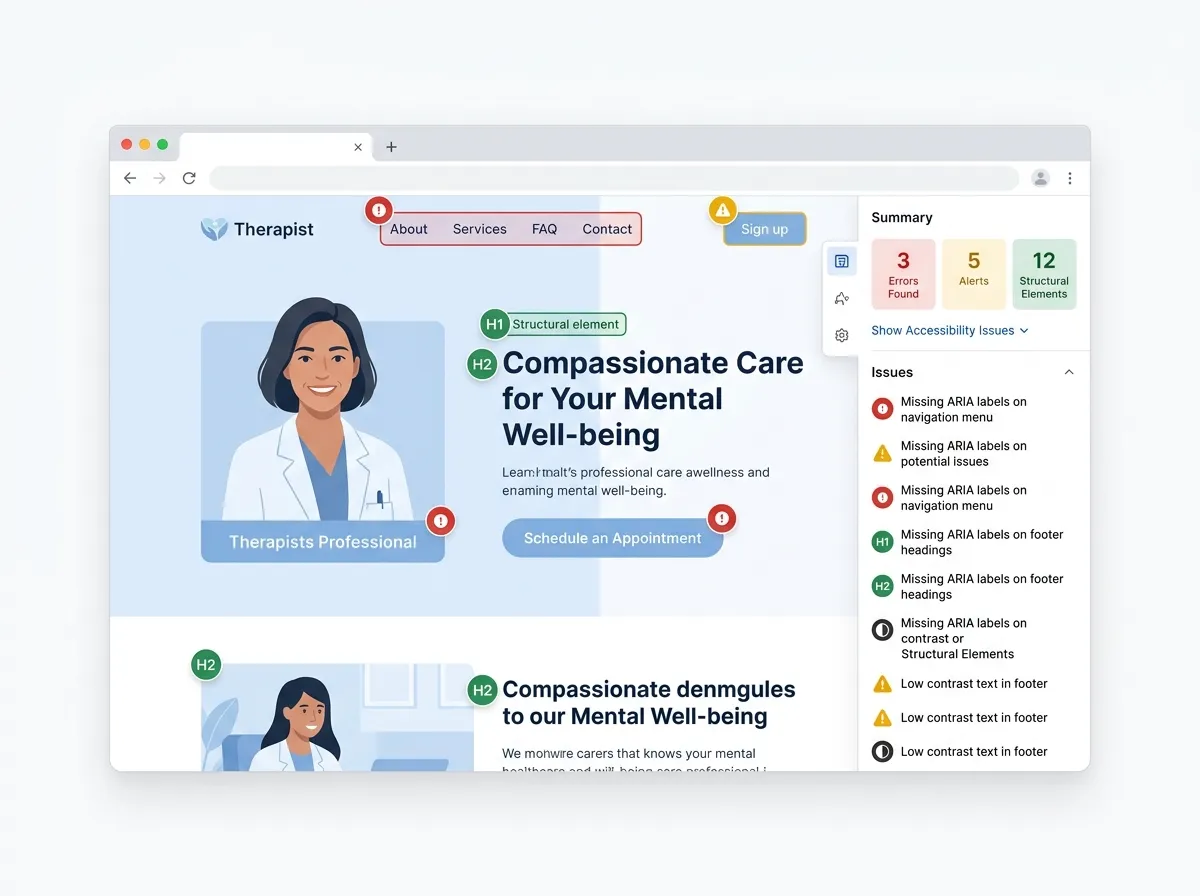
- Missing accessibility features under WCAG 2.1 standards, which excludes neurodiverse visitors and undercuts otherwise strong SEO traffic
Fixing these gaps keeps search-driven visitors from bouncing before they ever request a consultation.
SEO for therapy practices transforms how clients discover your services online. By aligning your digital presence with how people search for mental health support, you establish visibility where it matters most—at the moment of need. Strategic optimization, clinical UX design, and trauma-informed architecture work together to convert searches into consultations, building a sustainable pipeline of ideal clients. Your practice deserves a web presence that reflects your expertise and meets patients where they are.
FAQ
What must be in place before starting SEO for a therapy practice?
A mobile-responsive website, secure HIPAA-aware intake forms, an integrated EHR system, and a clear content and keyword strategy aligned with client search habits form the required foundation.
Which actions improve a therapy practice’s online visibility and client acquisition?
Five coordinated steps work together: local map optimization, on-page content strategy, technical website fixes, metric tracking, and visibility in AI-driven search tools, applied sequentially rather than as optional extras.
Who provides SEO services for therapy practices?
Therapeia Web Design, a 50-employee agency based in Bolton, Manchester, builds local map listings, on-page content, and technical site strategies specifically for licensed therapists and mental health professionals.
Facts
- Therapeia Web Design is located in Bolton, Manchester, United Kingdom.
- Therapeia Web Design has 50 employees.