From Visitor to Intake: Optimizing Therapist Websites for Client Acquisition
A therapist’s website is the primary contact point for prospective clients; this article outlines focused strategies—conversion architecture, Clinical UX, and content approaches—that improve experience, streamline intake, and increase bookings.
Design Improvements
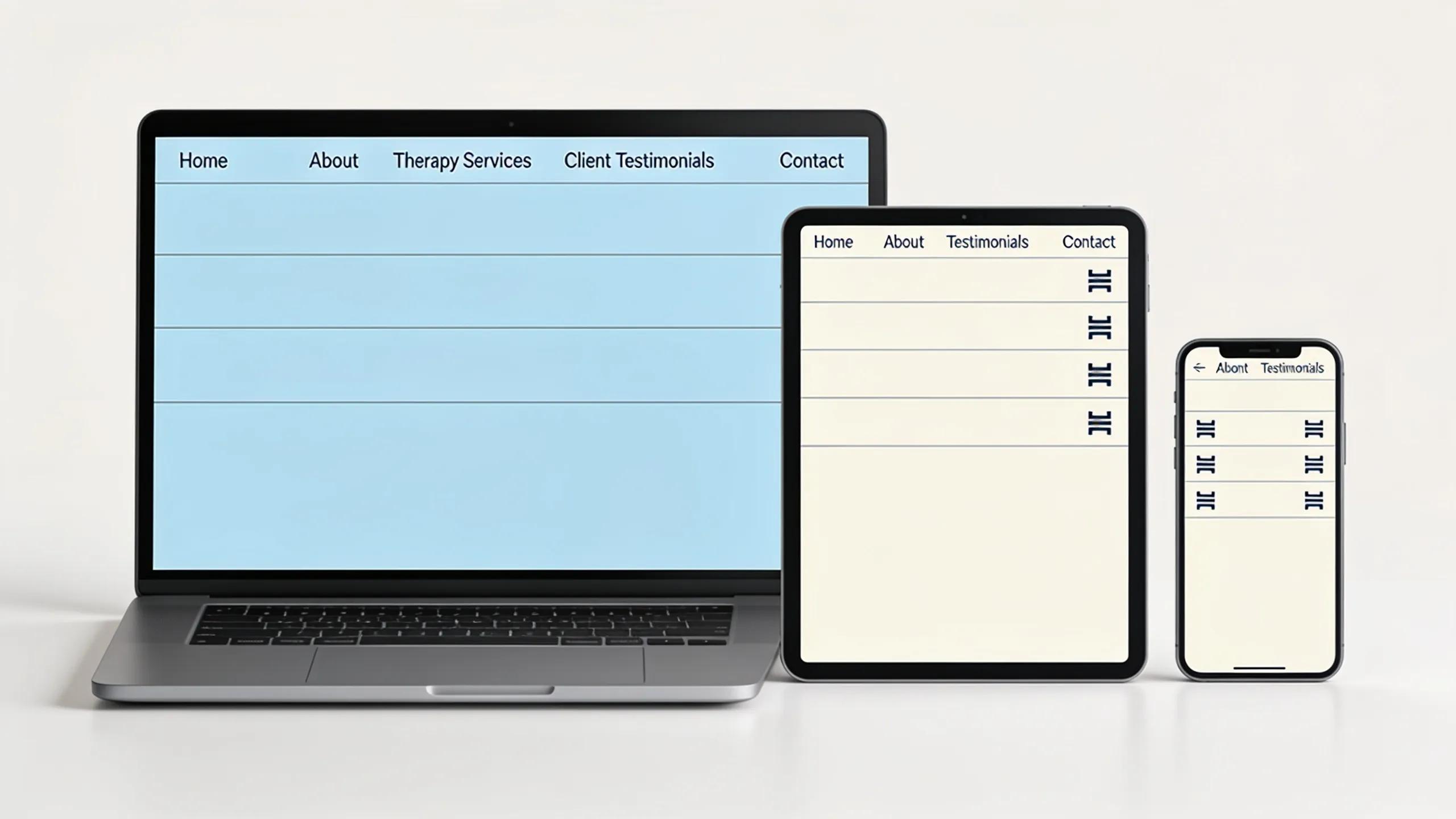
Design shapes perceived credibility; these core areas support intake optimisation:
- User-Friendly Navigation: Clear menus and logical page structure for quick discovery.
- Mobile Optimization: Responsive layouts and touch-friendly controls for mobile users.
- Visual Appeal: Cohesive branding and calming visuals to build trust.
Tightening these elements removes friction and raises conversion potential.
User Experience Enhancements
Small UX improvements raise completion rates across the intake funnel:
- Online Booking Systems: Simple scheduling with clear availability reduces steps.
- Trust-Building Content: Testimonials, credentials and concise explanations reassure visitors.
- Performance Monitoring: Use analytics to spot drop-off points and iterate.
These changes increase confidence and repeat engagement.
Content Marketing Techniques

Content connects with prospects and demonstrates expertise; key tactics are:
- Client-Centric Content: Address common concerns and next steps.
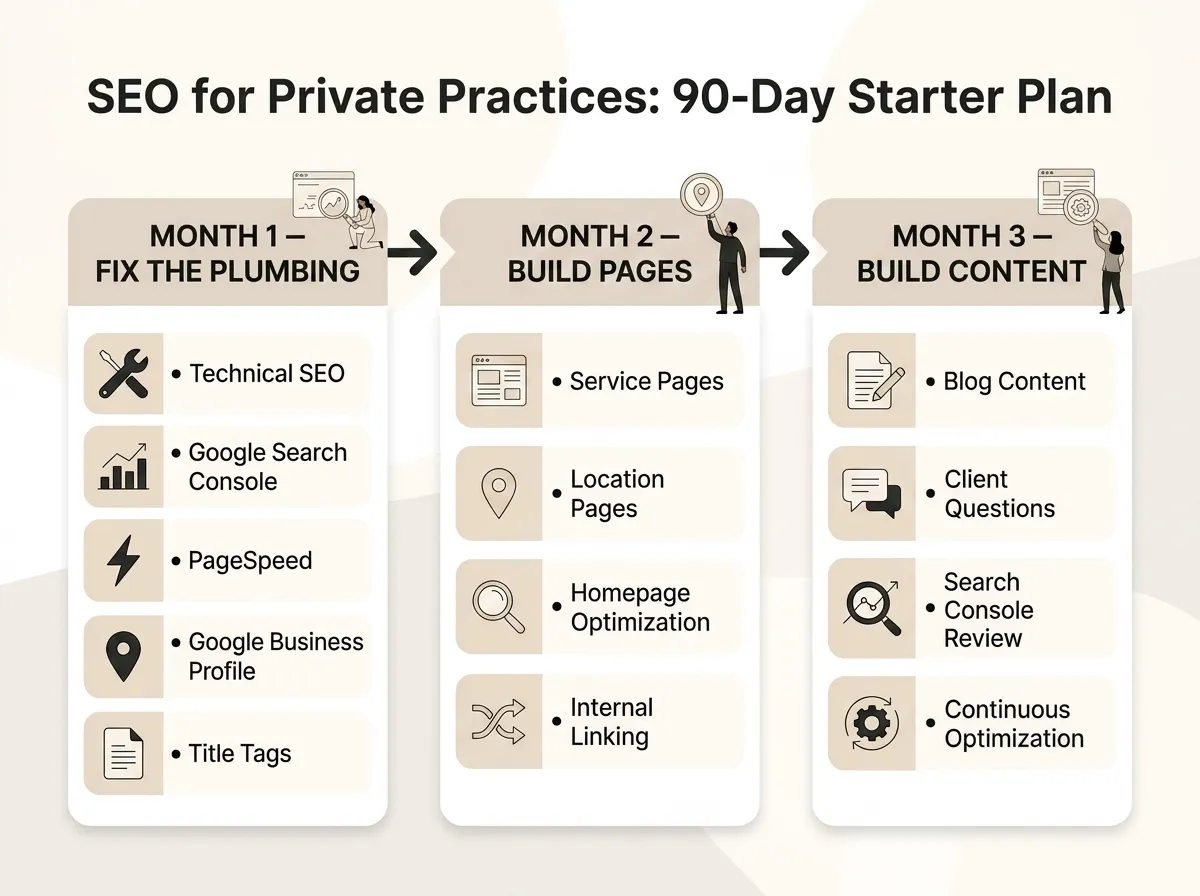
- Blogging: Regular posts that answer client questions and improve SEO.
- Social Media Engagement: Share useful content and guide users back to the site.
Targeted content increases visibility and inquiry volume.
Effective Lead Generation Practices
Focus on attracting qualified traffic and capturing interest:
- SEO Strategies: Use relevant keywords and local targeting for visibility.
- Lead Capture Tools: Offer helpful downloads or sign-ups to collect contacts.
- Engaging Content: High-quality resources encourage return visits and trust.
These practices raise qualified leads and conversion rates.
How Can Therapist Website Design Improve Client Intake Conversion?
Design impacts conversion through usability and persuasive layout:
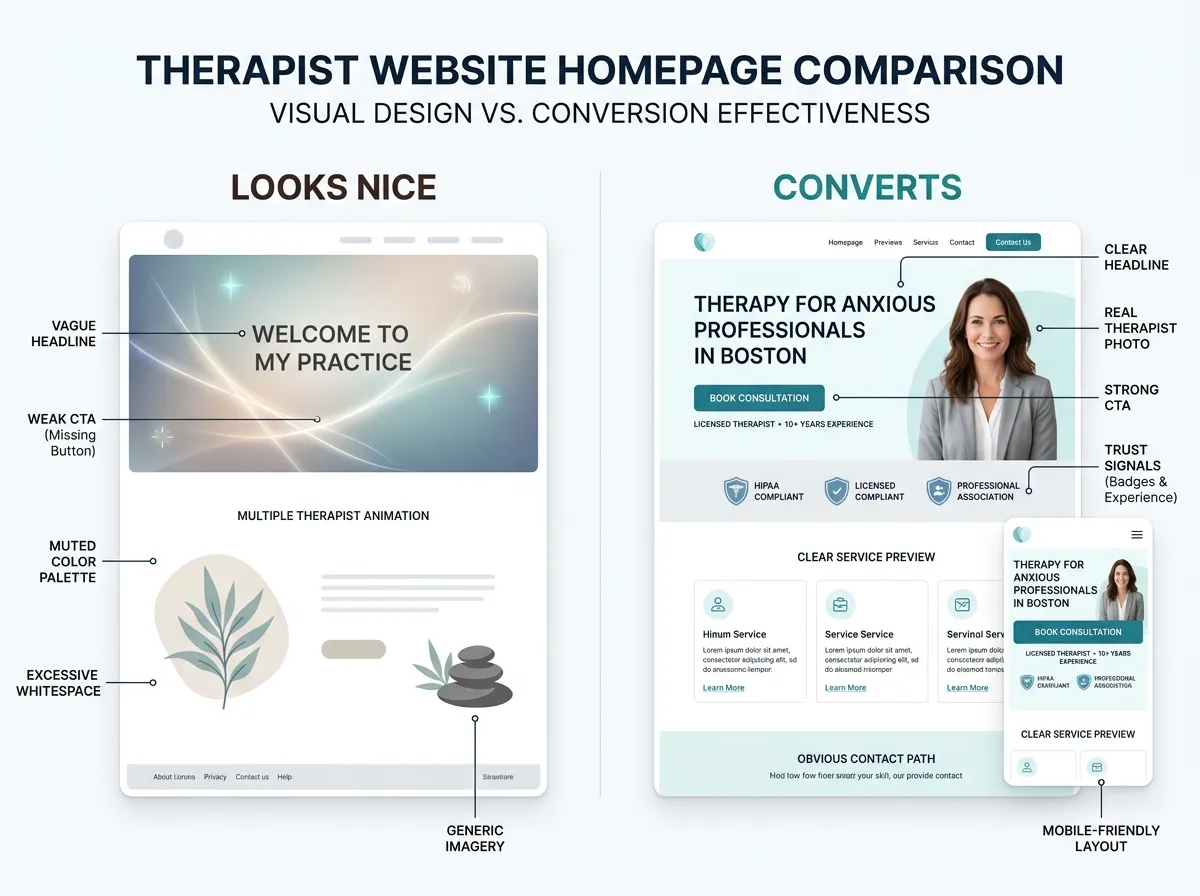
- Visual Appeal: Professional, uncluttered pages boost trust.
- Clear Navigation: Fewer clicks to key pages reduces abandonment.
- Call-to-Action (CTA) Placement: Prominent CTAs guide visitors to book or contact.
Well-executed design guides visitors to act.
What Are Essential Therapist Website Features for Conversion?
Essential features to include:
- User-Friendly Navigation: Fast access to services, fees, and contact info.
- Online Booking Systems: Direct scheduling reduces friction.
- Trust-Building Content: Clear credentials, testimonials and process explanations.
These features make intake straightforward for clients.
How Does Professional Design Build Trust and Encourage Bookings?
Design signals competence and care, influencing decisions:
- Professional Aesthetics: Clean layouts convey reliability.
- User-Friendly Navigation: Easy paths encourage booking actions.
- Trust Signals: Testimonials and affiliations validate credentials.
Design choices directly affect booking behaviour.
What Are Best Practices for Therapist Intake Form Optimization?
Optimize forms to reduce anxiety and friction:
- Calming Design Elements: Soothing colours and clear spacing.
- Empathetic Language: Kind, concise copy that sets expectations.
- Streamlining the Process: Only request essential information up front.
Simpler forms increase completion rates.
How Should Therapist Intake Forms Be Structured for Usability?
Structure forms for clarity and accessibility:
- Clean Layouts: Logical grouping and clear labels.
- Prominent Placement: Place forms where users expect them.
- Empathetic Language: Short prompts that reduce resistance.
Usable forms improve intake success.
What Techniques Reduce Form Abandonment in Therapy Websites?
Reduce abandonment by lowering friction and increasing trust:
- Reducing Required Fields: Ask only for what’s needed to start.
- Enhancing User Experience Design: Make controls obvious and mobile-friendly.
- Building Trust with Security Signals: Display privacy and SSL assurances.
These steps help more users complete intake.
How Does User Experience Enhance Online Therapy Client Acquisition?
Good UX makes information discoverable and emotionally resonant:
- Intuitive Navigation: Guides visitors to relevant pages quickly.
- Emotional Design: Tone and visuals that align with client needs.
- Credibility Indicators: Professional elements that support trust.
Improved UX raises acquisition and retention.
Which UX Elements Streamline the Visitor-to-Intake Journey?
Prioritise elements that remove friction and prompt action:
- Clear CTAs: Direct language and visible placement.
- Responsive Design: Consistent experience across devices.
- Feedback Mechanisms: Short surveys or contact options to capture intent.
These features smooth the path from visit to intake.
How Can Navigation and Mobile Responsiveness Increase Intake Rates?
Strong navigation and mobile performance widen reach and reduce drop-off:
- Effective Navigation: Logical structure lowers user effort.
- Mobile Optimization: Fast, usable pages on phones and tablets.
- SEO Benefits: Improved discoverability brings targeted traffic.
Prioritising these increases engagement and conversions.
What Are Effective Lead Nurturing and Follow-up Strategies via Therapist Websites?
Nurture leads with valuable, respectful communication:
- Email Marketing: Helpful, occasional messages that offer next steps.
- Content Marketing: Ongoing resources that answer client questions.
- Social Media Engagement: Lightweight interactions that maintain visibility.
Consistent, useful follow-up turns interest into appointments.
How Can Automated Follow-ups Improve Appointment Bookings?
Automation keeps communication timely and reduces no-shows:
- Automated Reminders: Appointment reminders and confirmations.
- Follow-Up Emails: Short messages to re-engage prospects.
- Streamlined Scheduling: Links and tools that simplify booking.
Automation increases booked appointments and attendance.
What Content Supports Ongoing Client Engagement Online?
Sustain engagement with varied, helpful formats:
- Educational Blog Posts: Practical articles that answer common questions.
- Video Content: Short clips that introduce approach and tone.
- Social Media Posting: Regular, concise updates that nurture community.
Regular content keeps clients connected and informed.
Frequently Asked Questions
How important is mobile optimization for therapist websites?
Essential. Mobile responsiveness preserves usability, lowers bounce rates, and supports intake on smaller screens.
What role do client testimonials play in enhancing website credibility?
Testimonials act as social proof, helping prospective clients judge service quality and feel more confident contacting the practice.
Are there specific SEO strategies that benefit therapist websites?
Yes. Local SEO, optimised service pages and blog content, quality backlinks, and descriptive image alt text improve local search visibility.
What impact does website speed have on client engagement?
Speed directly affects engagement; faster pages reduce abandonment and support better conversion rates.
How can social media marketing support a therapist’s online presence?
Social media extends reach, showcases expertise, and drives interested users back to the website.
What types of content are most effective for engaging visitors?
Educational posts, short videos, infographics and case-focused content address common concerns and increase time on site.
How can therapists ensure their website meets accessibility standards?
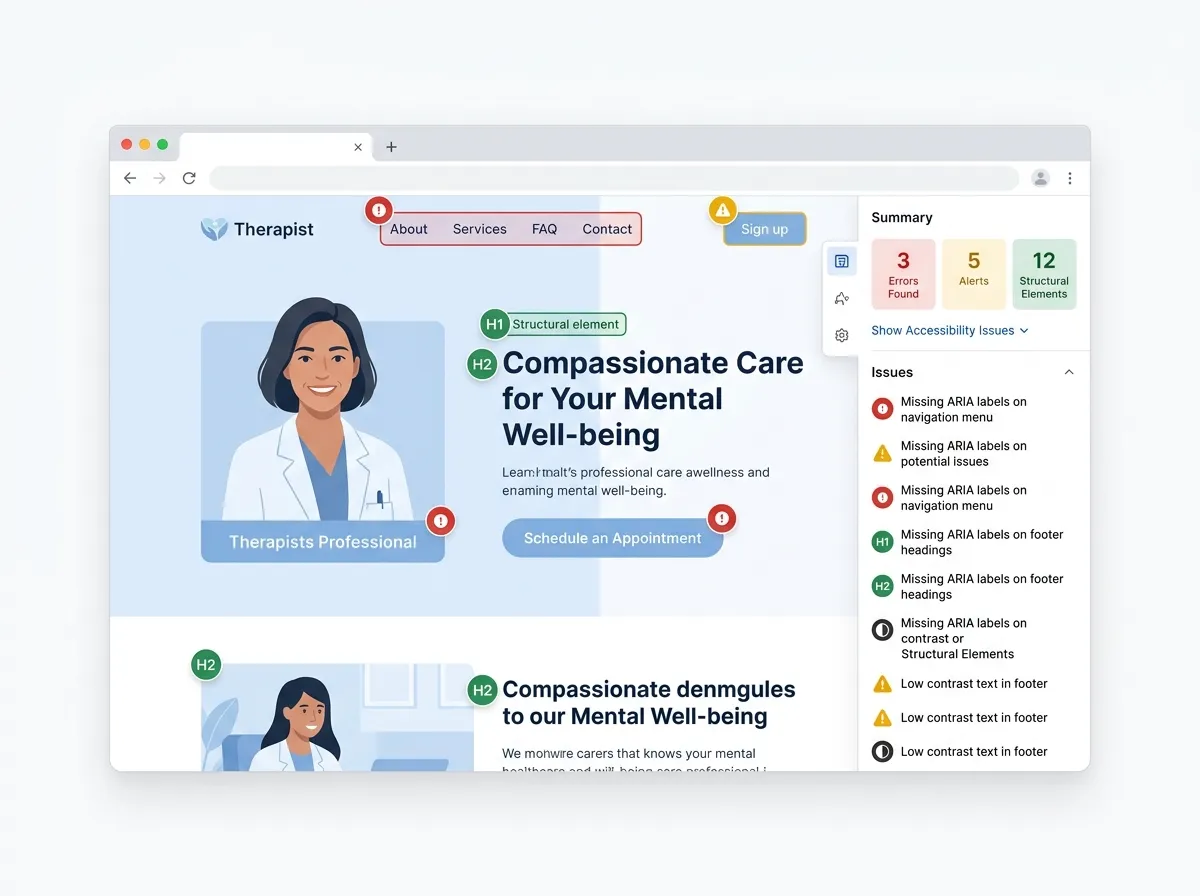
Follow WCAG: use clear language, provide text alternatives, ensure keyboard access, maintain contrast, and supply transcripts; audit regularly.
Conclusion
Optimising a therapy website combines strategic design, focused Clinical UX, and targeted content to build trust, simplify intake, and increase bookings; begin iterative improvements now to see measurable gains.