Free EHR for Therapists: Are No-Cost Electronic Health Record Solutions Actually Worth It?
Free Electronic Health Record (EHR) platforms appeal to therapists looking to cut overhead and simplify administration. They can streamline workflows and lower costs, but trade-offs exist. This article summarizes core features, constraints, HIPAA considerations, security risks, and practical effects of adopting no-cost EHRs compared with paid systems.
Research continues to assess the wider effects of EHR adoption on mental health services, especially where sensitive data and therapeutic relationships are involved.
EHR Impact on Mental Health: Sensitive Data & Therapeutic Relationships
Adoption of electronic health records (EHRs) and electronic medical records (EMRs) in mental health has progressed slowly due to concerns about collecting sensitive information, standardizing mental health data, and potential impacts on therapeutic relationships. Despite these concerns, EHRs and EMRs are increasingly recognised as important for improving documentation, information sharing, and, more broadly, the quality of care provided.
Impact of electronic health records on information practices in mental health contexts: scoping review, TC Kariotis, 2022
Features

Most free EHRs provide a compact feature set to support clinical work and basic administration. Common capabilities include:
- User-friendly interfaces for faster navigation by clinicians and clients.
- HIPAA-oriented controls such as encryption and access restrictions in many vendors’ offerings.
- Telehealth tools or integrations for remote sessions.
For small practices, these elements often cover everyday needs without licensing fees.
Limitations
No-cost EHRs can be limited compared with paid platforms:
- Reduced functionality — fewer advanced billing, reporting, or analytics features.
- Minimal support — limited customer service and training resources.
- Varying security — claimed HIPAA compliance may not match enterprise-grade safeguards.
These constraints can affect scaling, revenue cycle management, and technical resilience.
Potential Impact on Therapy Practices
Free EHRs can cut costs and improve administrative efficiency, potentially increasing client access and session time. Practices should weigh those gains against limitations in support, reporting, and integrations.
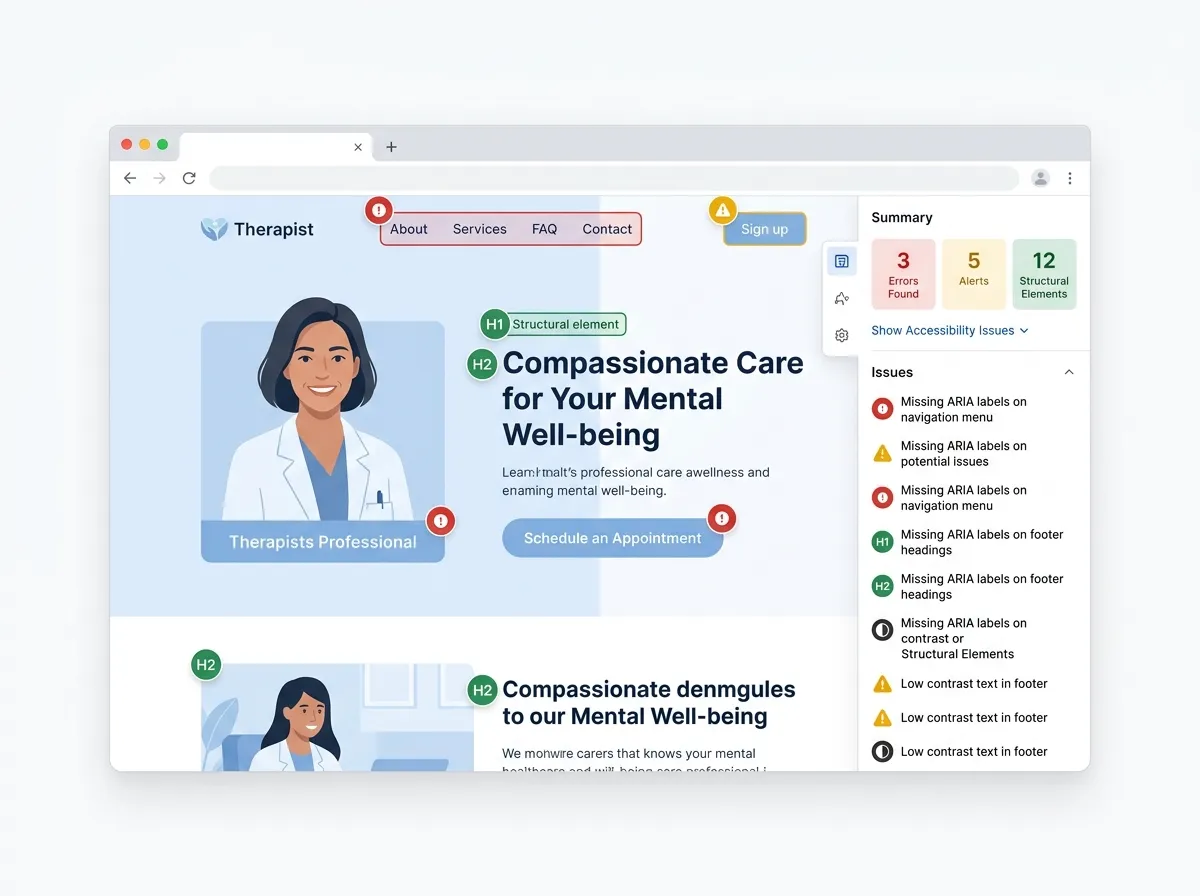
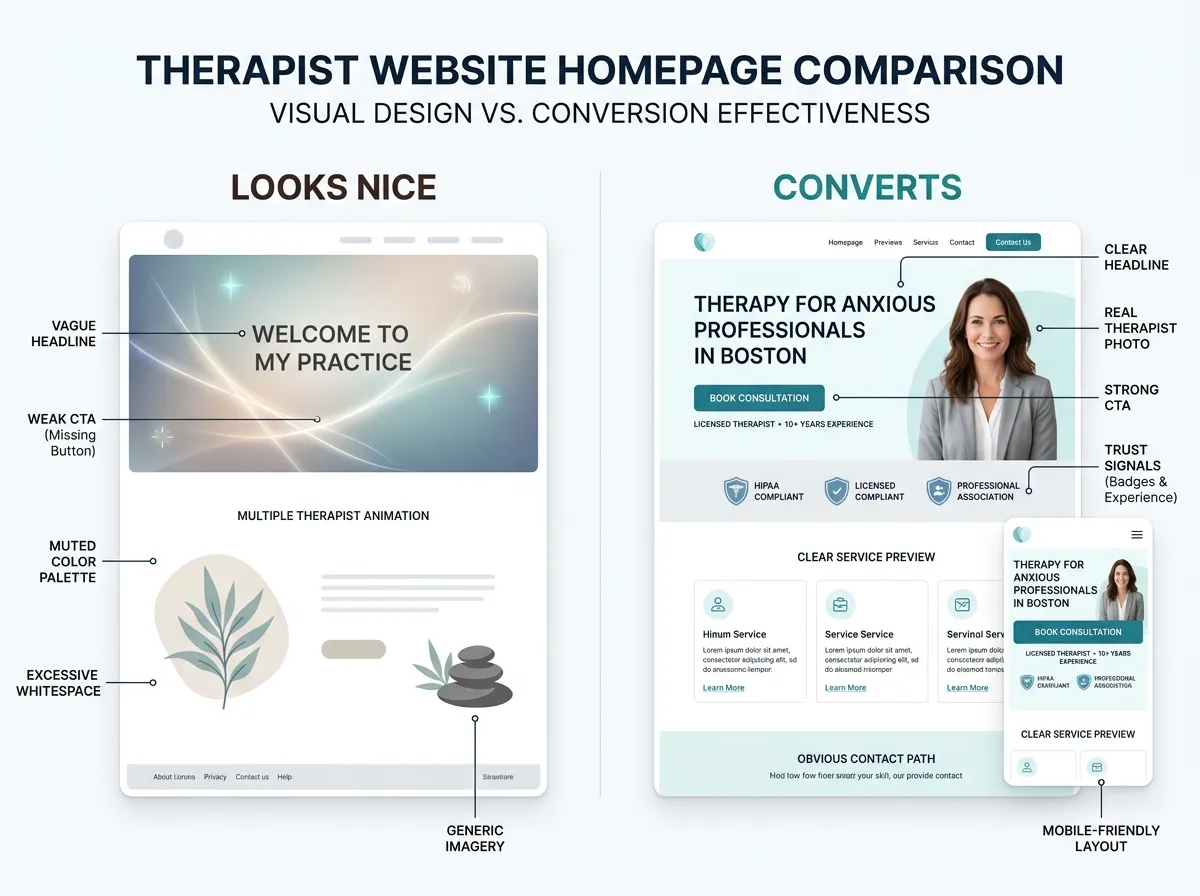
Good website design and clear patient navigation reduce friction when connecting clients to portals and telehealth features.
What Features Should Therapists Expect from the Best Free EHR Software?
Prioritise features that maintain clinical quality and efficiency:
- Intuitive UI for fast documentation and scheduling.
- Clinical documentation tools for efficient note-taking.
- Telehealth integration or simple video links.
This shortlist highlights what to check when assessing free EHRs.
Which Therapy Practice Management Tools Are Included in No-Cost EHRs?
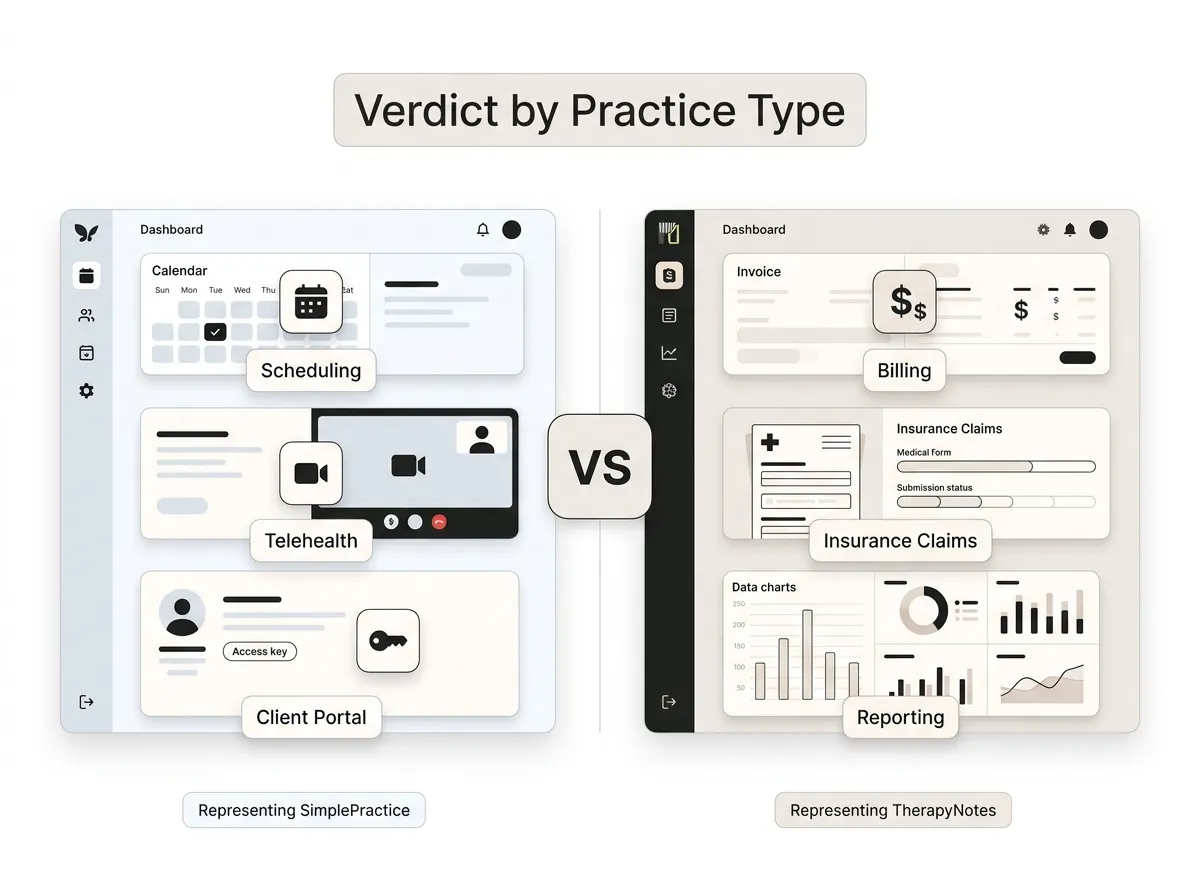
Basic practice management tools commonly bundled with free EHRs include integration hooks, scheduling, and simple billing or invoicing features. These support essential administrative workflows for smaller practices.
- Integration capabilities for scheduling or billing add-ons.
- Scheduling tools to manage appointments.
- Basic billing for invoicing and payment tracking.
Confirm integration depth before committing to a platform.
How Do Open Source Mental Health EHRs Compare in Functionality?
Open source EHRs can offer more customisation and additional modules but typically demand technical expertise and maintenance. Consider:
- Feature differences — unique custom modules may exist.
- Implementation costs — hosting, customization, and support create expenses.
- User experience — usability varies and may need refinement.
Match the option to your practice’s technical capacity and priorities.
What Are the Pros and Cons of Using No-Cost EHR Solutions for Counselors?
Free EHRs offer clear benefits and trade-offs.
Pros:
- Cost savings from no licensing fees.
- Accessibility for solo clinicians and small practices.
- Basic functionality adequate for routine workflows.
Cons:
- Feature limits that can hinder larger practices.
- Support gaps and fewer training resources.
- Security risks if vendor practices are weak.
Identifying targeted strategies and technical workarounds is important for successful EHR implementation in integrated behavioral health settings.
EHR Challenges & Solutions in Integrated Behavioral Health Practices
This article reports on practices that sought to integrate behavioral health with primary care between 2012 and 2014, describing EHR-related experiences, the challenges encountered, and the initial health information technology solutions and workarounds developed during implementation.
Electronic health record challenges, workarounds, and solutions observed in practices integrating behavioral health and primary care, M Davis, 2015
This balanced view helps counselors choose systems that align with clinical and administrative needs.
How Does HIPAA-aware Affect Free EHR Adoption?
HIPAA compliance is essential. Verify that a vendor provides:
- Encryption for data in transit and at rest.
- Access controls and role-based permissions.
- Audit trails to record access and changes.
Confirm these safeguards in writing before integrating any free EHR into practice workflows.
What Security and Privacy Risks Should Therapists Consider?

Key risks include data breaches, non-compliance with regulations, and insufficient staff training. Mitigate risk with technical controls, vendor due diligence, and routine staff education.
- Data breaches — protect against unauthorized access.
- Compliance risk — ensure the vendor meets legal requirements.
- User training — reduce human error through policies and training.
How Can Professional Therapy Website Design Enhance Free EHR Integration?
A well-designed practice website improves access to portals and telehealth, and reduces client friction. Focus on mobile responsiveness, secure patient portals, and clear navigation.
- Mobile responsiveness so clients access records on any device.
- Secure portals for protected information exchange.
- Clear navigation to reduce confusion and support engagement.
What Are Best Practices for Seamless EHR and Website Integration?
Follow pragmatic steps to reduce disruption:
- Choose a system that fits your workflows.
- Maintain updates for compatibility and security.
- Promote engagement via portals and reminders.
These actions support efficient operations and reduce technical friction.
How Does Clinical UX Improve Therapist and Patient Experience?
Good clinical UX reduces cognitive burden and supports safe workflows. Prioritise intuitive navigation, empathetic design, and accessibility.
- Intuitive navigation to speed routine tasks.
- Emotional design that supports patient comfort.
- Accessibility for users with disabilities.
Optimising EHR user interfaces and overall experience is essential to reduce user dissatisfaction and workflow disruption.
Optimizing EHR UI/UX: Addressing User Dissatisfaction & Workflow Disruption
Electronic Health Records (EHR) systems serve as digital platforms for managing patient data, streamlining clinical workflows, and supporting decision-making. Despite their role, EHRs frequently suffer from poor UI and UX design, which can increase cognitive load, disrupt workflows, generate user dissatisfaction, and raise the risk of clinical errors.
Enhancing human-computer interaction in healthcare: optimizing UI/UX design for electronic health records (EHR) systems, M Safaei, 2022
What Are Real-World Outcomes for Therapists Using Free EHRs with Custom Websites?
When paired with tailored websites, free EHRs often yield practical benefits:
- Improved engagement through portals and messaging.
- Streamlined operations for routine administrative tasks.
- Better accessibility for clients accessing records and telehealth.
Thoughtful integration tends to amplify the system’s practical value.
Which Success Stories Demonstrate Practice Growth and Booked Consultations?
Some practices report increased bookings, higher retention, and better patient feedback after adopting no-cost EHRs with focused website work. Look for case studies from similar practice sizes when evaluating vendors.
How Do Tailored Web Solutions Support Telehealth and Patient Navigation?
Tailored sites extend free EHR functionality by integrating telehealth, simplifying patient journeys, and hosting support resources. These extensions improve care continuity across remote and in-person settings.
- Telehealth integration for remote sessions.
- Navigation that helps clients find records and clinicians.
- Support resources for client education and referrals.
Frequently Asked Questions
What should therapists consider when transitioning from a paid EHR to a free EHR solution?
Inventory must-have features (billing, reporting, support), plan for migration and training, and confirm HIPAA compliance before switching.
Are there specific types of therapy practices that benefit more from free EHR systems?
Solo therapists and small practices often gain the most from free EHRs; larger practices usually need paid systems for advanced billing and reporting.
How can therapists ensure the security of patient data when using free EHRs?
Verify vendor security practices (encryption, access controls, audits), enforce strong passwords, and train staff regularly.
What are the implications of using free EHRs on patient engagement?
Good free EHRs can improve engagement via portals and telehealth; poor usability can reduce it. Prioritise systems with clear patient workflows.
Can free EHR systems integrate with other practice management tools?
Many support integrations, but depth varies. Confirm integration capabilities with your scheduling, billing, or telehealth tools.
What role does user feedback play in selecting a free EHR system?
User feedback reveals real-world usability and support quality; review testimonials from similar practice types when assessing vendors.
How can therapists measure the effectiveness of a free EHR system in their practice?
Track metrics such as administrative time saved, changes in patient engagement, scheduling accuracy, and billing efficiency, and collect staff and patient feedback.
Conclusion
Free EHRs can reduce costs and handle essential administrative tasks for many therapy practices, especially small or solo providers. Before adopting a no-cost solution, confirm HIPAA safeguards, integration needs, and support options. Match features to your clinical workflows and technical capacity to ensure a secure, usable system for both clinicians and clients.