Most therapist websites don’t have one big SEO problem. They have five or six small ones stacked up: a homepage titled “Home,” an unclaimed Google Business Profile, service pages that describe therapy in general instead of answering what a stressed-out person typed into Google at 11 p.m.
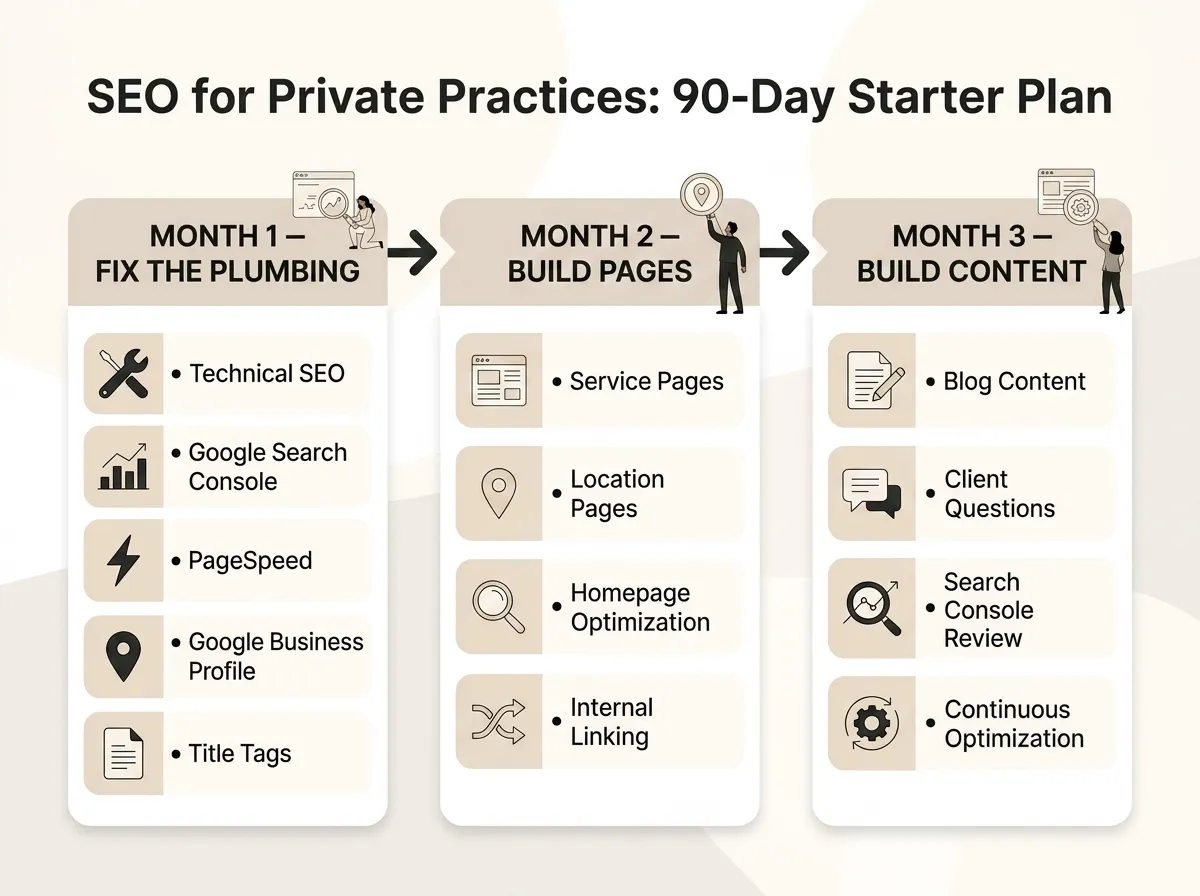
None of these fixes is hard. The order you fix them in is what most practices get wrong. So here’s the order.
Why Isn’t My Therapist Website Ranking on Google?
Therapist websites usually fail to rank for one of five reasons: the site isn’t fully indexed, pages target no clear search term, titles and headings are generic, the site is slow or clumsy on mobile, or the practice has no local presence on Google. Most sites we audit have at least three of the five.
That last point matters. We’ve built 500+ websites for therapists and coaches, and in client audits we almost never find a site that was penalized or somehow blacklisted. We find sites that were launched and then left alone, competing against practices that kept tinkering.
Quick distinction before you diagnose anything: “not ranking well” and “not showing up at all” are different problems. If Google can’t find your site, period, that’s an indexing issue — we’ve covered that separately in why your therapist website isn’t showing up on Google. This article is for the site that exists in Google but sits on page four.
Diagnose Before You Optimize
Skip this step and you’ll spend a month polishing pages that were never the problem.
Start with two free checks:
- Google Search Console. Set it up at search.google.com/search-console if you haven’t. Look at which queries already show your site, and at what position. Pages sitting at position 8–20 for a real query are your fastest wins — they need improvement, not miracles.
- The incognito test. Open a private browser window and search the phrases a client would actually use: “anxiety therapist in [your city],” “EMDR therapy near me,” “couples counseling [neighborhood].” Note who outranks you. Nine times out of ten it’s not the practice with the prettiest site. It’s the one with a page dedicated to that exact search.
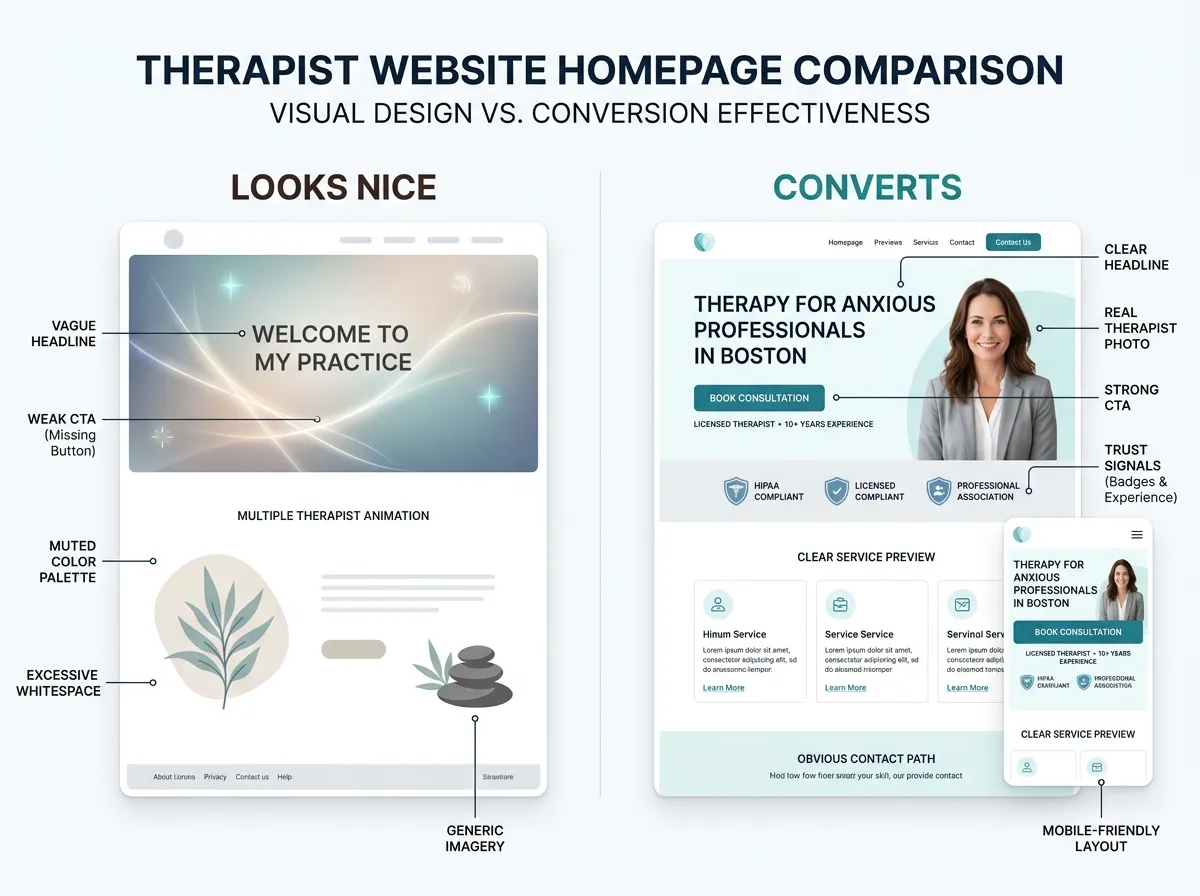
Then look for keyword gaps. Most therapy sites target nothing at all — the homepage says “Welcome” and the services page lists eight modalities in one paragraph. If no page on your site is clearly about “trauma therapy in Boston,” Google has no reason to show you for it.
On-Page SEO: Fix Your Titles First
Your title tags are the single highest-leverage hour you’ll spend on any of this.
Open your pages and look at what shows in the browser tab. If it says “Home | Willow Counseling,” you’re telling Google your page is about the word “home.” Rewrite it as the search you want to win: “Anxiety Therapy in Portland | Willow Counseling.”
After titles, in rough priority order:
- One page per specialty. A dedicated anxiety page, a dedicated couples page, a dedicated EMDR page. A single “Services” page listing everything ranks for nothing. This is the strongest opinion we’ll offer in this article, and it’s the change that moves rankings most often.
- Headings that answer questions. Your H2s should read like the things clients type: “What does EMDR feel like?” beats “Our Approach.”
- Internal links. Your anxiety page should link to your fees page, your About page, and your contact page with descriptive anchors. Orphan pages rank poorly and convert worse.
Your About page pulls double duty here — it’s usually the second-most-visited page on a therapy site and a trust signal Google’s quality guidelines care about. We wrote a full guide to building an effective therapist About page if yours is still two sentences and a stock photo.
Technical Problems That Quietly Sink Therapy Sites
You don’t need to become a developer. You need to check four things:
- Speed. Run your homepage through Google’s PageSpeed Insights. The usual culprit on therapy sites is a 4 MB hero photo of a couch. Compress images before uploading; aim for under 300 KB each.
- Mobile. More than half of therapy searches happen on phones, often in private moments. Tap through your own site on your phone. If the booking button needs pinch-zooming, you’re losing people.
- HTTPS. If your address bar shows “Not secure,” fix it today. It costs nothing with most hosts and Google treats it as a baseline.
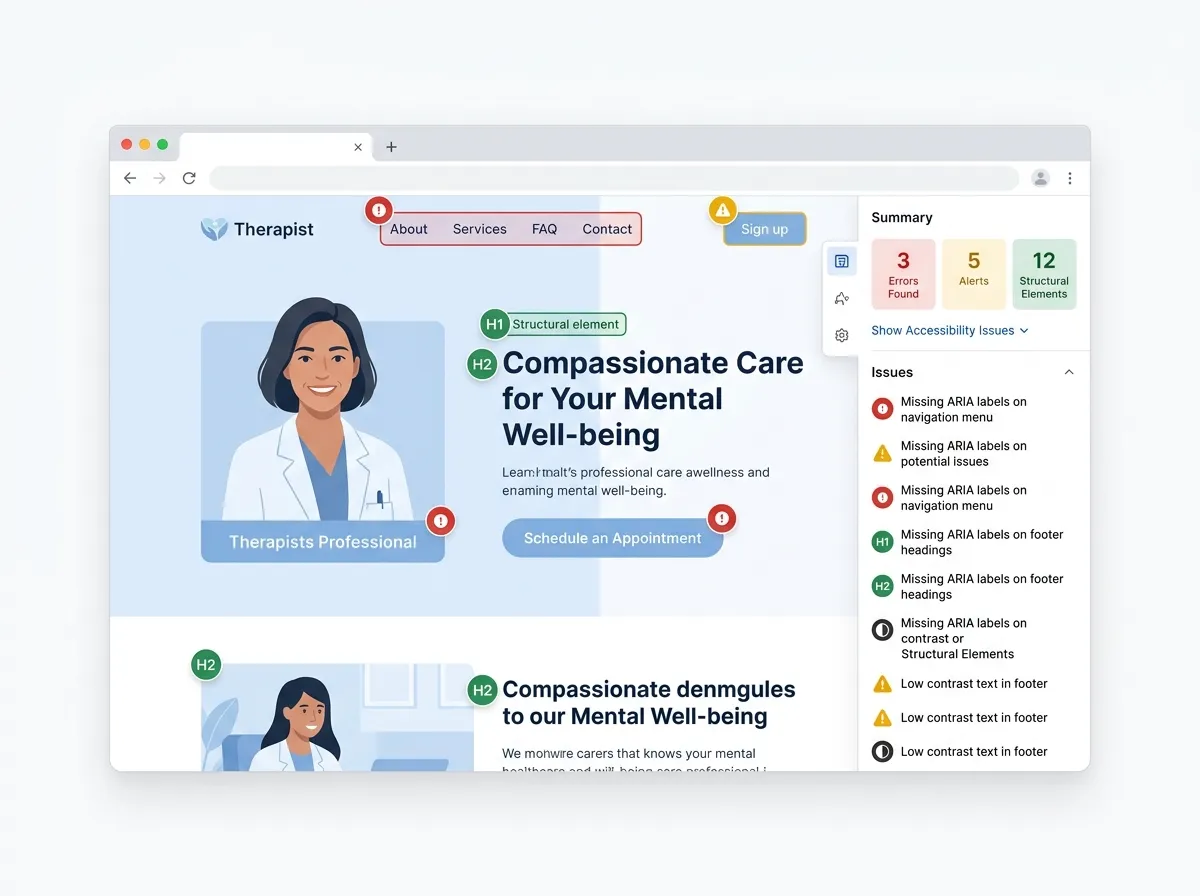
- Duplicate H1s and messy headings. Some WordPress themes and SEO plugins inject the page title twice or scramble heading order. View your page source and search for <h1. There should be exactly one.
Ten minutes of checking. Maybe an afternoon of fixing. Worth it before any content work.
Local SEO Is the Fastest Win for Most Practices
If you see clients in a specific city or state, local search is where you’ll feel results first — and your Google Business Profile matters more than your blog for at least the first year. There’s our second opinion.
Get the profile right:
- Claim and complete it. Category (“Psychotherapist” or “Counselor”), hours, phone, website link, photos of the actual office. Half-finished profiles get half-shown.
- Keep your NAP consistent. Name, address, phone number — identical everywhere your practice appears online. Mismatches make Google hesitate.
- Post occasionally. A short update every few weeks signals the practice is alive.
Now the part most SEO guides get wrong for this profession: don’t ask clients for Google reviews. Standard SEO advice says “encourage reviews,” and for a plumber that’s fine. For therapists, soliciting testimonials from current clients crosses an ethical line under most professional codes, and even asking former clients sits in gray territory. Reviews from colleagues, workshop attendees, or supervisees are the compliant route — slower, but it won’t put your license in the conversation.
Local SEO goes deeper than one profile — citations, location pages, review strategy that respects your board’s rules. That’s exactly what our local SEO for therapists service handles if you’d rather not run it yourself.
Content and Backlinks: Spend Your Time Carefully
Backlink outreach is the most oversold tactic in therapist SEO. Cold-emailing bloggers for guest posts is a poor use of a clinician’s hours, and the links you’d earn rarely justify the time. If backlinks come, let them come from things you’d do anyway — a podcast interview, a professional association directory, a quote in a local news piece.
Content is a better investment, with one condition: write pages that answer searches, not essays about therapy. “How much does couples counseling cost in Denver” is a page worth writing. “The importance of self-care” is not, because 40,000 sites already wrote it and none of them get clients from it.
One well-aimed page a month beats a weekly blog you’ll abandon by October.
If you’d rather hand the whole system to someone who does this for therapy practices all day — keyword research, content, local, technical — that’s what our SEO and digital marketing retainer is built for.
How to Tell Whether Any of This Is Working
Track three numbers monthly, and only three:
- Impressions and average position in Search Console — the leading indicator. These move first.
- Organic visits in your analytics — the middle indicator.
- Contact form fills and calls — the only number that pays rent.
Set expectations honestly: SEO for a therapy practice typically takes three to six months to show up in inquiries, sometimes longer in crowded metros. That’s also the honest trade-off with hiring help. An SEO retainer is a months-long commitment before the payoff arrives, and if your caseload is already full or you’re pre-launch, it’s the wrong purchase — fix your titles and your Google Business Profile yourself and revisit the rest when you have capacity to fill.
FAQ: SEO for Therapist Websites
How long does SEO take for a therapist website?
Do I still need SEO if Psychology Today sends me referrals?
Should I do SEO myself or hire someone?
Do blog posts help a therapy website rank?
Where to Start This Week
Fix the title tags. Claim the Google Business Profile. Those two moves address the most common SEO problems on therapist websites, cost nothing, and take an afternoon.
If you’d rather see the full gap between where your site ranks and where it could, tell us about your practice through the Website Inquiry Form and we’ll show you exactly what to fix, in order.