Automate Client Onboarding with EHR Integration on Therapy Websites
Integrating an Electronic Health Record (EHR) with your therapy website streamlines onboarding, reduces manual entry, and improves client experience. This guide explains the benefits of “EHR integration” , how it automates intake workflows, and the core best practices for secure, compliant connections.
What Are the Key Benefits of EHR Integration for Therapy Websites?
EHR integration delivers operational and client-facing gains: reliable client data capture, easier access for authorised staff, fewer errors, and less admin work so clinicians can focus on care.
- Improved Client Experience : Faster online intake and previsit form completion.
- Streamlined Workflows : Centralised appointment, billing, and records management.
- Enhanced Data Accuracy : Reduced duplicate entry and fewer transcription errors.
For practices wanting operational gains, integrating an EHR can be transformative. Companies such as Therapeia Web Design build therapy websites to connect directly with EHR systems, cutting intake friction.
How Does EHR Integration Improve Client Onboarding Automation?

Integration automates repetitive onboarding tasks, creating a predictable intake flow and reducing manual reconciliation.
- Seamless Data Transfer : Client-entered information flows into the EHR automatically.
- Online Appointment Scheduling : Web bookings sync to the EHR to prevent double-booking.
- Automated Reminders : Scheduled reminders reduce no-shows.
These features lower administrative overhead and make client interactions more consistent.
Independent research indicates cloud automation can streamline EHR integration and digital patient onboarding across the patient journey.
Cloud Automation for EHR Integration & Digital Patient Onboarding
Cloud automation offers significant potential for healthcare organisations facing rising administrative demands and patient experience challenges. Integrating Electronic Health Record systems with cloud platforms such as Salesforce Health Cloud allows providers to streamline operations across the patient journey. These technologies support digital patient onboarding, intelligent appointment scheduling, and automated claims processing while reducing manual workloads.
Cloud Automation in Healthcare: Faster Onboarding and Better Patient Experiences, 2025
Automate Client Onboarding with EHR Integration on Therapy Websites
Scheduling software saves coordination time and improves calendar accuracy. When linked to an EHR, tools synchronise availability, automate reminders, and reduce interruptions to clinical work.
- Streamlined Appointment Bookings : Clients can book online.
- Automated Reminders : Fewer missed sessions.
- Reduced Administrative Burden : Less time spent managing schedules.
Integrating scheduling with your EHR creates a more reliable, predictable client experience.
How to Connect Your Therapy Website with EHR Systems Securely and Compliantly?
Connecting a website to an EHR requires planning to ensure security and regulatory compliance (e.g., HIPAA). Prioritise secure data flows and clear accountability.
- Understand EHR Integration : Map the EHR’s integration capabilities and limits.
- Choose the Right EHR System : Pick a system that fits your practice needs and compliance requirements.
- Ensure HIPAA-aware : Use encryption and access controls to protect data.
A planned integration approach enables a secure, compliant connection between your website and the EHR.
What Are the Steps to Ensure HIPAA-aware in EHR Integration?
HIPAA compliance depends on careful system selection, secure interfaces (APIs), and ongoing oversight to protect client data and reduce legal risk.
- Choose a HIPAA-Compliant EHR System : Confirm vendor compliance and agreements.
- Implement API-Based Integration : Use secure, standards-based APIs for data exchange.
- Conduct Regular Audits : Monitor logs and processes to maintain compliance.
Prioritising compliance safeguards client information and preserves trust.
The evolving health‑tech landscape underscores the need for HIPAA-compliant interoperability and secure, real-time data transfer between EHR systems.
HIPAA-Compliant EHR Data Interoperability & Secure Transfer
In a rapidly changing healthcare technology environment, the requirement for secure, real-time data transfer between Electronic Health Record (EHR) systems has become both a clinical and legislative priority. Providers face pressure to modernise integration infrastructure to support decision support systems, patient-centric care models, and population health analytics while maintaining HIPAA compliance.
Real-Time AI Integration Architectures for HIPAA-Compliant Healthcare Data Interoperability, A Warrier, 2025
How to Implement Secure EHR Client Portals for Data Protection?
Secure client portals must enforce encryption, authenticated access, and clear user permissions to limit exposure of sensitive records.
- Choose the Right EHR System : Prefer vendors with strong security features.
- Utilize API Integration : Ensure APIs follow industry security standards.
- Ensure Compliance with HIPAA : Regularly review security controls.
These practices create a safer environment for managing protected health information.
How Can Scheduling and Telehealth Features Be Automated Through EHR Integration?
EHR integration enables automated scheduling and telehealth workflows that improve access and convenience while reducing administrative steps.
- Increased Accessibility : Bookings and telehealth access from anywhere.
- Convenience and Flexibility : Clients choose convenient times.
- Streamlined Communication : Faster, documented client-therapist messaging.
Automating these features reduces friction and supports better engagement.
What Are Best Practices for Automating Appointment Booking on Therapy Websites?
Effective automation needs an EHR that integrates with booking tools, clear user flows, and secure client access to maintain a consistent booking experience.
- Choose the Right EHR System : Confirm scheduling compatibility.
- Integrate Online Booking Systems : Simplify booking steps on the site.
- Implement Secure Client Portals : Protect appointment data and access.
These steps produce a user-friendly booking flow and fewer administrative follow-ups.
How Does Telehealth Integration Support Seamless Client Engagement?

Telehealth integration extends access, preserves session records in the EHR, and streamlines session logistics.
- Increased Accessibility : Clients can attend from home.
- Convenience and Flexibility : Easier scheduling around clients’ lives.
- Streamlined Communication : Integrated messaging and session notes.
Integrating telehealth with your EHR supports sustained engagement and smoother care.
A robust, HIPAA-compliant web application design framework is fundamental to the security and effectiveness of next-generation telehealth systems.
HIPAA-Compliant Web Application Design for Telehealth Security
This paper proposes a comprehensive, HIPAA-aware web application design framework for next-generation telehealth systems, addressing requirements such as data encryption, access control, audit logging, secure communication protocols, and breach notification. The framework describes a multi-layered security architecture using end-to-end encryption (AES-256), role-based access control (RBAC), OAuth 2.0 authentication, and related mechanisms.
A HIPAA-aware web application design framework for next-generation telehealth systems, SS Akib Rahman, 2024
What Are Proven Strategies to Optimize Client Onboarding Through Therapy Website EHR Connection?
Optimising onboarding via a website–EHR connection means choosing the right EHR, simplifying website navigation, and offering secure client portals to reduce intake friction.
- Choose the Right EHR System : Match features to practice needs.
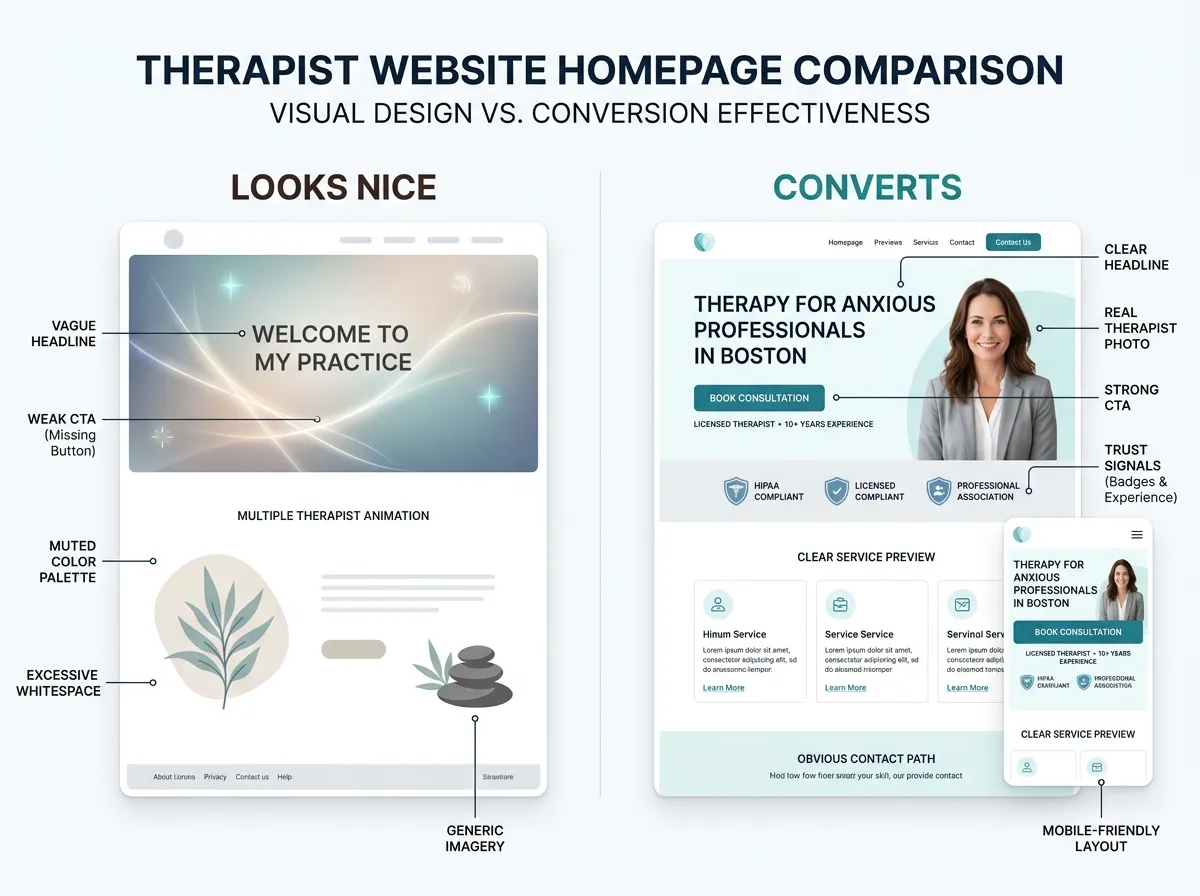
- Enhance Website Design : Clear navigation and simple forms.
- Provide Client Portals : Central access to onboarding materials.
These strategies make intake quicker and more reliable for clinicians and clients.
How Do Customized Client Portals Enhance User Experience and Retention?
Customised portals give clients tailored access to records, appointments, and resources, improving usability and engagement.
- Seamless User Experience : Easy access to relevant records.
- Enhanced Engagement : Personalised content and reminders.
- Improved Accessibility : Mobile-friendly portals for all devices.
Investing in customised portals supports stronger clinician–client relationships and retention.
What Case Studies Demonstrate ROI from EHR and Website Integration?
Case studies report measurable returns: less administrative time and improved appointment attendance after integration.
- Case Study 1 : A practice reported a significant reduction in admin time after EHR integration, freeing clinicians for care.
- Case Study 2 : Another practice saw higher attendance from automated reminders and online booking.
These examples show practical operational and engagement benefits from EHR–website integration.
Frequently Asked Questions
What should I consider when choosing an EHR system for my therapy practice?
Evaluate usability, integration capabilities, HIPAA compliance, mental-health features (note templates, billing), vendor support, and scalability.
How can I ensure my clients’ data is secure during EHR integration?
Use strong encryption for storage and transit, secure APIs, regular security audits, and staff HIPAA training.
What role does telehealth play in enhancing client engagement?
Telehealth increases access and convenience, supporting attendance and ongoing communication through integrated platforms.
How can I measure the success of my EHR integration?
Track KPIs: administrative time saved, appointment attendance, data accuracy, workflow efficiency, and client/staff feedback.
What are the common challenges faced during EHR integration?
Challenges include data migration complexity, staff adoption, and regulatory compliance; address these with planning and training.
Can EHR integration improve billing processes in therapy practices?
Yes — integration can automate invoicing, improve claim accuracy, and streamline payment processing to reduce administrative load.
Conclusion
Integrating an EHR with your therapy website improves onboarding efficiency and data accuracy. A secure, compliant connection reduces administrative burden and strengthens client engagement, allowing therapists to focus on clinical care. Consider partnering with experienced providers for correct implementation.