In the fast-paced realm of mental health services, the optimization of therapist websites through accelerated web sprint reviews is essential for delivering effective mental health care. This article explores how these reviews streamline web development processes specifically tailored for therapists, counselors, and wellness coaches. Readers will discover key methodologies, best practices, and strategies to enhance their online presence while ensuring compliance with necessary regulations. The current landscape often presents challenges in client acquisition and website maintenance, which can be effectively addressed through the implementation of an efficient sprint review process. This guide will cover best practices, tools, methodologies, and strategies that resonate with the unique needs of mental health practices, while also illuminating how to integrate HIPAA compliance into these workflows.
Best Practices
To effectively design websites for mental health practices, several best practices should be considered:
- User-Friendly Design: Websites must prioritize an intuitive layout that enables easy navigation for clients seeking support and information.
- Mobile Responsiveness: As more users access services via smartphones, responsive design ensures optimal functionality across all devices.
- SEO Optimization: Employing effective SEO strategies helps improve visibility, making it easier for potential clients to find the services offered.
These practices set the foundation for a successful online presence, creating a supportive environment for individuals seeking mental health assistance.
Tools
Utilizing the right tools is vital for efficient web development in mental health practices. Consider the following resources:
- Google Analytics: This tool allows practitioners to track visitor behavior on their websites, providing insights that guide improvements.
- Hotjar: Use this tool to visualize users’ interactions with your website, helping identify areas needing improvement.
- SEO Tools: Tools like SEMrush or Moz can enhance SEO efforts, ensuring your website ranks well in search results.
These tools play a fundamental role in optimizing online outreach and user experience.
Methodologies
Adopting systematic methodologies can significantly improve the design efficiency of therapist websites. Key approaches include:
- Content Marketing: Strategically creating and sharing valuable content can engage potential clients and improve search visibility.
- Conversion Rate Optimization (CRO): By analyzing user behavior, therapists can identify opportunities to increase website conversions.
- User Experience (UX) Design: Prioritizing user experience ensures that clients interact positively with the website, ultimately leading to higher satisfaction levels.
Implementing these methodologies provides a framework that maximizes the effectiveness of therapist websites.
Strategies
Effective strategies are essential for maintaining client engagement and ensuring the sustainability of therapist websites. Some impactful strategies include:
- Engagement with Clients: Building strong connections through personalized communication fosters trust and encourages return visits.
- Regular Content Updates: Consistently refreshing website content keeps it dynamic and relevant to users’ needs.
- Feedback Integration: Actively soliciting and incorporating user feedback leads to improvements in service delivery and website functionality.
These strategies can result in increased client retention and referrals, contributing to business growth.
What is an Accelerated Web Sprint Review for Mental Health Practices?
An accelerated web sprint review is a focused and efficient process that enables mental health professionals to streamline their website development, ensuring swift and compliant launches. This methodology emphasizes rapid iteration, allowing for quick assessments and adjustments based on feedback. The benefits of this approach include reduced time to market and enhanced adaptability in addressing client needs. This section will delve deeper into how the sprint methodology fosters efficiency in web development for therapists.
How does the sprint methodology streamline web development for therapists?
The sprint methodology enhances web development processes through structured phases that focus on specific objectives. Key aspects of this approach include:
- Defining Client Goals: Establishing clear, measurable objectives for what the website should achieve helps align design and functionality with client needs.
- User Experience Focus: Prioritizing user experience ensures that visitors find information easily and complete desired actions without frustration.
- Integration of Features: Each sprint cycle can introduce and test new features, ensuring they meet the evolving demands of users.
Implementing these practices ensures that therapists can effectively meet their clients’ expectations while streamlining the development process.
Key Aspects of the Sprint Methodology
Core principles of the sprint methodology include:
- Iterative Design Process: Continuous testing and refinement lead to better user-centered designs.
- Rapid Prototyping: Creating quick models of the website’s structure allows for immediate feedback and adjustments.
- Collaborative Workflows: Involving multiple stakeholders in the process ensures diverse perspectives are considered, enhancing overall outcomes.
These aspects contribute to a more dynamic and efficient development framework.
Practical Steps in the Sprint Process
To implement sprint reviews effectively, practitioners can follow these practical steps:
- Kickoff Meeting: Establish a project kickoff to align stakeholders on goals and expectations.
- User Testing: Conduct usability tests during the sprint to gather actionable insights from real users.
- Evaluation and Iteration: Regularly assess site performance and user feedback to inform the next steps in the development cycle.
These practical steps shape a comprehensive strategy for optimizing therapist websites through focused sprint reviews.
Which sprint phases are critical to achieving rapid, compliant launches?
Several key phases in the sprint process are essential for ensuring rapid and compliant website launches:
- Pre-Launch Preparation: Careful planning and testing can help identify potential compliance issues and technical glitches.
- Launch Day Procedures: Having a checklist for launch tasks ensures that all elements are appropriately configured and compliant.
- Post-Launch Maintenance: Continuous monitoring and updates maintain compliance and optimize user experience.
These critical phases foster a smoother transition from development to live deployment.
How is HIPAA Compliance Integrated into the Therapy Website Sprint Workflow?
Integrating HIPAA compliance into the therapy website sprint workflow is paramount for protecting client information. Key methods include:
- Patient Privacy: Ensuring that the website’s data collection and storage methods meet patient confidentiality standards is essential.
- Data Security: Implementing strong security measures safeguards against unauthorized access to sensitive information.
- Breach Notification: Establishing procedures for notifying clients in case of a data breach helps maintain transparency and trust.
By prioritizing these elements, therapists safeguard their practices from legal risks and enhance client confidence.
Integrating formal security standards is essential for ensuring that digital health platforms maintain rigorous privacy and operational integrity throughout their development lifecycles.
HIPAA-Compliant Web Design Framework for Mental Health Telehealth
This paper proposes a comprehensive, HIPAA-compliant web application design framework specifically tailored for next-generation telehealth systems, addressing critical requirements including data encryption, access control, audit logging, secure communication protocols, and breach notification mechanisms
A HIPAA-compliant web application design framework for next-generation telehealth systems, SS Akib Rahman, 2024
What are the key HIPAA requirements affecting web design for therapists?
The primary HIPAA requirements impacting web design for therapists include:
- Access Controls: Websites must restrict access to protected health information to authorized personnel only.
- Data Encryption: Encrypting data protects patient information from being intercepted during transmission.
- Audit Controls: Websites should include robust logging mechanisms to track access and modifications to sensitive data.
Understanding these requirements guides therapists in creating compliant websites that protect their practice and clients.
How do sprint workflows ensure data security and legal adherence?
Sprint workflows enhance data security and legal adherence by embedding compliance checks throughout the development process. These workflows:
- Incorporate Security Checks: Regular assessments of data protection measures can help catch compliance issues early.
- Facilitate Communication: Keeping all team members informed about HIPAA requirements ensures collective adherence.
- Adaptive Strategies: Adjusting workflows based on compliance feedback cultivates continuous improvement in data handling practices.
This proactive approach leads to more secure and legally compliant therapy websites.
What Are Best Practices for UX Design in Professional Therapist Websites?
Best practices in UX design are crucial for creating effective therapist websites. Consider the following:
- Clinical UX Principles: Incorporating clinical UX principles enhances trust between clients and practitioners, impacting overall satisfaction.
- Patient Engagement Strategies: Strategies such as personalized messaging can increase user interaction and loyalty.
- Navigational Elements: Clear and concise navigational components help users find relevant information quickly.
These practices are vital for ensuring that websites effectively meet the needs of clients seeking mental health services.
How does Clinical UX enhance patient trust and engagement?
Clinical UX enhances patient trust and engagement primarily by prioritizing user-centric design. Key elements include:
- Transparent Communication: Clear messaging about services, privacy policies, and appointment procedures fosters transparency with clients.
- Accessible Resources: Easily accessible informational content helps clients feel informed and engaged.
- Supportive Design: Incorporating calming aesthetics and intuitive navigation reduces barriers for users seeking help.
These design elements contribute to a website environment that encourages increased client engagement.
Which UX elements reduce friction in client navigation and booking?
Elements that effectively reduce friction in client navigation and booking include:
- Simple Booking Systems: Online scheduling tools optimize the process of making appointments.
- Quick Access to Resources: Prominent placement of mental health resources simplifies client access to support.
- Mobile-Friendly Features: Ensuring website functionality across mobile platforms is essential for user convenience.
These elements collectively enhance the client experience, promoting seamless interactions.
How Can Client Acquisition and Lead Conversion be Optimized Through Sprint Reviews?
Optimizing client acquisition and lead conversion is a vital goal for therapists. Effective strategies include:
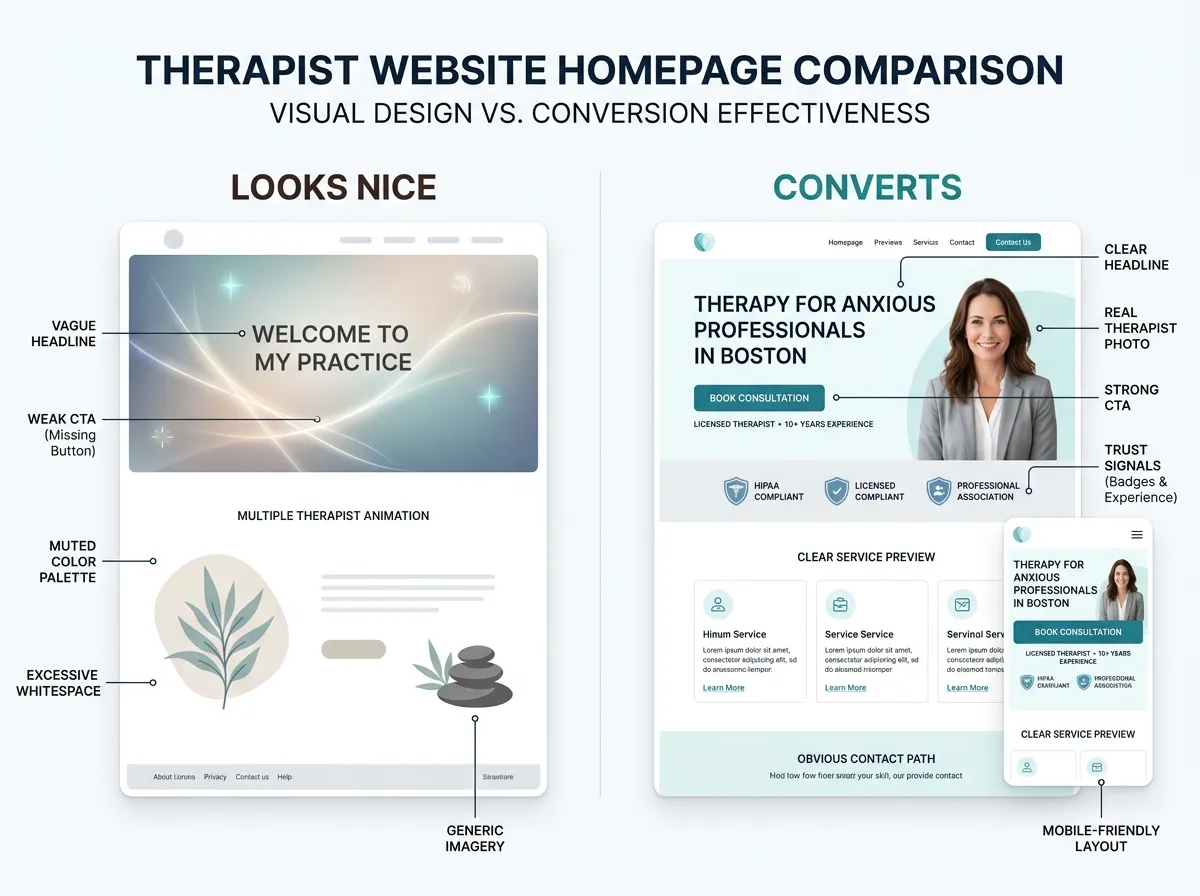
- Conversion Strategies: Implementing clear call-to-action elements encourages visitors to engage with services offered.
- Client Journey Mapping: Understanding the pathway clients take from awareness to booking can highlight areas needing improvement.
- Metrics Measurement: Tracking conversion metrics provides insights into the effectiveness of various strategies.
By leveraging these strategies, therapists can significantly enhance their online conversions.
What conversion strategies align with therapist website goals?
Conversion strategies that align with therapist website goals encompass:
- Engaging Landing Pages: Designing landing pages specifically targeting client needs can improve conversion rates.
- A/B Testing: Testing different layouts and CTA placements can identify the most effective combinations for client engagement.
- Email Follow-Ups: Establishing automated follow-up systems increases the likelihood of converting leads into clients.
These strategies emphasize aligning website functionalities with client expectations for better conversion outcomes.
How do workflow guides integrate client journey mapping for higher bookings?
Workflow guides facilitate the integration of client journey mapping by:
- Visualizing Customer Pathways: Outlining each step from first contact to signing up for services helps identify optimization points.
- Establishing Clear Goals: Defining benchmarks for each stage of the journey can guide teams in making necessary adjustments.
- Incorporating Feedback Loops: Regularly updating workflow guides based on client surveys fosters a client-centered approach.
By implementing these guides, therapists can create a more effective and streamlined client journey leading to increased bookings.
What Are the Steps for Post-Launch Maintenance and Continuous Website Improvement?
To ensure ongoing effectiveness, several steps should be taken for post-launch maintenance and continuous improvement:
- Automation Support: Leveraging automation tools can streamline ongoing website updates and resource management.
- Performance Metrics: Regular analysis of key performance indicators (KPIs) can highlight areas needing enhancement.
- Continuous Content Updates: Updating content to stay relevant ensures the website remains informative and engaging over time.
These steps foster a culture of continuous improvement, which is essential for maintaining a user-friendly and effective online presence.
How does ongoing workflow automation support mental health practices?
Ongoing workflow automation supports mental health practices by:
- Reducing Manual Work: Automating repetitive tasks frees up valuable time for therapists to focus on client care.
- Improving Data Accuracy: Automated systems help minimize human error in data entry and management.
- Enhancing Communication: Automated appointment reminders and follow-ups improve client engagement and reduce no-shows.
By embracing automation, therapists can enhance operational efficiency and improve client experiences.
What metrics and KPIs measure sprint review success over time?
Utilizing metrics and KPIs allows therapists to evaluate the success of their sprint reviews accurately. Metrics to consider include:
- Website Traffic: Analyzing visitor numbers can indicate the effectiveness of marketing strategies.
- Lead Conversion Rates: The percentage of visitors who become clients directly reflects the quality of the website’s offerings and layout.
- User Engagement Levels: Tracking time spent on site and interaction rates showcases user interest and satisfaction.
These metrics provide quantifiable insights into the impact of implemented strategies and inform ongoing improvements.
When considering the online presence of mental health professionals, it’s crucial to differentiate between a general website and specialized therapy directories. A personal website offers full control over branding, content, and user experience, allowing for a tailored presentation of services and a direct connection with potential clients. Conversely, therapy directories, while offering visibility, typically have less customization and may not fully capture the unique essence of a practice. Understanding the distinctions, such as those highlighted in a comparison of website vs therapy directories, can help practices make informed decisions about where to invest their online marketing efforts.