For many therapists, the first — and often only — home for their practice online is a directory profile. Psychology Today and SimplePractice have made it easy to get listed, get found, and get a first wave of clients without ever touching a line of code. That ease of entry is exactly why so many practices become a directory-dependent practice, relying on listings as their entire source of therapist online visibility rather than investing in dedicated therapist website design.
But convenience comes with a cost. A practice that depends entirely on third-party directories is building its visibility on rented land — and that fragility tends to surface at the worst possible time: when referrals slow down and new client inquiries matter most.
The Appeal of Directory Listings
It’s easy to see why Psychology Today and SimplePractice profiles are often a therapist’s first move:
- Built-in traffic. These platforms already rank well for high-intent searches like “therapist near me” or “anxiety counseling.”
- Low setup effort. A profile can be live in a day, with no design or technical work required.
- Instant credibility. Being listed alongside other licensed professionals lends a sense of legitimacy to a new or growing practice.
These are real advantages, and there’s nothing wrong with using directories as one channel among several. The risk appears when a directory listing becomes the only channel.
Where the Fragility Comes From
You don’t own the platform
A directory profile lives entirely within someone else’s system. Pricing models, visibility rules, and design templates can all change without notice — and when they do, a practice has no say in the outcome. A therapist who has invested years building a strong profile can see their placement, layout, or even their listing itself altered overnight.
Search placement is not guaranteed
Directories decide who appears at the top of search results within their own platform, and that logic is rarely transparent. A change to the ranking algorithm, a shift in paid placement policy, or an influx of new therapists in the same specialty can quietly push an established profile further down the list — with visibility dropping and no clear explanation why.
Every listing looks the same
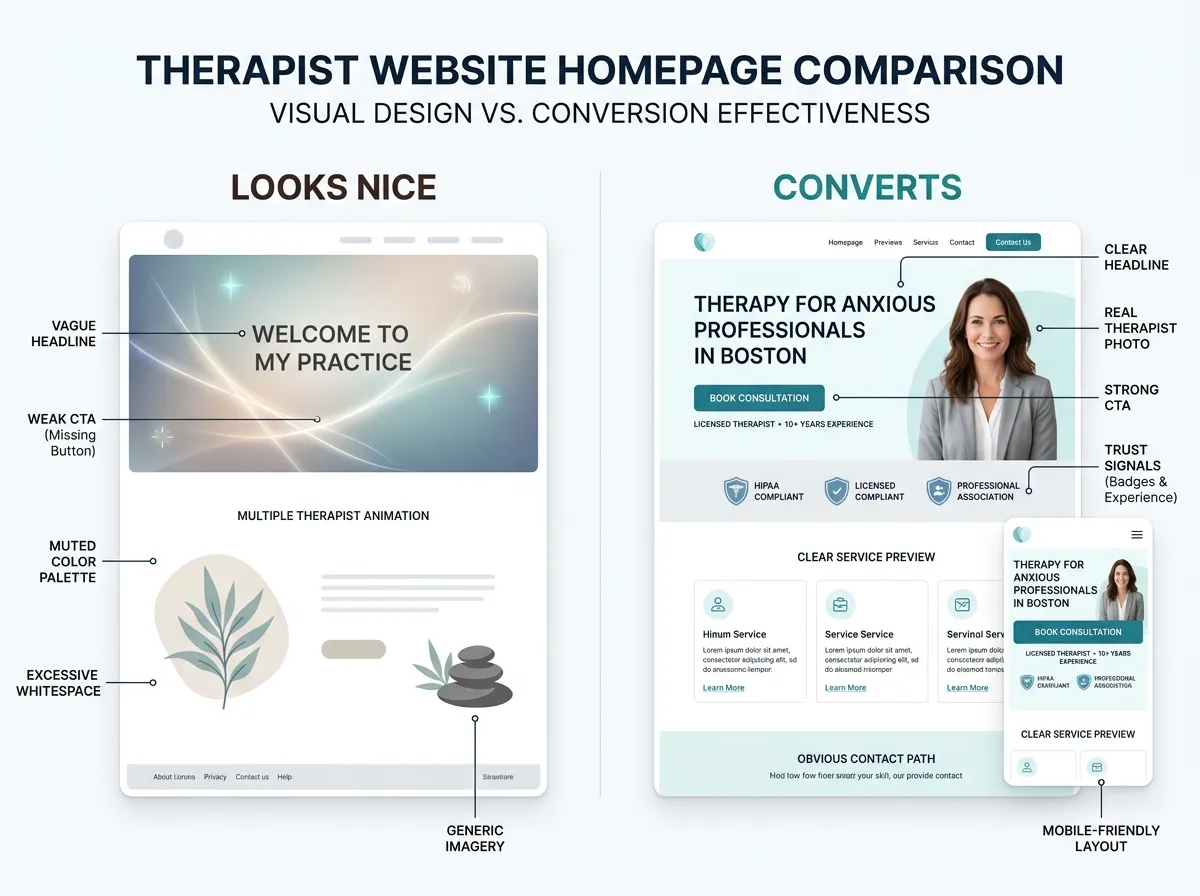
Directory templates are, by design, uniform. Every profile uses the same layout, the same photo sizing, the same limited bio fields. That consistency helps the platform, but it makes it genuinely difficult for a practice to stand out or communicate what makes its approach different from the therapist listed directly above or below.
The competition is built into the page
A prospective client browsing a directory is, by definition, looking at a page full of alternatives. Every profile sits shoulder-to-shoulder with competitors actively vying for the same inquiry. A practice’s own website carries no such built-in competition — the visitor’s attention belongs to that practice alone.
No ownership of the relationship or the data
Directories control how (and whether) a visitor can contact a therapist, what information is captured, and how that contact is followed up. A practice built solely on directory traffic has limited ability to nurture leads, build an email list, or track where its inquiries are actually coming from.
How This Limits Long-Term Visibility
The cumulative effect of these factors is a practice that is highly visible today and potentially far less visible tomorrow, through no fault of the clinician’s own work or reputation. A directory-only presence typically means:
- No independent search engine visibility outside the directory’s domain authority
- No ability to publish content that builds authority for a specific specialty or approach
- No consistent brand identity that clients recognize and return to
- Full exposure to a single platform’s policy, pricing, or algorithm changes
In short, the practice’s visibility is borrowed, not owned — and borrowed visibility can be withdrawn.
Building a Presence That Isn’t Dependent on One Platform
The most resilient therapists don’t abandon directories — they stop relying on them exclusively. A dedicated practice website, built and optimized around the therapist’s own specialties, location, and voice, gives a practice a channel it fully controls: one that can rank in its own right on search engines, reflect its actual approach to care, and convert visitors into inquiries without competing for attention on the same page as other listings.
Used together, a strong website and a directory profile reinforce one another — the website builds lasting, ownable visibility, while the directory continues to bring in its share of referral traffic. Used alone, a directory profile leaves a practice’s visibility in someone else’s hands.
At Therapeia Web Design, we specialize in mental health practice website design and build websites specifically for mental health professionals and coaches who want their online presence to work as hard as they do — without depending on a directory algorithm to be found. Think of a dedicated site as a genuine Psychology Today profile alternative: a channel you own outright, not one you rent. If you’d like to talk through what a dedicated website could do for your practice’s visibility, reach us at +44 795 564 6897, email contact@therapeiawebdesign.com, or visit https://therapeiawebdesign.com.
Frequently Asked Questions
Should I delete my Psychology Today or SimplePractice profile?
No. Directory profiles are a valuable referral channel and can stay part of your marketing mix. The issue is relying on them as your only online presence — pairing a directory listing with your own website gives you both immediate referral traffic and long-term, ownable visibility.
Why isn’t a directory profile enough on its own for a therapy practice?
A directory profile lives on someone else’s platform, so pricing, layout, and search placement can change without notice and without your input. You’re also placed directly alongside competing therapists, and you have limited ability to build an email list or track where inquiries actually come from.
What does a dedicated website give a therapist that a directory listing can’t?
A practice website is a channel you fully control: it can rank in its own right on search engines, reflect your specific specialties and voice, and convert visitors into inquiries without competing for attention on the same page as other listings.
How does a website work together with directory listings like Psychology Today?
Used together, they reinforce each other — the directory continues bringing in referral traffic, while the website builds lasting brand identity and independent search visibility that isn’t tied to any one platform’s algorithm or policies.
How can I get started building a website for my practice?
Therapeia Web Design builds websites specifically for mental health professionals and coaches who want a strong, ownable online presence. Reach out at +44 795 564 6897, email contact@therapeiawebdesign.com, or visit https://therapeiawebdesign.com to talk through what a dedicated website could do for your practice.