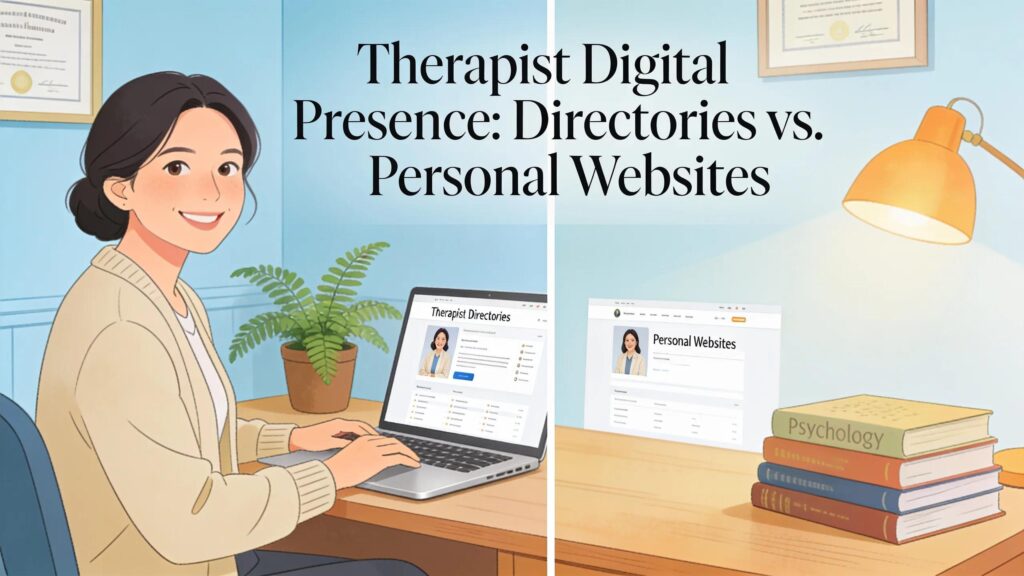
Comparing Therapist Directories vs your personal website: Which One Is Best for You?
Therapists must decide whether directory listings or a dedicated website better supports practice growth. Directories give quick exposure, while personal websites offer control over branding, content and SEO to attract qualified inquiries. This article compares effectiveness, reach, engagement, costs and optimisation strategies to help practitioners choose.
Effectiveness:
Platform effectiveness shapes a therapist’s ability to generate leads and convert visitors; directories and personal websites both acquire clients but use different mechanisms and levels of control.
Personal Websites:
Personal sites let therapists control messaging and content structure. When optimised, a site draws organic traffic and enables direct contact, supporting stronger engagement and higher conversion than standard listings.
Therapist Directories:
Directories can provide rapid visibility but constrain branding. Aggregated profiles are compact and competitive, which can reduce engagement and limit a therapist’s ability to explain specialised services.
Reach:
Reach depends on how each platform sources visitors and maintains visibility over time.
Personal Websites:
A well-optimised personal website extends reach through targeted SEO and consistent, informative content. By using specific keywords and maintaining relevant pages, therapists can build steady organic traffic and professional authority. Strong strategies for SEO for therapists underpin this growth.
Therapist Directories:
Directories deliver immediate exposure through existing traffic and search features, enabling quick discovery. That visibility is often transient, and engagement may drop once users leave the directory environment.
Client Engagement:
Engagement depends on a platform’s ability to build trust, communicate expertise and streamline contact.
Personal Websites:
Personal websites support direct interactions via booking systems, testimonials and tailored resources. These features reduce friction, showcase clinical expertise and increase the likelihood visitors request a consultation.
Therapist Directories:
Directory profiles usually offer limited detail and fewer conversion features, which can undermine confidence and lead to lower contact rates than a bespoke website.
What Defines Therapist Directories and How Do They Function?
Therapist directories compile practitioner listings searchable by location, speciality or insurance. They simplify client searches with a standardised interface but restrict how therapists present services, limiting customisation and control.
How Do Popular Directories Like Psychology Today Operate?
Major directories depend on search visibility and user feedback to stay discoverable. They encourage engagement through reviews and profile updates, using those signals to remain relevant in a crowded referral landscape.
What Are the Limitations of Therapist Directories for Client Acquisition?
Directories have limitations: standardised profiles reduce individuality, listings create elevated competition, and opportunities to convey specialised services are constrained—each factor can lower conversion effectiveness.
What Are the Benefits of Having a Personal Therapist Website?
A dedicated website delivers strategic advantages that support practice growth. These benefits include:
- Control Over Branding: Therapists can establish a unique identity through customized design and content.
- SEO Advantages: Personal websites can be optimized for search engines, improving visibility over time.
- Direct Client Engagement: Blogs, testimonials and booking systems foster direct connections with clients.
For practitioners aiming to expand, a dedicated site yields durable benefits. Understanding SEO for therapists is essential to realise these advantages.
How Does Customized Website Design Enhance Therapist Branding?
Customised design creates a coherent visual identity aligned with a practice’s values. Choices in colour, typography and imagery convey professionalism and reassure prospective clients about quality and the ethos of care.
In What Ways Can a Personal Website Improve Client Conversion Rates?
A personal website improves conversion through focused, measurable tactics:
- Effective Communication: Clear contact information and easy booking options directly on the site.
- Quality Content: Blogs and articles that present expertise and build trust, establishing the therapist as a resource.
- User-Friendly Design: An intuitive, easy-to-navigate site reduces bounce rates and increases conversion chances.
Clear communication, authoritative content and intuitive design raise the probability visitors convert to booked clients.
How Do Therapist Directories Compare to Personal Websites in Marketing Effectiveness?
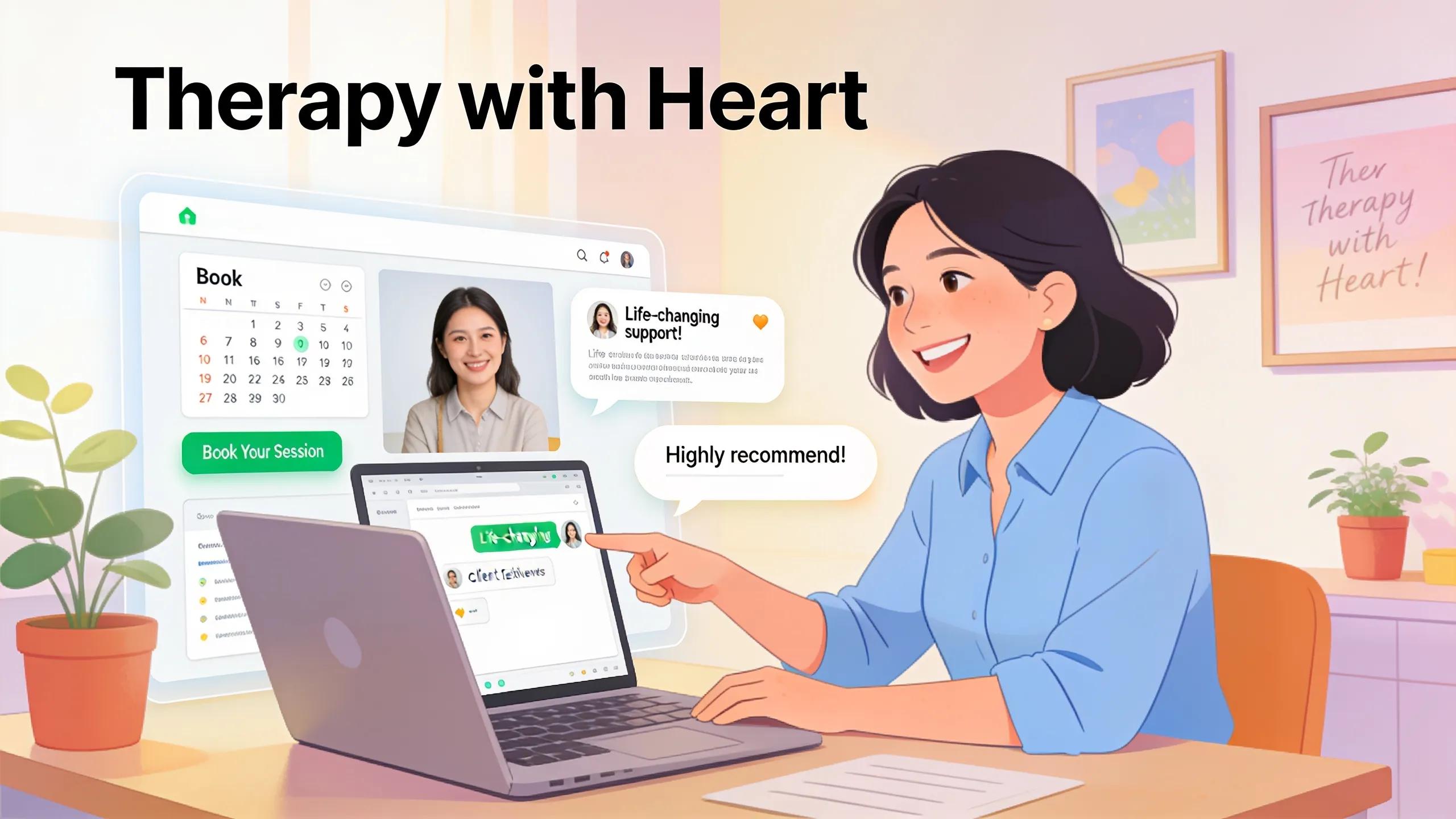
For marketing effectiveness, personal websites generally deliver stronger long-term results. Targeted campaigns and tailored content generate higher-quality leads and better retention. Directories provide short-term visibility but usually lack the depth of engagement; choose platforms based on strategic marketing objectives.
What Are the SEO Advantages of a Personal Therapist Website?
The SEO advantages of a personal therapist website include:
- Keyword Control: Therapists can select and optimize keywords relevant to their services to improve visibility for target searches.
- Content Customization: Unique, valuable content attracts and engages specific audiences, increasing site authority.
- Site Structure: A well-organized site improves crawlability for search engines and can lead to higher rankings over time.
Targeted SEO on a personal site supports steady traffic growth and more consistent client acquisition. Implementing proven SEO for therapists techniques is key.
How Do Costs and ROI Compare Between Directories and Personal Websites?
Directories often charge subscription fees but offer limited control over branding and lead quality. Building a personal website requires initial investment for design and hosting yet can yield greater ROI through improved SEO, branding and conversion as the practice grows.
How Can Therapists Optimize Their Online Presence Using Both Directories and Personal Websites?
Therapists can combine platforms strategically to maximise visibility and conversion. Effective tactics include:
- Linking Directories to Personal Website: Use directory profiles to direct clients to personal websites, enhancing visibility and engagement.
- Leveraging Social Media: Share insights and links from personal websites across social platforms to reach potential clients not actively seeking therapy.
- Content Marketing: Create engaging content to share on both platforms, fostering wider reach and providing valuable information.
Used together, these tactics broaden reach and increase opportunities to attract and convert clients.
What Therapist Online Marketing Strategies Leverage Both Platforms?
Integrated marketing that uses both directories and personal websites produces compounded benefits. Key strategies include:
- Content Marketing: Develop articles, videos or infographics to share on social media and listing sites to inform and promote services.
- SEO Best Practices: Optimize directory listings with keywords that match personal website content to create a seamless experience.
- Client Engagement: Use features from both platforms to engage clients, via directory messaging or website contact forms.
Leveraging both platforms creates a cohesive presence that improves discoverability and supports client acquisition across multiple touchpoints.
Frequently Asked Questions
1. Can a personal therapist website improve my online visibility more than a directory?
A personal website usually delivers stronger long-term visibility than directory listings. Strategic SEO and regular content updates improve rankings and reinforce professional authority, increasing the likelihood of client inquiries over time.
2. What types of features should I include on my personal therapist website?
Include an intuitive booking system, regular informative blog posts, genuine client testimonials and clear contact details. Also provide FAQs, privacy policies and resource links to support transparency and encourage contact.
3. How can I use a therapist directory effectively alongside my personal website?
Use your directory profile to funnel clients to your site by including a direct link. Ensure the listing is complete, keyword-optimised and accompanied by a professional photograph. Encouraging reviews enhances credibility and directs prospects to your site for fuller information.
4. Are there any specific SEO strategies I should implement on my personal website?
Do systematic keyword research to identify terms prospective clients use and integrate those phrases naturally into titles, headings and content. Produce high-quality articles addressing common concerns and ensure your site is mobile-responsive with fast load times to improve user experience and search performance.
5. How do client engagement rates differ between personal websites and directories?
Engagement metrics are generally higher on personal websites. Tailored content, direct messaging and integrated booking systems promote trust and make it easier for visitors to initiate contact, whereas directory entries are more generic.
6. What are some common mistakes to avoid when creating a personal therapist website?
Avoid neglecting mobile optimisation, cluttering the homepage with excessive information and failing to update content regularly. Also ensure a clear call-to-action so visitors know how to contact you or book an appointment.
7. How can content marketing enhance my therapist website’s effectiveness?
Regular, relevant content positions you as an expert and attracts targeted visitors. Articles, videos and infographics address client questions, improve SEO and support ongoing engagement that can convert readers into clients.
Conclusion
Choosing between a directory listing and a personal website affects client engagement and practice growth. A dedicated website offers greater control over branding, stronger SEO potential and direct client interaction, supporting deeper connections and higher conversion rates. Many practitioners achieve the best results by integrating both platforms strategically; assess your goals and align your online presence with your intended outcomes.