In the competitive landscape of therapy practice marketing, understanding the differences between therapist directories and personal websites is crucial for growth. Many therapists face challenges in client acquisition and visibility, often relying on directories like Psychology Today. However, this article will explore how having your own website can significantly enhance your practice’s marketing strategy. By examining the benefits and limitations of both approaches, therapists can make informed decisions that align with their goals. We will delve into the key advantages of personal websites, effective SEO strategies, and the unique challenges posed by directories.
Analysis of Therapist Directories vs. Having Your Own Website for Private Practice Marketing
When considering marketing strategies, therapists often weigh the benefits of using directories against the advantages of having their own websites. Therapist directories provide increased visibility and credibility, allowing practitioners to reach a broader audience. However, they come with limitations, such as reduced control over branding and increased competition. In contrast, personal websites offer full control over content and branding, along with significant SEO opportunities that can lead to better client engagement and acquisition.
1. Therapist Directories
Therapist directories serve as platforms where mental health professionals can list their services, making it easier for potential clients to find them. These directories often enhance visibility through online searches, as they are frequently visited by individuals seeking therapy. Additionally, being listed in reputable directories can lend credibility to a therapist’s practice, as clients may perceive directory listings as endorsements. However, therapists face limitations, such as a lack of control over how their profiles are presented and the potential for competition with numerous other practitioners in the same directory.
2. Having Your Own Website
Having a personal website allows therapists to establish a unique online presence tailored to their brand. This control over branding and content is a significant advantage, as it enables therapists to communicate their values and services effectively. Moreover, personal websites can be optimized for search engines, enhancing visibility and attracting more clients. Features such as blogs, testimonials, and contact forms facilitate direct engagement with potential clients, fostering a sense of trust and connection that directories may not provide.
What Are the Key Benefits of Having a Private Practice Website?

A private practice website offers several key benefits that can significantly impact client acquisition and practice growth. Firstly, effective branding through a personal website allows therapists to present their unique identity and approach, making them more relatable to potential clients. Secondly, improved online visibility through SEO strategies can lead to higher search rankings, making it easier for clients to find therapists. Lastly, a well-designed website enhances trust with potential clients, as it reflects professionalism and commitment to quality care.
How Does a Therapist Website Enhance Client Acquisition and Practice Growth?
A therapist’s website plays a pivotal role in client acquisition and practice growth by showcasing their expertise and services. Professional branding reflects the therapist’s identity, making it easier for clients to connect with them. SEO optimization improves search visibility, ensuring that the website appears in relevant search results. Additionally, content marketing establishes authority in the field, as therapists can share valuable insights and resources that resonate with their target audience.
Which SEO Strategies Improve Visibility for Therapist Websites?
To enhance visibility, therapists should implement several effective SEO strategies. These include:
- Keyword Research: Identifying relevant keywords that potential clients are searching for can help optimize website content.
- On-Page SEO Optimization: This involves optimizing website elements such as titles, meta descriptions, and headers to improve search engine rankings.
- Local SEO: Focusing on local SEO strategies can attract nearby clients, making it easier for them to find and contact therapists.
Further insights into optimizing local search presence for healthcare providers underscore the importance of targeted strategies.
Local SEO Strategies for Healthcare Practice Visibility & Patient Acquisition
This chapter provides a comprehensive guide to local SEO for medical practices, emphasizing how healthcare providers can improve online visibility and attract more patients through strategic optimization. It explains key concepts such as keyword targeting, metadata use, structured data tags, and directory listings. The chapter also introduces emerging challenges in AI-powered search results and offers practical tools, including a physician SEO readiness checklist, to help practices adapt. Real-world examples and step-by-step instructions ensure that providers without technical backgrounds can take actionable steps to enhance their digital presence and remain competitive in a rapidly evolving search landscape.Mastering Local SEO for Medical Practices, 2025
What Are the Limitations of Relying Solely on Therapist Directories?
While therapist directories can provide immediate visibility, they come with several limitations. Many free directories offer limited features, restricting the ability to showcase a therapist’s full range of services. Additionally, reliance on third-party platforms can lead to a lack of control over how services are presented, which may not align with a therapist’s branding. Furthermore, the competition within directories can dilute individual visibility, making it challenging for therapists to stand out.
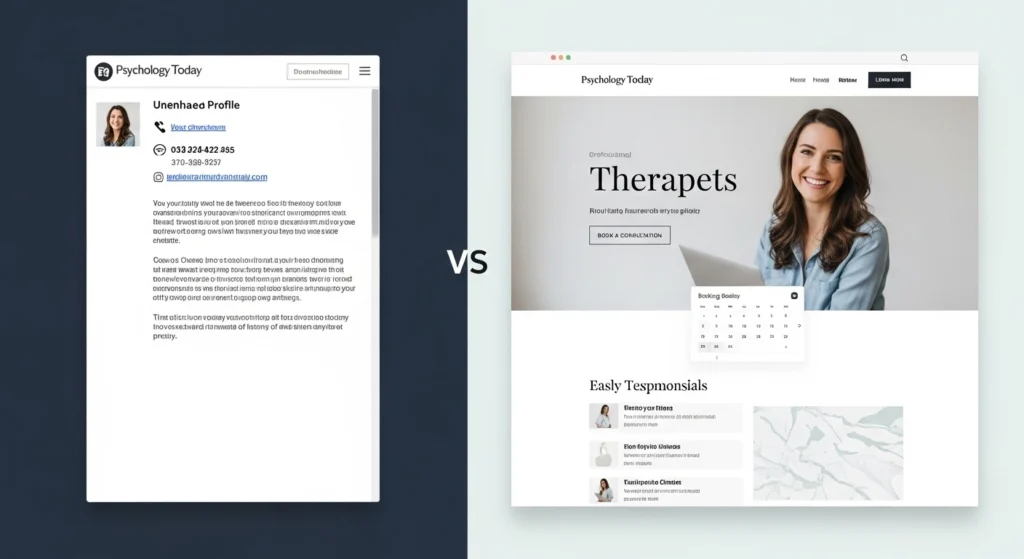
How Do Therapist Directories Like Psychology Today Compare to Personal Websites?
Directories like Psychology Today offer immediate visibility to therapists, allowing them to connect with potential clients quickly. However, personal websites provide a unique opportunity for branding control, enabling therapists to present their services in a way that resonates with their target audience. Over time, personal websites can foster long-term growth potential, as they can be optimized for search engines and tailored to meet the specific needs of clients.
What Branding and Control Challenges Do Directories Present for Therapists?
Therapists using directories often face branding limitations due to standardized formats that do not allow for personalization. This lack of control over content presentation can hinder a therapist’s ability to convey their unique approach and values. Additionally, directories may not provide the flexibility needed to adapt to changing market conditions or client preferences, making it essential for therapists to consider alternative marketing strategies.
How Can Therapists Effectively Grow Their Practice Online Beyond Directories?
To grow their practice online, therapists should consider several strategies beyond relying solely on directories:
- Website Optimization: Ensuring that the website is user-friendly and mobile-responsive can enhance the client experience.
- Content Marketing: Sharing valuable content through blogs or articles can establish authority and attract potential clients.
- Social Media Engagement: Actively engaging with the community on social media platforms can help build relationships and increase visibility.
What Client Acquisition Techniques Complement Therapist Website Design?
Effective client acquisition techniques that complement therapist website design include:
- Professional Website Design: A well-designed website instills trust and confidence in potential clients.
- SEO Strategies: Implementing SEO techniques can improve visibility and attract more visitors to the website.
- Content Marketing: Providing informative and engaging content can keep visitors on the site longer and encourage them to reach out for services.
How Do Personalized Websites Build Trust and Attract Ideal Clients?

Personalized websites build trust by offering clear branding and messaging that resonates with potential clients. A professional design conveys credibility, while informative content establishes authority in the field. By addressing the specific needs and concerns of clients, therapists can create a welcoming online environment that encourages engagement and fosters long-term relationships.
Different aspects of therapist directories and personal websites can be compared to understand their unique benefits and limitations.
| Aspect | Therapist Directories | Personal Websites |
|---|---|---|
| Control | Limited control over profile | Full control over branding and content |
| Visibility | Immediate visibility | SEO opportunities for better visibility |
| Client Engagement | Indirect engagement | Direct engagement through features |
This comparison highlights the distinct advantages of personal websites, emphasizing the importance of control and engagement in effective practice marketing.