Therapist’s Guide to Web Design Glossary – Key Definitions
Web Design Glossary: Essential Terms for Therapists to Build Trust and Grow Their Practice
Understanding web design terminology is crucial for therapists looking to establish a strong online presence. This comprehensive glossary will equip you with essential terms that can enhance your website’s effectiveness and client engagement. By familiarizing yourself with these concepts, you can build trust with potential clients and create a digital space that reflects your practice’s essence. Many therapists struggle with navigating the complexities of web design, which can hinder their ability to attract and retain clients. This article will guide you through fundamental web design terms, user experience principles, SEO strategies, branding elements, and optimization techniques.
What Are the Fundamental Website Terms Every Therapist Should Know?
To create an effective therapist website, it’s essential to understand key web design terms that impact your online presence. Familiarity with these concepts will help you make informed decisions about your website’s structure and functionality.
What Is a Domain Name and Why Does It Matter for Therapist Websites?
A domain name is the web address that users type into their browsers to access your website. It serves as your online identity and plays a significant role in branding. A well-chosen domain name can enhance your practice’s visibility and credibility, making it easier for potential clients to find you. For therapists, a domain name that reflects your practice’s focus can foster trust and recognition among clients.
How Do Web Hosting and SSL Certificates Ensure Security and Confidentiality?
Web hosting refers to the service that stores your website’s files and makes them accessible on the internet. Choosing a reliable web hosting provider is crucial for ensuring your website’s performance and uptime. SSL certificates, on the other hand, encrypt data exchanged between your website and its visitors, safeguarding sensitive information. For therapists, implementing SSL is vital for maintaining client confidentiality and building trust.
How Does User Experience and Interface Design Impact Therapist Website Effectiveness?

User experience (UX) and interface design (UI) are critical components of a successful therapist website. These elements directly influence how visitors interact with your site and can significantly impact client engagement and satisfaction.
What Is Responsive Design and Why Is Mobile-First Important for Therapists?
Responsive design ensures that your website adapts seamlessly to different screen sizes and devices. With an increasing number of clients accessing websites via mobile devices, a mobile-first approach is essential. This design strategy prioritizes mobile usability, enhancing the overall user experience and making it easier for potential clients to navigate your site.
How Do Navigation Menus and Calls to Action Enhance Client Engagement?
Clear navigation menus and effective calls to action (CTAs) are vital for guiding visitors through your website. A well-structured navigation menu allows users to find information quickly, while compelling CTAs encourage them to take specific actions, such as booking an appointment or signing up for a newsletter. By optimizing these elements, therapists can enhance client engagement and drive conversions.
Which SEO and Content Terms Should Therapists Understand to Attract Ideal Clients?
Search engine optimization (SEO) is essential for increasing your website’s visibility and attracting ideal clients. Understanding key SEO terms can help therapists optimize their online presence effectively.
What Are Keywords and How Do They Influence Therapist Website Visibility?
Keywords are specific terms or phrases that users enter into search engines when looking for information. By incorporating relevant keywords into your website content, you can improve your site’s visibility in search results. For therapists, identifying and using keywords that reflect your services and specialties can help attract clients actively seeking your expertise.
How Do Sitemap, Alt Text, and Schema Markup Improve Search Engine Comprehension?
A sitemap is a structured list of your website’s pages, helping search engines understand your site’s organization. Alt text describes images on your website, making them accessible to search engines and visually impaired users. Schema markup is a code that provides additional context about your content to search engines. Together, these elements enhance search engine comprehension, improving your website’s chances of ranking higher in search results.
What Branding and Visual Elements Define a Professional Therapist Website?

Branding and visual elements play a significant role in establishing a professional online presence. These components help convey your practice’s identity and values to potential clients.
How Do Logo, Color Palette, and Typography Reflect a Therapist’s Practice?
Your logo, color palette, and typography are essential branding elements that communicate your practice’s personality. A well-designed logo creates a memorable impression, while a cohesive color palette evokes specific emotions and associations. Typography choices can also influence how your content is perceived, making it crucial to select fonts that align with your brand identity.
Why Are Imagery and Favicon Important for Therapist Website Recognition?
Imagery and favicons contribute to your website’s overall aesthetic and recognition. High-quality images can enhance your site’s visual appeal and convey professionalism, while a favicon—a small icon displayed in browser tabs—helps users identify your site quickly. Together, these elements reinforce your brand and improve user experience.
How Can Therapists Optimize Website Performance and Conversion Rates?
Therapists can optimize website performance and conversion rates by utilizing services such as SEO and digital marketing, which can enhance visibility and attract more visitors. Additionally, offering quick and effective brand and website transformations can improve user experience, making the site more appealing and functional. Implementing a newsletter subscription with incentives, like a discount, can also encourage engagement and conversions.
What Role Do Analytics and Conversion Rate Metrics Play in Practice Growth?
Analytics and conversion rate metrics are essential for understanding your website’s performance. By tracking user behavior and engagement, therapists can identify areas for improvement and optimize their online strategies. Key metrics, such as bounce rate and conversion rate, provide valuable insights into how effectively your website converts visitors into clients.
How Do Landing Pages, Client Portals, and Online Booking Systems Enhance Client Experience?
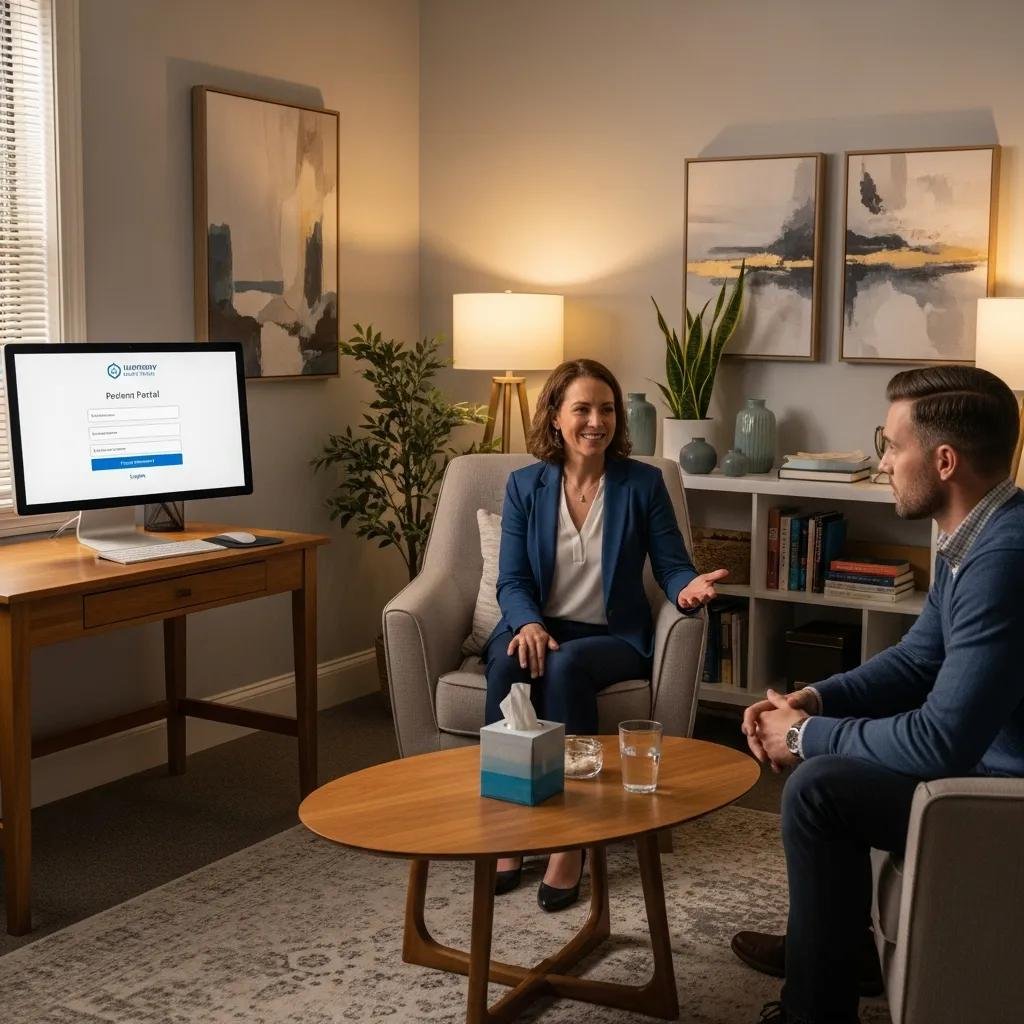
Landing pages, client portals, and online booking systems are crucial for improving client experience. Landing pages can be tailored to specific services or promotions, increasing conversion rates. Client portals provide a secure space for clients to access resources and communicate with you, while online booking systems streamline appointment scheduling, making it easier for clients to connect with your practice.
Research further supports the positive impact of web-based scheduling on client engagement and appointment attendance.
Web-Based Scheduling for Therapist Client Engagement
To meet the needs of clients, mental health clinics must offer responsive, organized intake procedures. Clients who receive rapid intervention when they request therapy services are more likely to attend and benefit from therapy. The present study examined the effects of implementing a web-based scheduling program on treatment delays and first session attendance. Results indicated that the use of a web-based scheduling system significantly reduced the number of days clients waited for a first appointment and increased the number of kept appointments. Additionally, clients provided with an immediate response to their request for treatment successfully terminated from therapy after fewer sessions.
Using web-based technology to facilitate client engagement, RB Tambling, 2007
Therapists can significantly benefit from understanding these web design terms and concepts. By implementing best practices in web design, user experience, SEO, and branding, you can create a professional online presence that attracts and retains clients. For tailored web design solutions, consider partnering with a specialized agency like Therapeia Web Design, which focuses on creating user-friendly and secure websites for therapists, counselors, and coaches.