Streamline Patient Intake with HIPAA Forms Online
HIPAA Compliant Online Form Builders for Therapists: Secure Intake Forms to Protect Patient Data and Grow Your Practice
In the realm of mental health care, ensuring the confidentiality and security of patient information is paramount. HIPAA compliance is not just a legal requirement; it is a commitment to safeguarding sensitive data. This article delves into the significance of HIPAA compliant online form builders for therapists, exploring their essential features, top options available, and integration strategies to enhance practice efficiency. Therapists often face challenges in managing patient data securely while providing a seamless intake experience. The right online form builder can address these pain points by offering secure, user-friendly solutions that protect patient information. We will cover the importance of HIPAA compliance, key features of form builders, a comparison of top options, integration strategies, and common questions surrounding HIPAA compliant online forms.
Why Are HIPAA Compliant Online Forms Essential for Therapists?
HIPAA compliant online forms are crucial for therapists as they ensure the protection of sensitive patient information. The Health Insurance Portability and Accountability Act (HIPAA) mandates that healthcare providers implement safeguards to protect patient data from unauthorized access. Non-compliance can lead to severe penalties, including fines and corrective action plans, but loss of licensure is generally not a direct consequence of HIPAA violations. By utilizing HIPAA compliant forms, therapists can maintain the confidentiality of protected health information (PHI) and build trust with their clients.
What Is Protected Health Information and Why Must It Be Secured?
Protected Health Information (PHI) refers to any information that can identify an individual and relates to their health status, healthcare provision, or payment for healthcare. Examples of PHI include names, addresses, medical records, and billing information. Securing PHI is essential to prevent identity theft, fraud, and breaches of confidentiality, which can have devastating effects on patients and therapists alike. Legal requirements mandate that therapists implement appropriate safeguards to protect this information, making HIPAA compliant forms a necessity.
The concept of patient consent is central to the secure handling of protected health information, forming the bedrock of privacy frameworks in the digital age.
Online HIPAA Authorization & Patient Data Consent
The dominant privacy framework of the information age relies on notions of “notice and consent.” That is, service providers will disclose, often through privacy policies, their data collection practices, and users can then consent to their terms.
User-friendly yet rarely read: A case study on the redesign of an online HIPAA authorization, S Pearman, 2022
How Does a Business Associate Agreement Ensure Compliance?
A Business Associate Agreement (BAA) is a contract between a healthcare provider and a third-party vendor that handles PHI. This agreement outlines the responsibilities of both parties in protecting patient data and ensuring compliance with HIPAA regulations. For therapists, having a BAA in place with their online form builder is critical, as it provides legal protection and clarifies the vendor’s obligations regarding data security. Obtaining a BAA is a straightforward process, typically involving a request to the vendor and a review of their compliance policies.
What Features Define the Best HIPAA Compliant Form Builders for Therapy Practices?
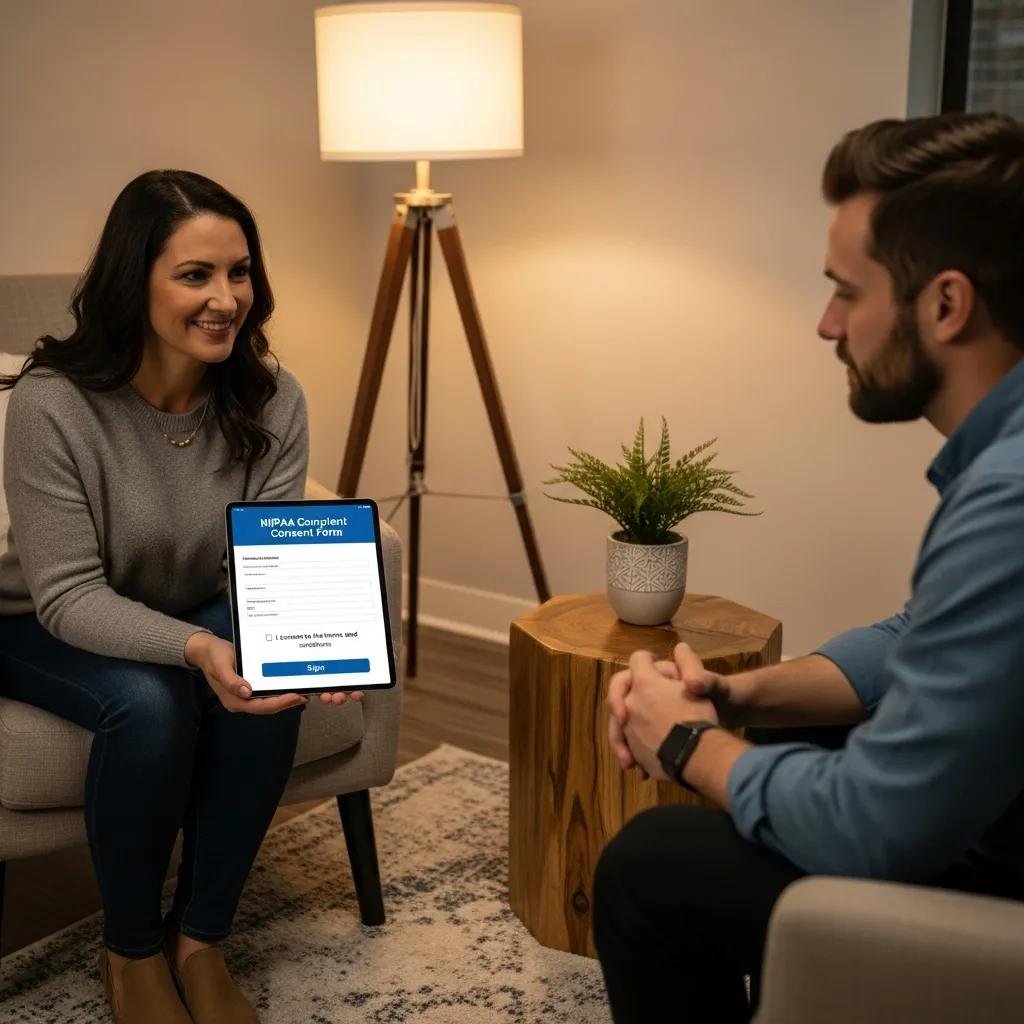
When selecting a HIPAA compliant form builder, therapists should consider several key features that enhance data security and user experience. These features not only protect patient information but also streamline the intake process, making it more efficient for both therapists and clients.
How Do Data Encryption and Secure E-Signatures Protect Patient Intake?
Data encryption is a vital feature of HIPAA compliant form builders, ensuring that patient information is securely transmitted and stored. This process converts data into a coded format that can only be accessed by authorized users, protecting it from unauthorized access. Additionally, secure e-signatures allow clients to sign documents electronically while maintaining compliance with legal standards. These features work together to create a secure environment for patient intake, reducing the risk of data breaches.
Which Integration Capabilities Enhance Therapist Website Functionality?

The integration capabilities of form builders significantly enhance the functionality of therapist websites. Key integrations include:
- Website Maintenance & Updates: Ensures that the website remains secure and up-to-date with the latest compliance standards.
- SEO & Digital Marketing: Helps therapists reach a broader audience and attract new clients through optimized online presence.
- Payment Processing: Facilitates the collection of payments for services directly through the therapist’s website.
These integrations contribute to the overall effectiveness and reach of a therapist’s online practice, making it essential to choose a form builder that offers robust integration options.
Which Are the Top HIPAA Compliant Online Form Builders for Therapists?
Several online form builders stand out for their HIPAA compliance and user-friendly features. Understanding the pros and cons of these options can help therapists make informed decisions.
What Are the Pros and Cons of JotForm, IntakeQ, and Formstack?
What Other Notable HIPAA Compliant Form Builders Should Therapists Consider?
In addition to the popular options mentioned, therapists may also consider other notable HIPAA compliant form builders such as:
- Cognito Forms: Offers customizable forms and strong data protection features.
- 123FormBuilder: Provides a wide range of templates and easy integration with various platforms.
- Typeform: Known for its engaging user interface, making the intake process more interactive.
These alternatives may offer unique features that align with specific practice needs, enhancing the overall patient experience.
How Can Therapists Integrate HIPAA Compliant Forms Seamlessly with Their Websites?
Integrating HIPAA compliant forms into a therapist’s website is crucial for maintaining a secure and efficient intake process. A seamless integration ensures that patient data is collected securely while providing a user-friendly experience for clients.
What Is Therapeia’s Approach to Secure Form Integration and BAA Compliance?
Therapeia Web Design specializes in creating secure, responsive, and user-friendly websites for mental health professionals. Their approach to secure form integration includes implementing BAA-compliant contact forms and SSL encryption to protect patient data. By focusing on building a HIPAA-aware digital infrastructure, Therapeia ensures that therapists can confidently manage patient information while complying with legal requirements.
How Does Conversion Architecture Optimize User Experience and Client Acquisition?
Conversion architecture plays a vital role in optimizing user experience and client acquisition for therapists. By designing websites with user-friendly navigation, clear calls to action, and strategically placed forms, therapists can enhance the likelihood of client engagement. This approach not only improves the intake process but also increases the chances of converting website visitors into clients, ultimately contributing to practice growth.
What Are Common Questions About HIPAA Compliant Online Forms for Therapists?
Therapists often have questions regarding the use of online forms and HIPAA compliance. Addressing these common inquiries can help clarify concerns and promote best practices.
Are Google Forms HIPAA Compliant for Therapists?
Google Forms is not inherently HIPAA compliant. While it offers some security features, it does not provide the necessary safeguards for handling PHI without a BAA. Therapists should avoid using Google Forms for patient intake unless they have a specific agreement in place that meets HIPAA requirements. Instead, opting for dedicated HIPAA compliant form builders is recommended to ensure data security.
How Do Therapists Obtain a BAA for Their Online Forms?
To obtain a Business Associate Agreement (BAA) for online forms, therapists should first identify their form builder and reach out to the vendor. The process typically involves requesting a BAA, reviewing the vendor’s compliance policies, and ensuring that the agreement outlines the responsibilities of both parties in protecting patient data. It is essential for therapists to have a BAA in place to safeguard their practice and comply with HIPAA regulations.