Secure Hosting Solutions for Therapists and Coaches
Secure Website Hosting Options for Therapists & Coaches: Ensuring HIPAA Compliance and Client Data Protection
In the digital age, therapists and coaches must prioritize secure website hosting to protect sensitive client information. This article explores the essential aspects of secure hosting options tailored for mental health professionals, emphasizing the importance of HIPAA compliance. Readers will learn about the critical security features necessary for safeguarding client data, how to choose the best hosting services, and best practices for maintaining website security. With the increasing reliance on online platforms for therapy and coaching, understanding these elements is crucial for building trust and ensuring legal compliance. We will also discuss how Therapeia Web Design integrates secure hosting into its services, providing a comprehensive overview of what therapists should consider when selecting a hosting provider.
Why Is HIPAA Compliant Hosting Essential for Therapists and Coaches?
HIPAA compliant hosting is vital for therapists and coaches as it ensures the protection of client health information (PHI) in accordance with federal regulations. Non-compliance can lead to severe legal repercussions, including fines and penalties, as well as loss of client trust. By utilizing secure hosting services, professionals can safeguard sensitive data, thereby enhancing their practice’s credibility and reliability. This compliance not only protects clients but also establishes a professional standard that is increasingly expected in the mental health field.
Further emphasizing the critical role of regulatory frameworks, research highlights best practices for ethical technology use in counseling, guided by HIPAA and HITECH.
HIPAA & HITECH Best Practices for Ethical Technology Use in Counseling
ABSTRACT: The use of technology in counseling is expanding. Ethical use of technology in counseling practice is now a stand-alone section in the 2014 American Counseling Association “Code of Ethics.” The Health Insurance Portability and Accountability Act (HIPAA) and the Health Information Technology for Economic and Clinical Health (HITECH) Act provide a framework for best practices that counselor educators can utilize when incorporating the use of technology into counselor education programs. This article discusses recommended guidelines, standards, and regulations of HIPAA and HITECH that can provide a framework through which counselor educators can work to design policies and procedures to guide the ethical use of technology in programs that prepare and train future counselors.
Technology in Counselor Education: HIPAA and HITECH as Best Practice., 2015
What Does HIPAA Compliance Mean for Therapist Websites?
HIPAA compliance for therapist websites involves adhering to specific regulations that protect client privacy and data security. This includes implementing safeguards such as data encryption, secure access controls, and regular risk assessments. For instance, therapists must ensure that any electronic communication containing PHI is encrypted to prevent unauthorized access. Compliance also requires that therapists conduct risk assessments to identify potential vulnerabilities in their systems, ensuring that all necessary measures are in place to protect client information.
How Does Secure Hosting Protect Client Confidentiality and PHI?
Secure hosting plays a crucial role in maintaining client confidentiality by employing various security measures. These include data encryption, which protects information during transmission, and secure servers that prevent unauthorized access. Additionally, secure hosting providers often offer features such as firewalls and intrusion detection systems, which further enhance data protection. By choosing a hosting service that prioritizes security and offers a Business Associate Agreement (BAA), therapists can ensure that their clients’ sensitive information remains confidential and protected from potential breaches.
What Are the Key Security Features of Therapist Website Hosting?
When selecting a hosting provider, therapists should look for several key security features that are essential for protecting client data. These features include SSL certificates, secure client portals, and robust data encryption methods. Each of these elements contributes to a comprehensive security strategy that safeguards sensitive information and supports compliance with HIPAA regulations.
How Do SSL Certificates and HTTPS Ensure Data Encryption?
SSL certificates are critical for establishing a secure connection between a therapist’s website and its users. By encrypting data transmitted over the internet, SSL certificates protect sensitive information from being intercepted by malicious actors. Websites that utilize HTTPS, the secure version of HTTP, signal to users that their data is being transmitted securely. This not only enhances security but also builds trust with clients, who can feel confident that their information is protected.
What Role Do Secure Client Portals and Forms Play in Practice Security?

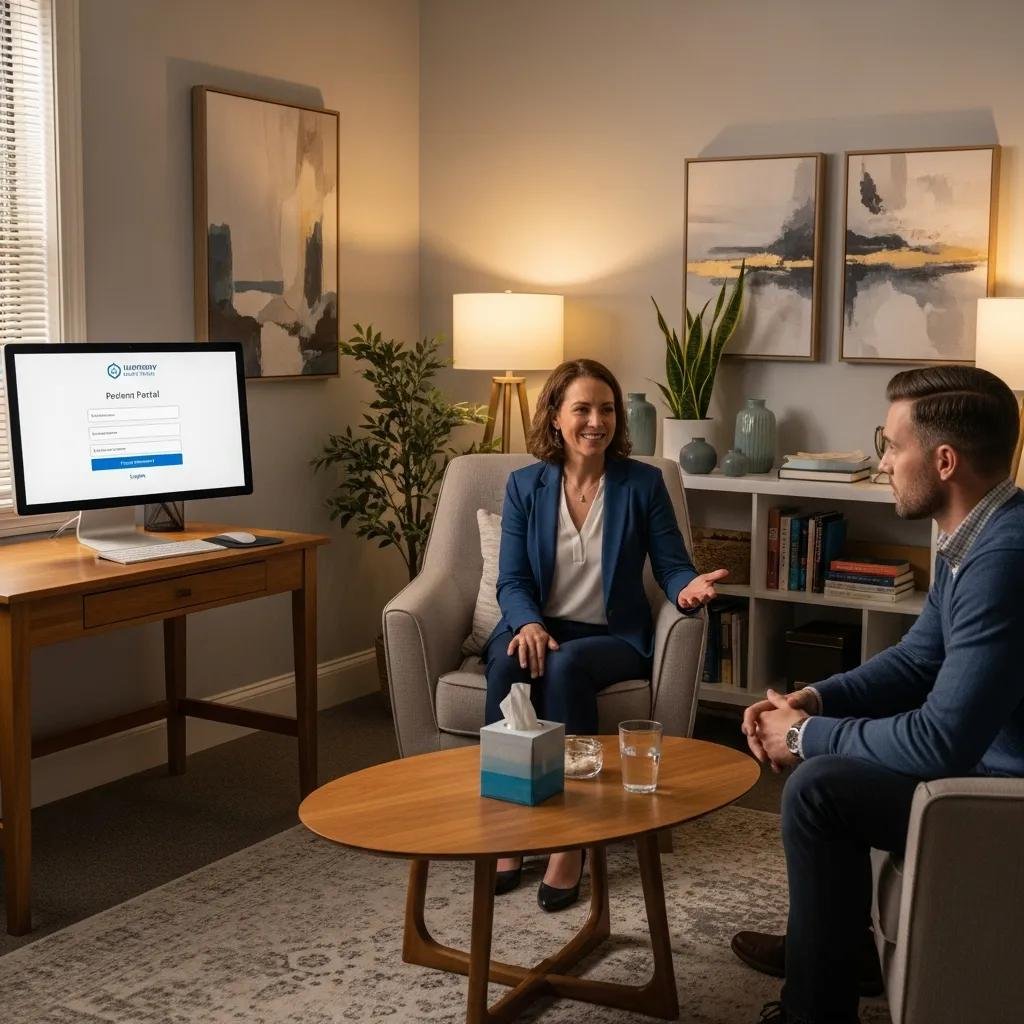
Secure client portals and forms are essential tools for therapists, allowing for safe communication and data exchange with clients. These portals typically require secure login credentials, ensuring that only authorized users can access sensitive information. Additionally, secure forms can be designed to encrypt data submissions, further protecting client information. By implementing these secure features, therapists can enhance their practice’s security and provide clients with a safe environment for sharing personal information.
How to Choose the Best Hosting for Therapy and Counseling Websites?
Selecting the right hosting provider is crucial for therapists and coaches. Factors to consider include the level of security offered, customer support, and the provider’s experience with HIPAA compliance. Understanding the differences between DIY hosting and full-service secure hosting can also guide therapists in making informed decisions about their website’s security.
What Are the Differences Between DIY Hosting and Full-Service Secure Hosting?
DIY hosting may seem cost-effective, but it often lacks the robust security features necessary for protecting client data and may not provide a Business Associate Agreement (BAA), which is required for HIPAA compliance. In contrast, full-service secure hosting providers offer comprehensive security measures, including regular updates, backups, technical support, and typically provide a BAA. While DIY options may require significant technical knowledge to manage effectively, full-service providers handle these aspects, allowing therapists to focus on their practice rather than technical details.
Which Questions Should Therapists Ask Potential Hosting Providers?
- What security measures do you have in place to protect client data?
- Do you sign a Business Associate Agreement (BAA) to ensure HIPAA compliance?
- What support do you offer in case of a data breach?
- Can you provide references from other therapists or healthcare providers?
How Does Therapeia Web Design Integrate Secure Hosting into Its Services?
Therapeia Web Design specializes in creating secure websites for therapists and coaches, emphasizing the importance of HIPAA compliance. Their approach includes a range of security measures designed to protect client data while providing user-friendly website solutions. One of their standout offerings is the “Website in a Week” service, which allows for rapid deployment of secure websites tailored to the needs of mental health professionals.
What Security Measures Are Included in the “Website in a Week” Service?
The “Website in a Week” service includes several essential security features, such as SSL certificates, secure client portals, and regular backups. These measures ensure that therapists can operate their websites with confidence, knowing that their clients’ information is protected. Additionally, Therapeia provides ongoing support to help therapists maintain compliance with HIPAA regulations, including assistance with Business Associate Agreements when applicable, ensuring that their practices remain secure over time.
How Does Therapeia Ensure Ongoing HIPAA Compliance and Data Protection?
Therapeia Web Design is committed to ensuring ongoing HIPAA compliance through regular updates and security audits. They monitor their hosting environment for potential vulnerabilities and provide clients with the necessary tools to maintain compliance. This proactive approach not only protects client data but also helps therapists focus on their practice without worrying about technical security issues.
What Are Best Practices for Maintaining Therapist Website Security?
Maintaining website security is an ongoing process that requires diligence and attention to detail. Therapists should implement several best practices to protect their websites and client data effectively. These practices include regular backups, strong password policies, and the use of multi-factor authentication.
Indeed, understanding and implementing robust cybersecurity measures is an ongoing challenge for mental health practitioners, as underscored by recent research.
Cybersecurity Practices for Mental Health Practitioners
Mental health practitioners rely on digital systems to interact with and in some instances treat patients (Hydari, Telang, & Marella, 2015; Recupero, & Rainey, 2005). Yet, while widespread use of digital devices provides significant practical advantages, that same use exacerbates the possibility of a cyber breach (Guterman, 1999). This research describes mental health practitioners’ current cyber security practices and the factors influencing their behavioral intentions to implement cyber security within clinical mental health settings.
Cyber security in mental health: An assessment of current practice and behavioral intent, 2020
How Do Regular Backups and Disaster Recovery Protect Your Practice?
Regular backups are essential for ensuring that therapists can recover their websites and client data in the event of a cyber incident. By implementing a robust disaster recovery plan, therapists can minimize downtime and protect their practice from potential data loss. This proactive approach not only safeguards client information but also helps maintain the trust and confidence of clients in the therapist’s ability to protect their data.
What Cybersecurity Measures Should Therapists Implement Beyond Hosting?
- Strong Password Policies: Encourage the use of complex passwords and regular updates.
- Multi-Factor Authentication: Add an extra layer of security by requiring additional verification for logins.
- Regular Software Updates: Keep all website software and plugins up to date to protect against vulnerabilities.