Rank Higher on Google with Effective Private Practice SEO
SEO for Therapists: A Beginner’s Guide to Ranking Higher on Google
In the digital age, therapists must navigate the complexities of online visibility to attract clients effectively. This guide will provide you with essential strategies to enhance your search engine optimization (SEO) efforts, specifically tailored for therapists. Understanding SEO is crucial for establishing a strong online presence, which can significantly impact client acquisition and retention. Many therapists struggle with low visibility in search results, making it challenging to connect with potential clients. This article will explore the fundamentals of SEO, effective keyword research, website optimization techniques, local SEO strategies, technical SEO essentials, and methods to track your SEO success. By the end, you will have a comprehensive understanding of how to rank higher on Google and attract more clients to your practice.
Research further emphasizes the importance of strategic website design and content for achieving top search engine results, particularly for healthcare-related sites.
Optimizing Medical Websites for Google SERP Rankings
This study describes a method of evaluating material for new medical/health care websites, or for assessing those already in existence, which is correlated with higher rankings on Google’s Search Engine Results Pages (SERPs).
A method for the design and development of medical or health care information websites to optimize search engine results page rankings on Google, S Dunne, 2013
What is SEO and Why Does It Matter for Therapists?
Search Engine Optimization (SEO) is the process of enhancing a website’s visibility on search engines like Google. It involves various strategies and techniques aimed at improving the ranking of a website in search results. For therapists, effective SEO is vital as it directly influences their ability to reach potential clients searching for mental health services online. By optimizing their online presence, therapists can increase their visibility, build trust with clients, and ultimately grow their practices.
How Do Search Engines Rank Therapy Websites?
Search engines utilize complex algorithms to determine the ranking of websites. These algorithms consider various factors, including content quality, relevance, user experience, and the number of backlinks pointing to a site. High-quality content that addresses the needs of potential clients is crucial for ranking well. Additionally, backlinks from reputable sources signal to search engines that a website is trustworthy and authoritative, further enhancing its ranking potential.
What Are the Key Benefits of SEO for Private Practices?
Implementing effective SEO strategies offers several benefits for private practices:
- Increased Visibility: A well-optimized website appears higher in search results, making it easier for potential clients to find your services.
- Client Trust and Credibility: High rankings in search results can enhance your practice’s credibility, as clients often associate top positions with quality and reliability.
- Long-Term Marketing Strategy: Unlike paid advertising, which stops generating leads once the budget is exhausted, SEO provides ongoing visibility and can lead to sustained client acquisition over time.
How to Conduct Effective Keyword Research for Therapists

Keyword research is a fundamental aspect of SEO that involves identifying the terms and phrases potential clients use when searching for therapy services. Understanding these keywords allows therapists to tailor their content to meet client needs effectively.
Which Keywords Do Potential Therapy Clients Use?
Potential therapy clients often use specific keywords related to their needs. Common search terms include “anxiety therapy,” “couples counseling,” and “child psychologist.” Long-tail keywords, which are longer and more specific phrases, can also be valuable as they often indicate a higher intent to seek services. For example, “best therapist for anxiety in [your city]” is a long-tail keyword that can attract local clients.
How to Find Local and Long-Tail Keywords for Therapy Practices
To find relevant local and long-tail keywords, therapists can utilize various tools such as Google Trends, keyword research tools like Google Keyword Planner, Ahrefs, or SEMrush, and competitor analysis. These tools help identify popular search terms and trends in the therapy field. Additionally, analyzing competitor websites can provide insights into effective keywords that resonate with the target audience.
How to Optimize Your Therapist Website for Better Google Rankings
Website optimization is crucial for improving search engine rankings. This involves several best practices that enhance both user experience and search engine visibility.
What Are the Best Practices for Titles, Meta Descriptions, and Headings?
Crafting compelling titles and meta descriptions is essential for attracting clicks from search results. Titles should include primary keywords and be engaging to encourage users to click. Meta descriptions should provide a brief overview of the page content, incorporating relevant keywords while remaining concise. Properly structured headings (H1, H2, H3) also help search engines understand the content hierarchy and improve readability.
How to Use Images and Internal Links to Boost SEO?
Images can enhance user engagement, but they must be optimized for SEO. This includes using descriptive file names and alt text that incorporates relevant keywords. Internal linking, which involves linking to other pages within your website, helps search engines crawl your site more effectively and keeps users engaged by guiding them to related content.
How Can Therapists Improve Local SEO to Attract Nearby Clients?
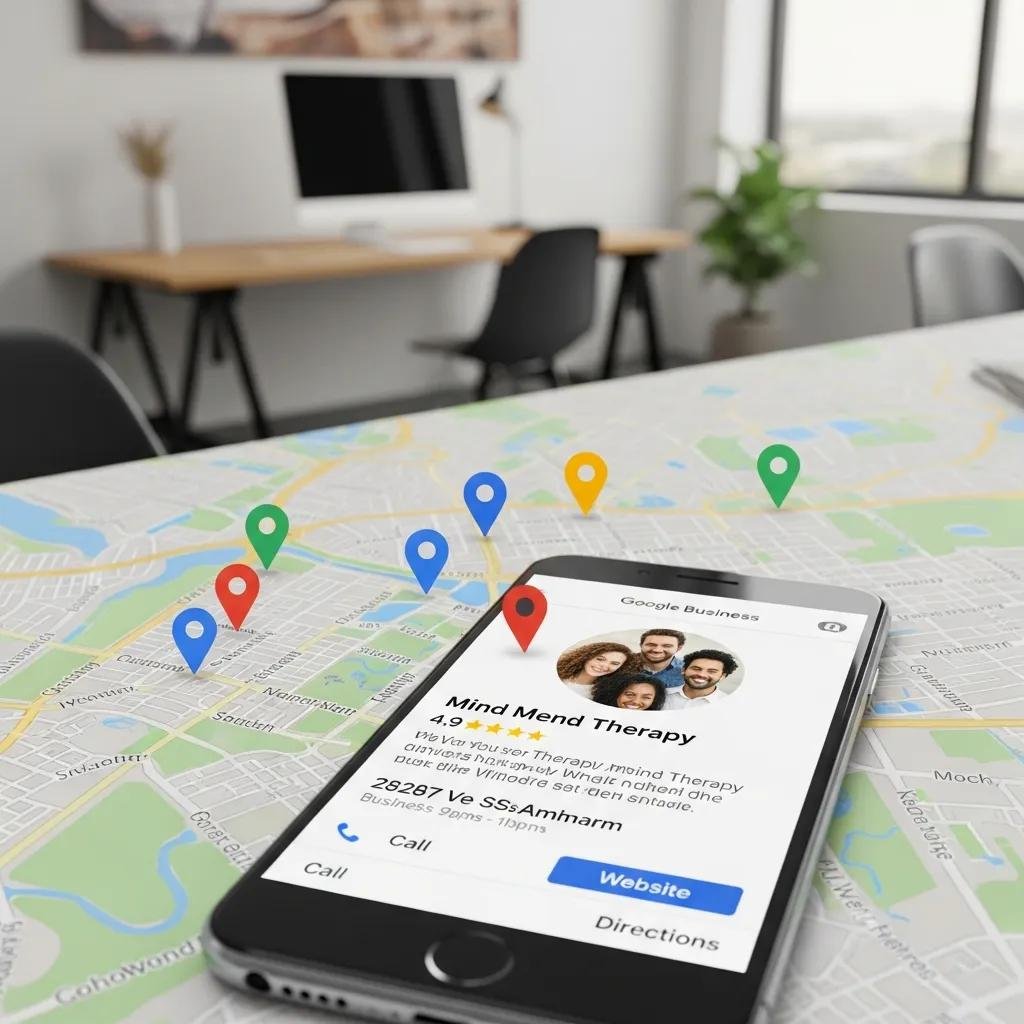
Local SEO is essential for therapists looking to attract clients in their geographic area. By optimizing for local search, therapists can increase their chances of being found by potential clients nearby.
Indeed, focusing on targeted local SEO campaigns can significantly enhance a therapist’s ability to connect with clients in their immediate vicinity.
Local SEO Marketing Campaigns for Therapists
When you turn you focus on local SEO marketing campaigns, it can pay experts from a professional local SEO company that provide affordable local search engine marketing services.
Theme:“SEO Strategy and Implementation for a local Company”, A Aliu, 2020
Why Is Google Business Profile Essential for Therapists?
A Google Business Profile is a free tool that allows therapists to manage their online presence across Google, including Search and Maps. Setting up a Google Business Profile helps therapists appear in local search results, making it easier for clients to find their practice. It also allows therapists to provide essential information such as location, hours of operation, and services offered.
The process of setting up and verifying your Google Business Profile is straightforward and crucial for local visibility.
Google My Business for Therapists: Local SEO Guide
click ‘Get onto Google’, enter your business name and address and click ‘Get your business’. You’ll be asked to verify your information and then taken on a tour of Google My Business.
13 STEPS TO BUILDING A THRIVING THERAPY BUSINESS., 2017
How to Maintain NAP Consistency and Generate Client Reviews?
NAP consistency refers to ensuring that your Name, Address, and Phone number are consistent across all online platforms. This consistency is crucial for local SEO, as search engines use this information to verify the legitimacy of your business. Additionally, encouraging satisfied clients to leave positive reviews can enhance your online reputation and improve your local search rankings.
What Technical SEO Essentials Should Therapists Know?
Technical SEO involves optimizing the backend of your website to improve its performance and usability. Understanding these essentials can significantly impact your site’s search engine rankings.
How Does Mobile-Friendliness and Site Speed Affect Rankings?
With the increasing use of mobile devices, having a mobile-friendly website is essential. Google prioritizes mobile-friendly sites in its rankings, so ensuring your website is responsive and easy to navigate on mobile devices is crucial. Additionally, site speed is a ranking factor; faster-loading sites provide a better user experience and are favored by search engines.
Why Are SSL, Sitemaps, and Crawlability Important for Therapy Websites?
Implementing SSL (Secure Sockets Layer) ensures that your website is secure, which is vital for protecting client information. Search engines favor secure sites, which can positively impact rankings. Creating and submitting a sitemap helps search engines understand the structure of your website, making it easier for them to crawl and index your pages. Ensuring crawlability means that search engines can access and index your site effectively, which is essential for visibility.
How to Build Authority and Track SEO Success for Therapy Practices?
Building authority in your niche and tracking your SEO success are critical for long-term growth. Establishing your practice as a trusted source can lead to increased visibility and client trust.
What Are Effective Strategies for Backlinks and Content Marketing?
Backlinks, or links from other websites to yours, are a significant ranking factor. Building relationships with other professionals and contributing guest posts to reputable sites can help generate quality backlinks. Additionally, content marketing, such as blogging about relevant topics, can position you as an authority in your field and attract more visitors to your site.
How to Use Google Analytics and Search Console to Monitor SEO Performance?
Google Analytics and Search Console are powerful tools for tracking your website’s performance. Google Analytics provides insights into user behavior, traffic sources, and conversion rates, while Search Console helps monitor your site’s visibility in search results. By analyzing this data, therapists can identify areas for improvement and adjust their SEO strategies accordingly.
This table illustrates how different strategies contribute to enhancing a therapist’s online presence and attracting clients.
Therapists can leverage these strategies to improve their SEO efforts and ultimately grow their practices. By focusing on keyword optimization, local SEO, and content marketing, therapists can establish themselves as trusted professionals in their field.
Therapists must prioritize SEO to enhance their online visibility and attract clients effectively. By understanding the fundamentals of SEO, conducting thorough keyword research, optimizing their websites, and implementing local SEO strategies, therapists can significantly improve their chances of ranking higher on Google. Additionally, staying informed about technical SEO essentials and tracking performance through analytics tools will ensure ongoing success in the digital landscape.