Exploring Future Mental Health: Top Therapy Trends to Watch
Future Trends in Mental Health Practice & Therapy: Embracing AI, Telehealth, and Digital Innovations for Private Practice Growth
The landscape of mental health practice is rapidly evolving, driven by advancements in technology and changing societal needs. Understanding future trends in mental health practice and therapy is crucial for professionals aiming to enhance their services and reach more clients. This article explores how innovations such as artificial intelligence (AI), telehealth, and digital therapeutics are reshaping the field, providing insights into their implications for private practice growth. As mental health professionals face increasing demands for accessibility and personalized care, leveraging these technologies can significantly improve client outcomes and operational efficiency. We will delve into the transformative role of AI in therapy management, essential features for telehealth website design, the impact of virtual reality and digital therapeutics, effective communication of therapeutic approaches, and the importance of a future-proof website for practice growth.
Indeed, the broader impact of technology on mental health care is profound, significantly improving accessibility and the quality of services provided.
Technology Enhances Mental Health Access & Care
The integration of various technological advancements, such as teletherapy, virtual care platforms, mental health apps, and wearable devices, holds great promise in improving access to mental health services and enhancing overall care. Technology’s impact on mental health care is multi-faceted. Teletherapy and virtual care have brought about a revolution in service delivery, eliminating geographical barriers and offering individuals convenient and flexible access to therapy.
The intersection of technology and mental health: enhancing access and care, M Maqbool, 2023
How is AI transforming therapy practice management and client care?
AI is revolutionizing therapy practice management and client care by streamlining administrative tasks and enhancing client interactions. By automating routine processes, AI allows therapists to focus more on their clients and less on paperwork. This transformation is particularly significant in an era where mental health professionals are increasingly overwhelmed by administrative burdens. AI-powered tools can analyze client data, support clinical decision-decision-making, and personalize care plans, ultimately improving the therapeutic experience. As we explore the specific applications of AI in therapy, it becomes clear that these technologies not only enhance efficiency but also foster deeper connections between therapists and clients.
What AI-powered tools streamline administrative tasks for therapists?

Several AI-powered tools are designed to streamline administrative tasks for therapists, significantly improving practice efficiency. These tools include:
- Practice Management Software: Automates scheduling, billing, and client communication, reducing the time spent on administrative duties.
- Chatbots: Provide instant responses to client inquiries, helping to manage appointments and answer frequently asked questions.
- Data Analytics Tools: Analyze client data to identify trends and outcomes, enabling therapists to make informed decisions about treatment plans.
By integrating these tools, therapists can enhance their productivity and focus more on delivering quality care to their clients.
How can AI enhance client intake and personalized treatment?
AI enhances client intake and personalized treatment by automating the assessment process and tailoring interventions to individual needs. For instance, AI-driven platforms can analyze responses from intake questionnaires to identify specific mental health concerns and suggest appropriate treatment options. This personalization not only improves client engagement but also increases the likelihood of successful outcomes. Furthermore, AI can continuously learn from client interactions, allowing for ongoing adjustments to treatment plans based on real-time feedback and progress.
What are essential telehealth website design features for therapists?
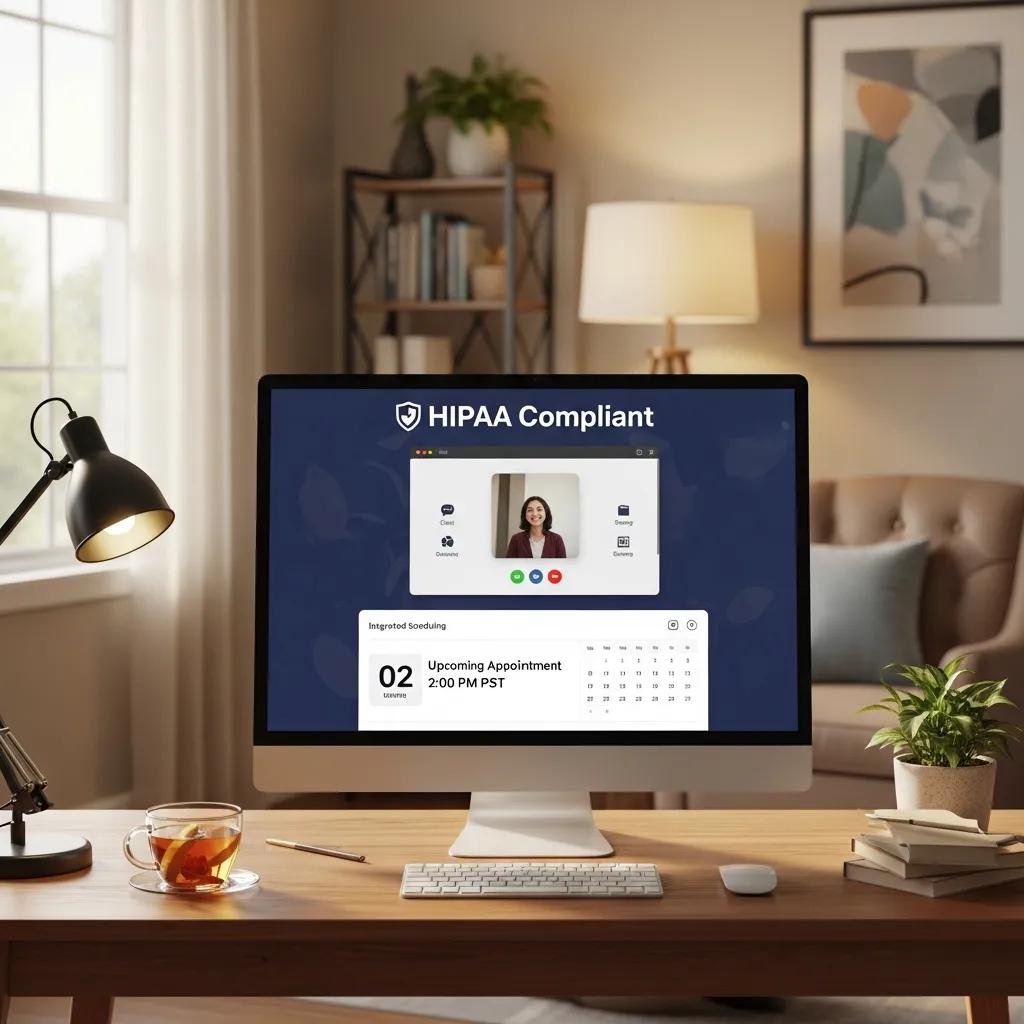
As telehealth becomes a standard practice in mental health care, having a well-designed website is crucial for therapists. Essential features for telehealth websites include:
- HIPAA Compliance: Ensuring that the website meets all privacy and security regulations to protect client information.
- User-Friendly Interface: A simple and intuitive design that facilitates easy navigation for clients seeking services.
- Integrated Scheduling Tools: Features that allow clients to book appointments directly through the website, enhancing convenience and engagement.
These features not only improve the client experience but also help therapists establish credibility and trust in their online presence.
How to create secure, HIPAA-compliant virtual therapy platforms?
Creating secure, HIPAA-compliant virtual therapy platforms involves several key steps:
- Encryption: Implementing end-to-end encryption for all communications to protect client data.
- Access Controls: Establishing strict access controls to ensure that only authorized personnel can access sensitive information.
- Regular Audits: Conducting regular security audits to identify and address potential vulnerabilities in the system.
By prioritizing these security measures, therapists can create a safe environment for their clients to engage in virtual therapy.
Which online scheduling and client portal features improve engagement?
Online scheduling and client portal features that improve engagement include:
- Automated Reminders: Sending clients reminders about upcoming appointments to reduce no-shows.
- Secure Messaging: Allowing clients to communicate with their therapists securely through the portal.
- Resource Sharing: Providing clients with access to educational materials and resources that support their treatment.
These features enhance the overall client experience and foster a sense of connection between therapists and their clients.
How are virtual reality and digital therapeutics shaping modern therapy?
Virtual reality (VR) and digital therapeutics are emerging as powerful tools in modern therapy, offering innovative ways to engage clients and enhance treatment outcomes. VR applications can create immersive environments for exposure therapy, helping clients confront fears in a controlled setting. Digital therapeutics, on the other hand, provide evidence-based interventions through mobile apps and online platforms, allowing clients to access support anytime and anywhere. As these technologies continue to evolve, they are reshaping the therapeutic landscape and expanding the possibilities for effective mental health care.
Specifically, research highlights the significant potential of virtual reality as an effective treatment modality, particularly for exposure therapy and skill-building.
VR Therapy: Future Trends & Clinical Expansion
Evidence reveals that virtual reality (VR) is an effective treatment for phobias and useful for studying specific issues, such as pharmacological compounds and behavioral manipulations, that can enhance treatment outcomes. We conclude that VR is a useful tool to improve exposure therapy and it can be a good option to analyze the processes and mechanisms involved in exposure therapy and the ways this strategy can be enhanced. In the coming years, there will be a significant expansion of VR in routine practice in clinical contexts.
Recent progress in virtual reality exposure therapy for phobias: a systematic review, C Botella, 2017
What virtual reality applications support exposure and skill-building therapies?
Virtual reality applications that support exposure and skill-building therapies include:
- Phobia Treatment: VR environments that simulate feared situations, allowing clients to gradually confront their fears.
- Social Skills Training: Interactive scenarios that help clients practice social interactions in a safe space.
- Mindfulness and Relaxation: VR experiences designed to promote relaxation and mindfulness, aiding in stress reduction.
These applications provide unique opportunities for clients to engage in therapeutic practices that may not be possible in traditional settings.
How to integrate and showcase digital mental health platforms on websites?
Integrating and showcasing digital mental health platforms on websites involves:
- Clear Navigation: Ensuring that clients can easily find and access digital tools and resources.
- Prominent Placement: Highlighting digital platforms on the homepage to draw attention and encourage usage.
- User Testimonials: Featuring client testimonials that speak to the effectiveness of digital tools in their treatment journey.
By effectively integrating these platforms, therapists can enhance their service offerings and provide clients with valuable resources for their mental health.
How can therapists communicate evolving therapeutic approaches online?
Therapists can effectively communicate evolving therapeutic approaches online by utilizing their websites to showcase their unique methodologies and philosophies. Clear communication is essential for building trust and attracting clients who resonate with specific therapeutic styles. By highlighting personalized and trauma-informed care, therapists can demonstrate their commitment to understanding and addressing the diverse needs of their clients.
What website strategies highlight personalized and trauma-informed care?
Website strategies that highlight personalized and trauma-informed care include:
- Client-Centered Messaging: Using language that emphasizes understanding and empathy towards clients’ experiences.
- Detailed Service Descriptions: Providing comprehensive descriptions of therapeutic approaches and how they cater to individual needs.
- Visual Storytelling: Incorporating images and videos that reflect the therapeutic environment and approach, making it relatable for potential clients.
These strategies help create a welcoming online presence that resonates with clients seeking personalized care.
How to present holistic and integrative therapy modalities effectively?
To present holistic and integrative therapy modalities effectively, therapists should:
- Educate Clients: Provide information about various modalities and their benefits, helping clients understand their options.
- Showcase Success Stories: Share case studies or testimonials that illustrate the effectiveness of integrative approaches.
- Create Resource Sections: Develop sections on the website dedicated to educational resources about holistic practices.
By adopting these strategies, therapists can effectively communicate the value of holistic and integrative modalities to potential clients.
Why is a future-proof website critical for private practice growth?
A future-proof website is critical for private practice growth as it ensures that therapists can adapt to changing technologies and client needs. With the rapid evolution of mental health technologies, having a website that can accommodate new features and functionalities is essential for maintaining competitiveness. A well-designed website not only enhances client engagement but also serves as a platform for showcasing services and building a professional online presence.
How does responsive, secure design support emerging mental health technologies?
Responsive, secure design supports emerging mental health technologies by:
- Adapting to Devices: Ensuring that the website functions seamlessly across various devices, including smartphones and tablets.
- Enhancing Security: Implementing robust security measures to protect client data and maintain trust.
- Facilitating Integration: Allowing for the easy integration of new tools and technologies as they become available.
These design principles are essential for creating a website that meets the demands of modern mental health practices.
What SEO strategies increase visibility for new therapy services?
Effective SEO strategies that increase visibility for new therapy services include:
- Keyword Optimization: Researching and incorporating relevant keywords into website content to improve search engine rankings.
- Local SEO: Focusing on local search optimization to attract clients in the therapist’s geographical area.
- Content Marketing: Creating valuable content that addresses common client concerns and showcases expertise in the field.
By implementing these strategies, therapists can enhance their online visibility and attract more clients to their practice.
How does Therapeia Web Design enable therapists to adopt future trends?
Therapeia Web Design plays a pivotal role in enabling therapists to adopt future trends by providing specialized web design services tailored to the needs of mental health professionals. Their focus on creating secure, responsive, and user-friendly websites empowers therapists to establish credibility and effectively share their expertise. By streamlining appointment scheduling and enhancing online visibility, Therapeia supports therapists in navigating the evolving landscape of mental health care.
What benefits does the ‘Website in a Week’ service offer for rapid digital transformation?
The ‘Website in a Week’ service offers rapid digital transformation by providing quick and effective brand and website transformations in just one week. It promises a stress-free experience, resulting in a beautiful and ready-to-launch website that aligns with the client’s vision. This service is particularly beneficial for therapists looking to establish an online presence quickly and efficiently, allowing them to focus on their practice while Therapeia handles the technical aspects.
How does Therapeia support ongoing practice growth and technology integration?
Therapeia supports ongoing practice growth and technology integration through services such as private practice growth coaching, website design specifically for therapists and coaches, website maintenance and updates, SEO and digital marketing, and e-commerce web design. These services aim to enhance brand visibility and streamline online operations, facilitating growth and effective technology use. By partnering with Therapeia, therapists can ensure that their practices remain competitive and responsive to the needs of their clients.