Enhance Therapy Intake Forms for Better Client Experience
Optimizing Website Forms for Therapist Client Intake: Secure, User-Friendly, and HIPAA Compliant Solutions
In the digital age, therapists must prioritize the optimization of their client intake forms to ensure a seamless and secure experience for their clients. This article delves into the importance of creating HIPAA-compliant, user-friendly forms that not only protect sensitive information but also enhance client engagement. By understanding the nuances of form design, therapists can significantly improve their client intake processes, leading to better communication and trust. The focus will be on the essential elements of effective therapy forms, strategies to boost conversion rates, and how to integrate these forms with practice management systems. Additionally, we will explore how Therapeia Web Design can assist therapists in achieving these goals through tailored web solutions.
What Are HIPAA Compliant Therapy Forms and Why Are They Essential?
HIPAA compliant therapy forms are essential documents that ensure the protection of client information in accordance with the Health Insurance Portability and Accountability Act (HIPAA). These forms safeguard sensitive data, such as personal health information, by implementing strict security measures. Compliance with HIPAA not only builds trust with clients but also protects therapists from legal repercussions. Understanding the significance of these forms is crucial for any mental health professional aiming to maintain ethical standards and client confidentiality.
How Do Therapy Forms Ensure HIPAA Compliance and Data Privacy?
Therapy forms ensure HIPAA compliance through various mechanisms, including data encryption, access controls, and secure data storage practices. Encryption methods protect data during transmission and storage, making it unreadable to unauthorized users. Access controls limit who can view or edit sensitive information, ensuring that only authorized personnel have access. Additionally, secure data storage practices, such as using HIPAA-compliant cloud services, further enhance data privacy and security.
Further emphasizing the complexities of digital health, recent research highlights the evolving landscape of privacy and security in therapy practices.
Digital Health Privacy & Security for Therapy Practices
The integration of digital technologies into family therapy practices presents both significant opportunities and notable challenges. This editorial examines recent trends impacting the field, including the adoption of cloud-based storage solutions, the involvement of entities outside the scope of standard privacy regulations in data management, the rise of patient-generated health data, and the increasing use of tracking technologies. While cloud-based storage offers enhanced scalability and accessibility, it also introduces concerns about data security and confidentiality.
Privacy and data security in digital health: Implications for family therapy, E NS Lockhart, 2025
What Security Measures Protect Sensitive Client Information in Online Intake Forms?
To protect sensitive client information in online intake forms, several security measures are implemented. SSL/TLS certificates encrypt data transmitted between the client and the server, preventing interception by malicious actors. Data encryption ensures that even if data is accessed, it remains unreadable without the proper decryption keys. User authentication processes, such as two-factor authentication, add an extra layer of security by verifying the identity of users accessing the forms.
How Can Therapists Design User-Friendly and Responsive Intake Forms?
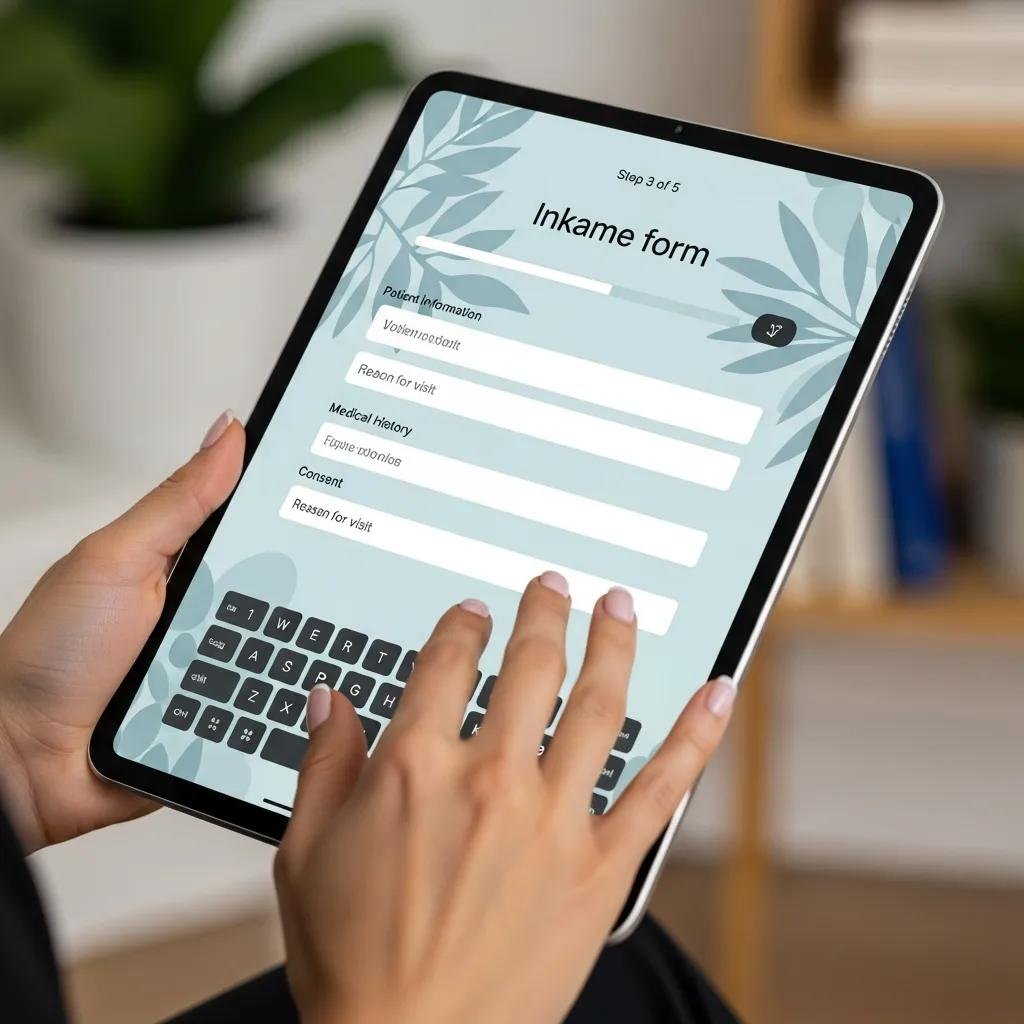
Designing user-friendly and responsive intake forms is crucial for enhancing the client experience. A well-designed form should be intuitive, easy to navigate, and accessible on various devices. By focusing on user experience, therapists can reduce the likelihood of form abandonment and improve overall client satisfaction.
What Are Best Practices for Therapy Website Form Design and Mobile Compatibility?
Best practices for therapy website form design include using responsive design techniques that ensure forms are easily viewable on mobile devices. Field labeling should be clear and concise, guiding clients through the form without confusion. Additionally, minimizing the number of fields can streamline the process, making it less daunting for clients to complete their intake forms.
The importance of responsive design for optimal user experience is further supported by studies examining its impact on usability across various devices.
Responsive Design for Enhanced Website Usability
Responsive design allows users to benefit from the web page without having to worry about screen size and resolution. The aim of this study is to investigate the effect of responsive design on usability. For this purpose, a questionnaire consisting of a five-point Likert was applied to university students.
Evaluating the effects of responsive design on the usability of academic websites in the pandemic, A Parlakkiliç, 2022
How Does Empathetic Language Improve Client Experience in Mental Health Forms?
Empathetic language plays a significant role in improving client experience in mental health forms. By using phrases that convey understanding and support, therapists can create a welcoming atmosphere for clients. For example, instead of asking, “What is your problem?” a more empathetic approach would be, “What brings you here today?” This subtle shift in language can make clients feel more comfortable and valued, encouraging them to share their experiences openly.
What Strategies Boost Client Intake Conversion Rates on Therapy Websites?
Boosting client intake conversion rates on therapy websites involves implementing effective strategies that enhance form completion. Clear calls-to-action (CTAs) and minimal fields are essential components that can significantly impact conversion rates. By optimizing these elements, therapists can create a more inviting and efficient intake process.
How Do Clear Calls-to-Action and Minimal Fields Enhance Form Completion?
Clear calls-to-action guide clients on what to do next, making the process straightforward. For instance, using phrases like “Start Your Journey” or “Complete Your Intake” can motivate clients to take action. Additionally, minimizing the number of fields required for submission reduces friction, leading to higher completion rates. Research indicates that reducing the number of form fields can increase submission rates by up to 20%, though the exact impact varies depending on context.
What Role Does Form Placement and Visual Design Play in Increasing Submissions?
The placement and visual design of forms are critical in increasing submissions. Forms should be prominently displayed on the website, ideally above the fold, to catch the client’s attention immediately. Visual hierarchy principles, such as using contrasting colors for the submit button, can draw attention and encourage action. A clean, uncluttered design also helps clients focus on completing the form without distractions.
Which Essential Fields and Consent Elements Should Therapy Intake Forms Include?
Essential fields and consent elements in therapy intake forms are vital for gathering necessary information while ensuring compliance with legal requirements. These elements help therapists understand their clients better and provide appropriate care.
What Client Information Is Critical for Effective Mental Health Intake?
Critical client information for effective mental health intake includes contact details, insurance information (if applicable), and the chief complaint or reason for seeking therapy. Collecting this information allows therapists to reach out to clients efficiently and verify insurance coverage for services when relevant. Additionally, understanding the chief complaint helps therapists tailor their approach to meet the client’s needs effectively.
How Are Online Consent Forms Structured for Counseling and Psychotherapy?
Online consent forms for counseling and psychotherapy are structured to clearly outline the terms of treatment, confidentiality agreements, and client rights. These forms should use straightforward language to ensure clients fully understand their rights and responsibilities. Including a section for clients to ask questions or express concerns can further enhance transparency and trust.
How Can Therapy Forms Integrate with Practice Management Systems and Automation?

Integrating therapy forms with practice management systems and automation can streamline client onboarding and data handling. This integration allows therapists to manage client information efficiently and reduce administrative burdens.
What Are Common Integration Options for Online Intake Forms and EHR Software?
Common integration options for online intake forms and Electronic Health Record (EHR) software include platforms that allow seamless data transfer between systems. Many EHR systems offer built-in features or APIs for importing client data directly from online forms, reducing the need for manual entry. This integration not only saves time but also minimizes the risk of errors in client information.
How Does Automation Streamline Client Onboarding and Data Handling?
Automation streamlines client onboarding by automatically populating client profiles with information collected from intake forms. This process reduces the time therapists spend on administrative tasks, allowing them to focus more on client care. Additionally, automated reminders for appointments and follow-ups can enhance client engagement and retention.
How Can Therapeia Web Design Optimize Website Forms for Therapists?
Therapeia Web Design specializes in creating secure, responsive, and user-friendly websites primarily for therapists, counselors, and coaches. Their services aim to help mental health professionals establish a strong online presence, build credibility, facilitate client communication, and enhance visibility.
What Security and User Experience Features Does Therapeia Implement?
Therapeia implements various security and user experience features to ensure that therapy forms are both safe and easy to use. These features include SSL/TLS encryption, user-friendly interfaces, and mobile optimization. By prioritizing these elements, Therapeia helps therapists create a secure environment for their clients while enhancing overall usability.
How Does the “Website in a Week” Service Facilitate Rapid, Secure Form Deployment?
The “Website in a Week” service facilitates rapid, secure form deployment by offering quick and effective brand and website transformations, allowing clients to have their dream website ready to launch in just one week. This service emphasizes a stress-free process, ensuring that the website is not only beautiful but also secure and functional.
Different strategies for improving form completion rates can be compared to understand their effectiveness.