Discover the Best Website Speed Test Tools for Fast Loading
Top Website Speed Test Tools for Performance Analysis: How to Check and Improve Your Site’s Load Time
In the digital age, website speed is a critical factor for success, especially for therapists and coaches who rely on their online presence to attract clients. This article explores the top website speed test tools available for performance analysis, helping you understand how to check and improve your site’s load time effectively. By optimizing your website speed, you can enhance user experience, boost client engagement, and improve your search engine rankings. We will delve into the importance of website speed, the tools available for testing, and practical steps to enhance your site’s performance.
Why Is Website Speed Critical for Therapists and Coaches?
Website speed is essential for therapists and coaches as it directly impacts client engagement and conversion rates. A slow-loading website can lead to high bounce rates, where potential clients leave before even viewing your services. Research indicates that a delay of just one second in page load time can result in a 7% reduction in conversions. This statistic highlights the importance of ensuring that your website loads quickly to retain visitors and encourage them to book appointments.
How Does Page Load Speed Affect Client Engagement and Bookings?
Page load speed significantly affects client engagement and bookings. When potential clients visit a therapist’s website, they expect a seamless experience. If the site takes too long to load, they may become frustrated and leave, opting for a competitor with a faster site. Studies show that 53% of mobile users abandon sites that take longer than three seconds to load. Therefore, optimizing your website’s load time is crucial for maximizing client interactions and increasing bookings.
What Role Does Website Speed Play in SEO and Online Visibility?
Website speed is a critical factor in search engine optimization (SEO) and online visibility. Google considers page speed as one of the ranking factors in its algorithm. Faster websites tend to rank higher in search results, leading to increased organic traffic. Additionally, Core Web Vitals, which measure user experience aspects like loading performance, are essential for SEO. By improving your website speed, you not only enhance user experience but also boost your chances of appearing prominently in search results.
This perspective is further supported by studies showing how website speed directly influences business outcomes and search engine visibility.
Website Speed Impact on E-commerce & Google Rankings
XYZ website is a business website that operates in the field of e-commerce which is implemented through websites and applications, for several years the website has had a percentage of users’ usage speed which has decreased quite a bit and has become old, due to lack of maintenance of some of the features contained in the website application which have an impact on the lack of customer interest in buying goods on the XYZ website and more influential in terms of access from searching e-commerce notifications from Google that if the percentage of websites decreases over a long period of time, this will result in websites not being allowed to publish advertisements.
The Website Optimization and Analysis on XYZ Website using the Web Core Vital Method, A Zahra, 2023
What Are Core Web Vitals and Why Do They Matter?
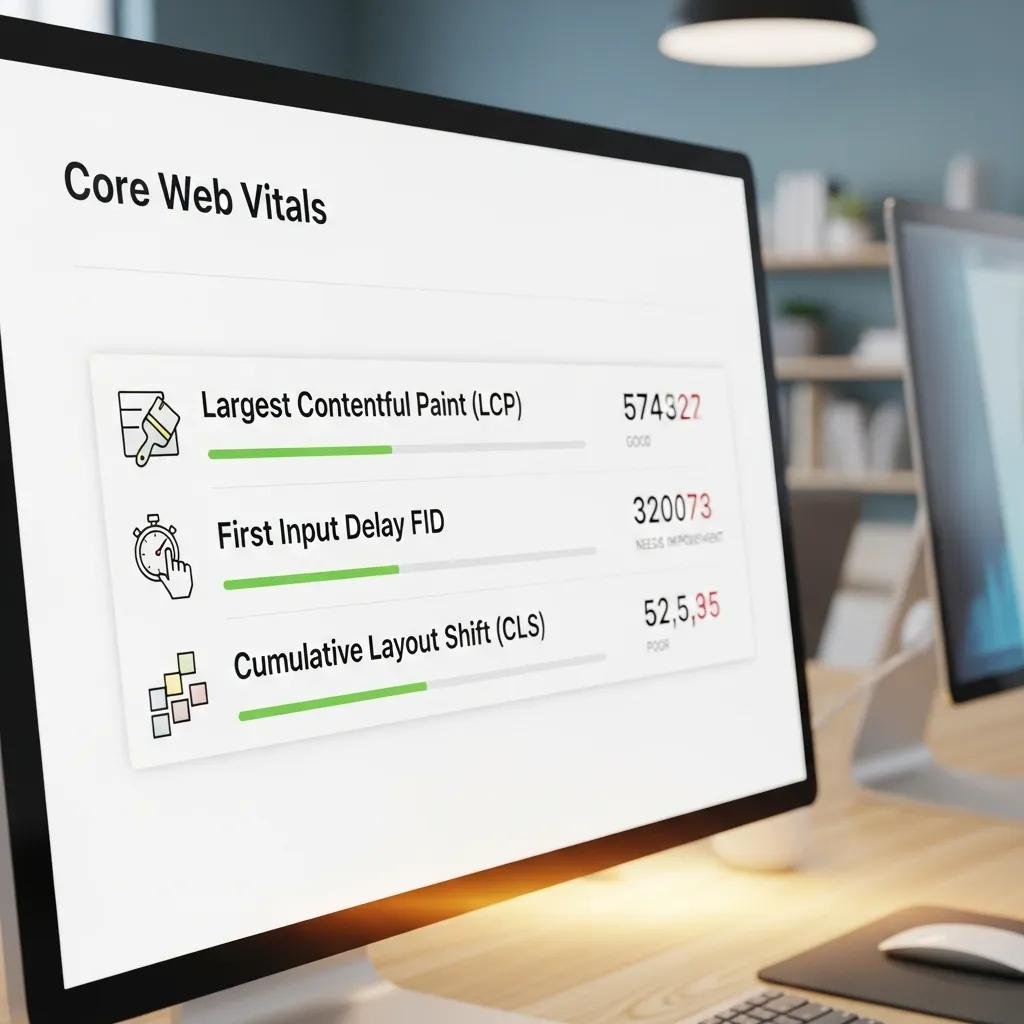
Core Web Vitals are a set of metrics that Google uses to measure the user experience of a website. These metrics focus on loading performance, interactivity, and visual stability, which are crucial for providing a positive user experience. Understanding these metrics can help therapists and coaches optimize their websites effectively.
How to Understand Largest Contentful Paint, First Input Delay, and Cumulative Layout Shift
The three main Core Web Vitals metrics are Largest Contentful Paint (LCP), First Input Delay (FID), and Cumulative Layout Shift (CLS). LCP measures loading performance, specifically how long it takes for the largest content element to become visible. FID assesses interactivity by measuring the time it takes for a user to interact with a page. CLS evaluates visual stability by tracking unexpected layout shifts during loading. Together, these metrics provide a comprehensive view of a website’s performance and user experience.
Further research emphasizes the critical role of web performance tools in evaluating and optimizing these key metrics for an enhanced user experience.
Web Performance Tools & Core Web Vitals for User Experience
This paper delves into the significance of web performance tooling in measuring and optimizing key performance indicators (KPIs) known as “web vitals.” It explores popular tools such as Lighthouse, PageSpeed Insights, and WebPageTest, analyzing their functionalities and roles in enhancing web performance [2][3][4]. These tools help evaluate critical metrics like Largest Contentful Paint (LCP) and First Input Delay (FID), which directly impact userexperience. Additionally, the paper investigates the importance of optimizing core web vitals like LCP and FID and their impact on key metrics such as bounce rate, conversion rate, and time on site.
Web performance tooling and the importance of web vitals, MK Dobbala, 2022
How Do Core Web Vitals Influence Website Performance and User Experience?
Core Web Vitals significantly influence website performance and user experience. A website that scores well on these metrics is likely to provide a smoother and more enjoyable experience for users. For instance, a fast LCP ensures that users can see content quickly, while a low FID means that users can interact with the site without delays. By focusing on improving these metrics, therapists and coaches can create a more engaging and user-friendly website, ultimately leading to higher client satisfaction and retention.
Which Free Website Speed Test Tools Are Best for Therapists and Coaches?
Several free website speed test tools can help therapists and coaches analyze their website’s performance. These tools provide valuable insights into load times, performance metrics, and areas for improvement.
How to Use Google PageSpeed Insights for Your Private Practice Website
Google PageSpeed Insights is a powerful tool that analyzes the content of a web page and generates suggestions to make that page faster. To use it, simply enter your website URL, and the tool will provide a score along with detailed insights on what to improve. Key recommendations may include optimizing images, leveraging browser caching, and minimizing JavaScript. Implementing these suggestions can significantly enhance your website’s speed and performance.
What Features Do GTmetrix and Pingdom Offer for Performance Analysis?
GTmetrix and Pingdom are two other excellent tools for performance analysis. GTmetrix provides a comprehensive report on your website’s speed, including a waterfall chart that breaks down the loading process. It also offers suggestions for improvement based on performance scores. Pingdom, on the other hand, focuses on user experience, providing insights into how quickly your site loads from different locations. Both tools are user-friendly and offer valuable data to help therapists and coaches optimize their websites effectively.
How Can You Interpret Website Speed Test Results Effectively?
Interpreting website speed test results is crucial for making informed decisions about optimizations. Understanding the metrics and recommendations provided by these tools can help therapists and coaches identify specific areas for improvement.
What Key Metrics Should Therapists Focus on When Analyzing Reports?
When analyzing speed test reports, therapists should focus on key metrics such as load time, LCP, FID, and CLS. These metrics provide insights into how well the website performs and where improvements can be made. Additionally, looking at the suggestions provided by the tools can guide therapists in prioritizing changes that will have the most significant impact on performance.
How to Translate Technical Data into Actionable Website Improvements?
Translating technical data into actionable improvements involves breaking down the recommendations into manageable tasks. For instance, if a report suggests optimizing images, therapists can start by compressing large image files or using next-gen formats like WebP. By systematically addressing each recommendation, therapists can enhance their website’s speed and overall user experience.
What Practical Steps Can Improve Your Therapist Website’s Speed?

Improving your therapist website’s speed involves implementing several practical strategies that can lead to significant performance gains.
How Does Image Optimization and Caching Enhance Load Times?
Image optimization and caching are two effective strategies for enhancing load times. Optimizing images involves reducing their file size without sacrificing quality, which can significantly decrease loading times. Additionally, implementing caching allows frequently accessed data to be stored temporarily, reducing the need for repeated data retrieval from the server. Together, these strategies can lead to faster load times and improved user experience.
These strategies are part of a broader set of web performance optimization techniques that are crucial for improving load times and user experience.
Web Performance Optimization Techniques for SEO & UX
We detailed various web performance optimization techniques such as asset optimization, caching, performance design checklist, prefetching, and content delivery networks (CDNs). These techniques are crucial for improving website load times, reducing latency, and enhancing overall user experience, directly contributing to better search engine rankings and user engagement.
An analysis of techniques and quality assessment for Web performance optimization, KS Shailesh, 2017
Why Is Choosing Fast Hosting and Using CDNs Important for Your Site?
Choosing a fast hosting provider and utilizing Content Delivery Networks (CDNs) are crucial for website speed. A reliable hosting provider ensures that your website is served quickly to users, while CDNs distribute your content across multiple servers worldwide, reducing latency. By selecting the right hosting and leveraging CDNs, therapists can ensure that their websites load quickly for clients, regardless of their location.
How Does Therapeia Web Design Ensure Fast, Responsive Websites?
Therapeia Web Design specializes in creating secure, responsive, and user-friendly websites tailored for therapists, counselors, and coaches. Their approach to website speed optimization is integral to their design philosophy.
What Is Therapeia’s Approach to Website Speed Optimization?
Therapeia employs a comprehensive approach to website speed optimization, focusing on best practices such as image compression, code minification, and efficient server configurations. By implementing these strategies, they ensure that the websites they design not only look great but also perform exceptionally well. This commitment to speed helps their clients maintain a competitive edge in the digital landscape.
How Have Clients Benefited from Improved Website Performance?
Clients of Therapeia Web Design have reported significant improvements in website performance, leading to increased client engagement and higher conversion rates. By prioritizing speed in their designs, Therapeia has helped therapists and coaches create websites that not only attract visitors but also convert them into clients. The positive feedback from clients underscores the importance of a fast, responsive website in today’s competitive market.