Create an Inclusive Therapy Site: Key Accessible Design Tips
ADA Compliant Therapy Website Design: Core Principles of Accessible Web Design for Therapists
Creating an accessible web design is crucial for therapists who aim to provide inclusive services to all clients, including those with disabilities. This article delves into the core principles of accessible web design, specifically tailored for mental health professionals. Readers will learn about the essential guidelines, practical features, and the importance of ADA compliance in therapy websites. As therapists often face challenges in reaching diverse client populations, implementing accessible web design can significantly enhance their practice. This guide will cover the essential WCAG guidelines, strategies for creating accessible websites, the intersection of ADA and HIPAA, and the business benefits of accessibility.
What Are the Essential WCAG Guidelines for Mental Health Websites?
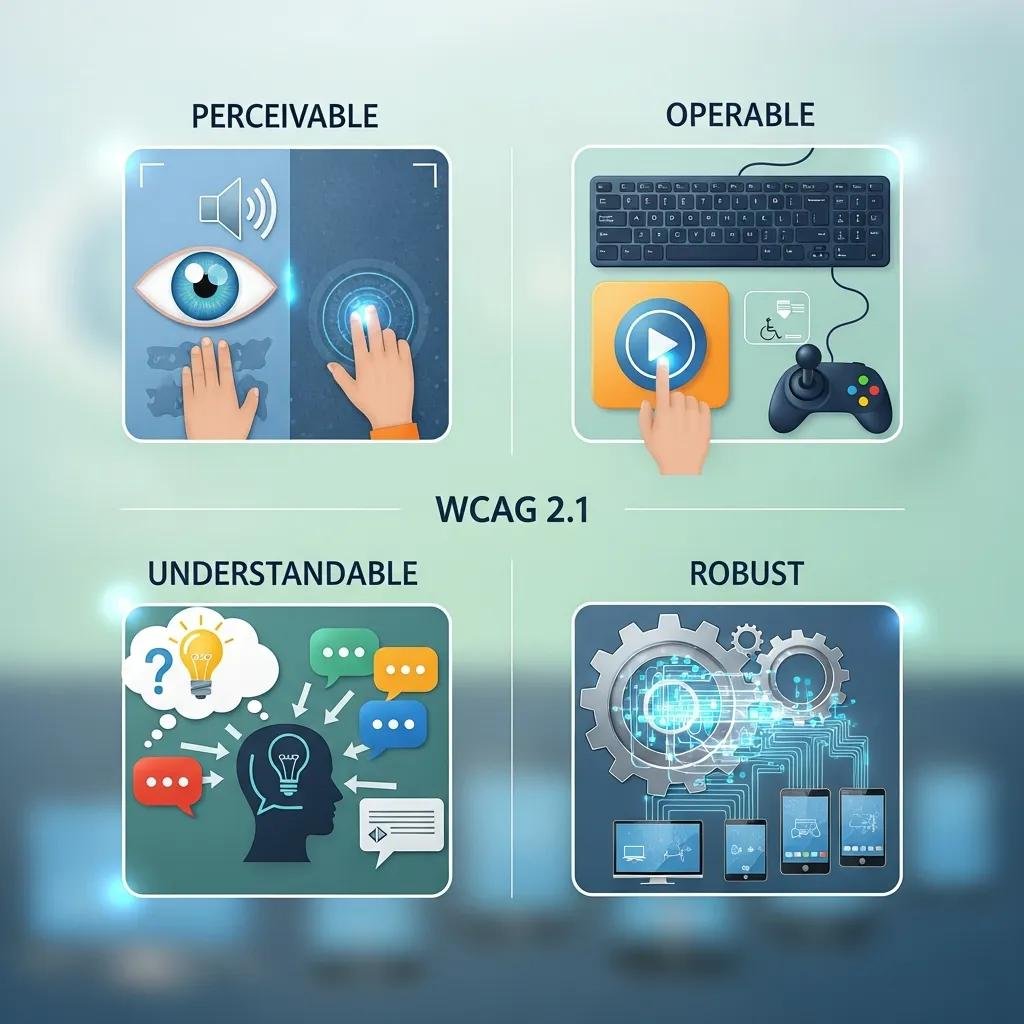
The Web Content Accessibility Guidelines (WCAG) provide a framework for making web content more accessible to people with disabilities. These guidelines are essential for therapists to ensure their websites are usable by all clients, including those with visual, auditory, or cognitive impairments. The WCAG 2.1 guidelines focus on four core principles: perceivable, operable, understandable, and robust. By adhering to these principles, therapists can create websites that are not only compliant but also user-friendly.
Further research emphasizes the critical role of WCAG 2.1 in evaluating and improving web accessibility for users with diverse abilities.
WCAG 2.1 & Inclusive Web Design for Users with Disabilities
This dissertation examines the current state of web accessibility, focusing on the evaluation of existing practices and technologies in meeting the needs of all users, including those with disabilities. Despite significant advancements in web technologies, many websites still fall short of providing truly inclusive experiences. This study aims to bridge the gap between current accessibility implementations and the actual requirements of users with diverse abilities. The research employs a mixed-methods approach, combining automated accessibility testing tools, manual expert evaluations, and user testing with individuals with disabilities. A comprehensive analysis of various websites across different industries is conducted, using evaluation criteria based on the Web Content Accessibility Guidelines (WCAG) 2.1.
Accessibility in Web Design-Evaluating Current Practices and Technologies, 2024
What Are the Four Core Principles of WCAG 2.1 for Therapists?
The four core principles of WCAG 2.1 are:
- Perceivable: Information must be presented in ways that users can perceive, such as providing text alternatives for non-text content.
- Operable: Users must be able to operate the interface, which includes ensuring that all functionality is available from a keyboard.
- Understandable: Information and operation of the user interface must be understandable, meaning the content should be clear and consistent.
- Robust: Content must be robust enough to be interpreted reliably by a wide variety of user agents, including assistive technologies.
These principles guide therapists in creating websites that cater to the needs of all clients, ensuring that no one is left behind.
How Do WCAG Success Criteria Apply to Therapy Website Accessibility?
WCAG success criteria provide specific benchmarks for measuring accessibility. For therapists, applying these criteria means ensuring that their websites meet the needs of users with disabilities. Key success criteria include providing text alternatives for images, ensuring sufficient color contrast, and making all interactive elements accessible via keyboard navigation. By implementing these criteria, therapists can enhance the usability of their websites, making it easier for clients to access vital information and services.
How to Create an Accessible Website Design for Therapists and Private Practices?
Creating an accessible website design involves several key features and strategies that therapists can implement. These features not only improve accessibility but also enhance the overall user experience for all clients.
The broader context of web accessibility highlights the need for inclusive design practices, especially as more content is created by non-professionals.
Inclusive Web Design for Accessible Online Content
Website accessibility is a problem that affects millions of people with disabilities. While most current accessibility initiatives target government or commercial sites, a growing segment of online content is being created by non-professionals. This content is often inaccessible to users with disabilities. Everyday inclusive Web design is a design perspective that promotes the creation of accessible content by everyday end-users.
Everyday Inclusive Web Design: An Activity Perspective., SK Kane, 2007
What Are the Key Features of Inclusive Web Design for Therapy Websites?
Key features of inclusive web design for therapy websites include:
- User-Friendly Navigation: Clear and intuitive navigation helps users find information quickly and easily.
- Responsive Design: Websites should be designed to work on various devices, ensuring accessibility on smartphones, tablets, and desktops.
- Content Readability: Text should be easy to read, with appropriate font sizes and line spacing to accommodate users with visual impairments.
These features contribute to a more inclusive online environment, allowing therapists to reach a broader audience.
How to Implement a Therapy Website Accessibility Checklist Effectively?
Implementing a therapy website accessibility checklist involves several steps:
- Conduct an Accessibility Audit: Evaluate the current website against WCAG guidelines to identify areas for improvement.
- Prioritize Changes: Focus on high-impact changes that will significantly enhance accessibility, such as improving color contrast and adding alt text to images.
- Monitor Progress: Regularly review the website to ensure ongoing compliance with accessibility standards.
By following these steps, therapists can create a more accessible online presence that meets the needs of all clients.
Why Is ADA Compliance Critical for Therapy Websites and Private Practices?
ADA compliance is essential for therapy websites as it helps ensure that all individuals, regardless of their abilities, can access services. Non-compliance can lead to legal repercussions and limit the reach of a therapist’s practice.
What Are the Legal Requirements and Risks for Therapists Regarding ADA?
Therapists must be aware that the Americans with Disabilities Act (ADA) requires public accommodations, including websites, to be accessible to individuals with disabilities. While the ADA does not explicitly provide detailed technical standards for websites, courts and the Department of Justice have increasingly interpreted the ADA to apply to websites as places of public accommodation. Failure to comply can result in lawsuits and financial penalties. Additionally, non-compliance can damage a therapist’s reputation and deter potential clients from seeking services.
How Does HIPAA Intersect with Accessible Web Design for Therapists?
The Health Insurance Portability and Accountability Act (HIPAA) requires therapists to protect patient information. Accessible web design must also consider HIPAA compliance, ensuring that all communication and data collection methods are secure. This includes using secure forms and ensuring that any third-party services used for accessibility do not compromise patient confidentiality.
How to Design Therapy Websites Optimized for Neurodiverse Patient Populations?
Designing therapy websites for neurodiverse clients involves understanding their unique needs and preferences. This approach ensures that all clients can navigate the website comfortably and effectively.
What Are Neurodiversity-Focused Accessibility Considerations for Therapists?

Neurodiversity-focused accessibility considerations include:
- Visual Clarity: Use clear fonts and layouts that minimize distractions.
- Cognitive Load Reduction: Simplify content and navigation to avoid overwhelming users.
- Sensory Considerations: Provide options to adjust visual and auditory elements to suit individual preferences.
These considerations help create a more inclusive environment for neurodiverse clients, enhancing their overall experience.
How to Reduce Cognitive Load and Enhance Usability for Neurodiverse Clients?
To reduce cognitive load and enhance usability, therapists can:
- Simplify Navigation: Use straightforward menus and clear labels to guide users.
- Organize Content Logically: Present information in a structured manner that flows logically.
- Provide Feedback Mechanisms: Allow users to provide feedback on their experience, helping to identify areas for improvement.
Implementing these strategies can significantly improve the usability of therapy websites for neurodiverse clients.
What Practical Accessibility Features Enhance Therapy Website Usability?
Incorporating practical accessibility features can greatly enhance the usability of therapy websites. These features ensure that all clients can access and navigate the site effectively.
How to Use Alt Text, Color Contrast, and Keyboard Navigation Effectively?
Effective use of accessibility features includes:
- Alt Text: Provide descriptive alt text for all images to ensure that visually impaired users can understand the content.
- Color Contrast: Ensure sufficient contrast between text and background colors to enhance readability for users with visual impairments.
- Keyboard Navigation: Design the website so that all interactive elements can be accessed using a keyboard, making it easier for users with mobility impairments.
These features are essential for creating an inclusive online environment that caters to all clients.
What Are Best Practices for Mobile Accessibility in Therapy Websites?
Best practices for mobile accessibility include:
- Responsive Design: Ensure the website adapts to different screen sizes and orientations.
- Touch Target Sizes: Design buttons and links that are easy to tap, accommodating users with motor impairments.
- Mobile Navigation: Simplify navigation for mobile users, ensuring that essential information is easily accessible.
By following these best practices, therapists can create mobile-friendly websites that enhance accessibility for all users.
What Are the Business Benefits of Accessible Therapy Websites?
Investing in accessible therapy websites offers numerous business benefits, including expanding client reach and improving search engine optimization (SEO).
While often viewed as an ethical obligation, an accessible web presence also presents significant business opportunities and cost-benefit advantages for private practices.
Accessible Web Presence: Cost-Benefit & Business Opportunity
Providing an accessible Web presence is often regarded as an ethical or social obligation. Profit-oriented enterprises in particular tend to interpret the implementation of “barrier-free” access to their websites as a cost-intensive technological gimmick rather than as a business opportunity. This paper provides systematic insight into the cost and benefit drivers that might determine a purely rational management decision on Web presence that takes accessibility into consideration.
A cost-benefit approach for accessible web presence, C Strauss, 2004
How Does Accessibility Expand Client Reach and Improve SEO?
Accessibility can expand client reach by ensuring that individuals with disabilities can access services. Additionally, accessible websites often rank better in search engines, as they adhere to best practices for usability and user experience. This can lead to increased visibility and more potential clients finding the therapist’s services.
Why Does Inclusive Design Build Trust and Enhance Private Practice Reputation?
Inclusive design fosters trust among clients, as it demonstrates a commitment to serving all individuals, regardless of their abilities. By creating an accessible website, therapists can enhance their reputation and attract a more diverse client base. This commitment to inclusivity not only benefits clients but also strengthens the therapist’s professional standing in the community.
This table highlights the essential accessibility features that enhance usability for therapy websites, ensuring that all clients can access vital information and services.