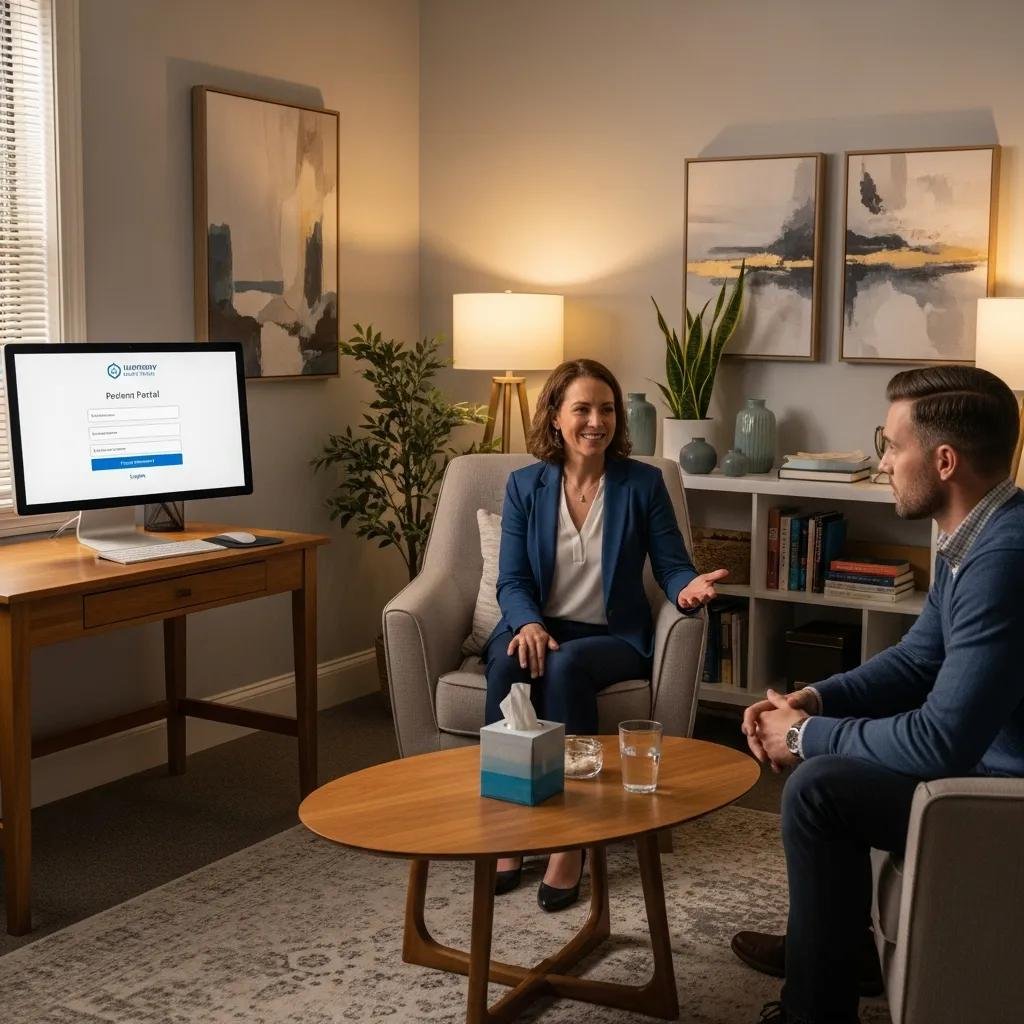
Boost Visibility with Content SEO for Counselors
How to Optimize Your Therapist Website: On‑Page SEO Best Practices to Grow Your Private Practice
Today, a thoughtfully optimized
therapist website
is one of the most reliable ways to attract and keep clients. On‑page SEO helps your site show up when people search for help, so the right clients can find you. This guide lays out practical on‑page SEO steps written specifically for therapists, counselors, and life coaches. Follow these tactics to improve search visibility, increase inquiries, and support steady practice growth. We’ll walk through keyword research, content tweaks, technical SEO basics, schema markup, and UX and accessibility considerations.
Knowing how to optimize your therapist site can be the difference between being discovered by the people you want to serve and getting lost online. This article gives clear, actionable strategies that serve both search engines and real human visitors. Expect hands‑on guidance for keyword work, content structure, technical fixes, schema benefits, and UX moves that help turn visitors into clients.
Research and industry trends show more mental health providers are adopting digital marketing—including SEO—to reach people who need services.
SEO and Marketing in Mental Health Services
Industry and academic sources report a steady increase in marketing activity among public and private mental health providers. That activity spans social campaigns, anti‑stigma work, social media, Search Engine Optimization (SEO), digital platforms, and CRM tools — even as many regions face shortages in mental healthcare access.
Customer relationship management practices to promote mental health services: a study in Ho Chi Minh City,
Vietnam, L Bucatariu, 2020
How can therapists use keyword research to reach their ideal clients?
Keyword research is the foundation of practical SEO: it reveals the words and phrases your prospective clients actually type. When you target the right queries, your content feels relevant to searchers and drives higher‑quality traffic to your site.
What are high‑intent therapy keywords and how do you find them?

High‑intent keywords signal someone is ready to seek help. Phrases like
find a therapist near me
,
counseling for anxiety
, or
best life coach
indicate clear intent. Use tools such as
Google Keyword Planner
,
SEMrush
, or
Ahrefs
to check search volume and competition. Focusing on these phrases helps attract people who are actively looking for services — and who are more likely to book.
Recent studies also suggest AI can refine keyword targeting and better predict search intent, making SEM and SEO more efficient.
AI in Keyword Optimization and Search Intent Prediction
Rising digital ad spend has pushed marketers to use advanced optimization methods. One proposed approach combines AI with search intent modeling to refine keyword strategies automatically. Testing on e‑commerce data showed notable gains in performance metrics — for example, lower cost‑per‑click and higher return on ad spend.
AI-Driven SEM Keyword Optimization and Consumer Search Intent Prediction: An Intelligent Approach to Search Engine Marketing, M Sun, 2025
Which tools help uncover long‑tail keywords for niche therapy services?
Long‑tail keywords are longer, more specific phrases tailored to niche needs. Tools like
Ubersuggest
,
AnswerThePublic
, and
Moz Keyword Explorer
surface those opportunities. Instead of competing for the broad term
therapy
, you might target
cognitive behavioral therapy for depression
— a phrase that connects you with a narrower, ready audience and improves conversion chances.
What content optimization steps work best for counseling websites?
Content optimization helps your pages attract visitors and guide them toward booking. With deliberate structure and client‑focused language, your site becomes both discoverable and persuasive.
How do you build entity‑rich service pages and blog posts that convert?
Entity‑rich pages combine clear keywords, precise descriptions, and helpful detail that answers client questions. A service page for anxiety therapy should explain the process, typical outcomes, and what a first session looks like. Blog posts that address common concerns — in plain, compassionate language — build trust and position you as a knowledgeable guide who understands clients’ needs.
How do you add LSI keywords and semantic variations without sounding forced?
LSI and semantic variations are related phrases that help search engines and readers understand context. Write comprehensively and naturally: if a page is about
couples therapy
, include terms like
relationship counseling
,
communication skills
, and
conflict resolution
where they make sense. That improves SEO while keeping the reader engaged with useful information.
Which technical on‑page elements have the biggest impact on rankings?
Technical SEO keeps your site fast, crawlable, and easy to use — all important signals for search engines and visitors. Addressing a few core elements makes a measurable difference.
How should you optimize URLs, internal links, and image ALT text?
Keep URLs short and descriptive so both users and search engines understand the page at a glance. For example,
is clearer than
. Use internal links to guide visitors to related content and keep them on your site. And always add meaningful ALT text to images — it improves accessibility and gives search engines extra context.
Why are mobile‑friendliness and page speed so important for mental health sites?
Many clients search from phones, so a responsive site is essential. Slow pages frustrate visitors and increase bounce rates. Use tools like
Google PageSpeed Insights
to find speed issues and fix them — faster pages lead to better engagement and better rankings.
How does schema markup help therapists show up in search?
Schema markup (structured data) helps search engines understand your content and can improve how your pages appear in results. Implementing the right schema makes key details easier for potential clients to find.
Which schema types should mental health professionals use?
Useful schema types include
LocalBusiness
,
Service
, and
FAQPage
. LocalBusiness highlights your location and contact info, Service describes the therapies you offer, and FAQPage can surface common questions directly in search results — all of which help prospective clients decide to reach out.
How do you add LocalBusiness, Service, and FAQPage schema to a therapy site?
Adding schema means inserting structured data into your HTML. For LocalBusiness, include your practice name, address, phone number, and hours. Use Service schema to outline therapy types, and format common Q&A for FAQPage. Tools like Google’s Structured Data Markup Helper or schema generators can simplify the process and reduce errors.
Why do user experience and accessibility matter for on‑page SEO in therapy?

UX and accessibility are central to both service and search performance. A welcoming, easy‑to‑use site keeps visitors reading and makes it simple for them to take the next step. Accessibility ensures everyone — including people with disabilities — can access your information.
How do you design for WCAG 2.1 and support neurodiverse clients?
Aim for WCAG 2.1 basics: readable fonts, good color contrast, keyboard navigation, and descriptive alt text. For neurodiverse users, reduce distracting elements, use clear headings, and offer predictable navigation. These changes improve inclusivity and make your content more usable for everyone.
Where should you place calls to action to boost conversions?
Place clear, action‑focused CTAs where visitors naturally decide to act: the top of service pages, within blog posts, and at the end of informational sections. Use straightforward language that tells people the next step — for example,
schedule an appointment
or join a newsletter. Make the CTA visible and simple to follow.
Different technical SEO elements deliver specific benefits when implemented correctly.
By applying these on‑page SEO practices, therapists can build a stronger online presence that attracts the right clients and makes it easy for them to connect. Focus on targeted keywords, thoughtful content, solid technical foundations, clear schema, and a welcoming user experience.
Frequently Asked Questions
What are the benefits of using long‑tail keywords for therapy websites?
Long‑tail keywords help you reach people with specific needs — the ones more likely to contact you. They reduce competition and increase relevance. For example, targeting “cognitive behavioral therapy for anxiety” connects you with searchers who know what they need, which often leads to better conversion than broad terms like “therapy.”
How can therapists measure the effectiveness of their SEO work?
Track organic traffic, bounce rate, and conversions (like contact form submissions or bookings). Google Analytics and Search Console show how many visitors come from search, which pages perform best, and which queries drive traffic. Monitoring keyword rankings over time also reveals what’s working and where to refine your approach.
What role does content freshness play in SEO for therapists?
Fresh, updated content signals activity and relevance to search engines. Regularly refresh blog posts, service pages, and resources to reflect new information or common client questions. That keeps returning visitors engaged and can improve your visibility in search results.
How important is local SEO for therapists?
Local SEO is essential: most clients look for providers nearby. Use location‑based keywords, keep your Google Business Profile accurate, and encourage reviews. These steps help you appear in local search results and on Google Maps, making it easier for local clients to find and contact you.
What are common SEO mistakes therapists make?
Common missteps include skipping keyword research, neglecting mobile optimization, and ignoring local SEO. Some focus only on technical fixes without improving content or UX. A balanced strategy — content that answers client questions, solid technical foundations, and local visibility — works best.
How can therapists improve their website’s user experience?
Improve UX by prioritizing fast load times, clear navigation, and mobile responsiveness. Use plain language, helpful headings, and well‑placed CTAs to guide visitors. Add accessibility features like alt text and readable fonts so everyone can use your site comfortably. A positive UX builds trust and encourages people to reach out.
Conclusion
On‑page SEO is a practical, doable way to make your practice more visible and more helpful to the people who need you. Prioritize targeted keywords, useful content, reliable technical health, and inclusive UX to create a site that search engines can find and clients want to use. Start with a few changes today and grow your online presence steadily over time.