Avoid Common Therapist Website Mistakes That Lose Clients
Avoid These Common Therapist Website Mistakes: Your Guide to a Professional and Client-Attracting Online Presence
Creating a professional and effective website is crucial for therapists, counselors, and coaches looking to attract clients and grow their practices. However, many professionals fall into common pitfalls that can undermine their online presence. This article will explore the most frequent mistakes made on therapist websites, the impact of user experience and functionality errors, content blunders, technical oversights, and the importance of clear calls to action. By understanding these issues, you can enhance your website’s effectiveness and ensure it serves as a powerful tool for client engagement.
The critical role of mental health providers as active participants and users of web-based tools highlights the necessity of well-designed online platforms.
Mental Health Providers as Key Web Tool Users
For the current investigation, we focus on a specific subset of stakeholders, providers of mental health services. Providers are key stakeholders because they are both end users of these
Exploring mental health providers’ interest in using web and mobile-based tools in their practices, SM Schueller, 2016
What Are the Most Frequent Design Mistakes on Therapist Websites?
Therapist websites often suffer from several design mistakes that can deter potential clients. These errors can range from outdated visual elements to poor readability, all of which can negatively impact user experience and trust.
How Does Outdated Visual Design Affect Client Trust and Credibility?
Outdated visual design can significantly affect client trust and credibility. First impressions matter, and a website that appears old-fashioned or poorly designed can lead potential clients to question the professionalism of the therapist. A modern, clean design fosters trust and conveys a sense of competence, which is essential in the mental health field. Research shows that users often judge a website’s credibility based on its visual appeal, making it crucial for therapists to invest in contemporary design elements.
Why Are Poor Readability and Cluttered Layouts Harmful to User Experience?
Poor readability and cluttered layouts can severely hinder user experience. Clear fonts and organized layouts are vital for ensuring that visitors can easily navigate the site and absorb information. When a website is cluttered, users may feel overwhelmed and frustrated, leading to higher bounce rates. Effective design should prioritize simplicity and clarity, allowing potential clients to focus on the content without distractions.
How Can User Experience and Functionality Errors Drive Clients Away?
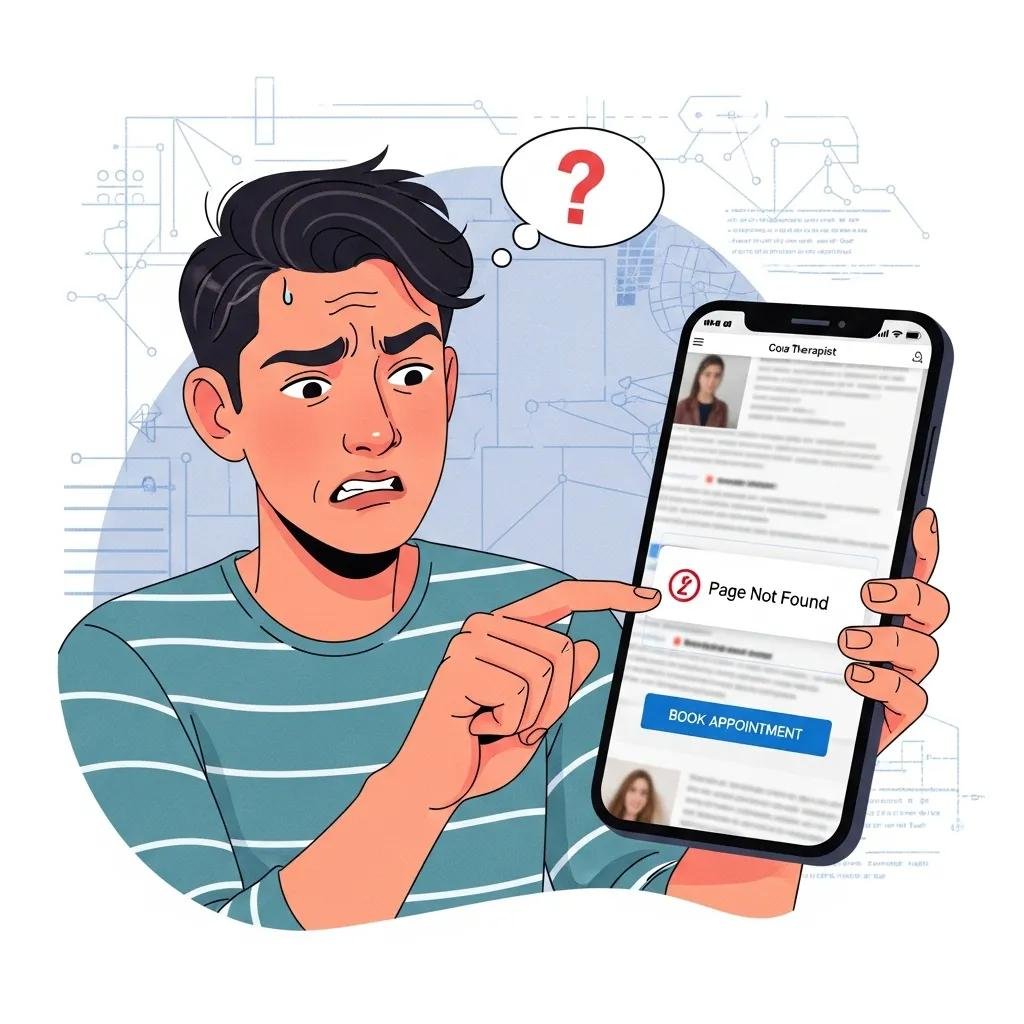
User experience (UX) is a critical factor in retaining potential clients. Functionality errors, such as non-mobile responsive designs and slow loading times, can drive users away and diminish engagement.
What Are the Consequences of Non-Mobile Responsive Therapist Websites?
Non-mobile responsive therapist websites can lead to significant user drop-off rates. With an increasing number of users accessing websites via mobile devices, a site that does not adapt to different screen sizes can frustrate visitors. This lack of responsiveness can result in a poor user experience, causing potential clients to seek services elsewhere. Ensuring that your website is mobile-friendly is essential for capturing and retaining clients in today’s digital landscape.
How Do Slow Loading Times Impact Client Engagement and Bounce Rates?
Slow loading times can have a detrimental impact on client engagement and bounce rates. Studies indicate that users expect a website to load within 2-3 seconds; if it takes longer, they are likely to abandon the site. This abandonment can lead to lost opportunities for therapists to connect with potential clients. Optimizing website speed is crucial for maintaining user interest and encouraging visitors to explore the services offered.
What Content and Messaging Blunders Should Therapists Avoid?
Content and messaging are vital components of a therapist’s website. Unclear or jargon-filled messaging can confuse potential clients and detract from the overall effectiveness of the site.
How Does Unclear or Jargon-Filled Messaging Confuse Potential Clients?
Unclear or jargon-filled messaging can alienate potential clients. When therapists use technical language or industry jargon, it can create barriers to understanding. Clear, straightforward communication is essential for making potential clients feel comfortable and informed. By using accessible language, therapists can better connect with their audience and convey their services effectively.
Why Is Authenticity Important Compared to Excessive Credentials or Generic Copy?
Authenticity is crucial in establishing a connection with potential clients. While credentials are important, excessive focus on them can come across as impersonal or generic. Clients are often looking for a therapist who resonates with them on a personal level. By emphasizing authenticity in messaging, therapists can build trust and rapport, making it more likely that potential clients will reach out for services.
Which Technical and Security Oversights Jeopardize Therapist Website Effectiveness?
Technical and security oversights can jeopardize the effectiveness of therapist websites. Issues such as lacking an SSL certificate or failing to comply with accessibility standards can have serious implications.
Why Is Having an SSL Certificate Essential for Therapist Websites?
Having an SSL certificate is essential for therapist websites as it ensures secure data transmission. This security measure builds client trust, as potential clients are more likely to engage with a website that protects their personal information. Without an SSL certificate, therapists risk losing clients who prioritize data security, especially in the sensitive field of mental health.
How Does Accessibility Compliance Ensure Your Website Serves All Clients?
Accessibility compliance is crucial for ensuring that a therapist’s website serves all clients, including those with disabilities. By adhering to accessibility standards such as the Web Content Accessibility Guidelines (WCAG), therapists can create an inclusive online environment that welcomes everyone. This compliance not only broadens the potential client base but also demonstrates a commitment to ethical practice and client care.
Understanding the specific challenges faced by mental health service users online further underscores the importance of accessible web design.
Web Barriers for Mental Health Service Users
People with these disorders often use the Web as an informational resource, platform for convenient self-directed treatment, and a means for many other kinds of support. However, some features of the Web can potentially erect barriers for this group that limit their access to these benefits, and there is a lack of research looking into this eventuality. Therefore, it is important to identify gaps in knowledge about “what features of the Web can potentially erect barriers for this group that limit their access to these benefits.”
Barriers and facilitation measures related to people with mental disorders when using the web: a systematic review, R Bernard, 2016
How Can Clear Calls to Action Improve Client Conversion on Therapist Websites?
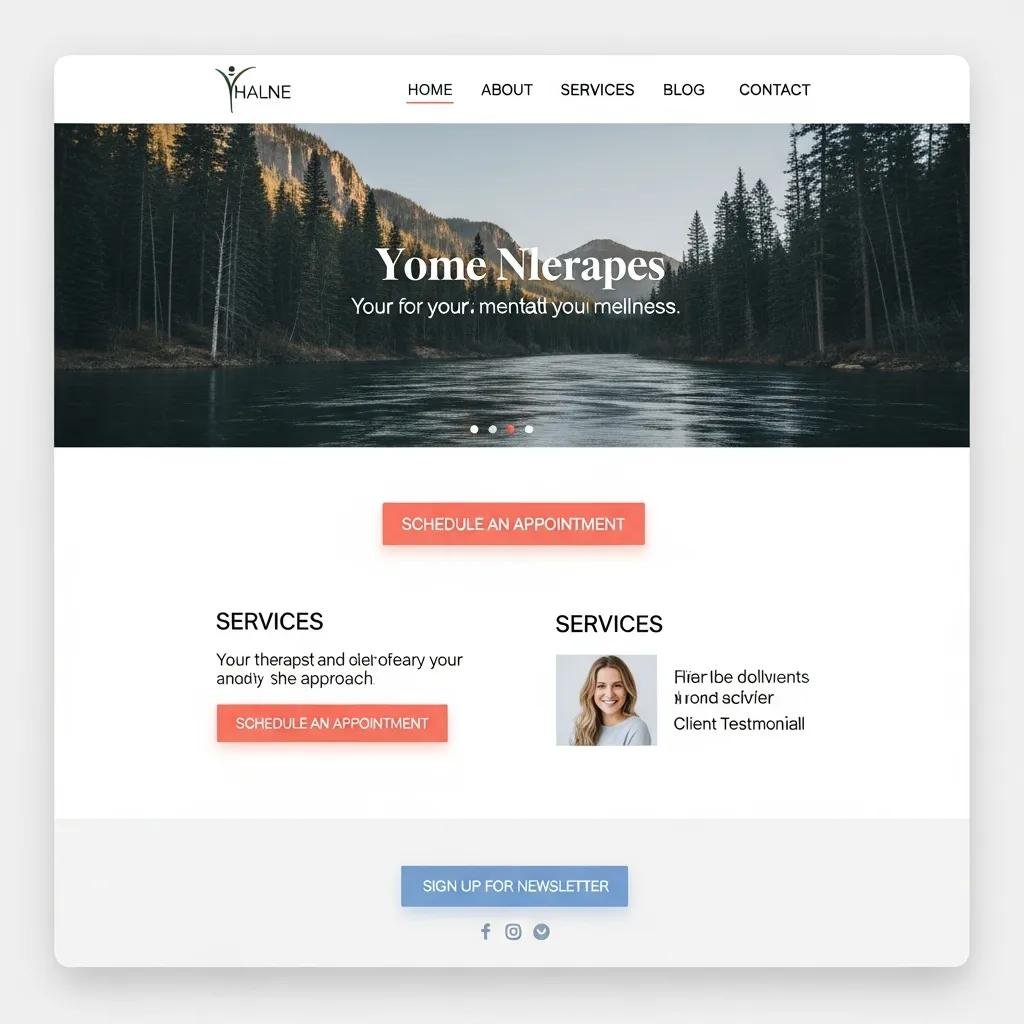
Clear calls to action (CTAs) are vital for improving client conversion rates on therapist websites. Effective CTAs guide potential clients toward taking the next step, whether that be scheduling an appointment or signing up for a newsletter.
What Are Effective CTA Strategies for Private Practice Websites?
- Promotional Offers: Highlight discounts, such as “10% OFF Your New Website Template!” to encourage immediate action.
- Newsletter Sign-Up: Use CTAs like “JOIN THE NEWSLETTER & RECEIVE 10% OFF” to build a mailing list and engage potential clients.
- Urgency and Convenience: Phrases like “Ready to ditch the waiting game?” and “Your Dream Website in Just One Week” create a sense of urgency and appeal to the desire for quick solutions.
- Clear Action Steps: Provide straightforward options for users to inquire or subscribe, such as a “Website Inquiry Form” for easy access to services.
These strategies can effectively drive engagement and conversions on private practice websites.
How Does Placement and Clarity of CTAs Influence User Engagement?
The placement and clarity of CTAs significantly influence user engagement. CTAs should be prominently displayed and easy to understand, guiding users toward desired actions. Effective placement, such as at the top of the homepage or at the end of informative articles, can increase the likelihood of user interaction. Ensuring that CTAs are clear and compelling is essential for maximizing client conversion rates.
What Are Best Practices to Fix Common Therapist Website Problems?
Addressing common therapist website problems requires a strategic approach. Implementing best practices can significantly enhance the overall effectiveness of a therapist’s online presence.
How Can Professional Web Design Services Address These Common Mistakes?
Professional web design services can address common mistakes by providing expertise in creating user-friendly, visually appealing websites. These services can help therapists avoid pitfalls such as outdated designs and poor functionality, ensuring that their websites effectively attract and retain clients. By investing in professional design, therapists can save time and focus on their practice while benefiting from a polished online presence.
What Role Does SEO and Mobile Optimization Play in Website Improvement?
SEO and mobile optimization play crucial roles in website improvement. Effective SEO strategies enhance visibility in search engine results, making it easier for potential clients to find therapists online. Additionally, mobile optimization ensures that websites function well on various devices, catering to the growing number of users accessing sites via smartphones and tablets. By prioritizing these elements, therapists can significantly improve their online presence and client engagement.
Different aspects of website design solutions can be compared to understand their effectiveness better.