
In the digital age, therapists often turn to social media platforms like Instagram to establish their online presence. While Instagram offers a visually engaging way to connect with potential clients, relying solely on it can limit a therapist’s reach and credibility. This article explores the critical aspects of maintaining a robust online presence, emphasizing the importance of a professional website alongside social media. Readers will learn about the limitations of Instagram, the risks of exclusive reliance on social media, and the significant benefits of having a dedicated therapist website. We will also discuss how to effectively integrate Instagram with a professional website to enhance client engagement and conversion rates.
A professional website serves as a cornerstone for therapists looking to establish a credible online presence. Unlike Instagram, which is primarily a social platform, a dedicated website allows for comprehensive content that can enhance client engagement. By providing detailed information about services, credentials, and therapeutic approaches, therapists can build trust and authority in their field. Additionally, a well-optimized website can improve visibility through search engine optimization (SEO), reaching a broader audience beyond social media.

Relying solely on Instagram for marketing presents several drawbacks for therapists:
Understanding how potential clients perceive online information is crucial, as studies show that users often don’t critically evaluate content, making a professional and credible online presence paramount.
Website Credibility for Online Mental Health Information
Research on the use of online information has suggested that general users of the internet do not critically evaluate the information they consume. In addition, specific elements of online information, such as the presence of advertisements, has been shown to affect perceptions of that information, resulting in less favorable ratings of websites.
Critically Evaluating Website Credibility: Factors that Influence Perceptions of Online Mental Health Information, 2021
Instagram’s algorithm significantly impacts how therapists are seen by potential clients. The platform prioritizes engaging content, which can lead to unpredictable visibility. Changes in the algorithm can affect a therapist’s reach, making it challenging to maintain consistent engagement with followers. Furthermore, while visual content can attract attention, it may not adequately represent the complexity of therapeutic services, potentially leading to misunderstandings about what therapists offer.
Exclusively relying on social media marketing poses several risks for therapists:
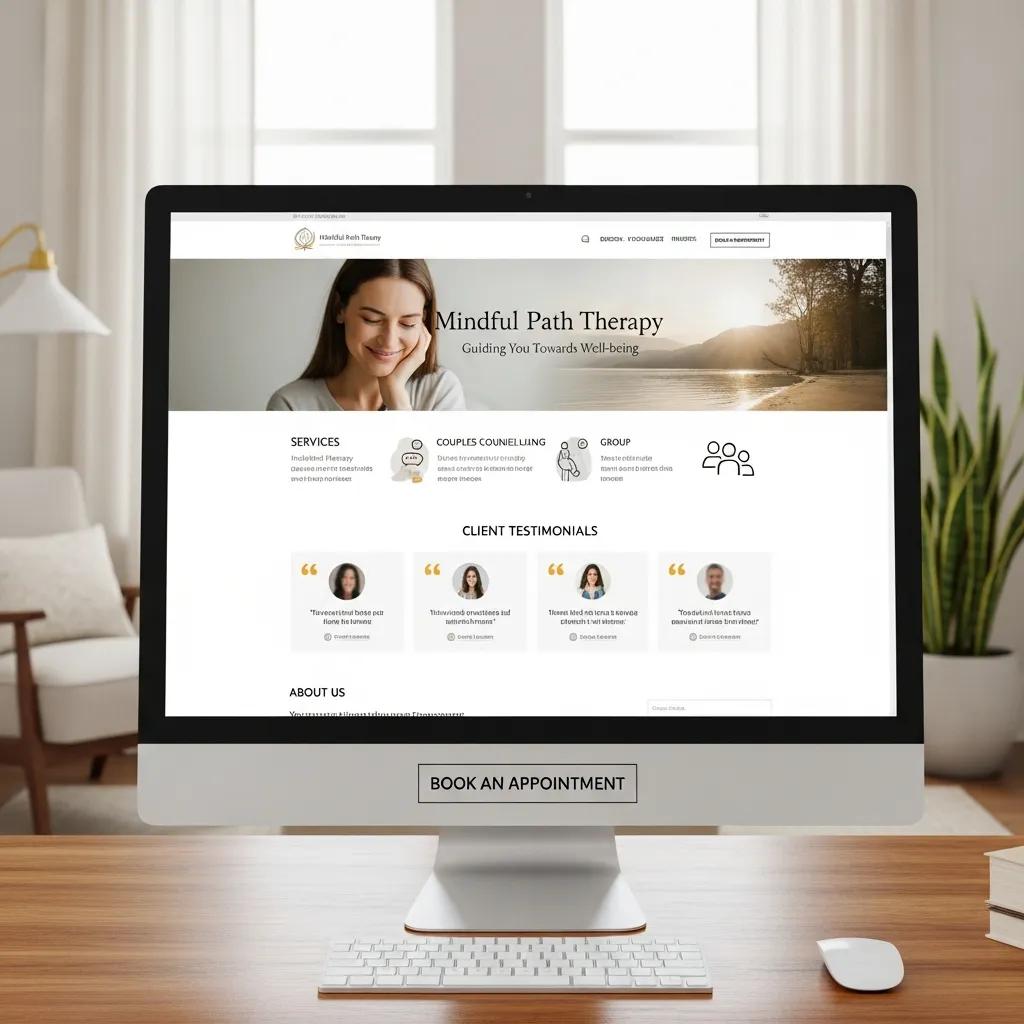
Having a professional website offers numerous advantages over relying solely on Instagram:
Custom web design plays a crucial role in establishing a therapist’s brand authority. A unique online identity reflects the therapist’s professional image and therapeutic approach, enhancing first impressions. A well-designed website can also improve user experience, making it easier for potential clients to navigate and find the information they need. This attention to detail not only builds trust but also encourages clients to reach out for services.
SEO-optimized websites significantly enhance client acquisition for therapists. By increasing visibility in search results, therapists can attract targeted traffic to their sites. Effective SEO strategies, such as keyword optimization and local search targeting, ensure that potential clients can easily find therapists in their area. Additionally, a user-friendly website enhances the overall experience, encouraging visitors to explore services and ultimately book consultations.
Integrating Instagram with a professional website can create a cohesive online presence for therapists. Here are some effective strategies:
To streamline patient navigation between Instagram and a professional website, therapists can implement several strategies:
Integrating Instagram with a professional website can significantly boost lead conversion and practice growth. By simplifying appointment scheduling through the website, therapists can make it easier for potential clients to take the next step. Consistent messaging across platforms builds trust, while community engagement through social media fosters a sense of connection. This holistic approach not only enhances client acquisition but also supports long-term practice growth.
To maximize the effectiveness of their websites, therapists should implement the following SEO best practices:
Several SEO techniques can help therapists increase organic traffic beyond social media:
Structured data plays a vital role in enhancing search visibility for therapists. By implementing schema markup, therapists can help search engines better understand their content, improving indexing and discoverability. This optimization can lead to higher rankings in search results, making it easier for potential clients to find therapists online. Additionally, creating high-quality, informative content that addresses client concerns can further enhance visibility and engagement.
To optimize websites for client conversions, therapists should consider the following techniques:
Lead capture tools and clear calls-to-action are essential for improving client engagement. Effective CTAs guide potential clients toward taking action, such as signing up for newsletters or booking appointments. Online booking systems simplify the scheduling process, making it more convenient for clients. Additionally, trust-building content, such as informative articles and testimonials, enhances engagement by providing value and reassurance.
User experience is critical in reducing friction and building client confidence. An intuitive website design enhances user experience, making it easier for potential clients to navigate and find the information they need. Mobile responsiveness is crucial, as many users access websites from their smartphones. Incorporating trust signals, such as professional credentials and client testimonials, further builds confidence and encourages potential clients to reach out for services.