
A well-built therapist website is a core tool for client discovery and trust. This concise guide shows how to design a professional site that serves clients and follows SEO and compliance best practices, covering audience research, content, UX, and security.
Identify the primary client groups you serve and capture their needs through surveys, intake notes, or interviews. Use clear personas to drive navigation, tone, and the priority of content so visitors find relevant information quickly.
Set measurable goals—bookings, inquiries, resource downloads, or reputation building—and link each goal to specific pages and calls to action so every design decision supports outcomes you can track.
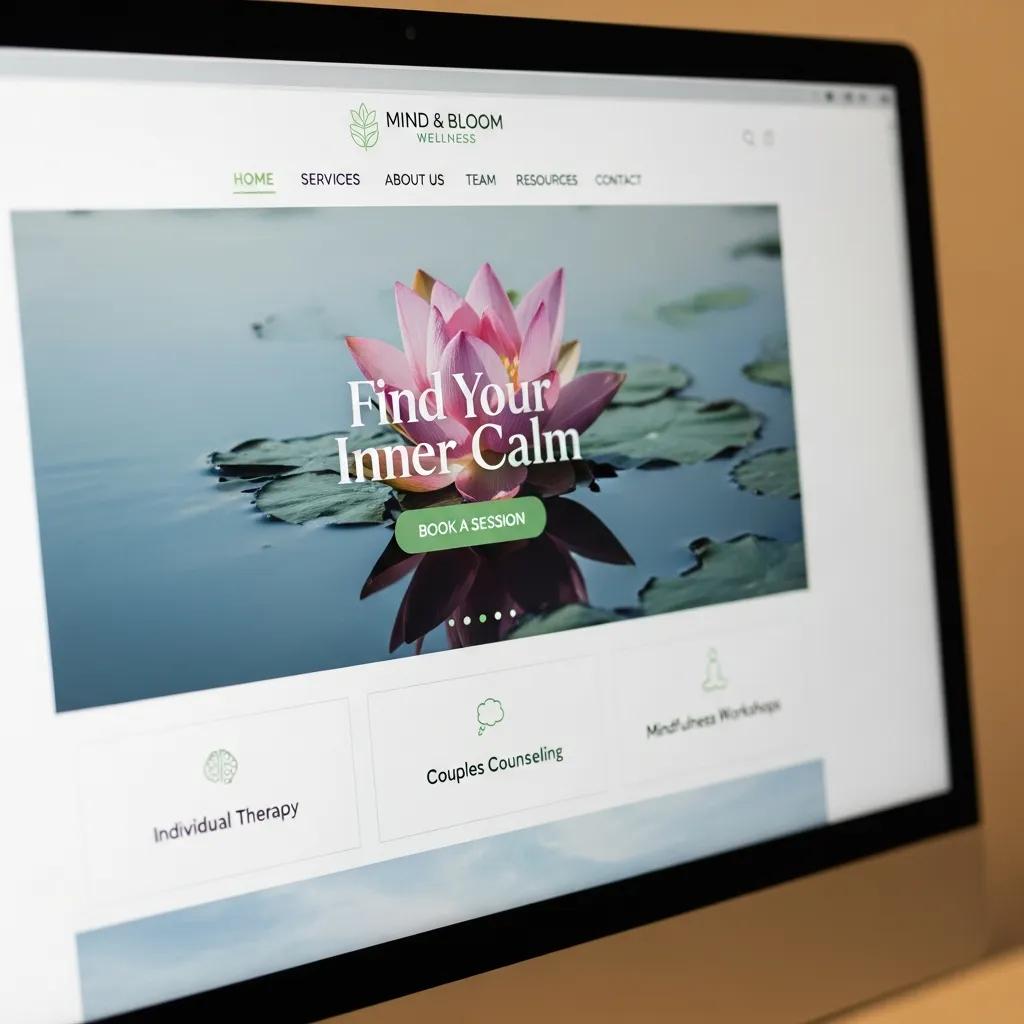
Prioritise calm, uncluttered layouts, simple navigation, and prominent calls to action. A reassuring visual hierarchy and clear paths to booking reduce friction and increase conversions.
Build to WCAG principles and ensure layouts adapt to mobile. Accessible, responsive sites reach more clients and reduce barriers for users with disabilities.
Research reinforces the critical need for accessible design in counselling services.
Developing Accessible Counseling Websites with WCAG
Current counseling services, such as those available through sikons.upgris.ac.id, lack full accessibility for students with disabilities, particularly those who are blind and visually impaired. Studies reveal significant accessibility barriers across educational websites, impeding equal access for users with disabilities. This study addresses these gaps by developing an accessible counseling platform aligned with Web Content Accessibility Guidelines (WCAG) to ensure inclusive access for all students.
Development of Counseling Sites with Digital Accessibility Features for the Blind and Visually Impaired Students, D Rakhmawati, 2025
Focus on clear, helpful content that answers common client questions and demonstrates competence. Use targeted phrases like “therapist website design” and “SEO for therapists” naturally in service pages and resources.

Implement basic SEO: accurate metadata, structured data where possible, and a completed Google Business Profile. Add location-based keywords to key pages to improve local discovery.
Research further highlights local optimisation strategies for medical and mental health practices.
Mastering Local SEO for Medical & Mental Health Practices
This chapter provides a comprehensive guide to local SEO for medical practices, emphasizing how healthcare providers can improve online visibility and attract more patients through strategic optimization. It explains key concepts such as keyword targeting, metadata use, structured data tags, and directory listings.
Mastering Local SEO for Medical Practices, 2025
Therapeia Web Design specialises in custom sites for therapists and wellness professionals and can assist with SEO setup and local visibility.
Protect client data with SSL, secure hosting, and regular updates, and follow HIPAA or local regulations when storing or transmitting personal information.
Test flows, booking forms, and mobile layouts before launch. Collect initial user feedback and fix usability issues quickly after going live.
Keep content and software current, monitor analytics for issues and opportunities, and schedule routine backups and security checks.
Hiring a specialist can speed delivery and ensure accessibility, SEO, and legal compliance are handled correctly while producing a polished, on-brand site.
Use on-page SEO, sensible keyword mapping, and content marketing to sustain visibility. Regularly update resource pages and posts to keep rankings current.
Maintain a professional tone, simple navigation, and clear trust signals (qualifications, privacy notices, testimonials) to build credibility and encourage contact.
A professional therapist website should include a clear homepage, service pages, contact/booking options, and a resources area. Key features include:
These elements support usability and client engagement.
Online booking improves access and convenience, reduces scheduling errors, and frees time for administrative tasks.
Security and compliance protect client confidentiality and preserve trust; follow encryption and secure-handling practices for any personal data.
A streamlined development process helps you launch faster and stay focused on client needs:
Following these steps keeps the project focused on outcomes.
Core stages are research, design and development, testing and launch, and post-launch maintenance—each with clear deliverables and timelines.
Use clear calls to action, trust signals, and simplified paths to booking to increase conversions and reduce drop-off.
Costs vary by complexity and features; choose between template-based, custom builds, and ongoing maintenance based on budget and goals.
Packages differ by customization, integrations (booking, telehealth), and support levels.
Choose the package that balances cost and long-term needs.
ROI depends on client acquisition, retention, and improved efficiency; a clear site can increase bookings and referrals over time.
SEO raises organic visibility; targeted keywords and well-structured pages typically lead to more inquiries and bookings.
Practical SEO actions include consistent blogging, a complete Google Business Profile, and using targeted keywords on service pages.
These approaches improve visibility and attract relevant clients.
A content strategy builds authority and prompts contact—provide useful resources, answer FAQs, and update content regularly to support conversion.
Keep content current, monitor analytics, apply software updates, and use newsletters or social posts to maintain engagement.
Use secure hosting, SSL, encrypted forms where required, and consult a healthcare compliance expert for jurisdiction-specific guidance.
Fast pages reduce abandonment; optimise images, minify code, and use a CDN to improve load times.
Share helpful content, engage authentically, and use targeted ads sparingly to drive traffic to high-value pages.
Avoid poor mobile design, confusing navigation, weak calls to action, and outdated content to maintain trust and discoverability.
Track traffic, bounce rate, time on page, and conversions (bookings or contact forms) and review these metrics regularly to guide improvements.
Building a therapist website from scratch requires clear audience focus, accessible design, secure practices, and ongoing SEO. Apply these principles or engage specialised design services to create a site that attracts clients and supports practice growth.