
A reliable website is a core part of a therapist’s practice. For
therapists, counselors, and life coaches
your site needs to be secure, easy to use, and visible to the people who need you. Regular maintenance keeps pages loading, protects client data, and helps search engines find you. This guide offers a focused, step‑by‑step checklist tailored for therapy practices — covering compliance, security, content updates, technical checks, user experience, and how to choose the right maintenance support. Follow these practices to safeguard client information, improve site performance, and support steady practice growth.
The value of a well-kept online presence for mental health providers has been noted in earlier research and industry guidance.
Website Maintenance for Mental Health Professionals
Covers the website lifecycle — from planning and building tools to the hands‑on work of ongoing maintenance.
The mental health professional and the new technologies: A handbook for practice today, MM Maheu, 2004
Routine maintenance directly affects client trust, data protection, and how easy it is for people to find your services. Keeping software and plugins updated reduces security risks and helps you stay aligned with regulations like HIPAA when those rules apply. A healthy site also supports search engine optimization (SEO), so potential clients can discover your practice more easily. Prioritizing maintenance helps you present a dependable, professional digital presence that builds confidence and supports long‑term growth.
If you need to get online quickly, specialized offerings can help you
launch a professional site fast
— a practical option for new practices or clinicians who want a secure, polished presence without delay.
Consistent maintenance is a key part of protecting client information and reducing compliance risk. Simple measures — like installing an SSL certificate, forcing HTTPS, and applying software updates — encrypt data and close common attack paths. Routine checks and vendor diligence help catch vulnerabilities before they become breaches. Neglecting these steps can lead to legal exposure and damage client trust, so make security an ongoing priority.
In practice, HIPAA awareness isn’t just a checkbox — it’s part of ethical, risk‑aware care for clients who share sensitive information online.
HIPAA Compliance for Therapists: Ethical & Risk Management
HIPAA compliance is both an ethical obligation and a risk‑management task. Model notices and resources are available from HHS (www.hhs.gov).
The impact of HIPAA and HITECH regulations on the couple and family therapist, 2016
Maintenance supports SEO in practical ways: fresh content, optimized images, and fast page loads all signal quality to search engines. Regular updates tell search engines your site is active, and technical improvements like mobile optimization and speed tuning improve rankings and user satisfaction. Keeping these basics in check helps more potential clients find your practice online.
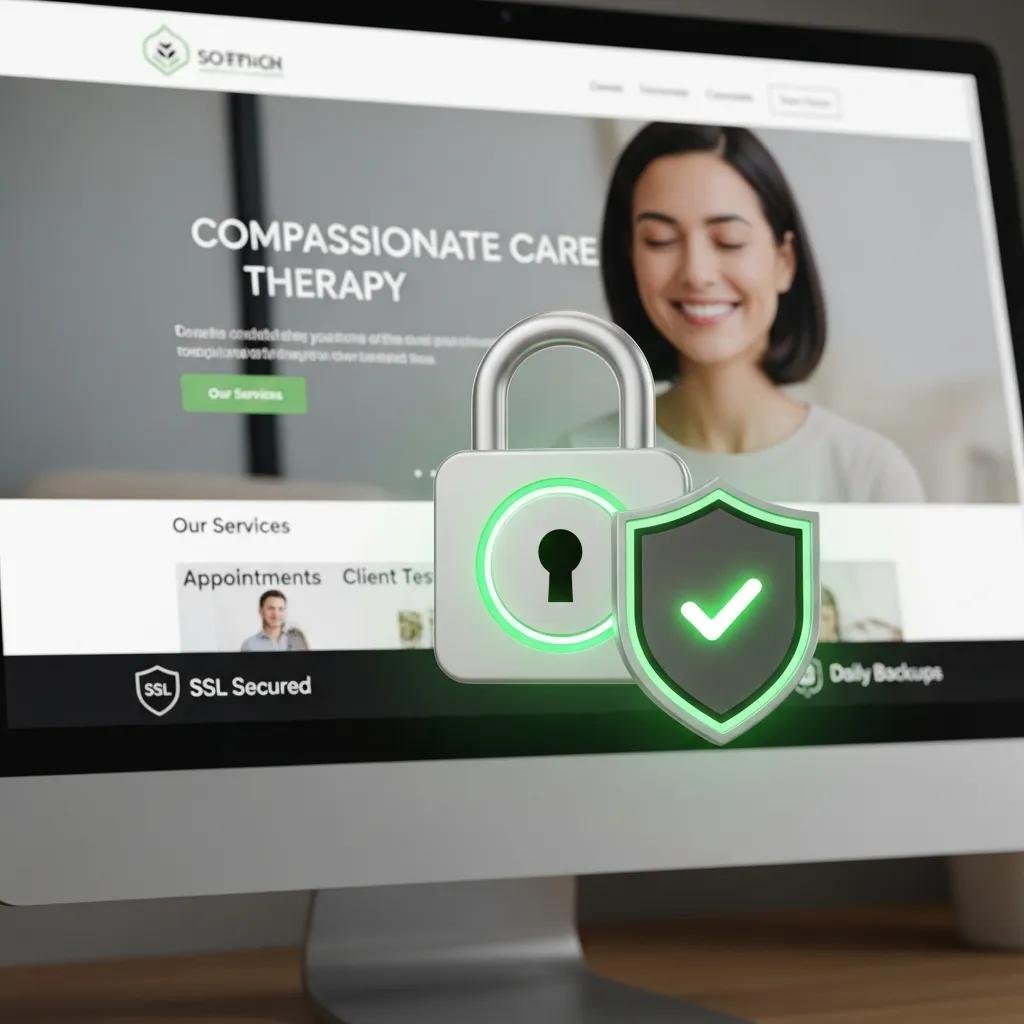
A secure therapy website combines several practices: an SSL certificate and HTTPS, routine backups, malware scanning, and timely updates for themes and plugins. Together these elements form a baseline of protection that preserves client privacy and keeps your site stable.
SSL certificates encrypt data between a visitor’s browser and your server, which prevents eavesdropping on contact forms, payments, or client portals. Serving your site over HTTPS also increases credibility with users and search engines, supporting both security and discoverability.
Backups let you recover quickly after a failure or attack. Malware scans identify and remove harmful code before it spreads. Keeping plugins and the CMS current closes known vulnerabilities that attackers exploit. Together, these steps reduce downtime and limit data‑loss risk for your practice.
Practical security measures and checklists help ensure the tools you use meet privacy expectations and industry standards.
Therapist HIPAA Compliance: Privacy & Security Checklist
Examines privacy and security concerns in digital systems and offers a checklist to evaluate whether a VoIP setup meets HIPAA privacy and security requirements. Therapists should weigh risks and benefits before adopting VoIP tools for telehealth.
VoIP for telerehabilitation: A risk analysis for privacy, security, and HIPAA compliance, 2010

Keep your site relevant by planning a steady stream of updates: add new pages, refresh old content, and publish posts that address client questions. Consistent content work strengthens SEO and helps you connect with people searching for support.
Regular blog posts and resource pages give visitors useful information and show your expertise. Practical tips, short guides, and client‑approved testimonials (with permission) help build credibility. Over time, this content becomes a resource that attracts and retains clients.
Start with the words people use when searching for therapy in your area and for your specialties. Create clear service pages for each focus area, include local signals where appropriate, and write descriptive titles and meta descriptions. Thoughtful keyword work improves your chances of appearing for the right searches.
Regular technical audits catch small problems before they affect visitors. Track speed, verify mobile responsiveness, and review analytics to make data‑driven improvements.
Fast pages lower bounce rates and keep visitors exploring your site. Mobile‑friendly layouts ensure people can find information and contact you from any device. Since many clients search on phones, prioritize mobile testing and speed optimization as part of routine maintenance.
Broken links frustrate users and weaken SEO. Regular link checks and analytics reviews reveal what pages perform well and where visitors drop off. Use that data to fix problems and refine content so your site better serves prospective clients.
A welcoming, accessible site helps more people connect with your services. Follow accessibility best practices and design choices that make content easy to read and navigate.
WCAG 2.1 gives practical guidelines for making sites usable by people with a range of needs. Simple language, clear headings, text alternatives for images, and predictable navigation also support neurodiverse visitors. These steps create a more inclusive experience for everyone.
Well‑organized menus, concise page copy, and obvious contact options help visitors find help quickly. When people can easily understand your services and how to reach you, they’re more likely to take the next step and
get in touch
.
Look for a provider that understands therapist workflows, privacy needs, and the technical work required to keep a site healthy. Compare service scope, response times, pricing, and references to find the right fit for your practice.
Outsourcing maintenance saves time and reduces risk. A professional team can manage backups, security monitoring, software updates, and performance tuning so you can focus on clinical work. Good maintenance plans also include routine reporting and technical support.
Therapeia Web Design builds and maintains sites specifically for therapists, counselors, and coaches. Our maintenance plans combine thoughtful design, HIPAA‑aware infrastructure, and ongoing SEO support so your site stays compliant, secure, and discoverable — leaving you to concentrate on client care.
Signs include slow pages, broken links, outdated content, security warnings, or sudden drops in traffic. If clients report trouble accessing forms or booking, or if accessibility issues arise, schedule a maintenance review. Regular checks catch these issues early.
Aim for basic maintenance monthly — updates, backups, and a quick performance check. Add a deeper audit every quarter to review content, SEO, accessibility, and analytics. A predictable schedule keeps your site reliable and reduces emergency fixes.
Client and visitor feedback is a practical source of improvement ideas. Ask about navigation, clarity of information, and any access problems. Use that input to prioritize fixes that directly improve the user experience.
Some clinicians can manage basic tasks, but professionals are valuable for technical, security, and compliance work. If you’re unsure about HIPAA‑related choices, server configurations, or SEO strategy, a maintenance partner can provide the expertise and assurance you need.
Skipping maintenance increases the chance of security breaches, data exposure, downtime, and loss of search visibility. Outdated sites can frustrate visitors and reduce referrals. Regular care prevents these problems and protects your practice’s reputation.
Follow WCAG 2.1 basics: clear structure, alt text for images, keyboard navigation, and readable content. Test with screen readers and with users who have different needs, and adopt neurodiversity‑friendly practices like predictable layouts and plain language. Ongoing testing and updates keep accessibility current.
Keeping your website healthy is an ongoing, practical part of running a private practice. Regular updates, security measures, and thoughtful content work protect client data, improve discoverability, and create a better experience for visitors. If managing technical details feels heavy, consider partnering with a maintenance provider that understands therapists’ needs — it’s an investment in safety, professionalism, and steady growth.